
At first glance, the question “what is 2/3 + 1/2 as a fraction” appears to be a straightforward arithmetic problem, a relic from grade school mathematics. Indeed, the answer is 7/6, or 1 and 1/6. However, in an increasingly digital world, this simple query serves as a profound gateway into understanding the critical role technology plays in foundational math education, problem-solving, and computational literacy across various domains. It highlights how digital tools not only provide answers but also facilitate deeper comprehension, automate complex processes, and empower individuals to navigate a data-rich environment. This article delves into how technology has transformed our interaction with basic mathematical concepts, making them more accessible, understandable, and applicable in our daily lives and professional endeavors.

The Digital Evolution of Basic Arithmetic Education
The pedagogical landscape for learning mathematics has undergone a seismic shift, moving beyond traditional chalkboards and textbooks to embrace dynamic, interactive digital platforms. The humble addition of fractions, once a source of frustration for many, is now often a seamlessly navigable concept thanks to technological advancements.
From Textbooks to Interactive Apps
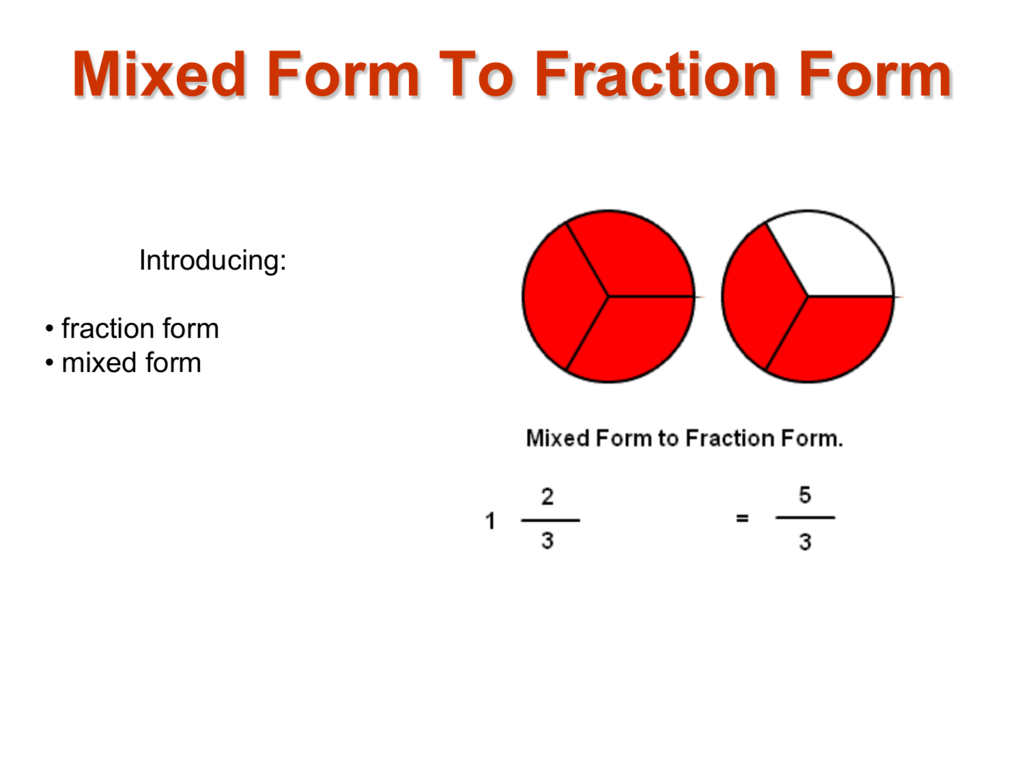
Educational apps have fundamentally revolutionized how foundational mathematical operations, including fraction addition, are taught and learned. Gone are the days of static diagrams; in their place are vibrant, interactive interfaces that allow users to visualize fractions, manipulate parts of a whole, and see the common denominator emerge graphically. These applications often incorporate gamification elements, turning potentially dry topics into engaging challenges. For instance, an app might allow a student to drag and drop fractional pieces onto a number line or combine visual representations of 2/3 and 1/2 to literally see 7/6 take shape. This experiential learning fosters intuitive understanding, moving beyond rote memorization to genuine conceptual grasp, crucial for building a strong mathematical foundation. The immediate feedback loops inherent in these apps also allow students to correct misconceptions in real-time, accelerating the learning process and boosting confidence.
Online Calculators and Solvers: Instant Gratification and Deeper Understanding
The ubiquitous presence of online calculators and step-by-step fraction solvers exemplifies how technology serves both as an answer provider and an educational aid. While a basic calculator might only yield a decimal (1.1666…), a specialized online fraction calculator can instantly provide “7/6” or “1 1/6” and, more importantly, show the working. It will illustrate the process of finding a common denominator (6), converting 2/3 to 4/6 and 1/2 to 3/6, and then adding them to get 7/6. This transparency demystifies the arithmetic, turning a simple calculation into a mini-tutorial. For students struggling with a particular step, or professionals needing to refresh their memory on a specific operation, these tools offer immediate, accessible explanations, bridging gaps in understanding without the need for a human tutor. They empower users to not just get the answer, but to comprehend the logical progression that leads to it.
The Importance of Foundational Skills in a Digital Age
While technology can automate calculations, the intrinsic value of understanding foundational mathematical skills like fraction addition remains paramount. In a world increasingly reliant on data interpretation and critical analysis, the ability to comprehend proportions, ratios, and percentages—all rooted in fractional understanding—is indispensable. Technology aids in how we solve problems, but fundamental human understanding dictates which problems to solve and how to interpret the results. For example, understanding that 7/6 is slightly more than 1 helps in real-world estimation and problem-solving, a nuance an unthinking calculator cannot provide. Digital literacy extends beyond operating software; it includes the ability to apply logical reasoning and mathematical principles that technology amplifies, rather than replaces.
AI and Machine Learning in Personalized Math Tutoring
Beyond static apps and calculators, artificial intelligence and machine learning are ushering in a new era of personalized math education, transforming how individuals approach and master concepts, from basic fractions to advanced calculus.
Adaptive Learning Paths
AI-powered educational platforms are capable of creating highly personalized and adaptive learning paths. By analyzing a user’s performance on exercises and quizzes, AI can identify specific learning gaps – perhaps difficulty with finding common denominators or simplifying improper fractions – and then tailor subsequent content and explanations accordingly. If a student consistently struggles with converting 1/2 to 3/6, the AI can provide additional focused practice, different explanatory videos, or alternative teaching methods until that specific hurdle is overcome. This level of individualized attention, traditionally only available through expensive one-on-one tutoring, makes complex topics like fractions more accessible and mastery more attainable for a wider audience. The system adapts its pace and method to the individual, ensuring effective and efficient learning.
Explaining Complex Concepts with AI
AI’s capacity for natural language processing allows it to explain mathematical concepts, including the intricacies of fraction addition, in a conversational and intuitive manner. Instead of just showing steps, an AI tutor can answer “why” questions: “Why do I need a common denominator?” or “What does it mean to simplify a fraction?” It can elaborate on the conceptual underpinnings, provide real-world analogies, and break down complex ideas into digestible chunks. For problems like 2/3 + 1/2, AI can articulate the reasoning behind multiplying denominators, finding the least common multiple, and expressing the sum as an improper fraction or a mixed number, offering clarity that goes beyond mere procedural instruction. This deep explanatory capability helps bridge the gap between mechanical calculation and genuine mathematical insight.
The Role of AI in Demystifying Fractions and Ratios
Fractions, ratios, and percentages are fundamental to understanding many aspects of the modern world, from financial literacy to scientific data. AI tools can demystify these concepts by integrating them into interactive simulations and real-world scenarios. Imagine an AI tutor generating a scenario where you’re baking and need to combine 2/3 cup of flour with 1/2 cup of sugar, prompting you to figure out the total quantity. Or an AI-driven game where fractional resources need to be managed. By presenting fractions in relevant, tangible contexts, AI helps learners grasp their practical significance, making abstract mathematical ideas concrete and reducing the intimidation often associated with them. This contextual learning is vital for developing applied mathematical skills.
Software Tools for Precise Fractional Calculations in Professional Contexts
While our initial problem is simple, its underlying principles extend into professional domains where precise fractional and proportional calculations are not just helpful but absolutely critical, and software tools are indispensable.
Spreadsheets and Data Analysis
In business, finance, and scientific research, spreadsheets like Microsoft Excel or Google Sheets are workhorses for data analysis. While they typically display decimals, they are capable of handling fractional calculations behind the scenes. Analysts use fractions and ratios extensively for financial modeling (e.g., debt-to-equity ratios, profit margins), budget allocation (e.g., allocating 2/3 of a budget to marketing and 1/2 of the remainder to advertising), and scientific data interpretation (e.g., comparing fractional concentrations of chemicals). Understanding how to set up formulas that accurately reflect these fractional relationships is key. Advanced spreadsheet functions allow for complex aggregations and transformations of data, where fractional components are often foundational, ensuring precision in critical decision-making.
Programming Languages for Advanced Mathematical Operations
Engineers, scientists, data analysts, and quantitative finance professionals frequently use programming languages such as Python, R, or MATLAB for sophisticated mathematical operations. These languages offer robust libraries (e.g., NumPy and SymPy in Python) that can perform exact fractional arithmetic, avoiding the rounding errors inherent in floating-point decimal representations. When dealing with complex algorithms, simulations, or high-precision financial calculations, representing quantities as exact fractions (like 7/6) rather than approximate decimals (1.1666…) is crucial for maintaining accuracy. For example, in computational physics or algorithmic trading, minute differences caused by rounding can lead to significant errors. Programming allows for the symbolic manipulation of fractions, ensuring that calculations are performed with absolute precision until a numerical approximation is explicitly required.
CAD Software and Precision Engineering
In fields like architecture, mechanical engineering, and product design, Computer-Aided Design (CAD) software is fundamental. Fractions and ratios are inherently embedded in design specifications, measurements, and tolerances. A component might require a dimension that is exactly 2/3 of another part, or a gear ratio might be 1:2. CAD software automates these fractional calculations, ensuring that designs are precise and components fit together perfectly. These tools allow engineers to input exact fractional values, simulate their interactions, and identify potential conflicts or inefficiencies before physical prototypes are ever made. The precision afforded by CAD software, built upon a bedrock of mathematical principles including fractions, is essential for creating everything from intricate microchips to large-scale infrastructure.
The Future of Computational Literacy: Beyond Manual Calculation
The journey from “what is 2/3 + 1/2 as a fraction” to understanding its technological implications underscores a broader shift in what it means to be computationally literate in the 21st century.
Emphasizing Conceptual Understanding over Memorization
With technology readily available to perform calculations, the emphasis in education and professional development is shifting from rote memorization of arithmetic procedures to a deeper conceptual understanding. The goal is not just to know how to add 2/3 and 1/2, but to understand what fractions represent, why a common denominator is needed, and how to apply this understanding to real-world problems. Technology liberates us from tedious manual calculation, allowing us to focus on higher-order thinking, problem formulation, and interpreting results. This means more time for critical analysis and less time spent on error-prone manual computation.
Digital Citizenship and Data Interpretation
In an age overflowing with information, the ability to understand and critically analyze data—often presented in fractions, ratios, or percentages—is a vital aspect of digital citizenship. From understanding health statistics presented as “2 out of 3 people” to interpreting economic indicators, a solid grasp of fractional concepts is key to making informed decisions and avoiding misinterpretations. Technology, through data visualization tools and interactive dashboards, helps present this information accessibly, but it’s the underlying mathematical literacy that empowers individuals to truly engage with and question the data.
The Synergy of Human Intellect and Technological Capability
Ultimately, technology doesn’t diminish the need for human intelligence; it amplifies it. The ability to ask the right questions, to formulate problems mathematically, and to interpret the results of complex calculations performed by machines remains a uniquely human endeavor. The synergy between human intellect and technological capability is what drives innovation. Using an AI tutor to understand 2/3 + 1/2 allows a student to quickly grasp the basics, freeing their cognitive energy for more complex mathematical reasoning, creative problem-solving, and abstract thought – skills that are inherently human and irreplaceable by any algorithm.

Conclusion
The seemingly simple question, “what is 2/3 + 1/2 as a fraction,” opens a window into the expansive influence of technology on mathematics. From interactive educational apps that demystify fraction addition for children, to AI tutors providing personalized learning paths, and sophisticated software tools enabling precise calculations in professional domains, technology is fundamentally reshaping how we learn, understand, and apply mathematical concepts. It has transformed tedious manual tasks into seamless operations, freeing human intellect to focus on conceptual understanding, critical analysis, and innovative problem-solving. As we navigate an increasingly data-driven world, the foundational mathematical literacy, enhanced and supported by technological advancements, remains an indispensable skill, empowering us all to not just find answers, but to truly comprehend the world around us.
aViewFromTheCave is a participant in the Amazon Services LLC Associates Program, an affiliate advertising program designed to provide a means for sites to earn advertising fees by advertising and linking to Amazon.com. Amazon, the Amazon logo, AmazonSupply, and the AmazonSupply logo are trademarks of Amazon.com, Inc. or its affiliates. As an Amazon Associate we earn affiliate commissions from qualifying purchases.