
Navigating the financial landscape of an auto purchase can be a daunting task for even the most seasoned consumer. When you walk into a dealership or apply for a loan online, you are often bombarded with terms like “interest rate,” “monthly payment,” and “Annual Percentage Rate” (APR). While many buyers focus exclusively on the monthly payment to see if it fits their budget, the APR is the most critical metric for understanding the true cost of borrowing.
Computing the APR for a car loan allows you to pull back the curtain on hidden fees and dealership markups. It provides a standardized way to compare loan offers from different lenders, ensuring that you are making a decision based on total cost rather than just a manageable monthly installment. In this guide, we will explore the nuances of car loan mathematics and provide a step-by-step framework for calculating APR.
The Fundamental Difference Between Interest Rate and APR
Before diving into the calculations, it is essential to distinguish between the nominal interest rate and the APR. While they are related, they represent two different financial realities.
Defining the Annual Percentage Rate (APR)
The Annual Percentage Rate is a broader measure of the cost of borrowing money than the interest rate alone. It is expressed as a percentage that represents the actual yearly cost of funds over the term of a loan. This includes not only the interest rate charged by the lender but also any other fees or charges that you are required to pay to obtain the loan.
In the context of car financing, these additional costs might include loan origination fees, documentation fees, and certain types of credit insurance. Because the APR bundles these costs together, it is almost always higher than the base interest rate. Federal law, specifically the Truth in Lending Act (TILA), requires lenders to disclose the APR to consumers, providing a level of transparency that prevents lenders from hiding the true cost of credit in the fine print.
Why the Interest Rate Alone is Misleading
The interest rate is simply the percentage of the principal amount that the lender charges for the use of their money. If you were to look only at the interest rate, you might be tempted to choose a loan that appears “cheaper” on the surface but carries heavy upfront fees.
For example, consider two loan offers for a $25,000 car. Lender A offers a 5% interest rate with $0 in fees. Lender B offers a 4.5% interest rate but charges a $1,500 “loan processing fee.” If you only look at the interest rate, Lender B seems like the better deal. However, when you compute the APR, you realize that the $1,500 fee significantly increases the effective cost of the loan, potentially making Lender A the more economical choice.
The Mathematical Components of a Car Loan APR
To compute the APR accurately, you must first understand the variables that feed into the calculation. Auto loans are typically structured as “simple interest” loans, meaning interest is calculated daily based on the remaining principal balance.
Principal and Interest
The principal is the total amount of money you are borrowing to purchase the vehicle. This includes the purchase price of the car minus your down payment and any trade-in equity. The interest is the profit the lender makes on the loan. In an amortized loan, each monthly payment is split: one portion goes toward paying down the interest that accrued during the month, and the remainder goes toward reducing the principal.
Factoring in Prepaid Finance Charges
Prepaid finance charges are the “hidden” elements that separate the interest rate from the APR. These are costs paid at or before the consummation of the loan. Common examples include:
-
Origination Fees: Charged by the lender for processing the new loan application.
-
Documentation Fees: Often charged by dealerships for handling the paperwork (though only certain portions of these may be included in the APR depending on state law).
-
Credit Report Fees: The cost associated with the lender pulling your credit history.
When calculating APR, these fees are added to the total interest paid over the life of the loan to determine the total finance charge.
The Role of Loan Term and Amortization
The length of your loan—the “term”—has a massive impact on the APR calculation. Most car loans range from 36 to 84 months. A longer term will result in lower monthly payments, but it also means you will pay more in total interest over time. When computing APR, the math accounts for how these interest payments are spread across the specific duration of the loan.
Step-by-Step Guide to Calculating Car Loan APR
While lenders are required to provide the APR, knowing how to verify it yourself empowers you during negotiations. Because APR calculations involve complex algebraic formulas (specifically solving for the internal rate of return), most people use financial calculators or spreadsheet software. However, understanding the logic is vital.
Gathering Necessary Financial Data
To perform the calculation, you need four specific pieces of information:
-
Amount Financed: The total loan amount minus any prepaid fees.
-
Monthly Payment: The exact amount you will pay each month.
-
Loan Term: The total number of months you will be making payments.
-
Total Finance Charges: The sum of all interest payments plus all prepaid fees.
The Manual Estimation Formula

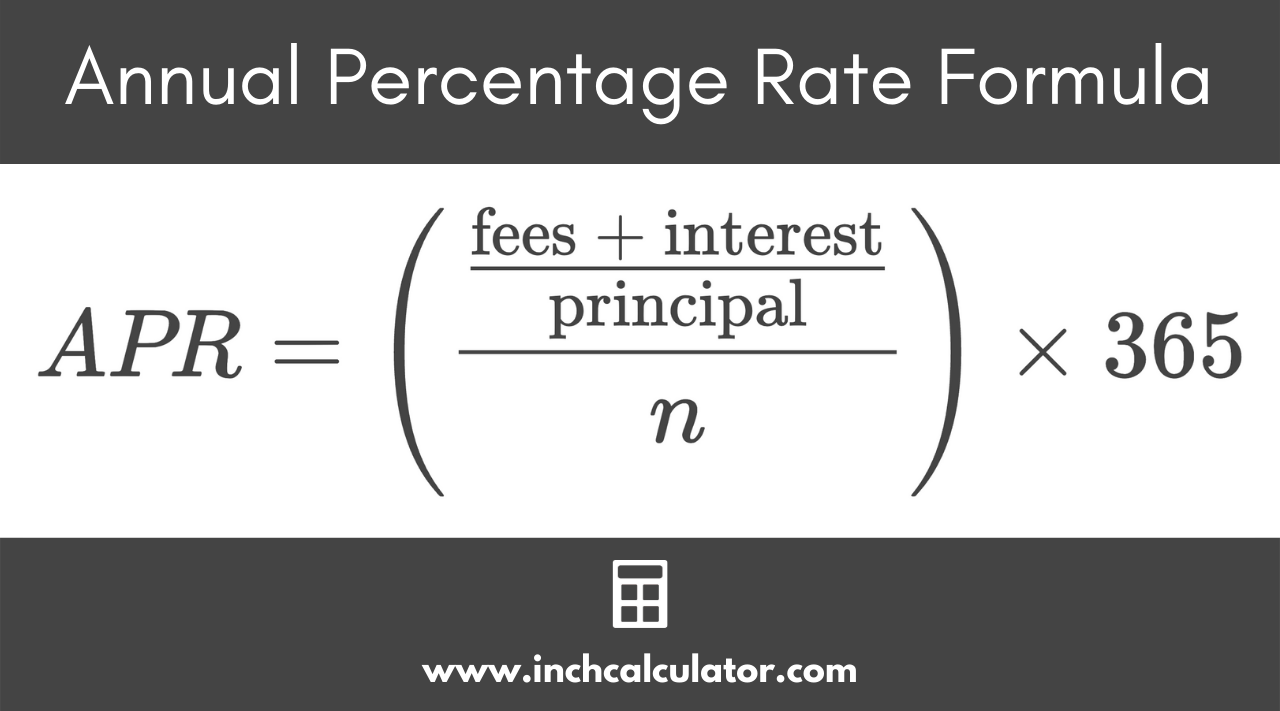
While the exact APR formula requires iteration (trial and error), you can estimate the APR using this simplified formula:
APR = ((Fees + Total Interest) / Principal) / Number of years in loan term) x 100
Note: This is an approximation. For a legally accurate APR, one must account for the declining principal balance through amortization.
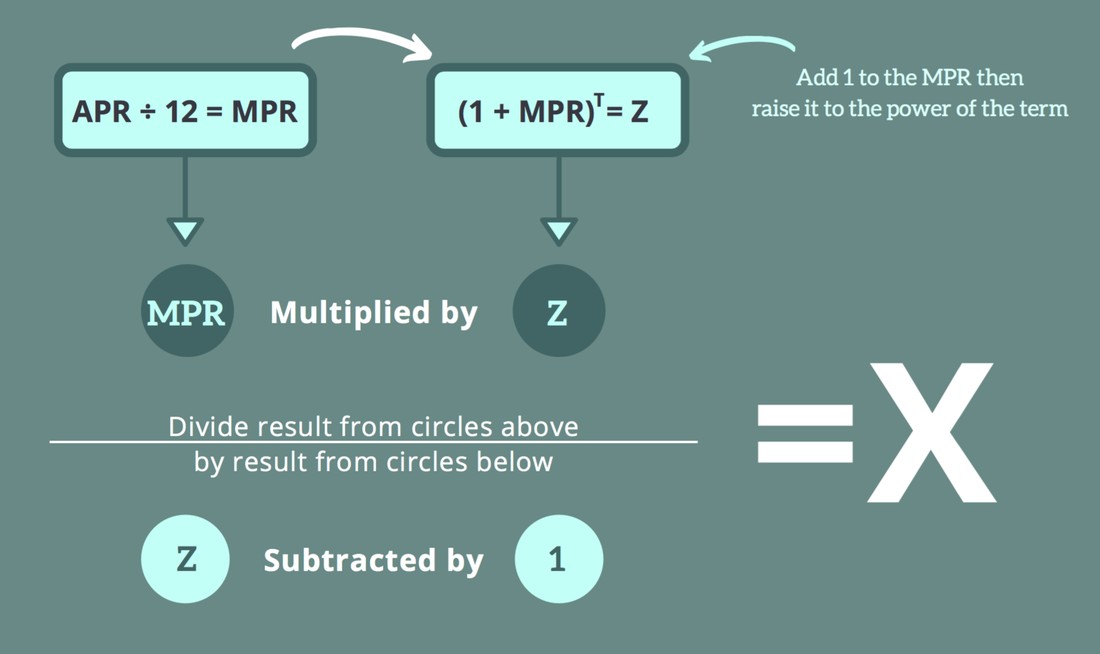
To get a more precise figure, you use the following logic: The APR is the interest rate that makes the present value of all future monthly payments equal to the net amount of the loan (Principal minus Fees).
Using Excel or Google Sheets for Precision
The most efficient way to compute APR is using the RATE function in a spreadsheet. This function calculates the interest rate per period.
The syntax is: =RATE(nper, pmt, pv) * 12
-
nper: The total number of monthly payments (e.g., 60).
-
pmt: The monthly payment amount (entered as a negative number).
-
pv: The net loan amount (Principal minus any upfront fees).
By multiplying the result by 12, you convert the monthly rate into an annual percentage rate. If the resulting number matches the lender’s disclosure, the loan is transparent. If your calculated APR is significantly higher, there may be undisclosed fees embedded in the contract.
Strategic Factors That Influence Your Car APR
Understanding how to calculate the number is only half the battle; the other half is understanding why the number is what it is. Several market and personal factors dictate the APR you are offered.
Credit Scores and Risk Profiles
Your credit score is the primary determinant of your APR. Lenders categorize borrowers into “tiers” (e.g., Super Prime, Prime, Subprime). A borrower with a score above 780 might secure an APR of 4%, while a borrower with a score below 600 might see offers exceeding 18%. This discrepancy exists because lenders use the APR to price the risk of default. The higher the risk, the higher the “risk premium” added to the base rate.
New vs. Used Vehicle Financing
Generally, new cars come with lower APRs than used cars. This is because new cars have more predictable resale values, making them better collateral for the lender. Additionally, manufacturers often provide “incentivized financing” (such as 0% or 1.9% APR) to move new inventory. Used car loans are seen as riskier because the vehicle’s value is more volatile, leading to higher APRs even for borrowers with excellent credit.
Dealer Markups and Negotiating the Buy Rate
Many consumers are unaware that the APR offered at a dealership is often negotiable. Lenders provide dealerships with a “buy rate”—the minimum interest rate the lender is willing to accept. The dealership then adds a “markup” (often 1% to 3%) as compensation for arranging the financing. This is known as the “contract rate.” By computing your own APR based on a pre-approval from a bank or credit union, you can negotiate the dealer’s markup and potentially save thousands over the life of the loan.
How to Use Your APR Calculations to Save Money
The ultimate goal of computing your car’s APR is to reduce your total cost of ownership. Once you have the tools to calculate and compare, you can use several strategies to optimize your personal finances.
Comparing Loan Offers Effectively
Never accept the first financing offer you receive. Use your APR calculations to compare a dealership offer against a credit union offer and an online lender offer. Even a 1% difference in APR on a $35,000 loan over 72 months can save you over $1,200 in interest. By focusing on the APR rather than the monthly payment, you avoid the trap of “payment packing,” where dealers extend the loan term to hide a high interest rate.
The Impact of Refinancing Your Auto Loan
If you already have a car loan and your APR calculation reveals a high cost of borrowing, you are not necessarily stuck. If your credit score has improved since you bought the car, or if market rates have dropped, you can compute the APR of a potential refinance loan. If the new APR (including any refinancing fees) is lower than your current APR, moving the debt to a new lender can reduce your monthly overhead and total interest paid.
Final Thoughts on Financial Literacy in Auto Buying
Computing the APR for a car is more than just a mathematical exercise; it is a fundamental skill in personal finance. In an era where vehicle prices are at record highs and loan terms are stretching longer than ever, the ability to dissect a loan offer is your best defense against overpaying. By understanding the components of APR—from the base interest to the hidden origination fees—you transition from a passive borrower to an informed consumer, ensuring that your next vehicle purchase supports your long-term financial health rather than hindering it.
aViewFromTheCave is a participant in the Amazon Services LLC Associates Program, an affiliate advertising program designed to provide a means for sites to earn advertising fees by advertising and linking to Amazon.com. Amazon, the Amazon logo, AmazonSupply, and the AmazonSupply logo are trademarks of Amazon.com, Inc. or its affiliates. As an Amazon Associate we earn affiliate commissions from qualifying purchases.