
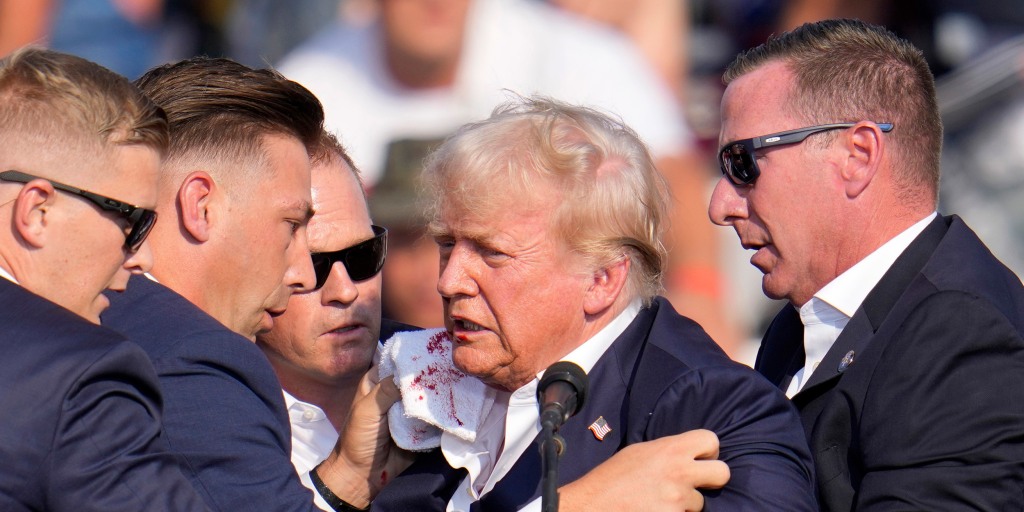
The intersection of politics and finance has rarely been as visceral as it is in the current era. For investors, the name Donald Trump represents more than a political figure; it represents a specific set of market expectations—often referred to as the “Trump Trade.” From deregulation and tax cuts to protectionist trade policies and a vocal support for cryptocurrency, his influence on capital flow is undeniable. Therefore, the hypothetical question of a sudden removal of such a figure from the geopolitical stage is not merely a political inquiry, but a critical exercise in risk management and financial forecasting.

In the event of a sudden, violent transition or the death of a major political candidate, markets do not react to the tragedy itself, but to the resulting uncertainty. This article explores the economic implications, market volatility, and sector-specific shifts that would emerge if the “Trump Premium” were suddenly erased from the global financial equation.
1. The Immediate Market Reaction: Volatility and the Flight to Safety
Financial markets loathe uncertainty above all else. A sudden event of this magnitude would likely trigger an immediate “flash crash” in equity markets as algorithmic trading systems react to news headlines. This initial reaction is rarely about fundamentals and almost entirely about the repricing of risk.
The Surge in the VIX and Volatility Indices
The CBOE Volatility Index (VIX), often called the “fear gauge,” would likely see a historic spike. Investors would rush to purchase downside protection (put options), driving up the cost of hedging. In the short term, the market would struggle to find a “floor” because the future of U.S. fiscal and domestic policy would be thrown into total disarray. History shows that during moments of extreme domestic turmoil—such as the assassination of JFK or the attempt on Ronald Reagan—markets initially dip before stabilizing once the line of succession and institutional stability are confirmed. However, in today’s high-frequency trading environment, the speed of the dip would be unprecedented.
Flight to “Safe Haven” Assets
In times of systemic shock, capital flows out of “risk-on” assets (equities, high-yield bonds) and into “safe havens.” Gold would likely see an immediate and sharp appreciation as it remains the ultimate store of value during geopolitical crises. Similarly, the U.S. Dollar might ironically strengthen in the very short term due to its liquidity, although this could be tempered by concerns over long-term U.S. stability. U.S. Treasuries would see a surge in demand, pushing yields down as investors prioritize the return of capital over the return on capital.
2. Sector-Specific Impacts and the End of the “Trump Trade”
Certain sectors of the economy have been explicitly “priced” based on the probability of a Trump victory and the implementation of his specific platform. A sudden removal of this possibility would require an immediate and painful recalibration for many portfolios.
The Collapse of the “Trump Brand” Equities
The most direct impact would be felt by Trump Media & Technology Group (DJT). As a “meme stock” whose valuation is almost entirely decoupled from traditional earnings metrics and tied instead to Trump’s personal brand and political prospects, the stock would likely face a total loss of value. For investors, this serves as a stark reminder of “key person risk” in its most extreme form. Without the namesake figurehead, the primary driver for the platform’s user base and investor enthusiasm evaporates.
Energy and Deregulation Reversals
The traditional energy sector—specifically oil, gas, and coal—has performed well under the expectation of a “Drill, Baby, Drill” policy framework. Trump’s platform of reducing the regulatory burden on fossil fuel extraction and pausing the transition to electric vehicles (EVs) has been a boon for traditional energy stocks. If he were removed from the race, the market would immediately price in a higher probability of continued or accelerated green energy mandates. This would lead to a pivot where capital flows back into ESG-compliant funds and renewable energy firms, while traditional energy companies might see a contraction in their valuation multiples.

The Cryptocurrency Pivot
In recent months, Donald Trump has positioned himself as a champion of the digital asset industry, promising to end the “war on crypto” and even suggesting a national Bitcoin reserve. This has led to a strong correlation between his polling numbers and the price of Bitcoin. A sudden vacuum in leadership would likely lead to a “de-risking” in the crypto market. While Bitcoin is often touted as “digital gold,” its current market behavior is still heavily influenced by regulatory sentiment. The loss of a pro-crypto candidate would be seen as a victory for the current regulatory “status quo,” likely leading to a short-term sell-off in the broader altcoin market.
3. Fiscal Policy Disruption: Taxes, Tariffs, and the Deficit
Beyond the immediate market swings, the long-term financial implications would revolve around fiscal policy. The U.S. tax code and trade relations are currently in a state of flux, waiting for the results of the 2024 election to determine their trajectory.
The Fate of the Tax Cuts and Jobs Act (TCJA)
A cornerstone of the “Trump economy” was the 2017 Tax Cuts and Jobs Act, which significantly lowered the corporate tax rate from 35% to 21%. Many provisions of this act are set to expire in 2025. Markets have been pricing in the likelihood of these cuts being extended or even deepened. If the primary driver of these tax cuts were removed, the probability of a “fiscal cliff”—where corporate taxes jump back up—increases. Analysts estimate that an expiration of these cuts could shave 5-8% off the S&P 500’s earnings per share (EPS) almost overnight, leading to a structural repricing of the entire equity market.
Trade Policy and Global Supply Chains
Trump’s “America First” agenda, characterized by high tariffs (particularly on China), has forced corporations to rethink their global supply chains. A sudden shift in the political landscape might suggest a return to more traditional neoliberal trade policies. While this might be seen as a positive for global trade stability, the “uncertainty period” during the transition would be devastating for logistical planning. Companies that had already begun “near-shoring” or moving operations out of China at great expense might find themselves in a strategic limbo, caught between two vastly different trade philosophies.
4. Investor Strategy in an Era of Extreme Political Risk
For the individual investor or the institutional fund manager, a “Black Swan” event of this nature requires a disciplined financial response rather than an emotional one. Managing a portfolio through a leadership crisis is about understanding the difference between temporary noise and permanent capital impairment.
The Importance of Non-Correlated Assets
This scenario highlights the necessity of diversification. Investors heavily concentrated in “Trump-adjacent” trades—such as traditional energy, private prisons, or specific defense contractors—would be disproportionately harmed. A robust portfolio must include non-correlated assets, such as international equities (to hedge against domestic U.S. instability), commodities, and high-quality fixed income. When the domestic political landscape becomes the primary source of risk, looking toward global markets becomes a necessary defensive move.
Avoiding the “Panic Sell” Trap
Historically, markets recover from political shocks remarkably quickly. While the initial drop might be 5% or 10%, the institutional framework of the U.S. economy—the Federal Reserve, the Treasury, and the legal system—remains intact. For most long-term investors, the best financial move in a moment of extreme political crisis is to do nothing. Panic selling often occurs at the “bottom” of the news cycle, just before the market begins to price in the “new normal.” Rebalancing a portfolio to maintain a target asset allocation is a professional strategy; dumping assets out of fear is a recipe for wealth destruction.
Conclusion: The Resilience of Capital
While the hypothetical death of a figure like Donald Trump would be a seismic event in world history, the financial world is governed by the cold reality of numbers and the relentless search for yield. The “Trump Trade” would vanish, replaced by a “Stability Trade” or perhaps a “Reform Trade.”
Ultimately, the U.S. economy is a $27 trillion engine that is larger than any one individual. While a sudden vacuum in leadership would cause significant short-term pain—particularly in sectors like crypto, energy, and localized media—the markets would eventually find their footing. For the savvy investor, the lesson is clear: politics influences the timing of cash flows, but it does not change the fundamental laws of economics. Maintaining a diversified, risk-adjusted portfolio is the only true protection against the unpredictable nature of the political arena.
aViewFromTheCave is a participant in the Amazon Services LLC Associates Program, an affiliate advertising program designed to provide a means for sites to earn advertising fees by advertising and linking to Amazon.com. Amazon, the Amazon logo, AmazonSupply, and the AmazonSupply logo are trademarks of Amazon.com, Inc. or its affiliates. As an Amazon Associate we earn affiliate commissions from qualifying purchases.