
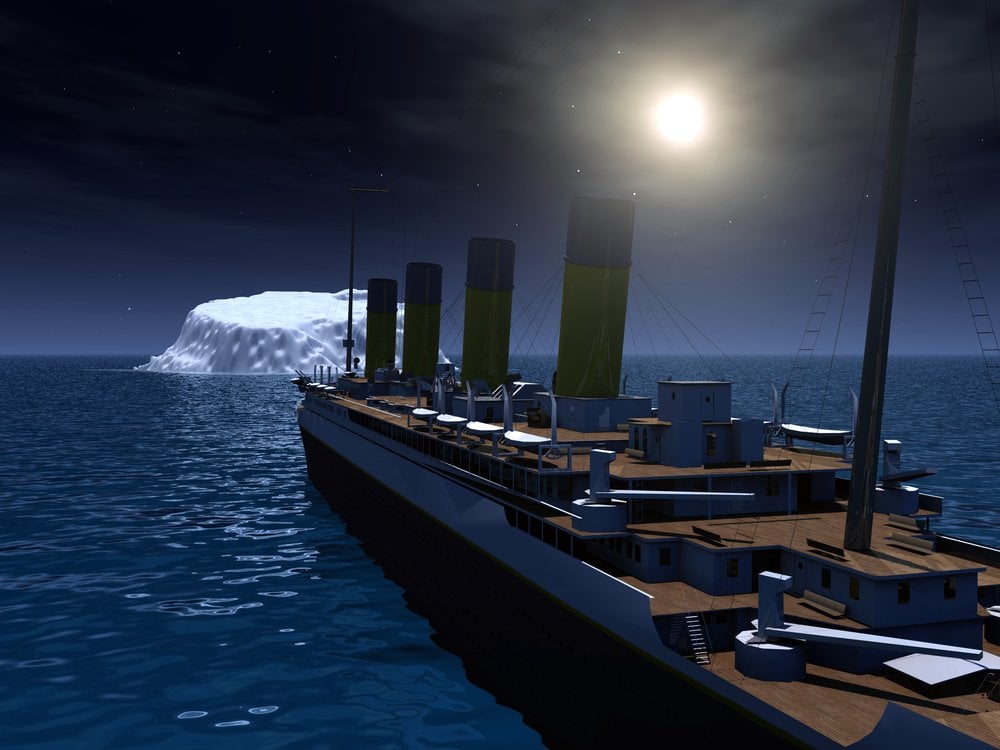
The sinking of the RMS Titanic remains the most scrutinized maritime disaster in history, serving as a foundational case study for naval architecture, materials science, and safety engineering. For over a century, a persistent debate has circulated among marine engineers and historians: What if the Titanic had struck the iceberg head-on instead of attempting a port-around maneuver? While the human instinct to turn away is universal, from a purely structural engineering and technological standpoint, the “glancing blow” was the one type of impact the ship’s technology was least equipped to handle.

By examining this hypothetical through the lens of modern structural analysis, metallurgy, and predictive simulation technology, we can uncover the profound technological lessons that emerged from the wreckage and how they continue to shape the maritime tech industry today.
The Physics of Impact: Structural Engineering and Kinetic Energy
The decision to turn the ship—ordered by First Officer William Murdoch—resulted in a 300-foot gash along the starboard side of the hull. This “zipper effect” breached five of the ship’s sixteen watertight compartments. To understand why a head-on collision might have been technologically superior, we must analyze the distribution of kinetic energy and the specific design of the Titanic’s bow.
The Crumple Zone Theory and Energy Absorption
In modern automotive tech, “crumple zones” are engineered to absorb the force of an impact, protecting the main cabin. In 1912, naval architecture did not explicitly use this terminology, but the bow of the Titanic was the most heavily reinforced part of the vessel. A head-on collision would have concentrated the massive kinetic energy of the 46,000-ton vessel into the first 100 feet of the ship.
From a structural engineering perspective, this would have resulted in the massive compression of the bow’s steel plates and frames. While the damage would have been catastrophic for those in the forward crew quarters, it likely would have localized the flooding to the first two or three watertight compartments. Because the Titanic was designed to remain afloat with any four compartments flooded, the technological redundancy of the bulkhead system would have held, theoretically keeping the ship on the surface.
Bulkhead Design and the Failure of Lateral Vulnerability
The Titanic’s fatal technological flaw was not the lack of height in its bulkheads—a common misconception—but rather their vulnerability to a longitudinal “sideswipe.” The ship’s transverse bulkheads were designed to withstand pressure from water filling a single compartment. However, the technology of the time did not account for a multi-compartment breach caused by a scraping impact.
By hitting the iceberg head-on, the force would have been directed against the strongest axis of the ship. Modern finite element analysis (FEA) suggests that the energy would have been dissipated through the shearing of rivets and the buckling of the hull plates in a controlled, linear fashion, rather than the catastrophic “unzipping” of the side hull that bypassed the ship’s safety systems.
Digital Twins and Simulation: Reconstructing the Event with Modern Software
To answer the “what if” of the Titanic, modern researchers no longer rely on guesswork. They use “Digital Twins”—sophisticated virtual models that replicate the physical properties of a vessel down to the molecular level. These software tools allow engineers to run thousands of permutations of the Titanic’s final moments.
Finite Element Analysis (FEA) in Maritime Disasters
Engineers today use Finite Element Analysis to simulate how materials respond to stress, heat, and impact. When applied to the Titanic’s head-on scenario, FEA software demonstrates that the “brittle fracture” characteristics of the Titanic’s steel would have played a significant role.
The ship was constructed with steel that had a high sulfur content, making it brittle in the freezing waters of the North Atlantic. In a head-on collision, this brittleness might have caused the bow to shatter rather than bend. However, even with the fragmentation of the bow, the primary structural “spine” of the ship—the keel—would likely have remained intact. Modern simulations show that the inertia would have been stopped by the massive internal structures of the forward bulkheads, preventing the breach from reaching the boiler rooms.
Predictive Modeling for Hull Integrity
Modern maritime tech utilizes predictive modeling to determine “Survival Probability” (s-factor). In 1912, these calculations were done by hand and were largely theoretical. Today’s software can account for the dynamic movement of water within a breached hull (sloshing effects) and the changing center of gravity as a ship takes on water.
When we input the head-on data into these models, the results consistently suggest that the ship’s “Reserve Buoyancy” would have been maintained. The technological failure of the Titanic was essentially a data failure; the crew had no way to simulate the outcome of their maneuvers in real-time, a capability that is now standard on the bridges of modern cruise liners and cargo ships.
Communication and Navigation Technology: The 1912 Gap
The hypothetical head-on collision is not just a question of physics; it is a question of the technological limitations of early 20th-century navigation. The Titanic’s “eyes” were entirely analog, relying on human lookouts in a crow’s nest without even the aid of binoculars.
From Morse Code to AIS: The Evolution of Proximity Warning
In 1912, the only “tech” available for collision avoidance was the wireless telegraph and the human eye. The Titanic’s Marconi wireless system was a breakthrough, but it was used primarily for passenger convenience rather than integrated safety. There was no technological interface between the wireless room and the bridge.
Today, the Automatic Identification System (AIS) and Global Maritime Distress and Safety System (GMDSS) ensure that every vessel’s position, speed, and heading are shared digitally. Had the Titanic been equipped with even the most primitive version of modern transponder tech, the iceberg—while not “broadcasting”—would have been detected by marine radar or sonar long before it was visible to the lookouts. The “head-on” debate only exists because the technology of the time failed to provide the 30 seconds of advanced warning needed to avoid the ice entirely.
Sonar and Radar: Why the Technology of the Time Failed the Vision
The tragedy of the Titanic accelerated the development of Underwater Echo Ranging (Sonar). Following the disaster, Lewis Richardson filed a patent for a “detecting device” using sound waves to find submerged objects. If we look at the Titanic’s situation through the lens of modern sensor fusion, the collision becomes a failure of “detection latency.”
Modern vessels use X-band and S-band radar to detect ice and other hazards in low-visibility conditions. These systems feed into an Electronic Chart Display and Information System (ECDIS), which would have alerted the Titanic’s officers to the iceberg miles away. In 1912, the technology was purely reactive; today, it is predictive.
The Legacy of Failure: How the Disaster Revolutionized Safety Tech
Whether the Titanic would have survived a head-on impact is a compelling theoretical exercise, but the real technological value lies in the “Safety Tech Revolution” that followed. The disaster proved that engineering for the “best-case scenario” is a recipe for catastrophe.
SOLAS and the Engineering of Modern Life-Saving Appliances
The first International Convention for the Safety of Life at Sea (SOLAS) was a direct technological response to the Titanic. It mandated that ships be designed with enough lifeboats for all passengers and required 24-hour radio watches. But more importantly, it changed how ships were built.
The “what if” of the Titanic led to the implementation of the “double hull” design in many vessels. While the Titanic had a double bottom, it lacked a double skin along its sides. Modern maritime tech has moved toward redundant hull systems where an outer breach does not necessarily mean an inner breach. This is the technological realization of the “head-on” lesson: if you cannot prevent the impact, you must engineer the ship to survive the most likely type of damage.
Advanced Metallurgy and Welding Techniques
The Titanic was held together by three million iron and steel rivets. Post-disaster analysis, particularly of the recovered “Big Piece” of the hull, showed that many rivets failed because they were made of inferior iron that popped under the pressure of the side-impact.
This led to a total overhaul in maritime metallurgy. Modern ships are no longer riveted; they are welded using high-tensile, low-carbon steel designed to remain ductile even in sub-zero temperatures. The technology of joining metal has advanced to the point where the seams are often stronger than the surrounding plates. A modern “Titanic” hitting an iceberg head-on would not “crumple” or “shatter” in the same way; the energy would be managed by sophisticated structural dampers and high-grade alloys that didn’t exist in the Edwardian era.

Conclusion: The Finality of Technological Evolution
The question of whether the Titanic would have stayed afloat after a head-on collision serves as a bridge between the era of “brute force” engineering and the era of “smart” technology. From a structural standpoint, the evidence leans toward survival. The ship was a longitudinal marvel but a lateral weakling. By hitting the iceberg on its strongest axis, the technology of the bulkheads might have functioned as intended.
However, the greatest technological takeaway from the Titanic is not about how to hit an iceberg; it is about the integration of systems. The disaster taught the tech world that a ship is not just a hull and an engine, but a network of sensors, communication tools, and materials that must work in unison. Today’s maritime industry uses the Titanic’s “head-on” hypothetical to stress-test new designs in virtual environments, ensuring that the engineering failures of 1912 remain firmly in the past. We no longer have to wonder “what if,” because our technology now allows us to see the danger before the impact ever occurs.
aViewFromTheCave is a participant in the Amazon Services LLC Associates Program, an affiliate advertising program designed to provide a means for sites to earn advertising fees by advertising and linking to Amazon.com. Amazon, the Amazon logo, AmazonSupply, and the AmazonSupply logo are trademarks of Amazon.com, Inc. or its affiliates. As an Amazon Associate we earn affiliate commissions from qualifying purchases.