
In the vast landscape of automotive technology, few components are as essential yet as frequently overlooked as the Constant Velocity (CV) joint. While consumers often focus on horsepower, software interfaces, or battery range, the CV joint is the critical mechanical link that translates engine or motor power into actual movement. It represents a pinnacle of mechanical engineering, solving a complex geometric problem: how to transmit power smoothly to a wheel that must simultaneously move up and down with the suspension and turn left and right for steering.
As we transition into an era defined by high-torque electric vehicles and precision-engineered drivetrains, understanding the technology behind the CV joint becomes vital for any enthusiast of modern machinery. This article explores the mechanics, material science, and future evolution of this indispensable piece of technology.

1. The Fundamentals of Constant Velocity Technology
To understand a CV joint, one must first understand the problem it was designed to solve. In early automotive engineering, power was often transferred via simple universal joints (U-joints). However, U-joints have a fundamental technological flaw: when bent at an angle, they do not rotate at a constant speed. Instead, they cause the output shaft to speed up and slow down twice per revolution, leading to vibrations and mechanical stress.
The Evolution from Universal Joints to CV Technology
The “Constant Velocity” in CV joint refers to its ability to transfer rotational power at a consistent speed, regardless of the angle of the joint. This was a revolutionary breakthrough in drivetrain tech. Unlike the U-joint, which relies on a simple cross-shaped pivot, the CV joint utilizes a complex arrangement of bearings and tracks that allow for fluid movement. This technology became the cornerstone of front-wheel-drive (FWD) vehicles, which require the front wheels to receive power while also pivoting for steering—a feat a standard U-joint cannot perform smoothly at high angles.
The Mechanics of the Ball-and-Socket Design
The most common technological implementation of the CV joint is the ball-type joint. Inside a hardened steel housing, six precision-ground steel balls are held in a cage between an inner race and an outer race. As the axle turns, these balls move along grooves (tracks) within the housing. The geometry of these tracks is engineered such that the balls always bisect the angle between the input and output shafts. This specific alignment ensures that the velocity remains constant, eliminating the “pulsing” sensation found in older mechanical couplings and providing the smooth ride quality modern drivers expect.
2. Types of CV Joints and Their Technological Applications
Not all CV joints are created equal. Depending on where they are located in the drivetrain and the specific demands of the vehicle, different technological configurations are utilized. Modern automotive engineering generally categorizes these into two main types: “Fixed” joints and “Plunging” joints.
Rzeppa Joints: The Standard for Steering
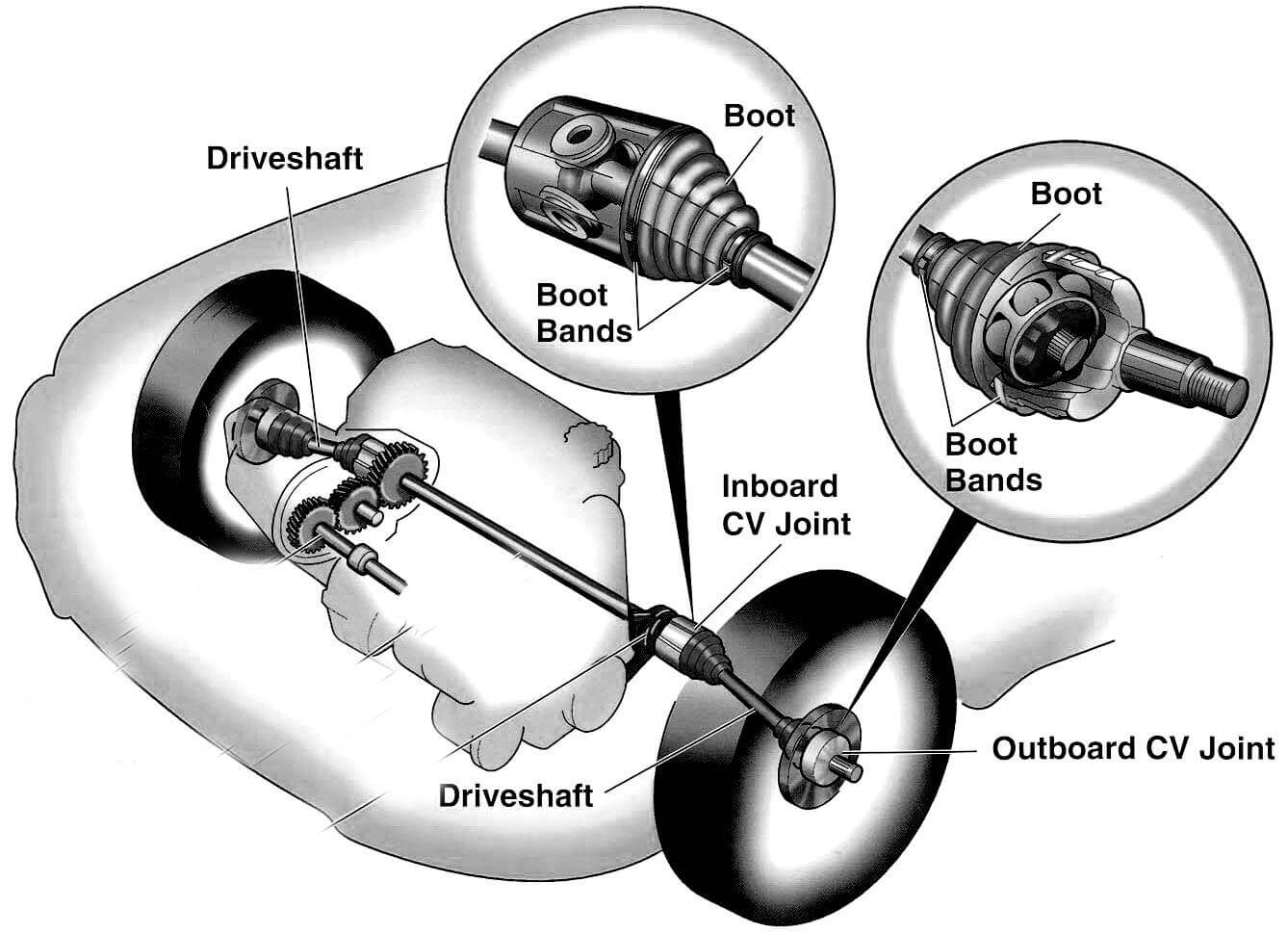
The Rzeppa joint, named after its inventor Alfred Rzeppa, is the “fixed” joint typically found at the outboard end of an axle (near the wheel). Its primary technological advantage is its ability to handle high steering angles—often up to 45 degrees or more—without losing efficiency or increasing vibration. This is achieved through a sophisticated series of internal grooves that allow for extreme articulation. For modern tech-heavy vehicles like performance sedans or off-road SUVs, the Rzeppa joint is the gold standard for maintaining power delivery during tight cornering.
Tripod Joints: Managing Plunge and Vibration
While the wheel-end joint handles steering, the inboard joint (near the transmission) must handle “plunge.” As a vehicle travels over bumps, the distance between the transmission and the wheel hub changes. The Tripod joint is designed to solve this. Instead of six balls, it uses a three-pointed spider with needle-bearing rollers. This design allows the joint to slide in and out (plunge) within a tulip-shaped housing. Technologically, this is crucial for vibration isolation. By allowing for linear movement along the axis of the drive shaft, Tripod joints prevent engine vibrations from being transmitted through the suspension to the cabin, a key factor in “Noise, Vibration, and Harshness” (NVH) engineering.
3. Material Science and Precision Manufacturing in Drivetrain Tech
The reliability of a CV joint is not just a matter of design, but a triumph of material science. These components operate under extreme pressure, high heat, and constant friction. The technology required to manufacture a component that can last for 100,000 miles while spinning at thousands of RPMs is immensely complex.
High-Performance Lubrication and Boot Technology
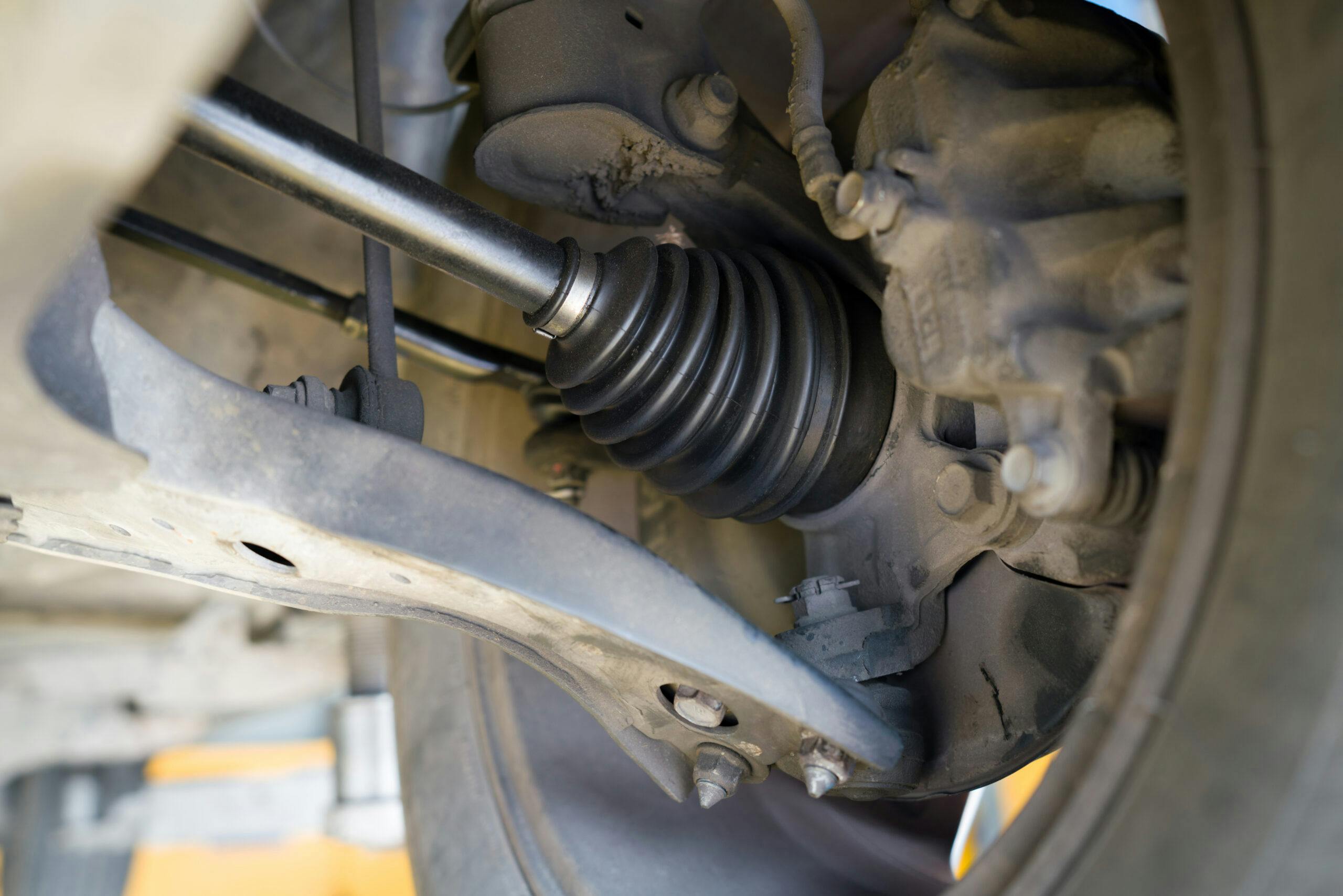
The “Achilles’ heel” of the CV joint has historically been its protective cover—the CV boot. This is a flexible, bellows-like sleeve made from advanced thermoplastics or chloroprene rubber. The technological role of the boot is twofold: it keeps the specialized molybdenum-disulfide grease in and keeps contaminants like grit and water out.
The grease itself is a marvel of chemical engineering. It is designed to withstand “extreme pressure” (EP) conditions where the film of oil must not break down even when squeezed between the steel balls and the tracks under the massive torque of a modern engine. If the boot cracks (a common failure point), the grease escapes, and the technology fails rapidly due to friction-induced heat.
The Role of Computer-Aided Design (CAD) and Forging
Modern CV joints are the product of rigorous Computer-Aided Design (CAD) and Finite Element Analysis (FEA). Engineers use these tools to simulate the stresses on the steel tracks and optimize the grain flow of the metal during the forging process. By using induction hardening—a process where high-frequency electricity heats the surface of the steel before it is quenched—manufacturers can create a joint with a diamond-hard surface for wear resistance, while maintaining a tough, ductile core to prevent snapping under sudden loads.
4. The Future of Power Transfer: CV Joints in the EV Era
As the automotive industry pivots toward Electric Vehicles (EVs), the technology of the CV joint is undergoing its most significant transformation in decades. EVs present unique challenges that internal combustion engines do not, primarily due to the delivery of instantaneous torque.
Torque Management and Electric Motor Integration
Electric motors can deliver 100% of their torque at zero RPM. This puts an immense, sudden load on the CV joints every time the driver presses the accelerator. To handle this, EV manufacturers are utilizing “heavy-duty” CV technology that incorporates larger bearings and reinforced cages. Furthermore, because EVs are significantly quieter than gas cars, any mechanical noise from the drivetrain is magnified. This has led to the development of “high-refinement” CV joints with tighter tolerances and specialized acoustic dampening materials to ensure the “silent” EV experience remains uninterrupted.
Predictive Maintenance and Smart Sensors
We are entering an era where mechanical components are becoming “smart.” Emerging tech in the drivetrain space includes the integration of sensors that can monitor the temperature and vibration patterns of CV joints in real-time. By utilizing AI-driven diagnostics, a vehicle’s onboard computer could theoretically detect a microscopic tear in a CV boot or a slight change in friction levels long before a mechanical failure occurs. This shift toward predictive maintenance represents the convergence of traditional mechanical engineering and modern digital monitoring, ensuring higher safety standards and lower long-term repair costs.
Conclusion: The Unsung Hero of Modern Engineering
The CV joint is far more than just a piece of hardware; it is a sophisticated technological solution to a fundamental physics problem. From the precision-ground steel balls of the Rzeppa joint to the high-tech thermoplastics of the protective boots, every element of the CV joint is engineered for maximum efficiency and durability.
As automotive technology continues to evolve toward higher performance and electrification, the CV joint will remain a vital component. It bridges the gap between the power source and the pavement, proving that even in a world dominated by software and silicon, the brilliance of mechanical engineering is what ultimately keeps us moving forward. Whether you are driving a high-performance sports car or a silent electric commuter, it is the constant velocity joint that ensures every turn of the wheel is smooth, precise, and powerful.
aViewFromTheCave is a participant in the Amazon Services LLC Associates Program, an affiliate advertising program designed to provide a means for sites to earn advertising fees by advertising and linking to Amazon.com. Amazon, the Amazon logo, AmazonSupply, and the AmazonSupply logo are trademarks of Amazon.com, Inc. or its affiliates. As an Amazon Associate we earn affiliate commissions from qualifying purchases.