
The perplexing and profoundly impactful ending of Shutter Island is not merely a plot twist; it is a meticulously crafted narrative device designed to interrogate the very nature of perception, identity, and the human capacity for self-deception. Far from being a simple resolution, the film’s conclusion serves as a critical junction, forcing the audience to re-evaluate everything they have witnessed and question the reliability of the protagonist’s journey. This exploration delves into the intricate layers of the film’s ending, analyzing the psychological underpinnings, the implications for the characters, and the broader thematic resonance.
The Illusion Shattered: Deconstructing Teddy Daniels’ Reality
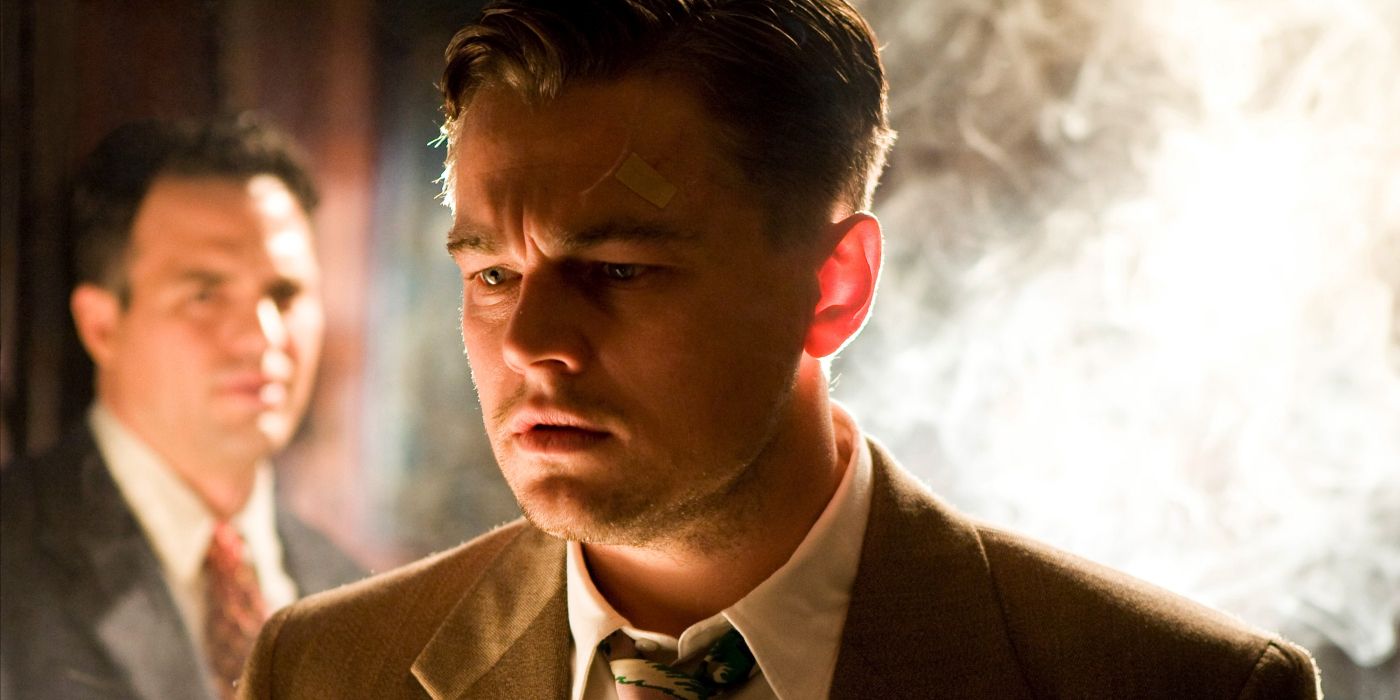
At its core, the climax of Shutter Island revolves around the shattering of Teddy Daniels’ meticulously constructed illusion. For the entirety of the film, we have experienced the narrative through Teddy’s eyes, privy to his investigation into the disappearance of Rachel Solando, his growing suspicions about the island’s sinister secrets, and his perceived pursuit of the incarcerated Andrew Laeddis, the man he believes is responsible for his wife’s murder. The film masterfully employs narrative misdirection, planting seeds of doubt and fueling Teddy’s paranoia, all while subtly hinting at a reality far removed from his conscious perception.
The Unveiling of Andrew Laeddis: The Architect of His Own Asylum
The pivotal moment arrives when Teddy, cornered and broken by his own fabricated truths, is confronted by the asylum’s chief psychiatrist, Dr. Cawley, and his partner, Dr. Sheehan (who is revealed to be Teddy’s actual therapist, Leonard Sheehan). The revelation is not a sudden, explosive detonation, but rather a gradual, agonizing implosion of Teddy’s perceived reality. He learns that he is not U.S. Marshal Teddy Daniels, but Andrew Laeddis, a patient at Ashecliffe Hospital for the criminally insane. The “investigation” is, in fact, an elaborate role-playing exercise, a desperate attempt by the doctors to break through his profound denial and delusion.
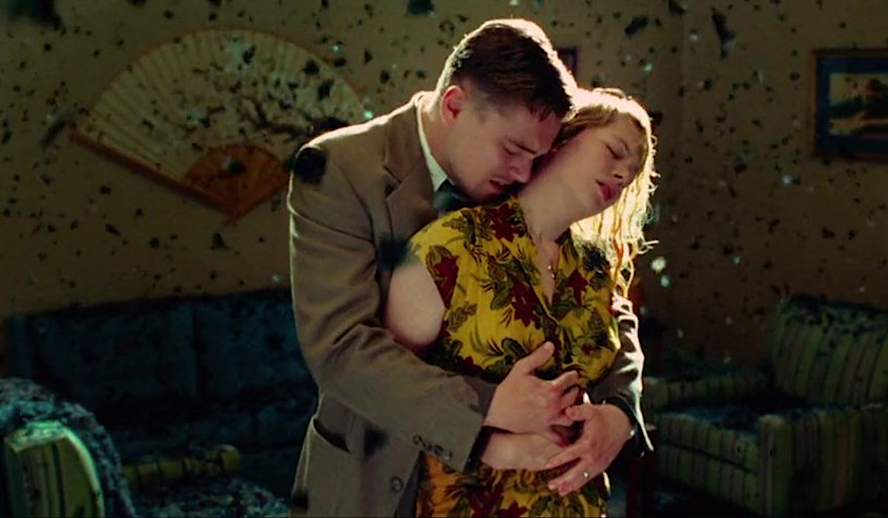
Andrew’s wife, Dolores, was not murdered by a mob boss named Laeddis. Instead, she suffered from severe postpartum psychosis and tragically drowned their three children. Andrew, unable to cope with the overwhelming guilt and grief, retreated into a fantasy world where he was a heroic marshal hunting down the man responsible for his wife’s death, thereby absolving himself of his own culpability in the tragedy. The island, Ashecliffe, is his prison, and the supposed conspiracy is a manifestation of his fragmented psyche. The entire investigation, the storm, the cryptic clues, and the other inmates playing roles – it’s all part of an elaborate therapeutic intervention. The objective was to allow Andrew to confront his pain and ultimately accept his responsibility.
The Role of Role-Playing: A Desperate Therapeutic Gambit
The film’s ending hinges on the concept of therapeutic role-playing, a high-stakes, ethically ambiguous strategy employed by Cawley and Sheehan. They believed that by immersing Andrew in a narrative that mirrored his guilt and offered him a chance to “win” by catching the villain (a projection of his own self-hatred), they could eventually guide him towards a breakthrough. The “disappearance” of Rachel Solando was a carefully orchestrated part of this Rube Goldberg-esque therapy, with an actual patient named Rachel playing the role. The stormy weather, a classic trope for psychological turmoil, further amplified the dramatic tension and served to isolate the participants within their manufactured reality.
The film’s genius lies in its ability to make the audience complicit in Andrew’s delusion. We are as shocked and disoriented as he is when his carefully constructed world crumbles. The clues that seemed so vital, the red herrings that pointed towards external malevolence, are recontextualized as fragments of Andrew’s fractured mind. The ending forces us to question the very nature of truth and the stories we tell ourselves to survive unbearable pain.
The Ultimate Choice: Acceptance or Annihilation
The most poignant and debated aspect of Shutter Island‘s ending is Andrew’s final decision. After the elaborate therapy fails to fully reintegrate him into reality – he regresses back into his “Teddy” persona, unable to fully bear the weight of his actions – he approaches Dr. Sheehan on the lighthouse steps. His words, “Which would be worse – to live as a monster, or to die as a good man?” are not a plea for understanding, but a stark declaration of his ultimate path.
The Lighthouse: A Symbol of Revelation and Reckoning
The lighthouse, a recurring motif throughout the film, becomes the site of Andrew’s final reckoning. It is here, within the towering structure that represents enlightenment and a beacon of truth, that the full extent of his delusion is laid bare. The climb up the lighthouse stairs mirrors his psychological ascent, his forced confrontation with the brutal reality of his past. The doctors, having seemingly exhausted their therapeutic options, present him with a final, agonizing choice.
The film deliberately leaves Andrew’s true intention ambiguous, sparking endless debate. Did he finally accept the truth and choose lobotomy as a means of escaping the unbearable pain of his memories? Or was he, in his final moments of lucidity, choosing a final act of self-destruction, a way to escape a reality he could no longer bear to live in, presenting it as a noble sacrifice? The ambiguity is intentional, reflecting the complex and often messy nature of mental illness and the profound difficulty of confronting one’s own demons.
The Ambiguity of Lobotomy: A Tragic Escape?
The implication that Andrew chooses lobotomy is deeply unsettling. It suggests that the pain of his guilt and grief is so profound that annihilation becomes a more desirable option than continued existence. This “choice” is not one made freely in a healthy mind, but a desperate act born from unbearable psychological suffering. The film doesn’t offer a clean resolution; instead, it presents a tragic scenario where the ultimate outcome is a form of self-imposed oblivion, a final escape from a reality too horrific to endure. This ending forces the audience to grapple with the limitations of even the most sophisticated therapeutic interventions when confronted with overwhelming trauma and guilt.
Thematic Resonance: Identity, Guilt, and the Power of Narrative
Beyond the intricate plot mechanics, Shutter Island‘s ending serves as a powerful commentary on fundamental human themes: the fluidity of identity, the corrosive nature of guilt, and the profound impact of the narratives we construct to make sense of our lives and ourselves.
The Fragility of Identity: When Reality Becomes a Construct
Andrew Laeddis’s story is a chilling testament to the fragility of identity. When faced with an unbearable truth, the human mind can construct elaborate defenses, creating an entirely new persona to shield itself from psychological annihilation. “Teddy Daniels” is not simply a character; he is a meticulously crafted alter ego, a manifestation of Andrew’s desperate need to be someone else, someone heroic, someone not responsible for the deaths of his children. The film suggests that identity is not a fixed entity but a malleable construct, susceptible to the pressures of trauma and the coping mechanisms of the mind. The ending forces us to consider how much of our own sense of self is built on conscious choices versus unconscious defense mechanisms.
The Unbearable Weight of Guilt: A Prison of the Mind
Guilt is arguably the central antagonist in Shutter Island. Andrew’s guilt over his role in his children’s deaths is so immense that it becomes a tangible force, shaping his entire reality. The film illustrates how guilt can be a self-imposed prison, more inescapable than any physical confinement. Andrew’s elaborate delusion is a desperate attempt to escape this internal torment, but the ending reveals that the prison of his mind is ultimately inescapable, or at least, the pain within it is too great to bear. The film’s exploration of guilt is not simply about moral failing but about the psychological devastation it can inflict, leading to a complete disintegration of self.
The Narrative as a Coping Mechanism: Stories We Tell Ourselves
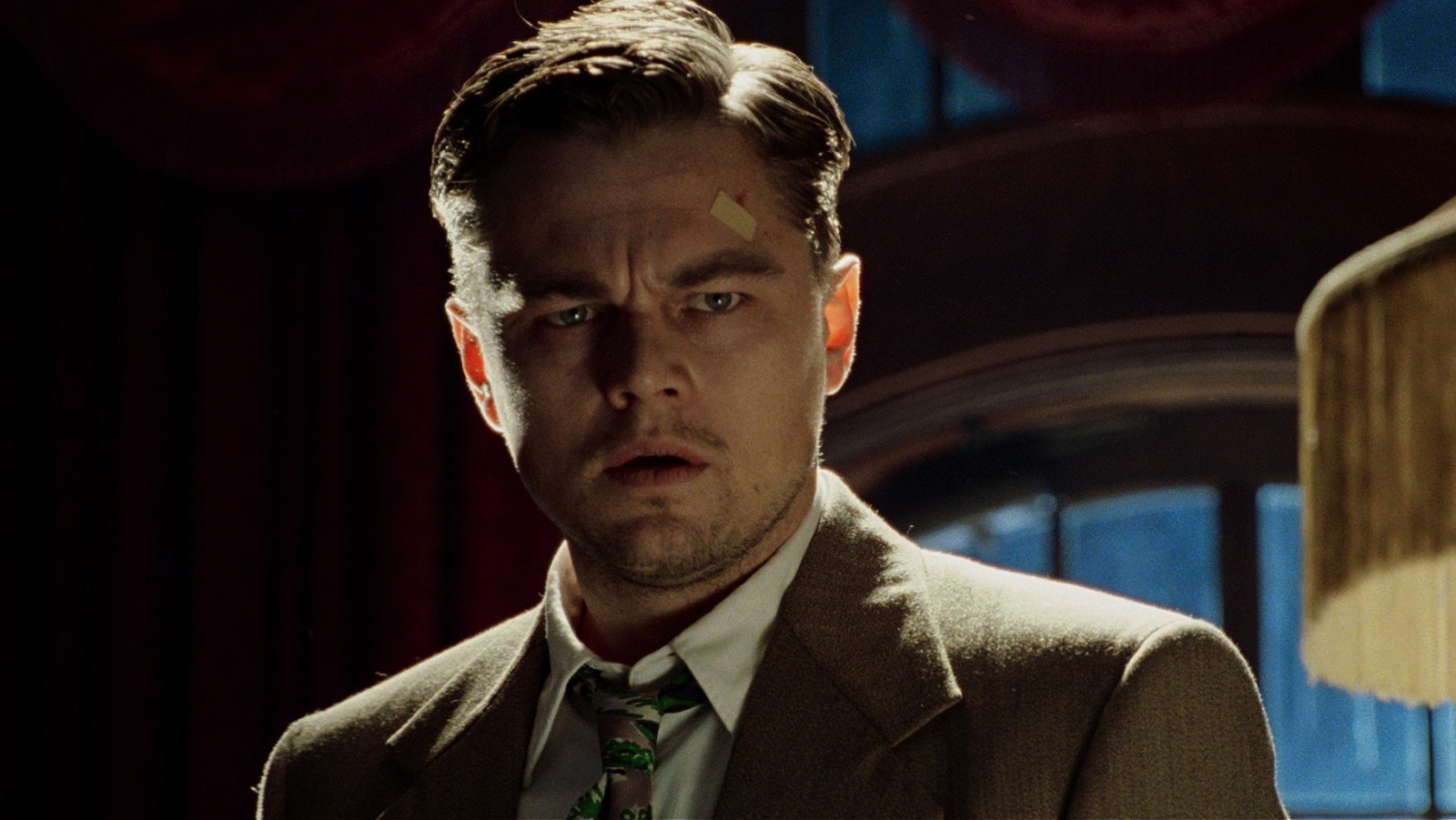
Ultimately, Shutter Island is a story about the power of narrative. The stories we tell ourselves, whether conscious or unconscious, shape our perception of reality and our understanding of who we are. Andrew’s narrative of being Teddy Daniels is his ultimate coping mechanism, a way to process unimaginable loss and avoid taking responsibility for his actions. The film’s ending, by revealing the constructed nature of this narrative, highlights the double-edged sword of storytelling. While narratives can provide solace and meaning, they can also become cages, trapping us in illusions that prevent us from confronting difficult truths. The film’s brilliance lies in its ability to make the audience an active participant in deconstructing these narratives, forcing us to question the stories we tell ourselves and the reality they create.
aViewFromTheCave is a participant in the Amazon Services LLC Associates Program, an affiliate advertising program designed to provide a means for sites to earn advertising fees by advertising and linking to Amazon.com. Amazon, the Amazon logo, AmazonSupply, and the AmazonSupply logo are trademarks of Amazon.com, Inc. or its affiliates. As an Amazon Associate we earn affiliate commissions from qualifying purchases.