
The trajectory of Spirit Airlines (SAVE) has become one of the most scrutinized case studies in the modern aviation investment landscape. Once a darling of the “Ultra-Low-Cost Carrier” (ULCC) model, the company’s stock has experienced a precipitous decline, leaving investors to grapple with the complexities of regulatory interventions, operational setbacks, and a precarious balance sheet. Understanding what happened to Spirit Airlines stock requires a deep dive into the financial mechanics of the airline industry and the specific economic pressures that have pushed this pioneer of budget travel to the brink of a fiscal crisis.

The Collapse of the JetBlue Merger: A Catalyst for Decline
For much of 2022 and 2023, the primary driver of Spirit’s stock valuation was the anticipated $3.8 billion acquisition by JetBlue Airways. Investors viewed this merger as a guaranteed exit strategy, providing a floor for the stock price despite the airline’s deteriorating fundamentals. However, the subsequent legal and regulatory battle fundamentally altered the company’s financial destiny.
The Regulatory Roadblock and Antitrust Intervention
In early 2024, a federal judge blocked the merger, citing concerns that the acquisition would harm cost-conscious travelers by removing a major low-cost competitor from the market. This decision was a watershed moment for the “Money” aspect of the Spirit story. From an investment perspective, the “arbitrage play”—where investors buy the target company’s stock in hopes of capturing the premium offered by the acquirer—evaporated overnight. The ruling sent Spirit’s shares tumbling by over 50% in a single trading session, as the market recalibrated the airline’s value as a standalone entity rather than an acquisition target.
The Sudden Loss of the Acquisition Premium
When the merger was officially called off in March 2024, Spirit was left without the $33.50 per share payout that JetBlue had promised. More importantly, the company lost the financial “safety net” that JetBlue’s capital would have provided. In the wake of the terminated deal, JetBlue paid Spirit a $69 million termination fee, but this was a drop in the ocean compared to Spirit’s mounting debt and operational losses. Investors quickly realized that Spirit’s standalone valuation was significantly lower than the merger price, leading to a sustained sell-off as the reality of its solo financial path set in.
Structural Financial Vulnerabilities and Debt Load
While the failed merger was the headline event, Spirit’s stock decline is rooted in deeper structural financial issues. The airline has struggled to return to profitability since the pandemic, a trend that stands in stark contrast to the record profits seen by many legacy carriers.
Navigating the 2025 Debt Maturity Wall
One of the most pressing concerns for institutional investors is Spirit’s looming “debt wall.” The company has significant loyalty-program-backed bonds and other debt obligations maturing in 2025 and 2026. As of mid-2024, Spirit’s total debt surpassed $3 billion. In a high-interest-rate environment, the cost of refinancing this debt is prohibitively expensive. This creates a “liquidity crunch,” where the company must find ways to raise cash or restructure its obligations to avoid a default. The stock market reflects this risk, with the share price behaving more like a distressed debt instrument than a growth equity.
The Pratt & Whitney Engine Crisis
Compounding the financial strain is a significant operational hurdle involving the Pratt & Whitney Geared Turbofan (GTF) engines. Due to a manufacturing defect involving powdered metal, Spirit was forced to ground dozens of its Airbus A320neo aircraft for inspections. For an airline, a grounded plane is a liability rather than an asset. This crisis reduced Spirit’s capacity and forced the airline to furlough pilots and delay aircraft deliveries. While Spirit reached a compensation agreement with Pratt & Whitney, the monthly credits provided do not fully offset the lost revenue and the inefficiency of operating a smaller-than-planned fleet. This operational drag has directly impacted the company’s EBITDA (Earnings Before Interest, Taxes, Depreciation, and Amortization), further souring investor sentiment.
Market Dynamics and the Erosion of the ULCC Model
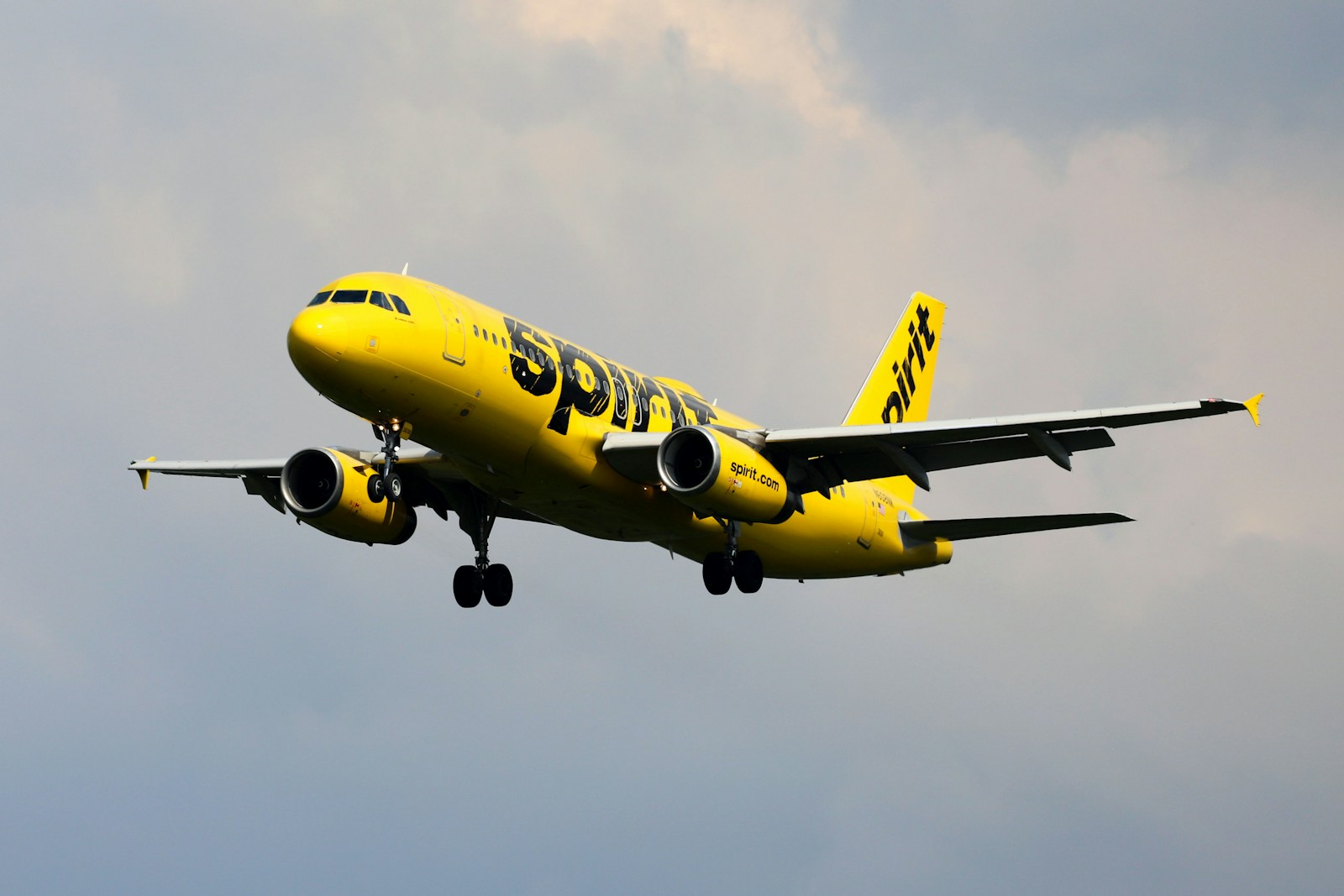
The “Money” story of Spirit Airlines is also a story of a shifting business model. For years, the Ultra-Low-Cost Carrier model thrived by offering “bare fares” and unbundling services. However, the post-pandemic market has moved in a different direction.
Premium Travel vs. The Bare Fare
Following the COVID-19 pandemic, there has been a notable shift in consumer behavior toward premium leisure travel. Travelers have shown a willingness to pay more for comfort, loyalty perks, and reliability—areas where legacy carriers like Delta and United excel. Spirit, which relies on high-volume, low-margin bookings, has found it difficult to compete. As legacy carriers introduced “Basic Economy” tiers to compete directly on price while offering superior networks, Spirit’s competitive moat narrowed. This shift resulted in a “yield” problem—the amount of revenue earned per passenger mile—which has consistently underperformed market expectations.
Competitive Pricing Pressure and Oversupply
During the peak summer and holiday seasons, the domestic U.S. market saw an oversupply of seats, particularly in popular leisure destinations like Florida and Las Vegas. This overcapacity led to aggressive fare wars. For a company like Spirit, which already operates on razor-thin margins, a price war is devastating. Investors have watched as Spirit’s unit revenues declined while its unit costs (specifically labor and fuel) rose. This “margin squeeze” is a primary reason why the stock has failed to find a bottom, as the path to sustainable profitability remains unclear.
The Looming Shadow of Chapter 11 Reorganization
As 2024 progressed, the conversation surrounding Spirit Airlines stock shifted from “recovery” to “restructuring.” The financial markets began pricing in the possibility of a bankruptcy filing, which traditionally wipes out common shareholders.
Analyzing Recent Bankruptcy Speculation
Reports surfaced in late 2024 that Spirit was in talks with bondholders regarding the terms of a potential bankruptcy filing. In the world of finance, a Chapter 11 filing allows a company to continue operating while it restructures its debt. However, for equity holders (stockholders), this is usually the end of the line. In most airline bankruptcies, the existing stock is canceled, and new shares are issued to the creditors. This fear of total capital loss has driven the stock into “penny stock” territory, as risk-averse investors exit their positions.
The Reality of Shareholder Recovery in Restructuring
From an investment standpoint, Spirit’s current valuation reflects the low probability of any equity recovery in a restructuring scenario. When a company’s debt exceeds its enterprise value, the equity is considered “underwater.” Even if Spirit successfully negotiates with its creditors to swap debt for equity, the resulting dilution would be so massive that current shares would retain almost no value. This fundamental reality is why the stock has decoupled from any positive news about travel demand or fuel prices; the balance sheet has become the only metric that matters.
Investment Outlook: Is Spirit a Contrarian Play or a Value Trap?
For the bold investor, Spirit Airlines occasionally appears as a contrarian opportunity. However, the financial data suggests a high level of risk that borders on speculation.
Potential Liquidity Lifelines
Spirit has been aggressive in its attempts to shore up liquidity. This includes selling off older aircraft to raise cash and deferring orders for new planes. These moves are designed to “buy time” to allow the macro environment to improve or to negotiate a better deal with bondholders. If the airline can successfully refinance its 2025 debt without a bankruptcy filing, the stock could see a significant “relief rally.” However, this is a narrow needle to thread, and the margin for error is non-existent.
Conclusion for the Modern Investor
The story of Spirit Airlines stock is a cautionary tale of how quickly a business model can be upended by a combination of regulatory misfortune and shifting market preferences. For those focused on the “Money” aspect of the markets, Spirit serves as a reminder that a low stock price does not always equate to a “value” buy. In the face of massive debt, operational inefficiencies, and a challenging competitive landscape, the stock remains a highly speculative instrument. Until the company can present a clear, viable plan to address its 2025 maturities and return to positive cash flow, the turbulence surrounding its shares is likely to continue, leaving it as one of the most volatile and high-risk tickers in the transportation sector.
aViewFromTheCave is a participant in the Amazon Services LLC Associates Program, an affiliate advertising program designed to provide a means for sites to earn advertising fees by advertising and linking to Amazon.com. Amazon, the Amazon logo, AmazonSupply, and the AmazonSupply logo are trademarks of Amazon.com, Inc. or its affiliates. As an Amazon Associate we earn affiliate commissions from qualifying purchases.