
The traditional image of a surgeon—a focused individual under bright lights, wielding a stainless-steel scalpel with steady hands—is undergoing a radical transformation. While the core mission of surgery remains the preservation of life and the repair of the human body, the “how” has been revolutionized by a wave of technological innovation. Today, what a surgeon does is as much about navigating complex digital interfaces and interpreting real-time data as it is about physical dexterity.
In the modern medical landscape, the surgeon has evolved into a high-tech navigator. The integration of robotics, artificial intelligence (AI), and immersive visualization tools has expanded the boundaries of what is possible, turning the operating room (OR) into a sophisticated data hub. This article explores the multifaceted role of the contemporary surgeon through the lens of technology, detailing how digital tools are redefining precision, safety, and recovery.
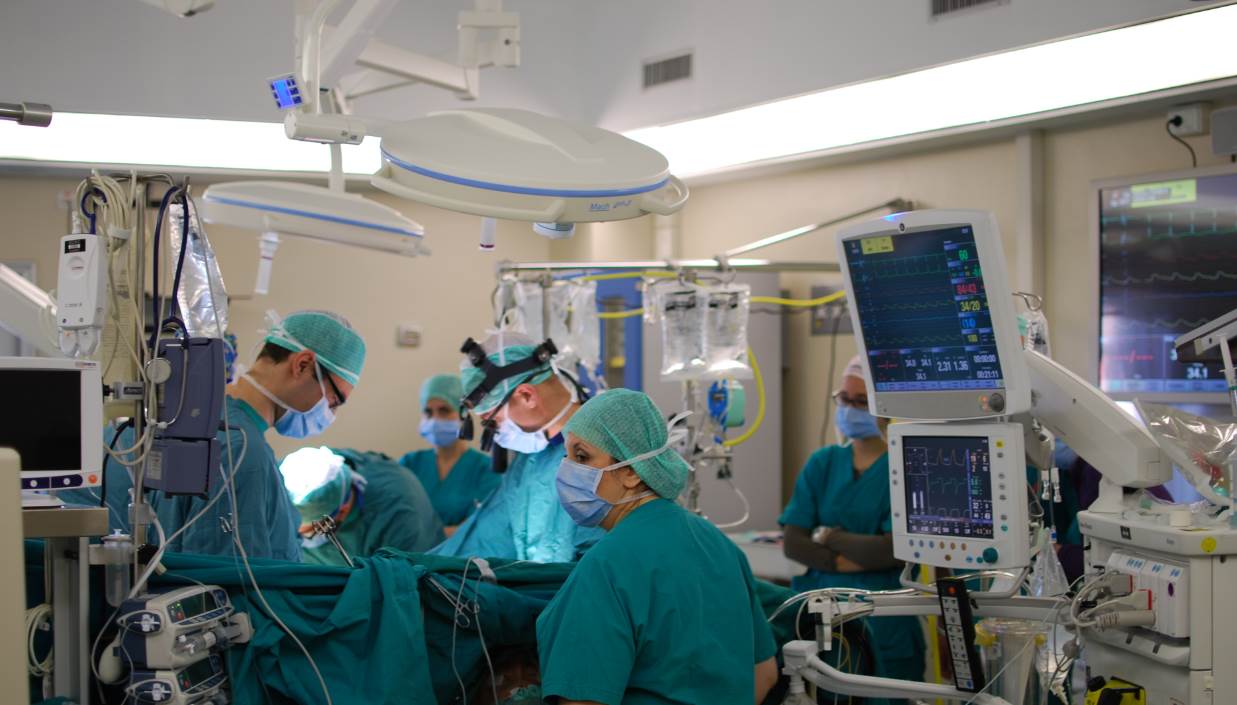
The Evolution of the Operating Room: From Manual Precision to Robotic Mastery
The most visible shift in what a surgeon does involves the transition from traditional open surgery to robotic-assisted procedures. This shift is not about replacing the surgeon, but about augmenting human capabilities beyond their natural biological limits.
Robotic-Assisted Surgery: Enhancing Human Capability
Modern surgeons frequently operate via platforms like the Da Vinci Surgical System. Instead of standing over the patient, the surgeon sits at a high-tech console, viewing a high-definition 3D image of the surgical site. Their hand movements are translated into micro-movements of tiny instruments inside the patient’s body. This technology eliminates the natural tremors of the human hand and allows for a range of motion far exceeding that of a human wrist. What a surgeon does in this context is manage a sophisticated interface that permits deep-tissue repairs through incisions no larger than a postage stamp.
Minimally Invasive Techniques and Sensor-Driven Feedback
The goal of the modern surgeon is to achieve the greatest therapeutic effect with the least amount of trauma. High-tech laparoscopic tools equipped with advanced sensors now provide surgeons with “haptic feedback.” These sensors allow the surgeon to “feel” the resistance of tissues through the robotic interface, a critical component in ensuring that delicate structures are not damaged during complex maneuvers. By utilizing these tools, surgeons reduce blood loss, lower the risk of infection, and significantly shorten patient recovery times.
Artificial Intelligence as the Surgeon’s Co-Pilot
Artificial Intelligence is no longer a futuristic concept in the medical field; it is a functional tool that assists surgeons in decision-making and execution. The role of the surgeon now involves collaborating with algorithms to ensure the highest degree of accuracy.
Pre-Operative Planning with Predictive Analytics
Before a single incision is made, a surgeon’s work begins with data. AI-driven software can analyze thousands of previous cases, patient imaging, and genetic profiles to predict potential complications. Surgeons use these predictive analytics to map out the safest surgical route. This “digital dress rehearsal” allows the surgeon to anticipate challenges specific to the patient’s unique anatomy, effectively moving the learning curve from the operating table to the computer screen.
Real-Time Intraoperative Guidance and Computer Vision
During a procedure, AI-powered computer vision acts as a second pair of eyes. These systems can identify anatomical landmarks in real-time, highlighting critical structures like nerves or blood vessels that might be obscured by fat or inflammation. For a surgeon, this means having a digital overlay that warns them if they are straying too close to a danger zone. This intersection of human judgment and machine precision represents the pinnacle of modern surgical safety protocols.
Immersive Technologies: Virtual and Augmented Reality in the Surgical Workflow
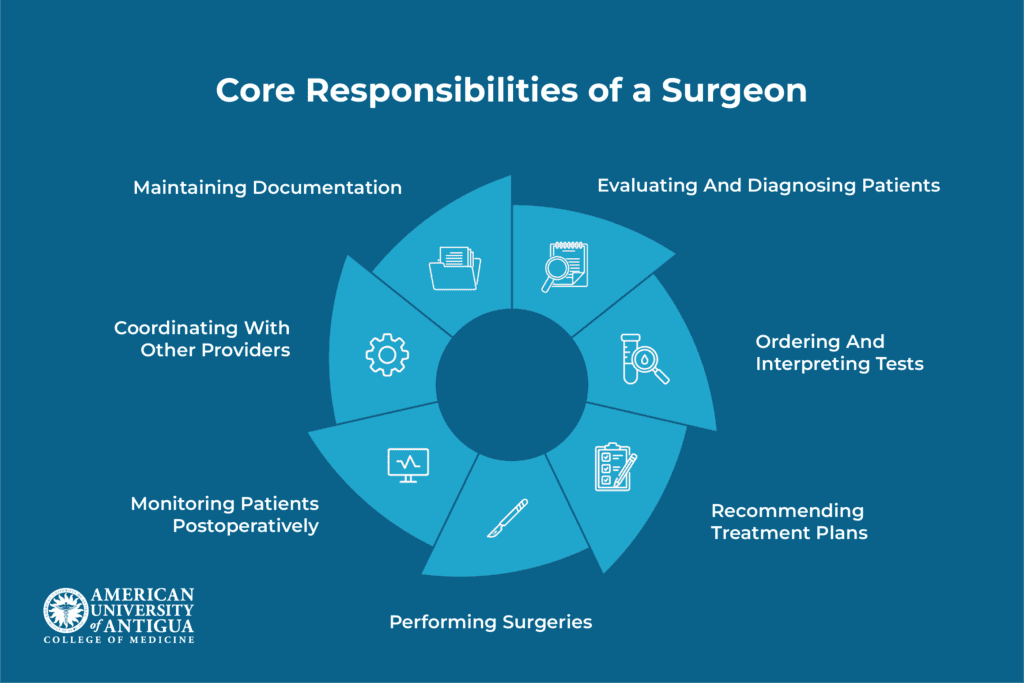
The integration of Virtual Reality (VR) and Augmented Reality (AR) has fundamentally changed how surgeons train, plan, and execute their work. These technologies have moved beyond gaming and into the critical infrastructure of the hospital.
Virtual Reality (VR) for High-Stakes Training and Simulation
Historically, surgeons learned by observing and then performing under supervision—the “see one, do one, teach one” model. Today, what a surgeon does to prepare involves immersive VR simulations. Surgeons can practice specific, rare procedures on a “digital twin” of their actual patient. By using VR headsets, they can navigate the patient’s specific vascular highway or tumor geometry, ensuring that when they enter the real OR, they have already performed the surgery multiple times in a risk-free virtual environment.
Augmented Reality (AR) Overlays: Seeing Through the Patient
Augmented Reality allows a surgeon to see “through” the patient’s skin. By wearing AR glasses, a surgeon can see a holographic projection of a patient’s CT or MRI scan superimposed directly onto the patient’s body during surgery. This “X-ray vision” helps in precisely localizing tumors or identifying the exact trajectory for orthopedic screws. This reduces the need for repeated intraoperative X-rays, lowering radiation exposure for both the patient and the surgical team while increasing the speed and accuracy of the procedure.
The Data-Driven Surgeon: Telemedicine and Remote Surgical Interventions
Connectivity is redefining the geography of surgery. The modern surgeon is no longer tethered to a single location; they are part of a global, networked medical community enabled by high-speed data transmission.
Telesurgery: Operating Across Continents via 5G
One of the most ambitious frontiers of what a surgeon does is “telesurgery.” Enabled by the low latency of 5G networks, a specialist surgeon in New York can control a robotic system in a rural clinic in Montana or even a combat hospital overseas. This technology democratizes access to elite surgical talent, allowing patients in remote areas to receive life-saving interventions from the world’s leading experts without the need for high-risk transport.
Post-Operative Monitoring through Wearable IoT Devices
A surgeon’s responsibility extends far beyond the closing of a wound. Technology has shifted the focus toward continuous, data-driven post-operative care. Surgeons now utilize Internet of Things (IoT) wearables to monitor patients’ vital signs, mobility, and wound healing in real-time after they leave the hospital. If a patient’s data indicates a spike in heart rate or a decrease in oxygen saturation, the surgeon is alerted immediately. This proactive approach allows for early intervention, preventing complications before they become emergencies.
Ethical Frontiers and the Future of the Tech-Integrated Surgeon
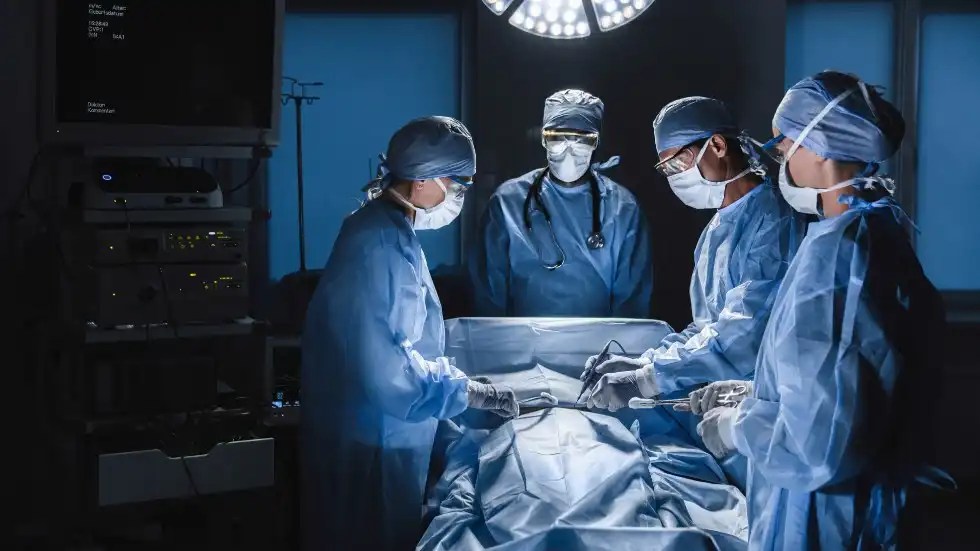
As technology becomes more deeply embedded in surgical practice, the definition of “what a surgeon does” continues to shift toward a role that balances technical proficiency with ethical oversight.
The future of surgery points toward increased autonomy for robotic systems. While we are not yet at the stage where a robot performs a surgery entirely on its own, we are seeing the rise of “smart” instruments that can autonomously perform repetitive tasks, such as suturing or tissue stapling, under the surgeon’s supervision. This allows the surgeon to focus their cognitive energy on the most complex aspects of the operation, delegating the routine to the machine.
However, this technological shift brings new challenges. The modern surgeon must now be literate in cybersecurity to protect sensitive patient data and understand the underlying logic of the AI tools they use to avoid “algorithmic bias.” The human element—empathy, ethical judgment, and the ability to navigate the nuances of patient care—remains the one component that technology cannot replicate.
In conclusion, what a surgeon does today is a masterclass in human-machine collaboration. They are the pilots of robotic systems, the interpreters of AI data, and the explorers of virtual anatomical landscapes. By leveraging these tech trends, surgeons are not just performing operations; they are engineering better outcomes, minimizing pain, and pushing the limits of human longevity. The scalpel may have gone digital, but the surgeon’s hands, guided by unprecedented levels of data and precision, remain the most vital tool in medicine.
aViewFromTheCave is a participant in the Amazon Services LLC Associates Program, an affiliate advertising program designed to provide a means for sites to earn advertising fees by advertising and linking to Amazon.com. Amazon, the Amazon logo, AmazonSupply, and the AmazonSupply logo are trademarks of Amazon.com, Inc. or its affiliates. As an Amazon Associate we earn affiliate commissions from qualifying purchases.