
In the modern era of professional sports, an athlete’s career is no longer defined solely by their performance on the field. It is a complex interplay of market positioning, reputation management, and personal branding. Perhaps no story in the NFL provides a more compelling case study in the volatility of professional branding than that of Michael Thomas. Once the undisputed “gold standard” of wide receivers, Thomas’s journey from a record-breaking superstar to a cautionary tale of brand erosion offers critical insights for professionals across all industries regarding the fragility of elite status and the importance of strategic pivot points.

The question of “what happened to Michael Thomas” is not merely a question of physical health; it is an analysis of how a high-value personal brand can lose its market dominance through a combination of external setbacks and internal mismanagement.
Building an Elite Identity: The Evolution of “CantGuardMike”
At his peak, Michael Thomas was more than a player for the New Orleans Saints; he was a highly optimized brand. His social media handle, @CantGuardMike, served as a masterclass in definitive market positioning. In a league filled with generic athletic personas, Thomas carved out a niche as the “Ultimate Technician.” He didn’t rely on the explosive, vertical flash of his peers; instead, he built his brand on the pillars of reliability, volume, and surgical precision.
Niche Dominance: The Slant King
Successful brands often dominate a specific segment of the market before expanding. Thomas did this with the “slant route.” While critics used the term “Slant Boy” as a pejorative, Thomas and the Saints’ marketing engine leaned into it as a symbol of unstoppable efficiency. By owning a specific area of the field, he became the “category king” of high-volume receiving. In 2019, when he set the NFL record with 149 receptions in a single season, his brand equity was at an all-time high. He was the “Blue Chip” stock of the NFL—low risk, high return, and consistently productive.
Consistency as a Brand Pillar
The core value proposition of the Michael Thomas brand during his ascent was “guaranteed output.” For four consecutive seasons, he delivered over 1,100 yards. This consistency allowed him to negotiate a five-year, $100 million contract extension in 2019, making him the highest-paid receiver in the league at the time. This moment represented the peak of his brand valuation. He had successfully transitioned from a promising asset to a foundational cornerstone, a move that every personal brand strives to achieve in their respective corporate or creative hierarchies.
The Crisis Management of a Declining Brand
In business, the transition from “market leader” to “distressed asset” can happen with alarming speed. For Thomas, this shift began in 2020. The primary driver was physical—a recurring ankle injury—but the brand damage occurred in how the subsequent fallout was managed. When a brand’s primary promise (in this case, availability and dominance) is broken, the strategy must shift toward transparency and trust-building.
The Injury Narrative and Brand Erosion
The Michael Thomas brand suffered from a “product recall” that never seemed to end. After his record-breaking year, a series of injuries limited him to just 20 games over the next four seasons. In professional branding, “availability is the best ability.” When a high-tier consultant or a high-priced athlete cannot perform the core function of their role, the brand begins to lose its “reliability” score. Thomas’s absence created a vacuum that was quickly filled by younger, more “available” brands like Justin Jefferson and Ja’Marr Chase. The lesson here is clear: market share is never permanent, and prolonged silence or absence allows competitors to redefine the industry standard.
Public Relations and Social Media Friction
Perhaps the most significant blow to the Michael Thomas brand was the public friction between the player and the New Orleans Saints organization. Effective personal branding requires alignment with your “platform”—the organization that hosts you. Thomas’s public disagreements with coaching staff and management regarding his medical treatment created a narrative of being “difficult.”
In the world of corporate identity, internal friction that leaks into the public eye is a brand killer. It shifts the conversation from “What can this person do for us?” to “Is this person worth the trouble?” Thomas’s use of social media during this period shifted from self-promotion to defensive posturing. For any professional, using social platforms to settle internal grievances often results in a “negative brand halo,” where the individual is perceived as a liability rather than a leader.

Rebranding After the New Orleans Saints Era
By the time the Saints released Thomas in early 2024, the “CantGuardMike” brand had undergone a radical transformation. He was no longer the centerpiece of a multi-million dollar franchise; he was a free agent looking for a “prove-it” opportunity. This phase of his career represents a “rebranding” or a “turnaround” strategy.
From Franchise Cornerstone to Free Agent Gamble
In personal branding, when your “market price” drops significantly, you must pivot from a “luxury” brand to a “value” brand. Thomas entered the 2024 offseason as a high-upside gamble. The challenge for his personal brand was no longer proving he was the best in the world, but proving he was still “functional.”
This shift requires a change in messaging. For a veteran professional in a similar situation, this would involve highlighting experience, mentorship, and specialized skills rather than raw output. However, the legacy of Thomas’s public disputes and his injury history made this transition difficult. The market (NFL teams) became hesitant, not just because of the “product quality” (his health), but because of the “brand baggage” (the perceived friction).
Lessons in Asset Value and Reputation Management
The trajectory of Michael Thomas serves as a reminder that a brand’s value is a combination of historical performance and future reliability. In 2019, Thomas’s “Future Value” was astronomical. By 2024, it had plummeted. Professionals must understand that a “Personal Brand” is an asset that requires constant maintenance. Thomas’s situation illustrates that you cannot rely on past data points (like the 149-reception record) to sustain a brand if the current “user experience” is characterized by unavailability and conflict.
Future Outlook: Can the Michael Thomas Brand be Restored?
The story of Michael Thomas in the NFL is not yet over, but the requirements for a brand recovery are steep. For any brand facing a decline, the path back to relevance involves a three-step process: acknowledgment, adaptation, and demonstration.
The Power of the Comeback Narrative
The “Comeback” is one of the most powerful archetypes in branding. If Thomas can find a secondary home in the NFL and contribute meaningfully—even in a reduced role—he has the opportunity to rewrite his brand story from one of “decline” to one of “resilience.” This requires a shift in ego; the brand must accept that it is no longer the “category king” and instead become a “high-value specialist.”
In the corporate world, this is akin to a former CEO taking a board seat or a senior advisory role. It is a graceful pivot that preserves legacy while acknowledging current limitations. For Thomas, this might mean becoming a red-zone specialist or a veteran mentor in a young locker room.
Transitioning to Post-NFL Brand Authority
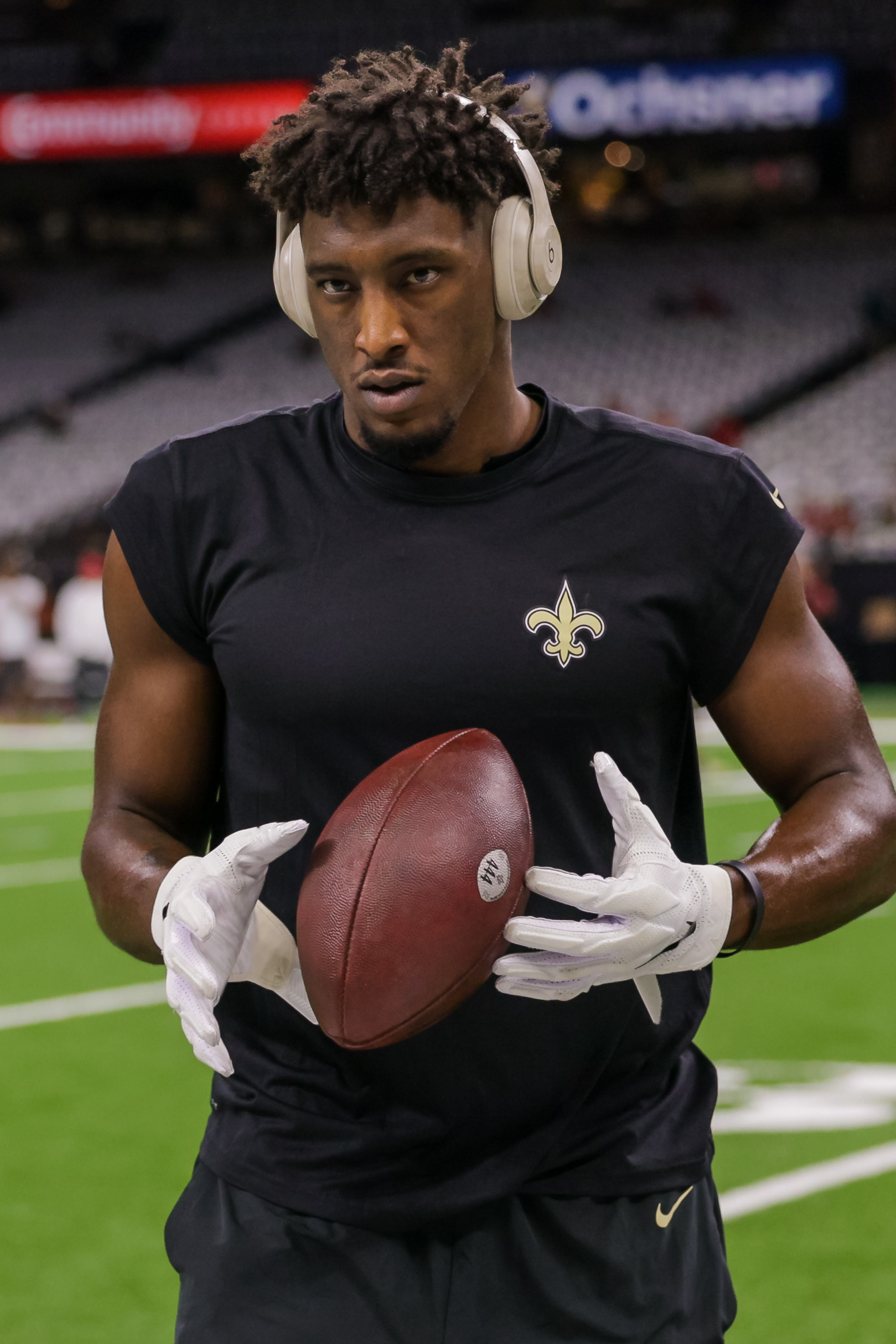
Regardless of what happens on the field, the Michael Thomas brand has significant potential in the “Post-Career” phase. His deep understanding of the technical aspects of the game positions him as a potential elite coach or a technical analyst. However, this transition depends entirely on how he manages his current “exit” from his peak years.
Branding is a long game. The way a professional handles the “down” years of their career often dictates the opportunities available in their “second act.” If Thomas can mend his public perception and demonstrate the technician-like mindset that made him famous, his brand will remain an influential one in the annals of NFL history.
In conclusion, “what happened to Michael Thomas” is a complex narrative of how a dominant market position can be eroded by a lack of adaptability and a series of reputation-damaging events. It stands as a vital lesson for any high-performer: Your brand is not just what you do when you are at the top; it is how you manage your value when things go wrong. Consistency builds the brand, but crisis management determines its longevity.
aViewFromTheCave is a participant in the Amazon Services LLC Associates Program, an affiliate advertising program designed to provide a means for sites to earn advertising fees by advertising and linking to Amazon.com. Amazon, the Amazon logo, AmazonSupply, and the AmazonSupply logo are trademarks of Amazon.com, Inc. or its affiliates. As an Amazon Associate we earn affiliate commissions from qualifying purchases.