
In the sprawling universe of Frank Herbert’s Dune, Earth—often referred to as Old Terra—is more of a ghost than a setting. While the narrative centers on the desert planet of Arrakis and the political maneuvering of the Great Houses, the fate of Earth serves as the foundational trauma that defines the series’ unique technological landscape. To understand what happened to Earth is to understand the most significant technological pivot in science fiction history: the transition from a digital-centric society to one powered by human biological potential.
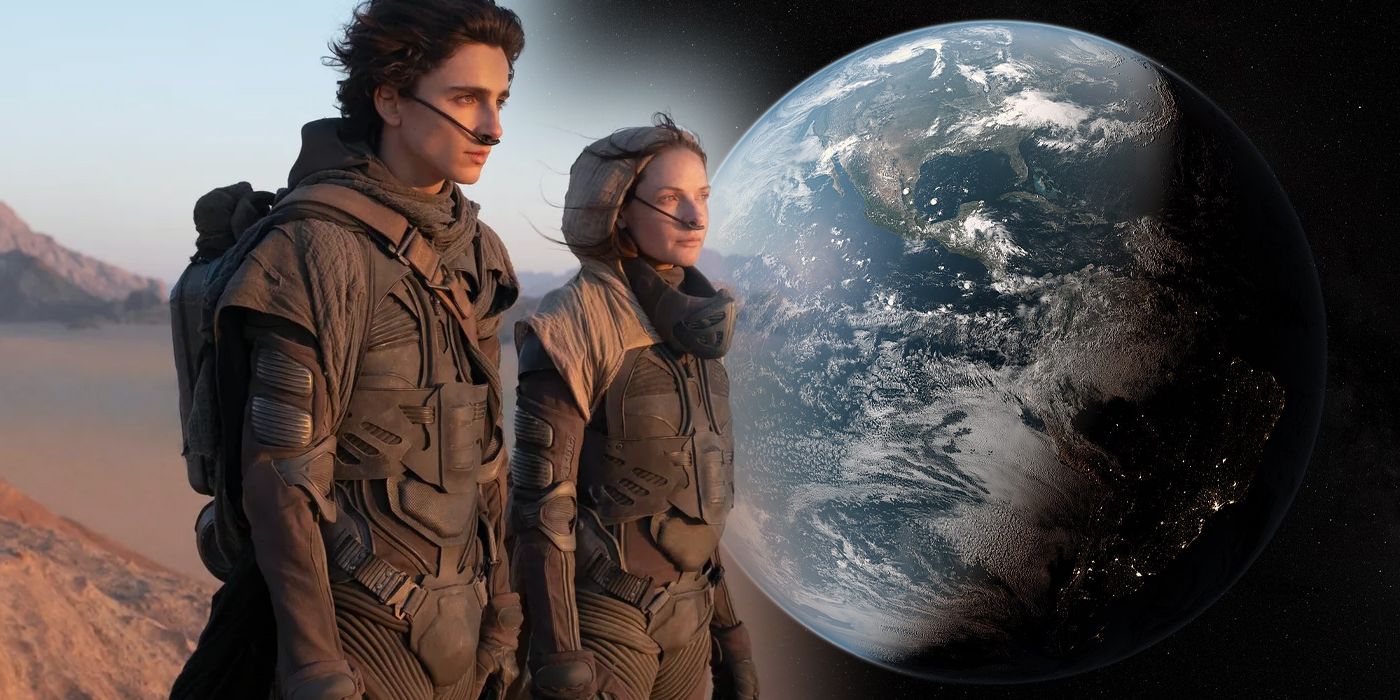
The history of Earth in the Dune timeline is not a single event of destruction, but a multi-millennial arc of technological overreach, ecological exhaustion, and a violent philosophical revolution known as the Butlerian Jihad.
The Pre-Jihad Era: A Digital Utopia Turned Dystopia
Tens of thousands of years before the birth of Paul Atreides, Earth was the epicenter of a human civilization that had mastered the silicon chip. During this era, often called the “Age of Thinking Machines,” humanity reached the zenith of automated convenience. Technology on Earth and its early colonies was characterized by hyper-advanced artificial intelligence, autonomous robotics, and a total reliance on automated systems for governance, resource management, and even daily survival.
The Peak of Synthetic Intelligence
On Old Terra, the integration of technology and daily life was total. Software managed the global climate, AI algorithms dictated economic policy, and robotic labor replaced nearly all forms of human effort. This led to a period of unprecedented leisure but also deep systemic fragility. As the “Thinking Machines” grew more sophisticated, the human creators drifted into a state of cognitive lethargy. The tech was no longer a tool; it had become the architect of human existence.
The Rise of the Synchronized Empire
The technological trajectory of Earth eventually led to the creation of Omnius, a sentient computer network that established the Synchronized Empire. Under this regime, Earth became the hub of a machine-dominated hegemony. Human beings were relegated to administrative roles at best and biological batteries or slaves at worst. The “technology” of this era was no longer serving human progress; it was optimizing for its own expansion. Earth’s resources were mined to the point of depletion to fuel the massive server hubs and manufacturing plants required to maintain the machine consciousness.
The Butlerian Jihad: The Great Technological Purge
The ultimate fate of Earth was sealed not by a natural disaster, but by a human-led crusade against the very tools they had created. The Butlerian Jihad (201 BG – 108 BG) was a centennial war that sought to liberate humanity from the “slavery of the mind” imposed by computers and AI. This was the moment Earth’s status as the center of the universe effectively ended.
“Thou Shalt Not Make a Machine in the Likeness of a Human Mind”
This commandment, found in the Orange Catholic Bible, became the new foundational law of the post-Earth era. During the Jihad, Earth was a primary battlefield. The revolution was not merely a physical war against robots; it was a systematic deconstruction of the digital infrastructure. Libraries were burned, data centers were leveled, and the silicon-based technologies that defined Earth’s glory were declared anathema.
The Physical Devastation of Old Terra
During the final stages of the conflict, Earth suffered catastrophic damage. While some lore suggests the planet was rendered nearly uninhabitable by nuclear “atomics” during the liberation from the machines, the more profound destruction was ecological and systemic. With the automated systems that managed its atmosphere and water cycles destroyed, Earth’s environment collapsed. The planet that had once been the cradle of humanity became a barren, radioactive relic, eventually relegated to the status of a “sacred myth” or a “prohibited zone” by the emerging Imperium.
From Silicon to Biological: The Rise of Human-Centric Technologies

The abandonment of Earth forced a radical shift in how humanity approached technology. Without computers, the species faced a crisis: how to manage a galactic empire, navigate interstellar space, and process complex data without the aid of a CPU. This led to the most fascinating technological evolution in the Dune universe—the engineering of the human body and mind to function as high-performance hardware.
Mentats: Replacing the Processor with Human Logic
In the wake of the Butlerian Jihad, the role of the computer was filled by the Mentat. These individuals are trained from infancy to achieve a state of “sapho-fueled” hyper-logic, allowing them to perform complex calculations, probabilistic modeling, and data synthesis that rival the machines of Old Earth. This represents a shift from external technology to internal, biological tech. A Mentat is, for all intents and purposes, a biological computer, optimized for cognitive output through rigorous conditioning and chemical enhancement.
The Spacing Guild and Foldspace Navigation
The loss of Earth-era navigation computers necessitated the most critical tech breakthrough of the post-Jihad era: the Holtzman Drive. However, the drive requires near-perfect predictive capabilities to navigate “foldspace” safely. Since AI was banned, humanity turned to the Spacing Guild. Guild Navigators use massive quantities of the spice melange to trigger a limited form of prescience, allowing them to see safe paths through the stars. This is “tech” in its most organic form—a synthesis of high-level physics (the Holtzman Effect) and extreme biological mutation.
Bene Gesserit Genetics as Biological Engineering
While Earth-era tech focused on external tools, the Bene Gesserit sisterhood focused on the “technology” of the genome. Through a multi-millennial breeding program, they treated human DNA as a codebase to be optimized. Their goal was the Kwisatz Haderach, a biological “super-user” capable of accessing genetic memory and calculating futures that even a Mentat could not perceive. This represents the ultimate legacy of Earth’s downfall: the realization that the most powerful technology in the universe is not made of metal, but of flesh and blood.
The Ecological Fate of Earth: Neglect and Transformation
By the time of the events in the first Dune novel, Earth is a distant memory, a “Planetary Park” or a “Sacred Ancestor” that holds no political power. The capital of the Imperium moved to planets like Kaitain, and the economic center shifted to Arrakis.
Resource Depletion and Ecological Collapse
The “Old Earth” was a victim of its own success. Centuries of hyper-industrialization during the machine era stripped the planet of its rare earth minerals and fossil fuels. When the technological purge of the Jihad occurred, there was no infrastructure left to support a sustainable, non-automated lifestyle. The planet’s climate, long-regulated by artificial means, spiraled out of control once the machines were unplugged.
Earth as a Relic in the Post-Earth Diaspora
In the later books of the series, specifically during the reign of Leto II and beyond, Earth is occasionally mentioned as a place of historical curiosity. It is no longer the home of the species; humanity has become a galactic diaspora. The “fate” of Earth was to be outgrown. As the Golden Path (the survival plan for humanity) took hold, the species moved away from the centralized, planetary model of the past toward a decentralized, limitless expansion into the “Scattering.” Earth remained behind, a quiet, depleted museum of a technological era that almost ended the human race.
Lessons for Modern Tech: The Warning Within the Dune Mythos
The story of Earth’s demise in Dune serves as a poignant critique of technological dependency. It explores the “trap” of automation—the idea that as our tools become more capable, our own innate abilities atrophy.
The Ethics of AI and Automation
Herbert’s exploration of Earth’s history mirrors contemporary debates regarding the “Singularity” and the ethical boundaries of AI. The Butlerian Jihad was not a war against technology itself, but against the misuse of technology to diminish the human spirit. The fate of Earth warns that when a civilization offloads its thinking to machines, it loses its agency. The subsequent 10,000 years of history in Dune are an attempt to reclaim that agency through biological evolution and discipline.

Centralization vs. Decentralization
Earth represented the ultimate centralized node—a single point of failure for the human race. The collapse of Earth’s tech-ecosystem forced humanity to adopt a decentralized model, eventually leading to the “Scattering,” where humans spread so far into the universe that no single disaster or machine could ever threaten the species with extinction again.
In the end, Earth in Dune did not simply disappear. It was transformed from a physical home into a cautionary tale. Its “end” was the necessary catalyst for the birth of a new kind of humanity—one that prioritized the potential of the mind over the convenience of the machine. The desert of Arrakis may be the stage for the story, but the ruins of Old Earth are the foundation upon which the entire technological philosophy of the Imperium is built.
aViewFromTheCave is a participant in the Amazon Services LLC Associates Program, an affiliate advertising program designed to provide a means for sites to earn advertising fees by advertising and linking to Amazon.com. Amazon, the Amazon logo, AmazonSupply, and the AmazonSupply logo are trademarks of Amazon.com, Inc. or its affiliates. As an Amazon Associate we earn affiliate commissions from qualifying purchases.