
The silent chime of American history is not a metaphor; it is a structural reality. For centuries, the ringing of a bell was the foundational mechanism of communal synchronization, signaling the start of the workday, the beginning of school, the arrival of the train, and the call to prayer. Today, these sonic landmarks have largely vanished from the American urban and rural landscape. Understanding why they disappeared requires a shift in perspective—viewing bells not as acoustic relics, but as the original “hardware” of social technology. When we ask what happened to the bells, we are essentially asking how our society underwent a total migration from analog physical infrastructure to the silent, digital protocols of the modern age.

The Bells as Infrastructure: The Original Time-Sync Protocols
Before the advent of ubiquitous mobile computing and global positioning systems (GPS), human activity in America was governed by decentralized, physical hardware. The town bell, the factory whistle, and the church steeple functioned as the primary server nodes of a community.
The Synchronization of Labor
In the 19th and early 20th centuries, America was a society running on local time. Industrialization demanded rigorous punctuality, yet synchronization was difficult to achieve across large distances. The factory bell served as the human interface for the workforce. It was a broadcasting tool—low-bandwidth, high-impact—that ensured that every laborer within a three-mile radius was physically accounted for at the start of the shift. This was, in essence, the original notification system. When the bell rang, it triggered a state change in the population. The decline of the bell began when the infrastructure of labor shifted from synchronized physical presence to individualized, distributed digital monitoring.
The Acoustic Web of Information
Bells were the bandwidth-limited predecessors to the internet. They transmitted binary information: there is an emergency, there is a gathering, there is a funeral, there is a celebration. Because air is a shared medium, these signals had a naturally high “broadcast reach” with zero subscription costs. However, as the American soundscape became cluttered with the noise of urbanization—automobiles, planes, and industrial machinery—the “signal-to-noise ratio” of the bell began to plummet. The cost of maintaining the hardware, combined with the increasing interference of a high-decibel society, rendered the bell an inefficient communication protocol.
The Digital Displacement: When Notifications Went Private
The disappearance of the bell is the story of the transition from “broadcast” communication to “unicast” and “multicast” notifications. We did not stop needing the signals; we simply moved the receivers from the town square to our pockets.
From Public Resonance to Private Vibration
The death of the physical bell is a case study in technological branding and user experience (UX) design. Public bells were “ambient,” meaning they existed in the shared environment of the user. Modern notifications are “intimate,” existing in the personal space of the user. When an iPhone pings with a meeting reminder or a Slack notification, it is performing the exact functional role of a 19th-century church bell, but with a critical difference: customization and data tracking. We traded the universality of the bell for the precision of the push notification.

The Rise of Efficiency-Based Infrastructure
In the modern corporate and institutional ecosystem, “bells” have been replaced by backend software suites. School systems, which once relied on the centralized bell to move students from history to mathematics, now utilize integrated digital management systems that can be programmed to the millisecond. This transition allowed for the decoupling of infrastructure from location. A factory in Ohio and an office in Bangalore can now be synchronized by the same cloud-based clock, rendering the physical tolling of a bell not just obsolete, but incompatible with the global, asynchronous nature of modern work.
The Branding of Silence: Why We Retired the Acoustic Legacy
Beyond functional obsolescence, the removal of bells from the American landscape was a deliberate aesthetic and brand-management choice. In the post-industrial era, the “brand” of a city or an institution changed from one of authority to one of personalization and tranquility.
The Acoustic Privatization of Public Spaces
As city planning prioritized the “wellness” and “privacy” of citizens, the ambient noise of the bell became a liability. An unceasing public bell is an intrusion; it dictates the rhythm of the city without user consent. Modern urban brands prioritize “on-demand” engagement. If a city or a business wants to alert its constituents, it does so through opt-in email lists, SMS alerts, or mobile app push notifications. The branding strategy moved from “We own your time” (the bell) to “We respect your time” (the digital alert). The silence of our towns is a branding feature, suggesting a civilized, unobtrusive environment where the individual is in control of their own sensory input.
Regulatory and Maintenance Costs
From a pure business and operational finance standpoint, bells are expensive “legacy hardware.” They require physical maintenance, structural support in high-wind zones, and specialized labor to operate or repair. In the context of corporate and municipal budgeting, the bell is a “sunk cost” asset. It offers no data, no analytics, and no way to track user engagement. Compare this to a digital notification platform, which provides administrators with real-time metrics on how many users opened an alert or ignored a message. The shift from physical bells to digital platforms was an inevitable outcome of the drive for data-driven institutional management.
The Future of the Signal: Will the Bell Return?
While the physical bell has largely been decommissioned, the “bell” as a conceptual framework remains central to our digital lives. We still speak of “ringing” phones, “alert” bells, and “notification” pings. The form factor has dissolved, but the psychological impulse to be summoned remains embedded in our social operating system.
Reclaiming the Acoustic Space
There is a growing trend in luxury brand strategy and placemaking that seeks to reintroduce the “analog” into the digital. We see this in the resurgence of mechanical watches, vinyl records, and curated acoustic environments in high-end retail. Some modern developments are experimenting with “smart” acoustic signals—directional sound technology that mimics the authority of a bell but targets only the intended recipient. This represents a hybrid future: the brand authority of the bell combined with the individualized precision of digital software.
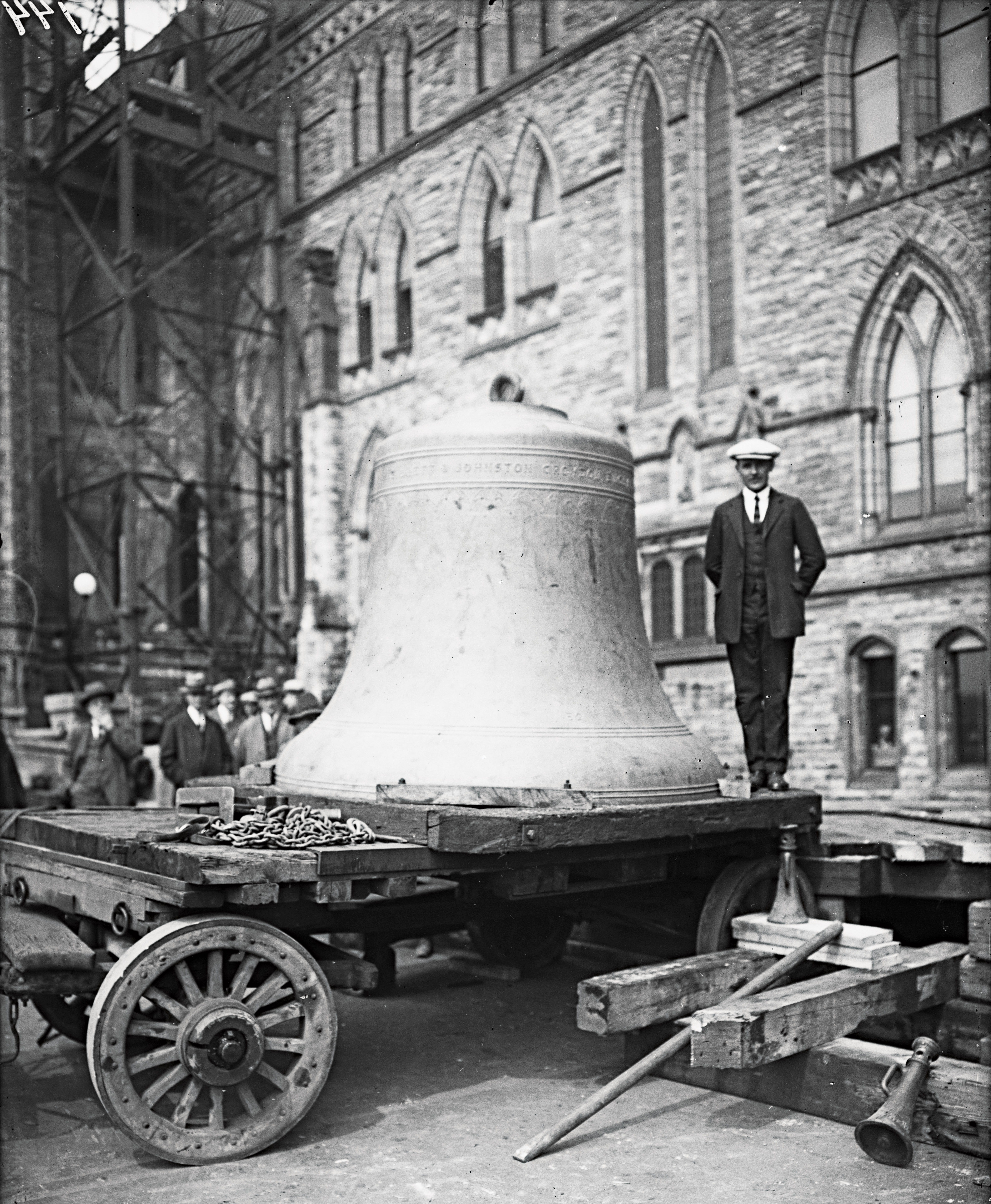
The Digital Archive of the Lost Signal
For many Americans, the absence of the bell is felt as a loss of communal identity. As we navigate a world of infinite, fragmented digital noise, the idea of a single, shared sound—a bell that unites a town under one temporal rhythm—is becoming a sought-after aesthetic. We see a movement toward “digital heritage,” where apps record and store the sounds of these retired bells, preserving them as historical data. This is the ultimate transformation: the bell has moved from being a physical tool of infrastructure to a piece of cultural digital content, archived, streamed, and consumed at the user’s leisure.
The story of what happened to all the bells in America is a testament to the relentless march of optimization. We traded the broad, communal, and somewhat chaotic analog signal for a precise, private, and highly trackable digital one. The bells are not gone because they stopped working; they are gone because we stopped needing a collective signal to manage a society that has become fundamentally, and permanently, individualistic. We have optimized ourselves into silence, trading the toll of the steeple for the subtle vibration of the device, effectively keeping the mechanism alive while burying the hardware that once defined the American skyline.
aViewFromTheCave is a participant in the Amazon Services LLC Associates Program, an affiliate advertising program designed to provide a means for sites to earn advertising fees by advertising and linking to Amazon.com. Amazon, the Amazon logo, AmazonSupply, and the AmazonSupply logo are trademarks of Amazon.com, Inc. or its affiliates. As an Amazon Associate we earn affiliate commissions from qualifying purchases.