
The digital revolution was once promised as a “paperless” and weightless transition that would liberate humanity from the physical constraints of industrialism. For decades, the narrative surrounding the technology sector was one of dematerialization—the idea that shifting our lives to the cloud would inherently reduce our environmental footprint. However, as we move deeper into the era of hyper-connectivity, artificial intelligence (AI), and massive data processing, the physical reality of the “virtual” world has become impossible to ignore.
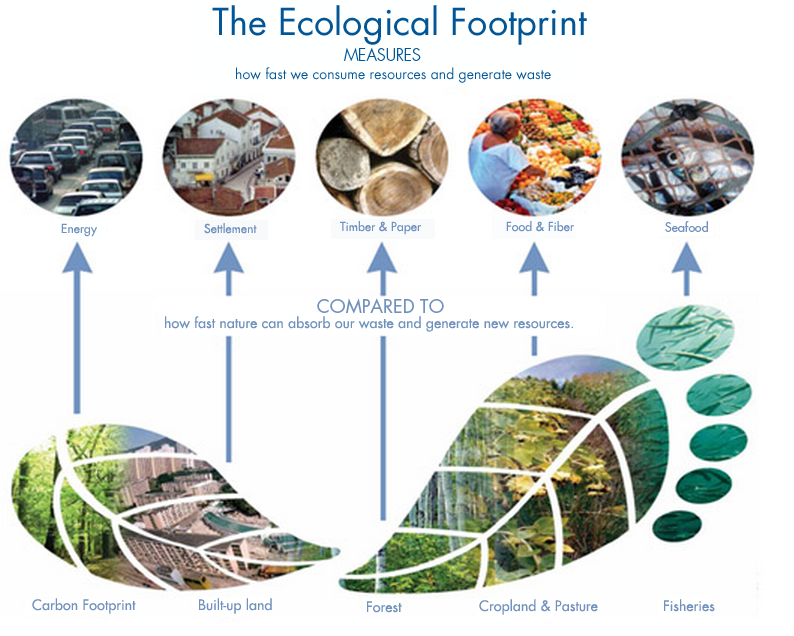
The ecological footprint of technology is no longer a peripheral concern for IT departments; it is a central challenge for the industry. From the energy-hungry servers that power our AI models to the rare earth minerals required for our hardware, every byte of data has a biological cost. Understanding what ecological impact modern technology has requires a comprehensive look at the infrastructure, the hardware lifecycle, and the very code that drives our digital existence.

The Hidden Cost of the Cloud: Data Center Energy Consumption
When we upload a file to “the cloud,” it doesn’t vanish into the ether. It travels through miles of fiber-optic cables to a massive, climate-controlled warehouse filled with thousands of servers. These data centers are the beating hearts of the global economy, but they are also some of the most energy-intensive structures ever built.
AI Training and the Surge in Power Demand
The recent explosion in generative AI has fundamentally shifted the energy profile of data centers. Unlike traditional cloud storage, which is relatively passive, training Large Language Models (LLMs) requires months of continuous, high-intensity computation across tens of thousands of GPUs (Graphics Processing Units). These chips consume significantly more power than standard CPUs.
Research indicates that training a single state-of-the-art AI model can emit as much carbon as five cars over their entire lifetimes, including manufacture. Beyond training, the “inference” phase—every time a user asks an AI a question—adds up. A single AI query can consume ten times the electricity of a standard Google search. As tech giants integrate AI into every software suite, the cumulative demand on global power grids is reaching a critical inflection point, forcing a reevaluation of how we build and scale digital tools.
Cooling Systems and Water Usage
Electricity is only one half of the ecological equation in data centers; the other is water. Servers generate immense heat, and to prevent hardware failure, data centers must be kept cool. While some facilities use air cooling, many rely on evaporative cooling systems that consume millions of gallons of water daily.
In regions prone to drought, the presence of a massive data center can strain local water supplies, creating a direct conflict between digital infrastructure and community needs. Leading tech firms are now experimenting with “underwater data centers” or “liquid immersion cooling,” where servers are submerged in non-conductive synthetic oils to transfer heat more efficiently. However, the industry-wide transition to water-neutral operations remains a complex engineering hurdle.
Hardware Lifecycle and the Growing E-Waste Crisis
The ecological impact of technology is perhaps most visible in the physical hardware we use. The “upgrade cycle”—driven by planned obsolescence and the rapid pace of software innovation—has created a global waste stream that is difficult to manage.
The Environmental Impact of Rare Earth Mineral Mining
The production of smartphones, laptops, and server components depends on a specific set of minerals, including lithium, cobalt, and neodymium. Extracting these materials is an ecologically destructive process. Open-pit mining for these elements often leads to soil erosion, deforestation, and the contamination of local water sources with toxic chemicals.
Furthermore, the concentration of these minerals in specific geopolitical zones means that the “tech supply chain” has a massive carbon footprint related to shipping and logistics. A single semiconductor might travel across three continents before it is finally installed in a device. The ecological cost is “front-loaded”—the vast majority of a laptop’s carbon footprint is generated during its manufacturing and transport, not during its actual use.
Moving Toward a Circular Economy in Electronics
To mitigate this, the tech industry is beginning to explore circular economy models. This involves designing hardware for modularity and repairability rather than disposal. If a single component fails or becomes obsolete, users should be able to swap it out without discarding the entire device.
Recycling programs are also evolving, though they face significant challenges. Currently, only about 20% of global e-waste is formally recycled. The rest often ends up in landfills or is processed in informal settings where workers are exposed to hazardous materials like lead and mercury. Technological breakthroughs in “urban mining”—using specialized robots to dismantle gadgets and recover precious metals—are essential to closing the loop and reducing the need for new raw material extraction.
Software Efficiency as an Ecological Strategy
While hardware and data centers are the physical manifestations of tech, the software itself plays a crucial role in ecological outcomes. The way code is written determines how hard a processor must work, which in turn determines how much electricity is consumed.
Green Coding: Optimizing Algorithms for Energy Savings
“Green coding” is an emerging discipline that focuses on writing energy-efficient algorithms. In the past, when hardware power was growing exponentially according to Moore’s Law, software developers often prioritized speed of development over resource efficiency, leading to “bloatware.”
Today, the focus is shifting. Developers are choosing programming languages based on their energy profiles; for example, compiled languages like C++ and Rust are significantly more energy-efficient than interpreted languages like Python for heavy computational tasks. By optimizing database queries and reducing unnecessary data transfers, software engineers can significantly lower the carbon footprint of an application without sacrificing user experience.
Edge Computing and Reducing Latency Emissions
Another technological shift is the move toward edge computing. Instead of sending every piece of data back to a centralized “hyperscale” data center, processing happens closer to the source—on the local device or a nearby “edge” node.
This reduces the energy required for long-distance data transmission through the internet’s backbone. For IoT (Internet of Things) devices and autonomous vehicles, edge computing is not just a performance necessity but an ecological advantage. By processing data locally, we minimize the “digital friction” that contributes to the overall energy drain of the global network.
Digital Security and its Environmental Intersection
Digital security and ecological sustainability are often viewed as separate fields, but they are increasingly intertwined. The methods we use to secure our data have direct environmental consequences.
The Energy Consumption of Proof-of-Work Systems
The most prominent example of the security-environment conflict is found in blockchain technology. The “Proof-of-Work” (PoW) consensus mechanism, used by Bitcoin, requires vast amounts of computational power to secure the network against attacks. This “security through energy expenditure” has led to a massive carbon footprint.
The tech industry’s response has been the development of “Proof-of-Stake” (PoS) and other more efficient consensus protocols. The Ethereum network’s transition to PoS reduced its energy consumption by over 99.9%. This serves as a primary case study in how technological architecture can be redesigned to maintain high levels of security while drastically reducing ecological impact.
Secure Data Disposal and Eco-Friendly Decommissioning
Digital security also impacts the end-of-life stage of hardware. To prevent data breaches, many organizations traditionally destroyed hard drives and storage media physically. This “shredding” approach makes the recovery of high-value materials impossible.
Modern tech standards are moving toward “cryptographic erasure,” where data is rendered unreadable through the destruction of encryption keys rather than the physical destruction of the disk. This allows the hardware to be safely refurbished and reused, extending its lifespan and keeping it out of the waste stream. Secure decommissioning is becoming a vital part of a sustainable IT strategy.

Conclusion: Toward a Symbiotic Relationship with the Planet
The question of “what ecological impact” technology has is no longer a simple one. As our tools become more powerful, their potential for both destruction and preservation grows. The technology sector is currently at a crossroads. On one hand, we see the staggering energy demands of the AI gold rush; on the other, we see the rise of green coding, circular hardware design, and renewable-powered infrastructure.
True innovation in the 21st century will not be measured solely by processing speed or pixel density, but by the ability of our digital systems to coexist with the natural world. By prioritizing energy efficiency in software, transparency in hardware sourcing, and sustainability in data center operations, the tech industry can transition from an ecological burden to a primary tool for environmental restoration. The digital frontier must be green, or it will eventually run out of the very resources—energy, water, and minerals—that allow it to function.
aViewFromTheCave is a participant in the Amazon Services LLC Associates Program, an affiliate advertising program designed to provide a means for sites to earn advertising fees by advertising and linking to Amazon.com. Amazon, the Amazon logo, AmazonSupply, and the AmazonSupply logo are trademarks of Amazon.com, Inc. or its affiliates. As an Amazon Associate we earn affiliate commissions from qualifying purchases.