
In the complex intersection of the legal system and personal finance, few terms are as nuanced as an unconditional discharge. For the entrepreneur, the investor, or the professional, understanding the gravity of this court outcome is essential, as its effects ripple far beyond the courtroom walls and into one’s credit report, insurance premiums, and long-term earning potential. While it is often perceived as a “lenient” sentence, an unconditional discharge carries specific financial weight that necessitates a strategic approach to wealth management and career planning.
The Financial Mechanics of an Unconditional Discharge
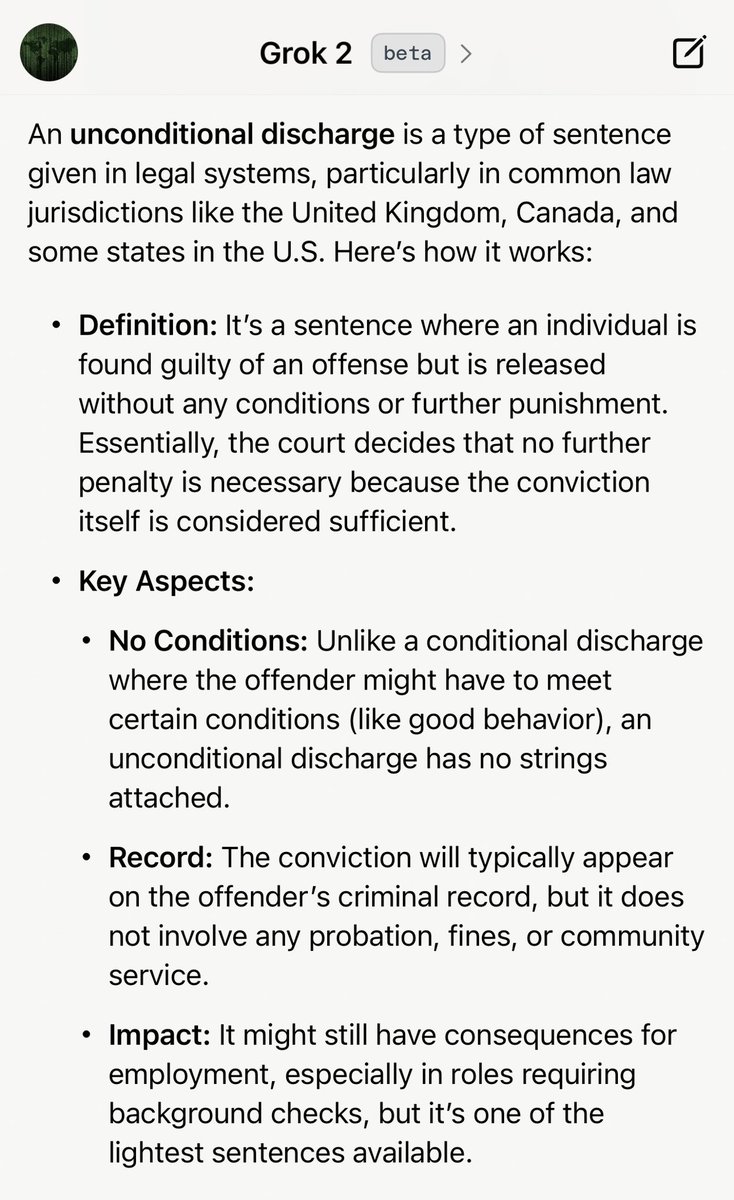
An unconditional discharge is a sentencing option where the court finds a defendant guilty of an offense but chooses not to impose any formal punishment, such as a fine, probation, or incarceration. From a cash-flow perspective, this is often viewed as the most favorable outcome following a conviction, as it eliminates the immediate outflow of capital toward state-mandated penalties.
The Absence of Immediate Monetary Penalties
In many criminal or regulatory proceedings, the financial burden of a conviction is twofold: the fine itself and the surcharges associated with court costs. For a small business owner or a private investor, a significant fine can disrupt liquidity and halt planned capital expenditures. An unconditional discharge effectively resets the immediate financial liability to zero. However, it is vital to distinguish this from an acquittal. A finding of guilt remains on the record, which can have “hidden” costs that are not immediately apparent on the day of sentencing.
Legal Fees as a Sunk Cost
While the court may not impose a fine, the process of securing an unconditional discharge often involves a substantial investment in legal counsel. In the world of personal finance, these attorney fees must be categorized as a significant loss of capital. For high-net-worth individuals, the goal of an unconditional discharge is often to protect professional licenses or future income streams, making the high cost of a specialized defense a calculated business decision. The ROI (return on investment) of an expensive legal defense is measured by the preservation of one’s ability to generate future revenue.
Civil Liability and the “Guilty” Finding
One of the most critical financial risks associated with an unconditional discharge is its impact on subsequent civil litigation. Because an unconditional discharge follows a finding of guilt (or a plea of guilty), it can be used as evidence in a civil lawsuit. If the underlying offense involved financial mismanagement, property damage, or personal injury, the defendant may still face a massive financial judgment in civil court. In these cases, the “money” at stake is far greater than any court fine, potentially threatening personal assets and business equity.
Impact on Credit, Lending, and Financial Tools
For anyone reliant on the credit markets—whether to scale a business or purchase real estate—a legal record is a significant red flag. An unconditional discharge may not be a prison sentence, but in the eyes of a bank’s underwriting department, it is an indicator of risk.
Navigating the Lending Landscape
Traditional lenders and fintech platforms use automated risk-assessment algorithms to determine creditworthiness. While an unconditional discharge is the most lenient sentence, the underlying conviction is what typically triggers a “high-risk” flag. This can lead to:
- Higher Interest Rates: Lenders may offset the perceived risk by placing the borrower in a higher interest bracket, significantly increasing the cost of capital over the life of a loan.
- Loan Denials: For certain types of business financing, such as SBA loans or specialized corporate lines of credit, any criminal record can be a disqualifying factor.
- Collateral Requirements: Banks may demand higher levels of collateral or personal guarantees to mitigate the risk associated with a borrower who has a legal record.
Insurance Premiums and Professional Liability
Insurance is a fundamental tool for financial protection. However, an unconditional discharge can lead to a spike in premiums across several categories. Professional liability insurance (Errors and Omissions) is particularly sensitive to a practitioner’s legal standing. If a court finds an individual guilty of a “crime of moral turpitude” or financial negligence, even without a penalty, the insurer may reclassify the individual as a high-risk client. Over a decade, the cumulative cost of increased insurance premiums can easily exceed tens of thousands of dollars.

The Role of Fintech and Background Checks
Modern financial tools and “Know Your Customer” (KYC) protocols have made it easier for institutions to see an individual’s legal history instantly. Even if an unconditional discharge eventually leads to an expunged record, the data may persist in third-party databases used by landlords, lenders, and digital payment processors. Maintaining a “clean” financial identity is increasingly difficult, and the existence of a discharge requires proactive reputation management to ensure continued access to the global financial ecosystem.
Business Strategy and Corporate Identity
For entrepreneurs and corporate executives, an unconditional discharge is not just a personal matter; it is a corporate governance issue. The financial health of a company is often inextricably linked to the reputation and legal standing of its leadership.
Investor Relations and Venture Capital
When seeking venture capital or private equity, the due diligence process is exhaustive. Founders with an unconditional discharge on their record must be prepared to disclose and explain the circumstances to potential investors. In the world of high-stakes finance, transparency is an asset. A failure to disclose a legal finding that appears during a background check can lead to a “morals clause” being triggered, resulting in the withdrawal of funding or the forced removal of a founder. The financial cost of a “broken deal” due to legal baggage can be the difference between a startup’s success and its insolvency.
Licensing and the Right to Earn
In many high-income industries—such as law, medicine, accounting, and securities trading—a conviction can lead to the suspension or revocation of professional licenses. An unconditional discharge is often the “best-case scenario” argued by defense attorneys to save a client’s career. If the licensing board views the lack of a court-imposed penalty as a sign of minimal culpability, the professional may be allowed to keep their license, preserving their primary source of income. This makes the legal outcome a vital component of a long-term financial survival strategy.
Government Contracting and Procurement
For businesses that rely on government contracts, an unconditional discharge can present a bureaucratic hurdle. Many government entities require “responsibility” certifications, where contractors must disclose any criminal findings. While a discharge is not a debarment, it can lead to additional scrutiny, delays in contract awards, or the loss of “preferred status” in bidding processes. The financial impact of losing a major government contract can be devastating to a firm’s bottom line.
Strategic Financial Planning Post-Discharge
Once the legal proceedings have concluded with an unconditional discharge, the focus must shift toward financial recovery and risk mitigation. Navigating the aftermath requires a structured approach to rebuilding one’s financial profile.
Seeking Expungement as a Financial Investment
In many jurisdictions, an unconditional discharge makes an individual eligible for expungement or sealing of records after a certain period. From a wealth-management perspective, the legal fees required to clear a record should be viewed as a high-priority investment. A cleared record restores access to lower interest rates, better insurance terms, and more lucrative employment opportunities. The “breakeven” point for the cost of expungement is often reached within the first year of securing improved credit terms.
Diversifying Assets and Liability Protection
For those who have experienced the legal system, the importance of asset protection becomes a central pillar of financial planning. Utilizing tools such as irrevocable trusts, offshore accounts (where legal and applicable), and robust corporate structures (like LLCs or S-Corps) can help insulate personal wealth from the fallout of legal disputes. Following an unconditional discharge, an individual should work with a financial advisor to ensure their estate is structured in a way that minimizes exposure to future civil claims that could stem from the same incident.

Rebuilding Financial Reputation
Building “social capital” is a legitimate financial strategy. This involves participating in industry leadership, philanthropic efforts, and public-facing projects that overshadow the legal record. In the age of digital search engines, a proactive approach to positive brand building can suppress negative search results related to a court case. While this involves an upfront cost in terms of time and marketing spend, the long-term benefit is the restoration of one’s “market value” as a professional or business leader.
In conclusion, while an unconditional discharge may signify the end of a court case without a jail cell or a fine, it marks the beginning of a complex financial journey. By understanding the implications for credit, insurance, and business operations, individuals can take proactive steps to mitigate the damage. In the realm of money and business, the goal is always the same: to protect one’s capital, preserve the ability to generate income, and maintain a path toward long-term financial freedom, regardless of the hurdles placed by the legal system.
aViewFromTheCave is a participant in the Amazon Services LLC Associates Program, an affiliate advertising program designed to provide a means for sites to earn advertising fees by advertising and linking to Amazon.com. Amazon, the Amazon logo, AmazonSupply, and the AmazonSupply logo are trademarks of Amazon.com, Inc. or its affiliates. As an Amazon Associate we earn affiliate commissions from qualifying purchases.