
The world of firearms and ammunition is often perceived through a lens of raw power and historical significance, yet beneath this surface lies a fascinating realm of intricate engineering, precise measurements, and sophisticated ballistics. Among the many terms that can baffle newcomers and even some seasoned enthusiasts, “grain” stands out as a fundamental, yet frequently misunderstood, unit. It’s not about texture, nor is it a poetic descriptor; rather, “grain” is a critical technical specification that dictates everything from a bullet’s trajectory and kinetic energy to the recoil felt by the shooter. To truly appreciate the technology underpinning modern ammunition, one must first grasp the significance of this small, often overlooked, measurement.

This article delves into the technical essence of “grain” in bullets, exploring its historical roots, its profound impact on ballistic performance, and how advancements in material science and computational modeling have refined its application. We’ll demystify why this particular unit remains the standard and provide a comprehensive understanding of how bullet weight, measured in grains, is a cornerstone of ammunition technology and selection.
The Fundamental Unit: Deconstructing “Grain” in Ballistics
At its core, “grain” is simply a unit of mass. However, its continued use in ballistics, particularly in North America, often prompts confusion given the global prevalence of the metric system. Understanding its origins and precise definition is the first step in appreciating its technical relevance.
Historical Context and Measurement Standards
The grain is an ancient unit of mass, dating back to antiquity. Historically, it was based on the average weight of a single grain of cereal, such as barley or wheat, which was a naturally reproducible unit available to virtually everyone. Over centuries, various civilizations adopted localized “grain” standards. When it comes to firearms, the unit solidified its position during the development of early gunpowder and projectile technology. The avoirdupois system, which evolved in England and became standard in the United States, standardized the grain as exactly 1/7000th of a pound. This historical inertia, combined with the entrenched manufacturing processes and ballistic data built around this unit, ensured its survival in the firearms industry. Unlike the modern push for metrication in many technical fields, the sheer volume of existing ammunition specifications, reloading data, and historical records measured in grains has made a complete transition impractical and unnecessary for much of the industry.
Why Grain, Not Grams or Ounces?
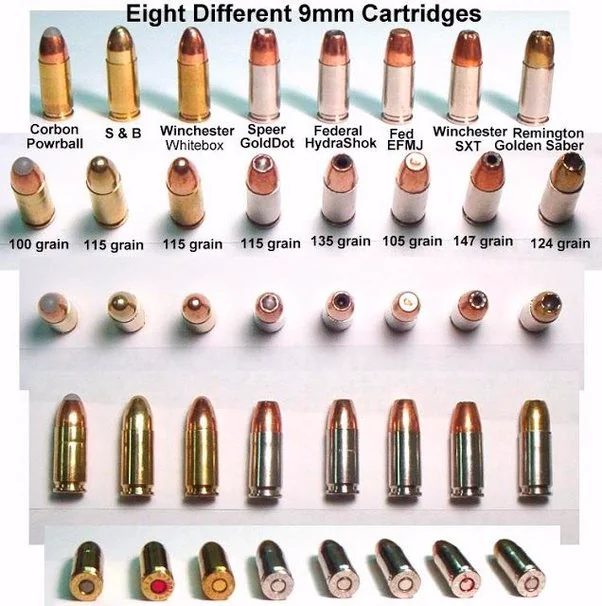
The question often arises: why not use grams or ounces, units more commonly understood today? While grams (the metric unit of mass) are sometimes seen in specifications for non-US manufactured ammunition, and ounces are used for shotgun pellets, grain remains dominant for rifle and handgun bullets for several technical and practical reasons. Firstly, a single bullet’s mass is relatively small. An ounce (approximately 437.5 grains) is too large a unit for the precise distinctions needed between different bullet weights (e.g., a 115-grain vs. a 124-grain 9mm bullet). Similarly, while grams could work (e.g., 9mm often comes in 7.5g to 8.5g), the smaller numerical values of grains allow for finer increments without resorting to decimal points, which simplifies communication and manufacturing tolerances within the existing framework. For instance, a 15-grain difference is immediately more apparent and less prone to misinterpretation than a 0.97-gram difference. The precision offered by the grain unit, combined with its historical entrenchment, makes it a pragmatic choice for the industry.
The Core Definition: Mass, Not Size
It’s crucial to understand that “grain” refers exclusively to the mass (or weight) of the bullet itself, not the entire cartridge, nor its physical dimensions (caliber). A bullet’s caliber refers to its diameter, typically measured in inches or millimeters (e.g., .223 inch or 9mm). Two bullets of the same caliber can have vastly different grain weights depending on their length, internal construction, and material composition. For example, a .30 caliber rifle bullet can range from around 110 grains to over 220 grains. This distinction is paramount for comprehending how different grain weights impact performance independently of the caliber.
Engineering Performance: How Grain Weight Influences Ballistics
The grain weight of a bullet is not an arbitrary number; it is a critical variable meticulously chosen and engineered to achieve specific ballistic outcomes. It directly affects the bullet’s flight path, its energy transfer upon impact, and the shooter’s experience.
Muzzle Velocity and Kinetic Energy
One of the most immediate impacts of grain weight is on muzzle velocity – the speed at which the bullet exits the barrel. Generally, for a given cartridge and powder charge, a lighter bullet will achieve a higher muzzle velocity than a heavier bullet. This is a direct application of Newton’s second law of motion ($F=ma$) and the conservation of energy. However, kinetic energy (KE = 0.5 * mass * velocity^2) is a function of both mass and velocity squared. While lighter bullets start faster, heavier bullets carry more momentum and can retain their energy more effectively over distance, especially if they are designed with good aerodynamic profiles. This balance between mass and velocity is a key engineering challenge, with designers optimizing for specific applications, whether it’s maximum initial speed or maximum energy retention downrange.
Trajectory and Bullet Drop Compensation (BDC)
Bullet weight profoundly influences trajectory. A heavier bullet, with more mass, typically exhibits greater ballistic coefficient (a measure of its ability to overcome air resistance) if its shape is also optimized. This means it can resist air drag better, leading to a flatter trajectory over longer distances and less susceptibility to wind deflection. Conversely, lighter bullets, despite higher initial velocities, often shed speed more rapidly due to lower ballistic coefficients (assuming similar shapes), resulting in a more pronounced parabolic arc and greater bullet drop. Shooters, especially in long-range precision disciplines, meticulously factor grain weight into their ballistic calculations and use systems like Bullet Drop Compensators (BDCs) on their optics, which are calibrated for specific bullet weights and velocities to ensure accurate targeting at varying ranges.
Recoil Dynamics and Shooter Experience
From the shooter’s perspective, bullet grain weight is a primary determinant of felt recoil. According to Newton’s third law, for every action, there is an equal and opposite reaction. When a bullet is propelled forward, the firearm is pushed backward. The momentum of the bullet (mass x velocity) must be equal to the momentum of the firearm and gases (mass x velocity). A heavier bullet, even at a lower velocity, imparts more momentum to the firearm, resulting in greater felt recoil. This is a critical factor for comfort, follow-up shot speed, and overall shooting performance, particularly in handguns or high-volume shooting scenarios. Engineering considerations here involve balancing powerful ballistics with manageable recoil to ensure user control and accuracy.
Terminal Performance: Expansion and Penetration
Beyond the flight path, grain weight plays a pivotal role in terminal performance – what happens when the bullet strikes its target. Heavier bullets typically possess greater momentum and sectional density (the ratio of a bullet’s mass to its cross-sectional area), allowing them to penetrate deeper into a target. This is particularly important for hunting larger game or in certain self-defense scenarios where barrier penetration might be necessary. Lighter bullets, while potentially delivering more energy at higher initial velocities, might not penetrate as deeply but can be engineered to expand more violently, transferring energy rapidly to create larger wound channels. The choice of grain weight, combined with bullet construction (e.g., hollow-point, soft-point, monolithic solids), is a sophisticated engineering decision tailored to achieve specific and predictable terminal effects.
Technological Advancement in Ammunition Design and Selection
The concept of bullet grain has remained constant, but the application and optimization of bullet weight have been profoundly impacted by technological advancements. From metallurgy to digital simulation, modern engineering allows for unprecedented precision and performance.
Material Science and Core Composition
Historically, bullets were primarily lead. Today, material science offers a wide array of options. Lead-core bullets with copper jackets are common, but advancements include bonded cores (where the lead core is molecularly bonded to the copper jacket to prevent separation), monolithic copper bullets (machined from a single piece of copper), and even various alloys designed for specific properties like increased hardness, reduced fragmentation, or environmental considerations (e.g., lead-free alternatives). These material choices directly influence a bullet’s weight for a given size, its structural integrity, and how it performs upon impact, allowing engineers to create bullets of specific grain weights with desired terminal ballistic properties.
Aerodynamics and Bullet Profile Optimization
Bullet shape, or profile, is intimately linked with grain weight in determining ballistic efficiency. Modern ammunition design leverages sophisticated aerodynamic principles to reduce drag and improve stability. Techniques include boat-tail designs (tapered bases), secant or tangent ogives (the curvature of the nose), and hollow points that are precisely engineered not just for expansion but also for aerodynamic stability. Computational fluid dynamics (CFD) software allows engineers to simulate airflow over various bullet shapes, optimizing designs to maintain velocity, reduce wind drift, and ensure stability at different grain weights, thereby maximizing the effective range and accuracy of a given projectile.
Computational Ballistics and Predictive Modeling
Perhaps one of the most significant technological leaps affecting grain weight selection is the advent of computational ballistics. Complex algorithms and software tools can now accurately model a bullet’s flight path, taking into account grain weight, muzzle velocity, ballistic coefficient, air density, temperature, humidity, wind, and even the Earth’s rotation (Coriolis effect). These tools allow manufacturers and end-users to predict trajectory, energy, and bullet drop with unprecedented precision. This predictive modeling capability enables engineers to design and test ammunition virtually, rapidly iterating on grain weights and bullet profiles to meet specific performance criteria before ever firing a live round. For shooters, online ballistic calculators, often based on these sophisticated models, empower them to fine-tune their ammunition choice based on grain for optimal performance in diverse conditions.
Smart Ammunition and Future Innovations
While still largely in developmental stages or niche applications, “smart ammunition” represents the bleeding edge of bullet technology. This includes concepts like guided projectiles that can correct their flight path, or ammunition with embedded sensors to provide real-time data. While such innovations might seem far removed from “grain,” the fundamental principles of mass and ballistics remain critical. Any smart projectile still needs to maintain a specific grain weight to perform predictably in terms of velocity, trajectory, and terminal effects, even if it has active guidance. The integration of microelectronics, power sources, and control surfaces within a projectile still necessitates adherence to core ballistic engineering principles, where grain weight is a primary design constraint and performance parameter.
Matching Grain to Application: A Technical Selection Guide
The “best” grain weight is not universal; it’s a technical decision dictated by the specific application, the firearm platform, and the desired outcome. Understanding these distinctions is key to optimizing performance.
Precision Shooting and Consistency Demands
For precision target shooting, especially at long ranges, consistency is paramount. Shooters often gravitate towards heavier-for-caliber bullets with high ballistic coefficients. These bullets tend to be less affected by wind and maintain their velocity more effectively, leading to tighter groups and predictable trajectories over distance. The focus is on uniform manufacturing, minimal variation in grain weight within a batch, and a bullet profile that ensures stability throughout its flight. Reloaders meticulously sort bullets by weight, sometimes even by tenths of a grain, to achieve the utmost consistency for competitive shooting.
Hunting Scenarios and Ethical Considerations
In hunting, the choice of grain weight is critical for ensuring an ethical and effective kill. Heavier bullets often provide better penetration, which is essential for reaching vital organs in larger, tougher game animals. However, the specific game animal and shot distance dictate the optimal choice. For smaller game, a lighter, faster bullet might be preferred for rapid energy transfer and less over-penetration. Bullet construction also plays a huge role here, with different designs (e.g., controlled expansion vs. rapid fragmentation) being engineered for different grain weights and target types. The goal is to achieve sufficient energy and penetration to incapacitate the animal quickly and humanely.
Self-Defense and Law Enforcement Requirements
For self-defense and law enforcement, the technical requirements shift towards immediate incapacitation and controlled penetration. Lighter, faster bullets in specific calibers are sometimes chosen for reduced recoil and faster follow-up shots, while others prioritize heavier, slower bullets designed for deeper penetration and reliable expansion after encountering barriers. Often, specialized hollow-point designs are used, where the grain weight is optimized to work with the bullet’s construction to achieve specific expansion and penetration characteristics within human tissue, minimizing the risk of over-penetration that could endanger bystanders. The balance here is extremely delicate, involving extensive testing and engineering to meet stringent performance criteria.
The Role of Firearm Platform in Grain Selection
The firearm itself significantly influences the ideal grain weight. Barrel twist rate (the rate at which the rifling spirals down the barrel) is a critical factor. A faster twist rate (e.g., 1:7 inches) is generally required to stabilize heavier, longer bullets, preventing them from tumbling in flight. Slower twist rates (e.g., 1:12 inches) are better suited for lighter, shorter bullets. An improperly matched bullet grain to barrel twist can lead to poor accuracy and diminished performance. Additionally, the firearm’s operating system (e.g., gas-operated vs. recoil-operated) and its intended use (e.g., pistol, carbine, precision rifle) all play a role in determining the optimal grain weight for reliable feeding, cycling, and ballistic performance.
Dispelling Myths and Common Misconceptions
Despite its fundamental importance, the concept of grain in bullets is often surrounded by misconceptions. Clarifying these ensures a more accurate technical understanding.
Heavier Doesn’t Always Mean Slower (in context)
A common assumption is that heavier bullets are always slower. While generally true for a given cartridge and powder charge, this isn’t universally the case across different calibers or specially engineered loads. For instance, a very heavy .45-70 Government bullet might be slower than a lighter .30-06 Springfield bullet, but the sheer difference in cartridge capacity and firearm type means they are designed for vastly different purposes. Furthermore, engineers can design specific propellant mixtures and bullet constructions that allow a heavier bullet to achieve respectable velocities, sometimes even outperforming lighter projectiles in terms of retained energy downrange due to superior ballistic coefficients. The relationship is complex and depends heavily on the entire ammunition system.
Grain vs. Caliber: Understanding the Distinction
As mentioned earlier, one of the most persistent confusions is conflating grain with caliber. Caliber is a measure of diameter, while grain is a measure of weight. They are independent but related specifications. A .223 Remington cartridge, for example, typically uses bullets ranging from 35 grains to 90 grains. A 9mm Luger can use bullets from 90 grains to 147 grains. The caliber defines the bore diameter, while the grain weight defines the mass of the projectile itself, both contributing uniquely to the bullet’s overall performance profile. Understanding this distinction is crucial for accurate ammunition selection and ballistic prediction.

The Myth of Universal “Best” Grain
There is no single “best” grain weight that applies to all firearms, all calibers, or all applications. The optimal grain weight is always contextual. What is ideal for long-range target shooting might be entirely unsuitable for self-defense, and what works well in a handgun might perform poorly in a rifle. The “best” grain weight is the one that achieves the desired balance of velocity, accuracy, trajectory, recoil, and terminal performance for a specific firearm and its intended purpose. Ammunition manufacturers invest heavily in research and development to offer a diverse range of grain weights, each meticulously engineered for distinct roles, allowing users to technically match their ammunition to their precise needs.
In conclusion, the “grain” in bullets is far more than a simple number; it’s a linchpin of ammunition technology and ballistic science. It represents a precise engineering variable that, in concert with bullet design, material science, and propellant technology, dictates the entire performance envelope of a projectile. From historical measurement standards to the cutting edge of computational ballistics, understanding grain weight unlocks a deeper appreciation for the intricate and sophisticated technology embedded within every single round of ammunition. For enthusiasts, professionals, and anyone seeking to grasp the technical nuances of firearms, mastering the concept of grain is an essential step towards informed selection and optimized performance.
aViewFromTheCave is a participant in the Amazon Services LLC Associates Program, an affiliate advertising program designed to provide a means for sites to earn advertising fees by advertising and linking to Amazon.com. Amazon, the Amazon logo, AmazonSupply, and the AmazonSupply logo are trademarks of Amazon.com, Inc. or its affiliates. As an Amazon Associate we earn affiliate commissions from qualifying purchases.