
The question of whether the Bible addresses the use of marijuana, specifically “smoking weed,” is a complex one, often leading to diverse interpretations and passionate debates. For individuals seeking to align their actions with their faith, understanding the biblical perspective is paramount. However, the Bible does not directly mention cannabis or its recreational use. This necessitates a deeper exploration of its underlying principles and teachings to derive guidance. This article will delve into these principles, examining themes of stewardship, moderation, love, and the interpretation of Old and New Testament texts, all within the framework of how these concepts intersect with the application of faith to modern-day practices.
Understanding Biblical Principles Relevant to Substance Use
While specific prohibitions against marijuana are absent, the Bible offers a rich tapestry of principles that can be applied to the consideration of its use. These principles guide believers in discerning how to live a life that honors God and respects their bodies and minds, which are often described as temples of the Holy Spirit.
The Principle of Stewardship over the Body and Mind
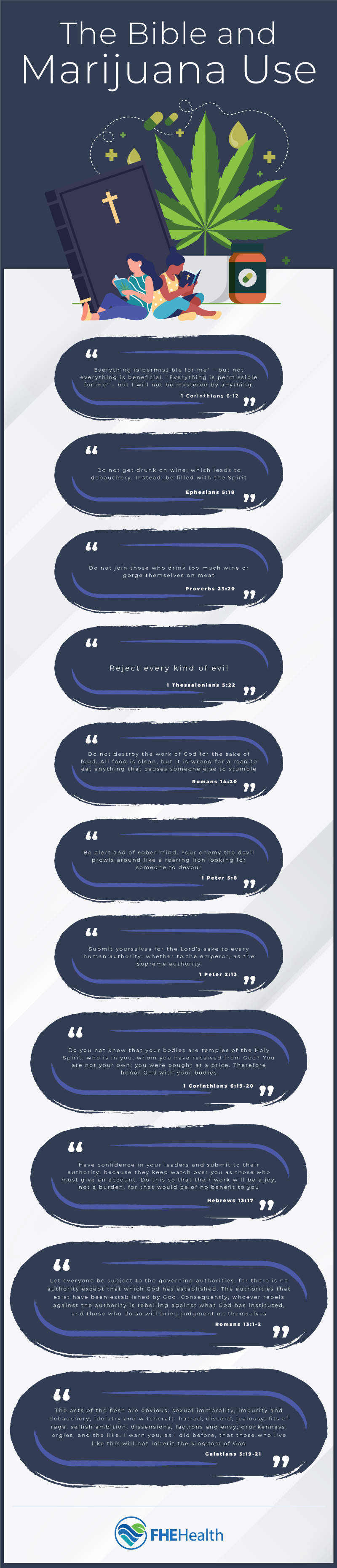
A foundational concept in Christian theology is that of stewardship. Believers are entrusted by God with their bodies, minds, and resources, and they are called to manage these gifts responsibly. The Apostle Paul, in 1 Corinthians 6:19-20, famously writes, “Or do you not know that your body is a temple of the Holy Spirit who is in you, whom you have from God? You are not your own, for you have been bought with a price. Therefore, glorify God in your body.” This passage underscores the sacredness of the human body as a dwelling place for the Holy Spirit and a vessel through which to glorify God.
From this perspective, any substance that impairs judgment, dulls the senses, or hinders one’s ability to serve God and others could be seen as a violation of this stewardship. The question then becomes whether marijuana use inherently falls into this category. Proponents of abstinence argue that the psychoactive effects of cannabis can indeed impair one’s ability to think clearly, make wise decisions, and engage fully in spiritual disciplines or service. They might point to potential negative impacts on memory, concentration, and motivation as evidence of such impairment.
Conversely, some may argue that moderate use, especially in contexts where it is medically prescribed or legally regulated, does not necessarily constitute a dereliction of stewardship. This perspective often hinges on the degree of impairment and the intent behind the use. The focus, in this view, is on avoiding addiction and misuse rather than outright prohibition, aligning with the broader biblical emphasis on avoiding excess.
The Importance of Moderation and Self-Control
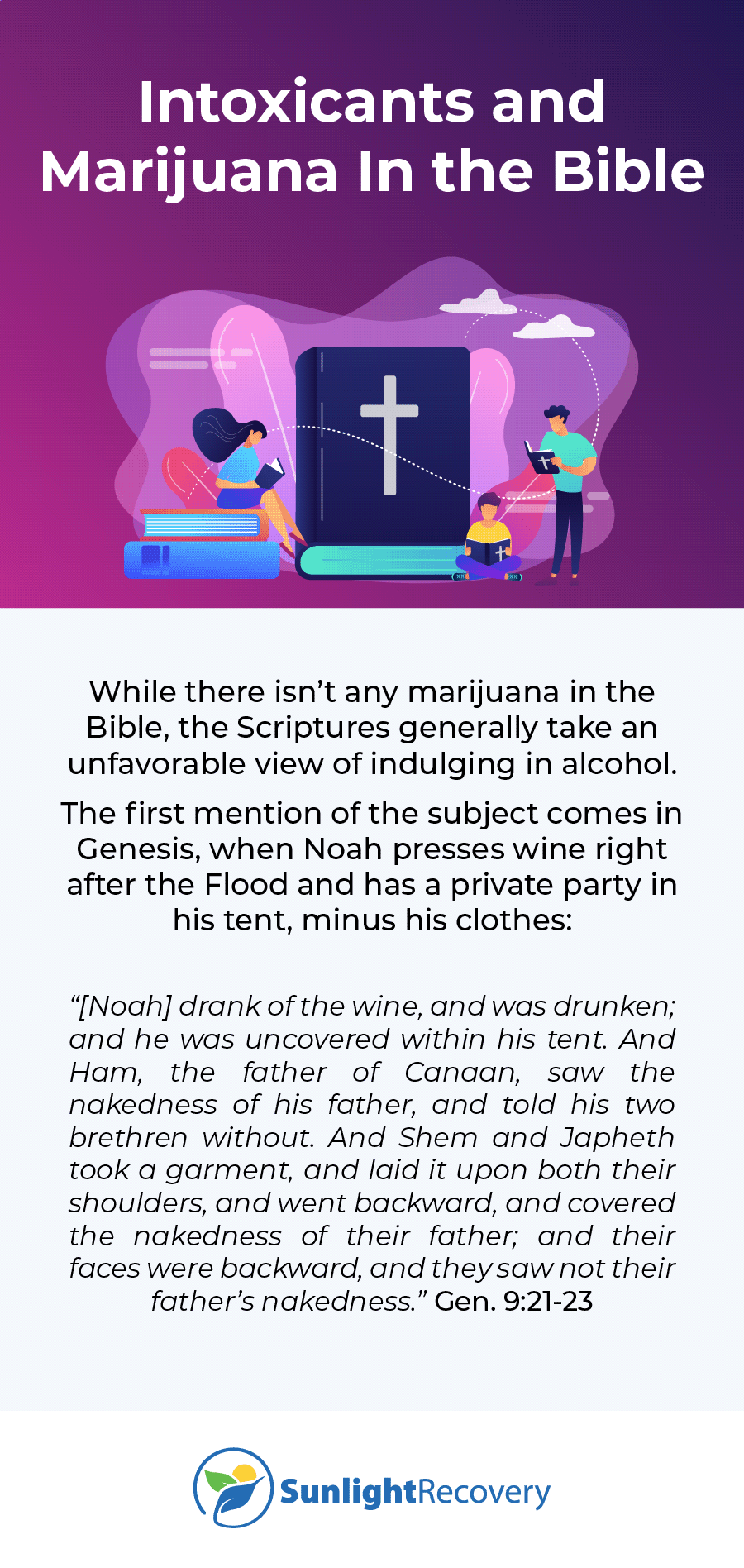
The Bible repeatedly exhorts believers to practice moderation and self-control in all aspects of life. Proverbs is replete with verses warning against excess and intoxication. For instance, Proverbs 20:1 states, “Wine is a mocker, strong drink is raging: and whosoever is deceived thereby is not wise.” While this verse specifically refers to alcoholic beverages, the principle extends to any substance that can lead to a loss of control.
The concept of self-control is a fruit of the Spirit, listed in Galatians 5:22-23 as a quality that characterizes a life led by God. “But the fruit of the Spirit is love, joy, peace, longsuffering, gentleness, goodness, faith, meekness, temperance.” Temperance, often translated as self-control or moderation, is a crucial virtue. Therefore, engaging in practices that deliberately relinquish self-control, even temporarily, raises questions for those seeking to live by this principle.
The debate here often centers on the definition of “control” and the potential for dependence. If marijuana use leads to a compulsive craving or a perceived inability to function without it, it would clearly conflict with the principle of self-control. However, for individuals who use it sparingly and do not experience dependence, the argument for its incompatibility becomes less clear-cut. The application of this principle requires a personal assessment of one’s own susceptibility to addiction and the impact of the substance on one’s ability to exercise self-discipline.
Love for Neighbor and Avoiding Stumbling Blocks
Another critical biblical principle is the command to love one’s neighbor as oneself, as articulated by Jesus in the Great Commandment (Matthew 22:39). This principle has practical implications for how believers conduct themselves, particularly concerning actions that might negatively influence others. The Apostle Paul, in Romans 14, addresses issues of conscience and the importance of not causing a fellow believer to stumble. He writes in Romans 14:13, “Let us therefore not judge one another anymore: but judge this rather, that no man put a stumblingblock or a snare in his brother’s way.”
In the context of marijuana use, this principle can be interpreted in several ways. If marijuana is illegal in a particular jurisdiction, engaging in its use could be seen as a violation of Romans 13:1, which instructs believers to “be subject to the governing authorities.” Furthermore, if one’s use of marijuana leads to behavior that is offensive or harmful to others, or if it causes a weaker brother or sister in faith to compromise their convictions, then it would be considered a breach of love for neighbor.
The legal status of marijuana varies globally, adding another layer of complexity. For Christians living in areas where cannabis is illegal, obedience to the law, as encouraged by the Bible, would generally counsel against its use. For those in regions where it is legal, the focus shifts more intensely to the ethical considerations of how such use might impact others within the community of faith or society at large.

Interpreting Old Testament Texts and the Concept of “Herbs”
The Old Testament contains passages that refer to “herbs” and their uses, particularly in the context of food, medicine, and sometimes, ritualistic practices. Understanding these references is crucial for a comprehensive biblical perspective.
Levitical Laws and Purity
The Mosaic Law, as laid out in Leviticus, provides numerous regulations concerning dietary laws, purity, and cleanliness. While these laws were specific to ancient Israel, they often carried underlying moral principles that are considered applicable to believers today. There are no direct prohibitions against specific psychoactive plants within these laws. However, the emphasis on maintaining a state of ritual and moral purity can be seen as a precursor to the New Testament emphasis on the body as a temple.
Some interpreters look to passages like Deuteronomy 18:10-12, which speaks against sorcery and divination: “There shall not be found among you anyone who burns his son or his daughter as an offering, anyone who practices divination or tells fortunes or interprets omens, or a sorcerer or a charmer or a medium or a necromancer or one who inquires of the dead, for whoever does these things is an abomination to the Lord.” While this passage is clearly about forbidden spiritual practices, some might broadly categorize any use of substances to alter consciousness as akin to seeking altered states outside of God’s intended means. However, this is a stretched interpretation, as the primary focus of these verses is on pagan and occult practices, not on the medicinal or even recreational use of natural substances.
The “Fruit of the Ground” and Divine Provision
Genesis 1:29 is often cited by those who believe the Bible permits the use of plants, including cannabis: “And God said, ‘Behold, I have given you every herb bearing seed, which is upon the face of all the earth, and every tree, in the which is the fruit of a tree yielding seed; to you it shall be for food.'” This verse highlights that God provided plants for human sustenance and benefit. Similarly, Genesis 9:3 states, “Every moving thing that liveth shall be meat for you; even as the green herb have I given you all things.”
The argument here is that if God created plants and declared them good, then their use is not inherently sinful. This perspective often distinguishes between the provision of something by God and the manner in which it is used. A knife, for instance, is a provision from God, but it can be used for good (preparing food) or evil (as a weapon). Similarly, the plant cannabis, like other “herbs,” could be seen as a divine provision, with its morality dependent on its application.
However, this interpretation must be balanced with the understanding that not everything that is provided is necessarily endorsed for every use. While God provided the land of Canaan for Israel, there were specific commandments and boundaries to follow within that land. Therefore, the existence of cannabis as part of creation does not automatically equate to its unrestricted or uncritical use by believers.
Examining New Testament Teachings and the Concept of Freedom in Christ
The New Testament, particularly the teachings of Jesus and the Apostle Paul, offers a framework of spiritual freedom and responsibility that is central to Christian living.
Freedom from Bondage vs. License to Sin
Paul’s writings often discuss Christian freedom, particularly in passages like Galatians 5:1: “Stand fast therefore in the liberty wherewith Christ hath made us free, and be not entangled again with the yoke of bondage.” This freedom is primarily spiritual, liberating believers from the bondage of sin and the Mosaic Law. However, Paul immediately cautions against misinterpreting this freedom as a license to indulge in sinful desires. He writes in Galatians 5:13, “For, brethren, ye have been called unto liberty; only use not liberty for an occasion to the flesh, but by love serve one another.”
This is a crucial distinction when considering marijuana use. If a believer feels spiritually free to use marijuana, they must ensure that this use does not become a form of “bondage” to the substance, nor does it lead to actions that are not motivated by love and service to others. Addiction or compulsive use would undoubtedly be considered a form of bondage.
The Importance of Conscience and Wisdom
In the absence of explicit biblical commands, the role of a believer’s conscience, informed by the Holy Spirit and Scripture, becomes paramount. 1 Corinthians 8 addresses the issue of eating food sacrificed to idols. Paul advises that while such food is not inherently problematic for a Christian, those who are “weak” in faith might be harmed or led astray if they see a stronger believer partaking. This emphasizes the importance of considering the impact of one’s actions on the faith of others.
Ultimately, discerning whether smoking weed aligns with biblical principles requires prayer, careful study of Scripture, and seeking the guidance of the Holy Spirit. It involves weighing the potential for impairment, addiction, legal repercussions, and the impact on one’s witness and relationship with God and others. The Bible does not offer a simple “yes” or “no” answer regarding marijuana, but it provides a robust ethical framework for individuals to make informed decisions that honor their faith. The pursuit of wisdom, self-control, and love for neighbor should guide every decision, including those concerning the use of substances.
aViewFromTheCave is a participant in the Amazon Services LLC Associates Program, an affiliate advertising program designed to provide a means for sites to earn advertising fees by advertising and linking to Amazon.com. Amazon, the Amazon logo, AmazonSupply, and the AmazonSupply logo are trademarks of Amazon.com, Inc. or its affiliates. As an Amazon Associate we earn affiliate commissions from qualifying purchases.