
In the landscape of global franchising and consumer goods, few identities are as instantly recognizable as the bold, blocky letters of A&W. For over a century, these two initials have served as a beacon for root beer enthusiasts and fast-food aficionados alike. While many consumers interact with the brand daily—whether through a frosted mug at a drive-in or a can from a local grocer—the question of what those letters signify is more than mere trivia. It is a window into a masterclass of brand strategy, corporate longevity, and the evolution of American marketing.

The “A” and the “W” stand for Roy Allen and Frank Wright, the two pioneers who transformed a roadside beverage stand into an international powerhouse. However, the story of A&W is not just about two men; it is about how a brand name can transcend its founders to become a symbol of nostalgia, quality, and a specific type of sensory experience.
The Genesis of an Identity: Allen, Wright, and the Birth of a Moniker
The story of A&W’s brand identity begins in 1919 in Lodi, California. Roy Allen, an entrepreneur with a knack for timing, purchased a secret recipe for a herb-and-spice-based root beer. He opened his first stand during a parade honoring returning World War I veterans, capitalizing on the celebratory atmosphere and the onset of Prohibition, which skyrocketed the demand for non-alcoholic “social” beverages.
Roy Allen’s Secret Recipe as a Value Proposition
From a branding perspective, Allen’s initial success wasn’t just the product—it was the exclusivity. By marketing a “secret” blend of roots, barks, and berries, he established a unique selling proposition (USP) that separated his brew from the generic sodas of the time. This mystery created an aura around the product, making the physical location a destination rather than just a convenience.
The 1922 Partnership
In 1922, Allen partnered with Frank Wright, one of his employees from a previous venture. It was this partnership that birthed the “A&W” name. By combining their initials, they followed a naming convention common in the early 20th century—simplicity and personal accountability. In an era before massive corporate facelessness, a brand name derived from its owners suggested a personal guarantee of quality. Though Wright eventually sold his interest in the company back to Allen in 1924, the brand name had already gained significant traction. Allen wisely chose to keep the name, recognizing that “A&W” had already begun to accumulate “brand equity”—a term we use today to describe the commercial value derived from consumer perception of the brand name.
The Anatomy of a Brand: Why Two Letters Work
In the world of brand strategy, the move from a descriptive name (like “Allen’s Root Beer”) to an abstract or initial-based name (A&W) is a significant shift. It allows the brand to move beyond the personality of a single individual and become a versatile corporate identity.
The Psychology of Minimalist Naming
Short names are easier to remember, easier to typeset, and easier to recognize from a distance—a crucial factor for a business built on roadside drive-ins. The “A&W” logo, with its balanced, symmetrical letters, provided a visual anchor for motorists traveling at high speeds. This minimalist approach preceded the modern trend of “de-branding” and simplification by nearly a century. The brevity of the name allowed the brand to occupy a unique space in the consumer’s “mental map,” sitting alongside other iconic initial-based brands like IBM or GE.
Consistency Across Generations
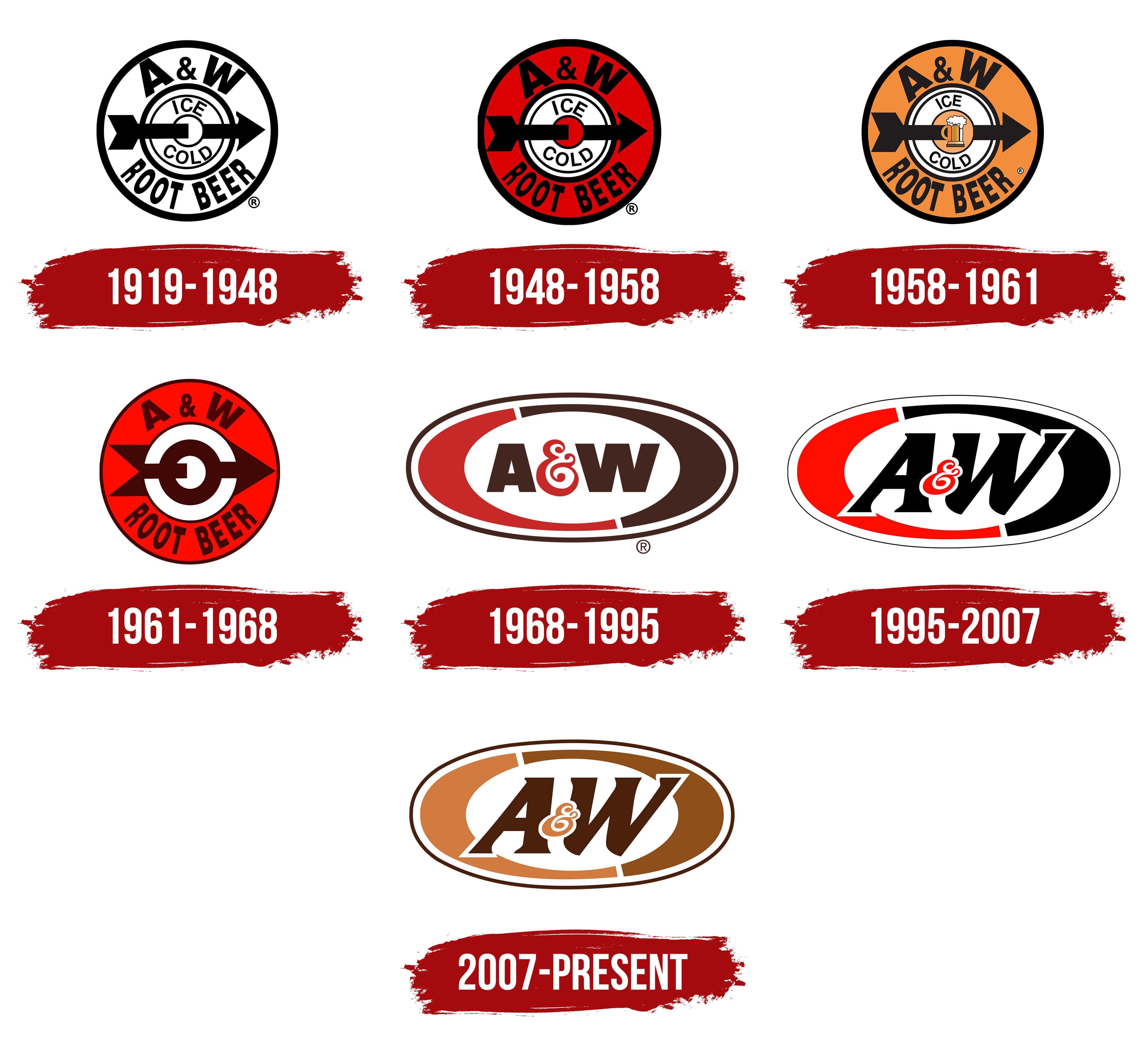
One of A&W’s greatest branding triumphs is its commitment to visual consistency. While the logo has seen minor refreshments to modernize its appearance, the core elements—the orange and brown color palette and the interlocking initials—have remained largely unchanged. This consistency fosters a sense of trust. In marketing, trust is built through the “mere exposure effect,” where consumers develop a preference for things simply because they are familiar with them. A&W has leveraged its long history to position itself as a reliable constant in an ever-changing fast-food landscape.
Brand Architecture: The Distinctive Paths of A&W USA vs. A&W Canada
A fascinating aspect of the A&W brand strategy is its divergent evolution. To understand the brand today, one must recognize that A&W Food Services of Canada and A&W Restaurants (USA) are entirely separate entities with distinct brand architectures and marketing strategies.
The “Burger Family” and the Canadian Identity
In Canada, A&W has cultivated a premium, high-quality brand image that often outpaces its competitors in the “QSR” (Quick Service Restaurant) space. Central to this strategy was the introduction of the “Burger Family”—the Papa Burger, Mama Burger, Teen Burger, and Baby Burger. This was a stroke of branding genius, creating a tiered product line that appealed to different demographics while reinforcing a “family-friendly” corporate identity. By personifying the products, A&W moved from selling food to selling a relatable experience.
The American Strategy: Nostalgia and the Great Root Bear
In the United States, the brand strategy has leaned heavily into nostalgia and the concept of “All-American” heritage. The introduction of “Rooty the Great Root Bear” in the 1970s provided a mascot that could bridge the gap between older generations who remembered the original drive-ins and younger children who were the new targets of television marketing. Mascot-led branding is a powerful tool for building emotional connections, and Rooty became a visual shorthand for the fun, whimsical nature of the brand.
Visual Identity and the Sensory Experience
Effective branding is not just about what you see; it is about what you feel and taste. A&W has mastered the art of “sensory branding,” ensuring that the brand identity is tied to a specific physical experience.
The Psychology of the Orange and Brown Palette
Color theory plays a massive role in corporate identity. Brown is often associated with earthiness, reliability, and—critically for A&W—the rich, caramelized color of root beer. Orange, conversely, evokes energy, friendliness, and appetite. Together, they create a warm, inviting aesthetic that differentiates A&W from the aggressive reds and yellows used by competitors like McDonald’s or Burger King. This palette reinforces the brand’s positioning as a “comfort food” destination rather than a “fast food” factory.
The Frosty Mug as a Brand Asset
Perhaps the most powerful element of A&W’s brand strategy is the “Frosty Mug.” By serving their signature beverage in heavy, chilled glass mugs, the brand created a ritual. In marketing, rituals are powerful tools for customer retention. The sound of the glass on the counter and the sight of the frost forming on the surface are brand touchpoints that a plastic cup or a tin can simply cannot replicate. The mug itself has become a piece of branded collateral so iconic that it is sold as merchandise, allowing the brand to live inside the homes of its customers.
Adapting for the Future: Authenticity and the Modern Consumer
As we move further into the 21st century, A&W faces the challenge of maintaining its heritage while appealing to a modern, health-conscious, and digitally-native consumer. The brand’s response has been a masterclass in “Authentic Branding.”
Transparency and Ingredients
A&W Canada, in particular, has pivoted its brand strategy to focus on ingredient transparency. By marketing “beef raised without artificial hormones” and “chicken raised without antibiotics,” they have successfully rebranded themselves as a “better-for-you” fast-food option. This demonstrates that a brand name—no matter how old—can be recontextualized to meet modern values without losing its core identity. The “A&W” initials now stand not just for the founders, but for a commitment to modern food standards.
Leveraging the Nostalgia Loop
In the U.S., A&W has seen a resurgence by leaning into its status as a “legacy brand.” In a world of fleeting digital trends, there is significant value in being a brand that has survived for over 100 years. Their marketing often utilizes retro-inspired design and celebrates their history as the first American franchise. This “heritage branding” creates a sense of stability and authenticity that resonates with consumers who are tired of the “manufactured” feel of newer startups.
Conclusion: More Than Just Two Letters
What do the A and W stand for? On the surface, they stand for Roy Allen and Frank Wright. But in the context of global brand strategy, they stand for the power of simplicity, the importance of consistency, and the ability to evolve.
A&W has successfully navigated a century of change—from Prohibition and the Great Depression to the rise of the internet and the shift toward sustainable eating. They have done this by protecting the core of their identity—the name and the root beer—while allowing the brand’s “personality” to adapt to the needs of the time. Whether it is through the nostalgia of a drive-in or the modern transparency of their sourcing, A&W remains a definitive example of how two simple initials can build a lasting, multi-generational legacy in the hearts and minds of consumers worldwide.
aViewFromTheCave is a participant in the Amazon Services LLC Associates Program, an affiliate advertising program designed to provide a means for sites to earn advertising fees by advertising and linking to Amazon.com. Amazon, the Amazon logo, AmazonSupply, and the AmazonSupply logo are trademarks of Amazon.com, Inc. or its affiliates. As an Amazon Associate we earn affiliate commissions from qualifying purchases.