
In the intricate symphony of modern automotive engineering, countless components work in concert to deliver performance, efficiency, and environmental responsibility. Among these, the oxygen sensor, often overlooked by the average driver, plays an absolutely critical role. Far from being a mere accessory, this sophisticated piece of technology acts as the primary feedback loop for an engine’s combustion process, directly influencing everything from fuel economy to exhaust emissions. Understanding its function is not just for mechanics; it’s an insight into the precision engineering that defines contemporary vehicles and contributes to a greener planet.
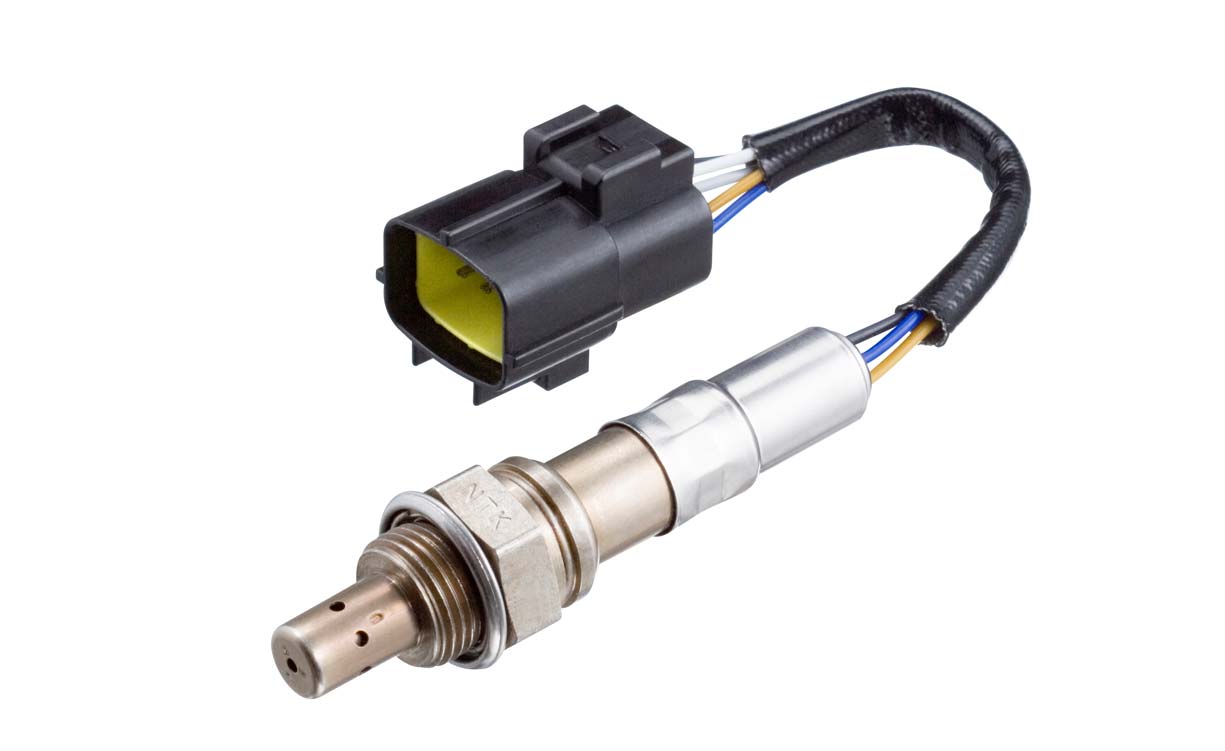
At its core, an oxygen sensor, also known as a Lambda sensor, measures the proportion of oxygen in the exhaust gases of an internal combustion engine. This measurement is then relayed to the engine’s central nervous system—the Engine Control Unit (ECU)—which uses this vital information to make instantaneous adjustments to the fuel injection system. Without an accurately functioning oxygen sensor, a vehicle would struggle to maintain optimal air-fuel ratios, leading to a cascade of negative effects that compromise performance, increase pollution, and diminish fuel efficiency.
The Crucial Role of the Oxygen Sensor in Modern Vehicles
The operational efficiency and environmental compliance of today’s vehicles hinge significantly on the accurate functioning of their oxygen sensors. These small but mighty components are the unsung heroes working diligently behind the scenes, ensuring that every drop of fuel is utilized effectively and that the vehicle’s footprint on the environment is minimized.
Ensuring Optimal Fuel Efficiency
One of the most immediate and tangible benefits of a properly working oxygen sensor is its contribution to fuel efficiency. The ideal air-fuel ratio for complete combustion in a gasoline engine is approximately 14.7 parts of air to 1 part of fuel, a state often referred to as stoichiometric. Deviations from this ratio—either too much fuel (rich mixture) or too little fuel (lean mixture)—lead to incomplete combustion, which wastes fuel.
The oxygen sensor constantly monitors the oxygen content in the exhaust, indicating whether the engine is running rich or lean. This real-time feedback allows the ECU to precisely adjust the amount of fuel injected into the cylinders. By maintaining the stoichiometric ratio as closely as possible, the engine extracts maximum energy from the fuel, resulting in better mileage and lower operational costs for the driver. A faulty oxygen sensor, on the other hand, can cause the ECU to misinterpret the exhaust conditions, leading to an overly rich mixture that consumes more fuel than necessary.
Minimizing Harmful Emissions
Beyond fuel economy, the oxygen sensor is indispensable for mitigating harmful exhaust emissions. The primary pollutants emitted by internal combustion engines include carbon monoxide (CO), unburnt hydrocarbons (HC), and nitrogen oxides (NOx). The catalytic converter, a key component in the exhaust system, is designed to transform these hazardous gases into less harmful substances like water vapor, carbon dioxide, and nitrogen. However, for the catalytic converter to operate at peak efficiency, it requires the exhaust gases to be within a very specific oxygen window—precisely what the oxygen sensor helps achieve.
By ensuring the air-fuel ratio is consistently near stoichiometric, the oxygen sensor provides the optimal environment for the catalytic converter to function effectively. If the engine runs too rich, the catalytic converter can become overloaded with hydrocarbons and carbon monoxide; if too lean, it may not be able to effectively reduce nitrogen oxides. Thus, the oxygen sensor is a linchpin in a vehicle’s emission control system, playing a direct role in protecting air quality and helping vehicles meet stringent environmental regulations worldwide.
Contributing to Engine Performance
While fuel efficiency and emission control are paramount, the oxygen sensor also indirectly contributes to overall engine performance. An engine that maintains an optimal air-fuel ratio runs smoother, responds better to throttle input, and delivers consistent power. When the ratio is off, the engine can suffer from rough idling, hesitation, misfires, and a noticeable drop in power output.
Modern ECUs are sophisticated enough to use oxygen sensor data not just for fuel trimming but also for other engine management functions. This real-time diagnostic capability means that potential issues can often be identified early, preventing more severe engine damage. A properly functioning oxygen sensor ensures that the engine’s combustion process is as clean and efficient as possible, which translates directly into reliable and responsive performance for the driver.
How Oxygen Sensors Work: A Deep Dive into the Technology
The operational principle of an oxygen sensor is a remarkable example of electrochemical engineering applied to real-time automotive diagnostics. Although there are different types, their fundamental objective remains the same: to measure oxygen concentration and convert it into an electrical signal the ECU can understand.
Sensing Oxygen Levels in Exhaust
The core of an oxygen sensor often involves a ceramic element made of zirconium dioxide (zirconia) that is porous and coated with platinum electrodes. This element is exposed to both the ambient air (reference air) and the exhaust gases. Zirconia is a solid electrolyte that, when heated to approximately 300°C (572°F) or more, becomes conductive to oxygen ions.
Oxygen molecules, due to the pressure difference between the exhaust and the ambient air, migrate through the zirconia element. The platinum electrodes facilitate the transfer of electrons, causing oxygen ions to move from the side with higher oxygen concentration to the side with lower concentration. This movement of ions creates a voltage difference across the zirconia element, which is the sensor’s output signal. The magnitude and polarity of this voltage are directly proportional to the difference in oxygen concentration between the exhaust and the ambient air.
Generating an Electrical Signal
For a narrowband zirconia sensor, the voltage output typically ranges from 0.1 to 0.9 volts.
-
High Voltage (0.9V): Indicates a low oxygen content in the exhaust, meaning a rich air-fuel mixture (more fuel than air). This is because most of the oxygen has been consumed during combustion.
-
Low Voltage (0.1V): Indicates a high oxygen content in the exhaust, meaning a lean air-fuel mixture (more air than fuel). This implies incomplete fuel combustion and excess oxygen.
The sensor rapidly switches between these voltage extremes as the ECU constantly adjusts the fuel injection to maintain the stoichiometric ratio. This continuous oscillation is the feedback signal that allows the ECU to “hunt” for the perfect air-fuel mixture.
Communicating with the Engine Control Unit (ECU)
The electrical signal generated by the oxygen sensor is sent directly to the ECU. The ECU is pre-programmed with specific target voltage ranges that correspond to optimal engine operation. When it receives a signal indicating a rich mixture, it reduces the amount of fuel injected. Conversely, if it receives a signal indicating a lean mixture, it increases fuel injection.
This feedback loop is incredibly fast, with adjustments happening multiple times per second. Modern ECUs use sophisticated algorithms to interpret the sensor data, taking into account other engine parameters like engine load, RPM, and engine temperature. This allows for dynamic and precise control over the combustion process, adapting to changing driving conditions in real-time. The oxygen sensor, therefore, isn’t just a measuring device; it’s a critical communication node in the complex network of engine management systems.
Types of Oxygen Sensors and Their Evolution
The evolution of automotive technology has seen the development of various types of oxygen sensors, each designed to meet increasingly stringent performance and emissions standards. While the basic principle remains similar, the sophistication and precision have significantly advanced.
Zirconia (Narrowband) Sensors
These are the traditional and most common type of oxygen sensor, historically found in most vehicles. As described earlier, they use a zirconia ceramic element to produce a voltage signal that flips rapidly between high (rich) and low (lean) states when the air-fuel ratio crosses the stoichiometric point. While effective for maintaining an average stoichiometric ratio, their “on-off” nature provides limited granularity of data, meaning they primarily indicate if the mixture is rich or lean, rather than how rich or lean. They are typically heated internally (Heated Oxygen Sensors, HO2S) to reach their operating temperature quickly, improving cold-start emissions.
Titania Sensors
Titania (titanium dioxide) sensors operate on a different principle. Instead of generating a voltage, their electrical resistance changes in response to varying oxygen concentrations in the exhaust gas. High oxygen content (lean mixture) results in lower resistance, while low oxygen content (rich mixture) leads to higher resistance. These sensors require a reference voltage from the ECU to operate and produce a varied output voltage signal. While less common than zirconia sensors, they offer advantages in certain applications, particularly due to their robustness and quicker response times in some designs.
Wideband (Air/Fuel Ratio) Sensors
Representing a significant technological leap, wideband oxygen sensors provide a much more precise and continuous measurement of the air-fuel ratio. Unlike narrowband sensors that only signal rich or lean conditions around stoichiometry, wideband sensors can accurately measure ratios across a much broader spectrum, from very lean to very rich.
This precision is achieved through an additional “pumping cell” that actively pumps oxygen ions into or out of a small diffusion gap. The current required to maintain a constant oxygen concentration in this gap is directly proportional to the actual air-fuel ratio. This continuous, linear signal allows the ECU to make much finer and quicker adjustments, leading to superior fuel economy, lower emissions, and enhanced performance, especially in turbocharged or high-performance engines. Wideband sensors are now standard in most modern vehicles and are crucial for meeting current emission regulations.
Sensor Placement and Functionality (Upstream vs. Downstream)
Modern vehicles typically employ multiple oxygen sensors strategically placed in the exhaust system:
-
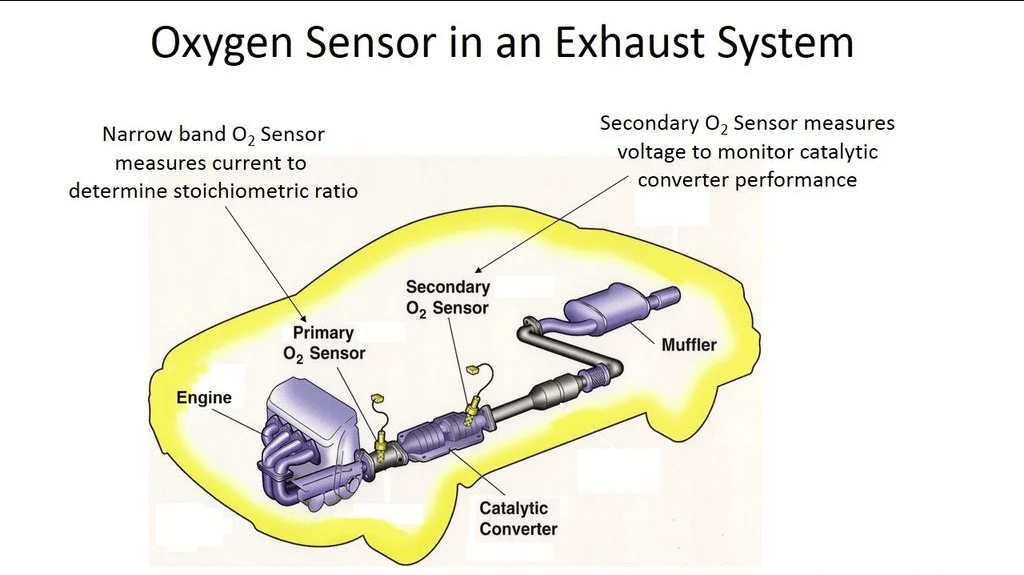
Upstream Sensors (Pre-Cat Sensors): Located before the catalytic converter. These are the primary sensors that provide crucial feedback to the ECU for air-fuel mixture control. They are usually wideband sensors in newer vehicles, ensuring optimal catalytic converter efficiency.
-
Downstream Sensors (Post-Cat Sensors): Located after the catalytic converter. These sensors monitor the efficiency of the catalytic converter itself. By comparing the oxygen levels before and after the converter, the ECU can determine if the converter is functioning correctly. A similar oxygen reading from both upstream and downstream sensors often indicates a failing catalytic converter, triggering a “Check Engine” light.
Common Issues, Diagnostics, and Maintenance
Like any electronic component exposed to harsh environments, oxygen sensors are subject to wear and tear. Their failure can lead to a range of performance issues and significantly impact a vehicle’s emissions.
Symptoms of a Failing Oxygen Sensor
Several noticeable symptoms can indicate a failing oxygen sensor:
-
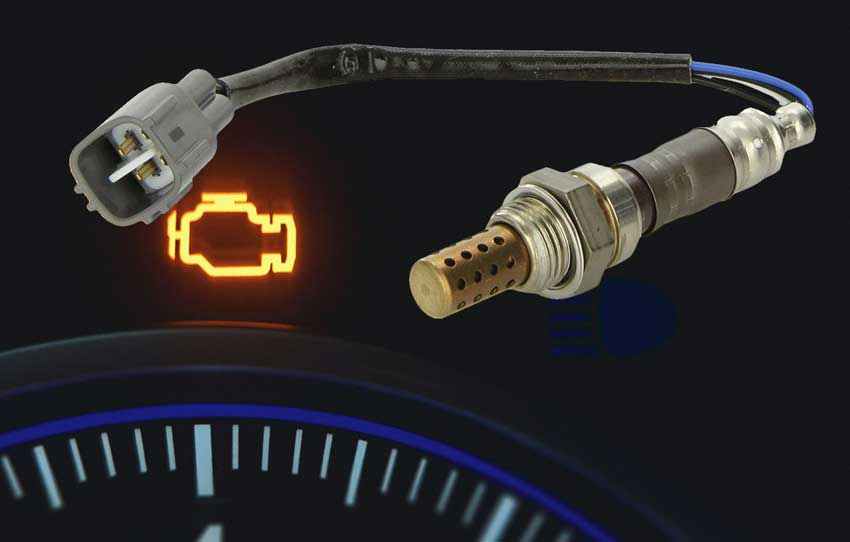
Illuminated “Check Engine” Light: This is the most common indicator. The ECU detects an anomaly in the sensor’s readings or functionality and triggers a Diagnostic Trouble Code (DTC).
-
Reduced Fuel Economy: A faulty sensor might cause the engine to run constantly rich, leading to increased fuel consumption.
-
Rough Idling or Stalling: Inaccurate air-fuel mixture can destabilize the engine’s idle speed.
-
Failed Emissions Test: Due to increased harmful pollutants in the exhaust.
-
Engine Hesitation or Misfires: Especially during acceleration, as the ECU struggles to provide the correct fuel mixture.
-
Sulfur or “Rotten Egg” Smell: Indicative of an overly rich mixture and a struggling catalytic converter.
Diagnostic Trouble Codes (DTCs)
When an oxygen sensor malfunctions, the ECU logs a specific DTC, which can be retrieved using an OBD-II (On-Board Diagnostics II) scanner. Common DTCs related to oxygen sensors include:
-
P0130-P0167: General oxygen sensor circuit malfunction codes, often specifying which sensor (e.g., Bank 1 Sensor 1 for upstream, Bank 2 Sensor 2 for downstream).
-
P0171 (System Too Lean – Bank 1) / P0172 (System Too Rich – Bank 1): These codes indicate a problem with the overall air-fuel mixture, often caused by a faulty oxygen sensor providing incorrect readings.
-
P0420 (Catalyst System Efficiency Below Threshold – Bank 1): While pointing to the catalytic converter, this code can sometimes be triggered by a faulty downstream oxygen sensor that isn’t accurately reporting the converter’s performance.
The Importance of Timely Replacement
Ignoring a faulty oxygen sensor is not advisable. Beyond the immediate issues of poor fuel economy and increased emissions, it can lead to more severe and costly problems. A continuously rich mixture, for instance, can cause carbon buildup on engine components, foul spark plugs, and, most critically, damage the catalytic converter, which is a very expensive component to replace. Timely diagnosis and replacement of a failing oxygen sensor are crucial for maintaining engine health and avoiding larger repair bills.
Impact of Modern Vehicle Technology on Sensor Lifespan
While older oxygen sensors might have needed replacement every 30,000-50,000 miles, modern sensors are generally more robust and can last much longer, often 100,000 miles or more. Factors affecting lifespan include fuel quality, engine condition, and exposure to contaminants like leaded fuel (which can poison the sensor). Advanced diagnostic systems in modern vehicles are better at detecting subtle sensor degradation before a complete failure, allowing for proactive maintenance.
The Broader Technological Impact and Future Outlook
The oxygen sensor, while a fundamental component, continues to evolve within the broader landscape of automotive technology. Its role is becoming even more integrated and critical as vehicles become smarter, more connected, and increasingly focused on environmental sustainability.
Integration with Advanced Driver-Assistance Systems (ADAS)
While not directly part of ADAS, the precise engine control enabled by advanced oxygen sensors indirectly supports the seamless operation of these systems. For instance, features like adaptive cruise control or automated emergency braking rely on the engine’s ability to respond accurately and instantaneously to commands for acceleration or deceleration. A finely tuned engine, thanks to optimal air-fuel ratios, ensures that power delivery and braking assistance are consistent and predictable, complementing the sophisticated algorithms of ADAS. Furthermore, as vehicles move towards electrification and hybridization, oxygen sensors in hybrid vehicles still play a role in managing the internal combustion engine component, ensuring its efficiency during its operational cycles.
Role in Automotive IoT and Predictive Maintenance
The continuous, high-resolution data provided by wideband oxygen sensors makes them valuable nodes in the growing Automotive Internet of Things (IoT). This data, combined with other sensor inputs, can be wirelessly transmitted and analyzed in real-time. This enables:
-
Predictive Maintenance: By analyzing trends in oxygen sensor readings, diagnostic algorithms can predict potential failures before they occur, allowing owners and service centers to proactively address issues. For example, a slow response time or erratic signal from an oxygen sensor could indicate impending failure, even before a “Check Engine” light illuminates.
-
Fleet Management: For commercial fleets, aggregating oxygen sensor data across numerous vehicles can provide insights into overall engine health, fuel efficiency trends, and emission compliance, optimizing operational costs and maintenance schedules.
-
Remote Diagnostics: Technicians can remotely monitor engine parameters, including oxygen sensor data, to diagnose issues without the vehicle needing to be physically present at a service center.
Environmental Regulations Driving Sensor Innovation
The relentless push for stricter global emission standards is a primary driver for continued innovation in oxygen sensor technology. As regulatory bodies demand near-zero emissions and higher fuel economy, the precision and responsiveness of these sensors become even more crucial. Future developments might include:
-
Even Faster Response Times: For more immediate adjustments to transient driving conditions.
-
Enhanced Durability: To withstand increasingly harsh operating environments and longer service intervals.
-
Integration with Advanced Combustion Technologies: As engines incorporate technologies like variable compression ratios or homogeneous charge compression ignition (HCCI), oxygen sensors will need to provide even more nuanced feedback to optimize these complex combustion processes.
-
Solid-State and Miniaturized Sensors: Future sensors might become even smaller, more integrated, and potentially utilize novel materials or sensing principles for greater accuracy and resilience.
In conclusion, the oxygen sensor, often unseen and unappreciated, is a cornerstone of modern automotive technology. Its ability to precisely monitor exhaust gases and feed critical data to the ECU underpins the sophisticated balance of performance, efficiency, and environmental responsibility that defines today’s vehicles. As automotive technology continues its rapid advancement, the oxygen sensor will undoubtedly remain a vital component, evolving in lockstep to meet the demands of an increasingly intelligent and sustainable future.
aViewFromTheCave is a participant in the Amazon Services LLC Associates Program, an affiliate advertising program designed to provide a means for sites to earn advertising fees by advertising and linking to Amazon.com. Amazon, the Amazon logo, AmazonSupply, and the AmazonSupply logo are trademarks of Amazon.com, Inc. or its affiliates. As an Amazon Associate we earn affiliate commissions from qualifying purchases.