
The Nasdaq Composite Index, a titan among global stock market benchmarks, frequently captivates the attention of investors, analysts, and economic observers worldwide. Renowned for its heavy weighting in technology and growth-oriented companies, the Nasdaq’s trajectory often serves as a barometer for innovation, economic expansion, and investor sentiment. When this index reaches an “all-time high,” it’s more than just a number; it signifies a period of profound investor optimism, robust corporate earnings, and often, transformative technological advancements. Understanding the Nasdaq’s all-time high—its value, the context of its achievement, and the forces driving it—is crucial for anyone seeking to navigate the intricacies of modern financial markets. This article delves into the specifics of the Nasdaq’s record peaks, the unique characteristics that propel it to new heights, and what these milestones mean for both seasoned and nascent investors.

Pinpointing the Nasdaq’s All-Time High
Identifying the precise all-time high for the Nasdaq requires looking at its most recent and significant peak, often reflective of current market conditions. The Nasdaq Composite, which includes virtually all stocks listed on the Nasdaq stock exchange, represents a broad spectrum of companies, though its identity is undeniably forged by the tech giants that dominate its market capitalization.
The Specific Peak: A Moving Target of Market Optimism
As of early 2024, the Nasdaq Composite has demonstrated remarkable resilience and growth, regularly touching and surpassing previous records. While market conditions are dynamic and subject to daily fluctuations, the index has generally seen its most recent all-time highs in the first half of 2024, pushing beyond the peaks witnessed in late 2021. For instance, the Nasdaq Composite reached significant peaks, exceeding 17,000 points in May/June 2024, a testament to the strong performance of its constituent companies, particularly in the technology sector. It’s important to note that specific daily closing values constantly reset this record, reflecting ongoing market dynamics. These recent highs indicate a renewed confidence in the tech sector after a period of correction. The Nasdaq 100, an index comprising the 100 largest non-financial companies listed on the Nasdaq, often mirrors or even leads the Composite’s performance due to its concentration of influential tech behemoths.
Historical Context: Peaks and Troughs of Innovation Cycles
The journey to these all-time highs is punctuated by several historic surges and corrections. The dot-com bubble burst in 2000, for example, saw the Nasdaq Composite plunge dramatically after reaching then-unprecedented levels, highlighting the inherent volatility of growth stocks. It took over 15 years for the index to regain those nominal highs. More recently, the post-financial crisis bull run, significantly accelerated by the digital transformation during the COVID-19 pandemic, propelled the Nasdaq to new stratospheric levels in late 2021. The subsequent pullback in 2022 served as a healthy reminder of market cycles, only for a robust rebound starting in late 2023 and continuing into 2024 to re-establish and surpass those previous all-time highs. This pattern underscores the long-term upward bias of the market, driven by continuous innovation and economic growth, despite periodic setbacks.
Understanding the Nasdaq’s Unique Composition and Drivers
The Nasdaq is not just another stock market index; it’s a specialized ecosystem, primarily representing the vanguard of technological advancement and future economic growth. Its distinct composition and the specific drivers behind its movements offer crucial insights for investors.
The Technology Powerhouse: A Concentration of Innovation
At its core, the Nasdaq is synonymous with technology. Unlike broader market indices that are more evenly distributed across various economic sectors, the Nasdaq Composite—and especially the Nasdaq 100—is heavily weighted towards companies engaged in software, hardware, internet services, biotechnology, telecommunications, and other high-growth industries. This concentration means that trends in technological innovation, consumer adoption of new digital tools, and the competitive landscape within these sectors have an outsized impact on the index’s performance. When tech companies thrive, the Nasdaq soars.
Key Sector Influence: From Software to Semiconductors
Within this tech-heavy landscape, certain sub-sectors frequently emerge as dominant forces. Software-as-a-Service (SaaS) companies, cloud computing providers, semiconductor manufacturers, and e-commerce giants consistently exert significant influence. For instance, the demand for more powerful chips to fuel AI development directly benefits companies like Nvidia, which in turn significantly impacts the Nasdaq’s overall value. Similarly, the widespread adoption of cloud services drives growth for Amazon (AWS) and Microsoft (Azure), both heavyweights on the exchange. The biotechnology sector, too, contributes to the Nasdaq’s innovative edge, with breakthroughs in medicine and life sciences offering substantial growth potential.
Macroeconomic Tailwinds: The Broader Economic Picture
Beyond specific sector performance, broader macroeconomic conditions play a pivotal role in the Nasdaq’s ascent. Periods of low-interest rates, for instance, tend to favor growth stocks because their future earnings streams are discounted less severely, making them more attractive to investors. A robust economic environment, characterized by strong GDP growth and consumer spending, also provides fertile ground for tech companies to expand. Furthermore, global trends such as increased digitalization across industries, the acceleration of remote work, and the expanding reach of e-commerce all serve as significant tailwinds, driving demand for the products and services offered by Nasdaq-listed companies.
The Forces Behind the Latest Ascent to the Summit
The recent surge to new all-time highs for the Nasdaq is not accidental but the culmination of several powerful, interconnected forces. These drivers highlight the dynamic interplay between technological innovation, corporate performance, and market sentiment.
Innovation and Disruption: Fueling Exponential Growth
At the heart of the Nasdaq’s enduring growth is its relentless pursuit of innovation. Companies listed on the exchange are often at the forefront of developing groundbreaking technologies that disrupt existing industries and create entirely new markets. Artificial intelligence (AI) is a prime example, with its transformative potential driving massive investments and revenue growth for companies involved in its development and application. From advanced machine learning algorithms to quantum computing and biotechnological advancements, the constant stream of innovation fuels investor excitement and provides a compelling narrative for long-term growth.
Earnings Growth and Investor Sentiment: The Pillars of Confidence
Ultimately, stock market performance is tied to corporate earnings. Strong, consistent earnings growth from Nasdaq’s constituent companies provides the fundamental justification for higher stock prices. When companies exceed revenue and profit expectations, it signals underlying business strength and validates investor confidence. Bullish investor sentiment, often amplified by positive news cycles and a “fear of missing out” (FOMO), can create a virtuous cycle, driving more capital into the market and pushing valuations higher. Conversely, any hint of decelerating growth or economic uncertainty can quickly temper this sentiment.
Monetary Policy and Liquidity: The Flow of Capital
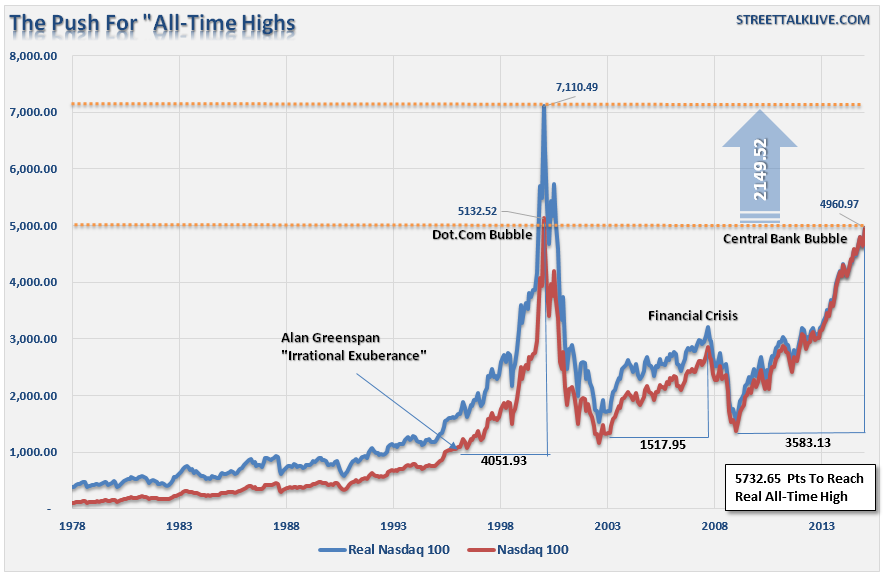
Central bank policies, particularly interest rates, have a profound impact on the Nasdaq. A low-interest-rate environment, as seen for much of the past decade, reduces the cost of borrowing for companies (enabling investment and expansion) and makes equity investments more attractive compared to fixed-income assets. Quantitative easing measures, which inject liquidity into the financial system, also tend to lift asset prices. While recent periods have seen interest rates rise, the market’s expectation of future rate cuts, coupled with ample liquidity still circulating, continues to influence investor appetite for growth stocks.
The “Magnificent Seven” and Market Concentration: A Powerful Few
A significant factor in the Nasdaq’s recent performance is the immense influence of a select group of mega-cap technology companies, often dubbed the “Magnificent Seven” (Apple, Microsoft, Alphabet, Amazon, Nvidia, Tesla, Meta Platforms). These companies, with their colossal market capitalizations and dominant market positions, command a substantial weighting within the Nasdaq Composite and especially the Nasdaq 100. Their individual performance—driven by strong earnings, innovative product launches, and expanding market shares—can single-handedly propel the entire index to new heights. While this concentration reflects their success, it also introduces a degree of risk, as the underperformance of even one or two of these giants can significantly impact the broader index.
Implications of an All-Time High for Investors
Reaching an all-time high is a moment of triumph for the market, yet it also presents a complex landscape for investors. While exciting, it necessitates a thoughtful approach to investing, balancing optimism with prudence.
Bull Market Psychology: Excitement and Potential Pitfalls
An all-time high often reinforces bull market psychology, where optimism abounds, and many investors feel compelled to participate lest they miss further gains. This sentiment can lead to exuberance, sometimes pushing valuations beyond their intrinsic worth. While the excitement is understandable, investing solely based on “the market is going up” can be perilous. It’s crucial for investors to distinguish between legitimate growth drivers and speculative frenzy.
Valuation Concerns: Are Stocks Overpriced?
When indices reach new highs, valuation metrics like price-to-earnings (P/E) ratios, price-to-sales, and enterprise value multiples often climb. High valuations imply that future growth is already priced into the stock, leaving less room for upside or making them more vulnerable to corrections if growth expectations are not met. Investors should meticulously examine individual company fundamentals rather than assuming that all stocks within a rising index are equally attractive. A stock trading at an all-time high might still be a good investment if its future earnings potential justifies the valuation, but it requires careful due diligence.
The Importance of Diversification and Long-Term Strategy
Investing at market highs underscores the perennial importance of diversification. Relying too heavily on a single sector, even a high-growth one like technology, can expose an investor to undue risk if that sector experiences a downturn. A diversified portfolio, spread across different asset classes, geographies, and industries, helps mitigate this risk. Furthermore, maintaining a long-term investment horizon is paramount. Market highs and subsequent corrections are part of the natural market cycle. Investors with a long-term perspective are better positioned to weather short-term volatility and benefit from the compounding power of growth over time.
Risk Management: Preparing for Volatility
All-time highs can often precede periods of increased volatility or corrections. While no one can perfectly time the market, prudent risk management is essential. This includes setting clear investment goals, understanding your risk tolerance, regularly rebalancing your portfolio to maintain desired asset allocations, and considering stop-loss orders or other protective measures. Having a cash reserve for potential buying opportunities during market dips can also be a strategic move.
Navigating the Future: What’s Next for the Nasdaq?
The journey beyond an all-time high is always uncertain, yet understanding potential challenges and enduring strengths can help investors prepare for the road ahead.
Potential Headwinds: Macroeconomic and Regulatory Pressures
While the Nasdaq’s past performance has been stellar, several headwinds could temper its future growth. Rising interest rates, if they continue or are held higher for longer, can make borrowing more expensive for companies and reduce the present value of future earnings, typically hitting growth stocks harder. Inflation, if persistent, can erode profit margins and consumer purchasing power. Regulatory scrutiny, particularly concerning anti-trust issues for dominant tech giants, could also impact their business models and growth prospects. Geopolitical tensions and supply chain disruptions remain ongoing risks that could affect global markets.
Enduring Strengths: Innovation and Adaptation
Despite potential challenges, the Nasdaq’s underlying strengths are formidable. Its constituent companies are often characterized by strong balance sheets, significant cash flows, and a relentless focus on innovation. They are adept at adapting to changing market conditions, leveraging their technological prowess to find new avenues for growth. The secular trends towards digitalization, automation, and artificial intelligence are long-term drivers that are unlikely to diminish, ensuring a continued demand for the products and services offered by Nasdaq’s leading firms. The capacity for reinvention and market leadership will likely continue to fuel the index’s long-term trajectory.
The Long-Term Perspective: Cycles of Growth
Ultimately, financial markets operate in cycles. While all-time highs signify periods of robust growth and investor confidence, they are rarely the permanent peak. Corrections and periods of consolidation are natural and healthy parts of a functioning market, often paving the way for the next phase of growth. For the long-term investor, the Nasdaq’s journey is one of continuous evolution, driven by human ingenuity and the pursuit of progress. Embracing this long-term perspective, rather than getting caught up in short-term fluctuations, remains the most reliable path to financial success.

Conclusion
The Nasdaq Composite reaching an all-time high is a powerful affirmation of the market’s belief in the future of technology and growth. It reflects periods of profound innovation, robust corporate earnings, and favorable macroeconomic conditions that propel the market to unprecedented levels. While these milestones are exciting and symbolize economic progress, they also serve as a crucial juncture for investors. They are reminders to approach investing with informed insight, emphasizing disciplined analysis over emotional exuberance. Understanding the unique characteristics of the Nasdaq, the forces that drive its ascent, and the prudent investment strategies required at market peaks, empowers investors to navigate the complexities of modern financial markets, harnessing the power of growth while managing inherent risks. The Nasdaq’s high-water marks are not just records to be celebrated, but vital data points for understanding the dynamic landscape of global finance.
aViewFromTheCave is a participant in the Amazon Services LLC Associates Program, an affiliate advertising program designed to provide a means for sites to earn advertising fees by advertising and linking to Amazon.com. Amazon, the Amazon logo, AmazonSupply, and the AmazonSupply logo are trademarks of Amazon.com, Inc. or its affiliates. As an Amazon Associate we earn affiliate commissions from qualifying purchases.