
The name “Karen,” once a common and gentle appellation, has undergone a dramatic and complex transformation in recent years. While its etymological roots are steeped in tradition and positive associations, its contemporary usage has been heavily influenced by socio-cultural shifts, particularly within the digital sphere. This article delves into the multifaceted meaning of “Karen,” exploring its historical context, its evolution into a cultural phenomenon, and its implications for individual identity and societal discourse. We will analyze how a simple given name has become a potent symbol, examining the underlying dynamics of this linguistic and cultural shift.

The Etymological Roots and Historical Prevalence of “Karen”
To understand the current perception of “Karen,” it is crucial to first explore its origins and historical significance. The name itself carries a rich linguistic heritage and has been a popular choice for generations, reflecting societal trends and aesthetic preferences.
Linguistic Origins and Traditional Meanings
The name “Karen” is primarily of Danish origin, derived from the Greek name Aikaterine, which means “pure.” It is a shortened form of Katherine, a name with a long and storied history, famously borne by saints and royalty. This inherent meaning of purity and nobility bestowed a certain gravitas and positive connotation upon the name. Historically, “Karen” was perceived as a classic, somewhat sophisticated, and approachable name. Its prevalence in the mid-20th century, particularly in Western cultures, marked a period where such names were widely embraced, evoking a sense of tradition and familial continuity. It was a name found on birth certificates across various socio-economic strata, lending it a universality that transcended specific cultural markers.
The Rise and Fall of Popularity
The popularity of “Karen” as a given name experienced a significant surge in the mid-20th century. In the United States, for instance, it ranked among the top 10 most popular names for baby girls throughout the 1950s and 1960s. This widespread adoption speaks to its then-neutral, positive, and desirable qualities. It was a name associated with mothers, sisters, and friends – a familiar and comforting presence. However, like many names, its popularity began to wane in subsequent decades as naming trends evolved. By the late 20th and early 21st centuries, “Karen” had become less common for newborns, moving from the top ranks to a more moderate standing. This decline in contemporary usage, while a natural part of naming evolution, inadvertently laid the groundwork for its later re-appropriation. The diminishing presence of “Karen” among younger generations meant that the name was increasingly associated with an older demographic, contributing to its eventual stereotyping.
The Emergence of “Karen” as a Cultural Archetype
The transition of “Karen” from a common given name to a widely recognized cultural archetype is a fascinating, albeit sometimes troubling, phenomenon. This transformation was largely fueled by online discourse and the viral nature of social media, where the name became a shorthand for a specific set of behaviors and perceived attitudes.
From Given Name to Internet Meme
The genesis of “Karen” as a pejorative term can be traced to various online communities and forums, particularly those discussing race and social justice issues. It began as a way to identify a particular type of white, middle-aged woman perceived as entitled, demanding, and often exhibiting racist tendencies, especially when interacting with service workers or people of color. Early iterations of the meme often depicted stereotypical scenarios of such women demanding to “speak to the manager” or exhibiting aggressive, unreasonable behavior. The name “Karen” was chosen, perhaps due to its prevalence among the demographic it was intended to represent, and its relative anonymity, allowing for a generalized critique without directly targeting specific individuals. This linguistic shorthand proved incredibly effective, enabling quick and widely understood communication about a specific social issue.
The Characteristics and Stereotypes Associated with “Karen”
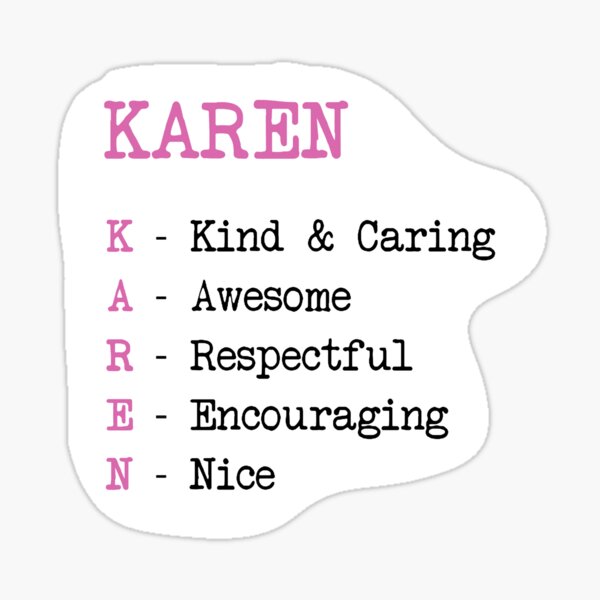
The “Karen” archetype is characterized by a constellation of behaviors and attitudes that have become widely understood through memes, videos, and online discussions. These often include:
- Entitlement and Demanding Behavior: A strong sense of self-importance and an expectation that her needs and desires should be met immediately and without question. This often manifests as demanding special treatment or making unreasonable requests.
- Aggression and Confrontation: A tendency to escalate situations, often by becoming verbally aggressive, accusatory, or threatening. This can include yelling, berating others, or resorting to passive-aggressive tactics.
- Weaponization of Privilege: The perceived use of her social standing, particularly as a white woman, to intimidate, assert authority, or complain when she feels her perceived rights are being infringed upon.
- “Speaking to the Manager”: This is perhaps the most iconic and frequently cited behavior, symbolizing a woman’s immediate resort to a higher authority when dissatisfied, often for trivial reasons, to exert control and achieve her desired outcome.
- Performative Outrage: An exaggerated or insincere display of anger or distress, often for personal gain or to gain attention, without genuine concern for the underlying issue.
It is crucial to acknowledge that this archetype is a generalization and does not reflect the reality of all individuals named Karen. However, the meme’s widespread adoption speaks to a perceived societal observation that resonated with many.
The Impact and Consequences of the “Karen” Archetype
The popularization of the “Karen” archetype has had significant and far-reaching consequences, impacting individuals, communities, and broader societal perceptions. Understanding these impacts is essential to navigating the complexities of this cultural phenomenon.
Social and Psychological Repercussions
For individuals actually named Karen, the cultural shift has been profoundly negative. Many have reported experiencing harassment, discrimination, and a sense of alienation simply because of their given name. The association of their name with negative stereotypes can lead to feelings of shame, embarrassment, and even anxiety. This can affect their personal relationships, professional lives, and overall sense of self-worth. The inability to escape the meme’s connotations can make everyday interactions uncomfortable and fraught with misjudgment. Furthermore, the meme can inadvertently discourage individuals from speaking up or advocating for themselves, out of fear of being labeled a “Karen.” This highlights a problematic aspect of collective online judgment, where individual identity can be overshadowed by a popularized stereotype.
Broader Societal Implications and Critiques
The “Karen” meme, while initially serving as a tool to critique problematic behavior and highlight issues of privilege and racism, has also faced significant criticism. Critics argue that it can be misogynistic, ageist, and classist, unfairly targeting women for expressing legitimate concerns or for simply being assertive. The meme has been accused of silencing women and discouraging them from speaking out, especially in situations where they might be experiencing genuine injustice. There is also a concern that the meme can be used to dismiss valid complaints from women, trivializing their experiences by automatically labeling them as “Karen” behavior. This highlights the delicate balance between social critique and the potential for harmful generalizations. Furthermore, the meme’s focus on individual behavior can sometimes distract from the systemic issues that contribute to the very behaviors it purports to critique, such as unequal power dynamics, inadequate customer service training, and societal biases. The reduction of complex social issues to a simple, easily identifiable meme risks oversimplification and hinders deeper understanding and constructive solutions.

Navigating the Future of the “Karen” Label
As the cultural landscape continues to evolve, the future of the “Karen” label remains uncertain. While its prevalence in online discourse may eventually diminish, the impact it has had on individuals and societal perceptions will likely linger. Moving forward, it is important to engage with this phenomenon with a critical and nuanced perspective. This involves:
- Promoting Individuality: Recognizing that a name does not define a person and actively working to separate individuals from the stereotypes associated with them.
- Focusing on Behavior, Not Labels: Addressing specific problematic behaviors directly rather than resorting to broad, identity-based labels.
- Encouraging Constructive Dialogue: Fostering conversations about entitlement, privilege, and social responsibility in a way that is respectful and aims for understanding, rather than condemnation.
- Educating about Nuance: Understanding that not all assertiveness is aggressive, and not all complaints are unreasonable. Differentiating between genuine concerns and the problematic behaviors associated with the “Karen” archetype.
The story of the name “Karen” serves as a potent reminder of the power of language and culture in shaping perceptions. It underscores the need for empathy, critical thinking, and a commitment to understanding the complexities of human behavior and identity in our increasingly interconnected world.
aViewFromTheCave is a participant in the Amazon Services LLC Associates Program, an affiliate advertising program designed to provide a means for sites to earn advertising fees by advertising and linking to Amazon.com. Amazon, the Amazon logo, AmazonSupply, and the AmazonSupply logo are trademarks of Amazon.com, Inc. or its affiliates. As an Amazon Associate we earn affiliate commissions from qualifying purchases.