
In the realm of modern technology, direction is no longer just a matter of looking at the sun or holding a magnetized needle. When we ask “what does due east mean” in a technical context, we are delving into a sophisticated world of geospatial data, sensor fusion, and the foundational mathematics that allow our devices to interact with the physical world. While the literal definition refers to a compass bearing of exactly 90 degrees, the technological implementation of “due east” is the backbone of everything from autonomous drone delivery to the complex algorithms driving global logistics.
Understanding “due east” through a tech lens requires looking past the horizon and into the software and hardware that define our digital reality. It is a benchmark for precision, representing an absolute vector in a world increasingly reliant on hyper-accurate spatial awareness.
The Mechanics of Digital Orientation: How Hardware Defines Direction
To a computer, “due east” isn’t a feeling or a general direction toward the sunrise; it is a specific numerical value calculated through an array of sensors known as the Inertial Measurement Unit (IMU). In our smartphones, laptops, and wearable gadgets, the determination of due east is a feat of micro-engineering.
Magnetometers and the Quest for Magnetic North
The primary tool for finding “due east” in consumer tech is the magnetometer. This is a tiny MEMS (Micro-Electro-Mechanical Systems) sensor that measures the strength and direction of magnetic fields. However, the tech challenge lies in the distinction between Magnetic North and True North. Because “due east” is traditionally defined relative to the Earth’s geographic axis (True North), software must apply a “declination” correction. This involves using a World Magnetic Model (WMM)—a large dataset integrated into operating systems like Android and iOS—to calculate the offset based on the user’s current GPS coordinates.
Gyroscopes and Accelerometers: Maintaining the Vector
Finding due east is one thing; maintaining that heading while in motion is another. This is where sensor fusion comes into play. While the magnetometer provides the initial bearing, gyroscopes measure the rate of rotation, and accelerometers measure linear motion. When a self-driving car or a robotic vacuum turns toward 90 degrees, the software utilizes a Kalman filter. This algorithm processes the noisy data from multiple sensors to provide a smooth, stabilized estimate of “due east,” ensuring the device doesn’t jitter or lose its heading due to local electromagnetic interference.
The Role of RTK (Real-Time Kinematic) Positioning
For standard consumer apps, an error of a few degrees when pointing due east is acceptable. However, in industrial tech—such as precision agriculture or civil engineering—”due east” must be accurate to within centimeters. This is achieved through Real-Time Kinematic (RTK) positioning. RTK enhances GNSS (Global Navigation Satellite System) data by using a fixed ground station to provide real-time corrections. This allows tech hardware to define a “due east” path with surgical precision, enabling tractors to plant seeds in perfectly straight lines or drones to inspect power lines with minimal human intervention.
Navigational Accuracy in the Age of Autonomous Systems
As we transition from human-led navigation to autonomous systems, the meaning of “due east” shifts from a visual guide to a critical data input. For an autonomous vehicle (AV) or a delivery robot, “due east” is a vector that must be reconciled with a high-definition (HD) map.
Computer Vision and SLAM Integration
Modern autonomous tech doesn’t rely solely on compass bearings. Simultaneous Localization and Mapping (SLAM) is a suite of algorithms that allow a robot to build a map of an unknown environment while keeping track of its own location within it. When a robot is programmed to travel “due east,” it uses LiDAR and computer vision to identify landmarks. If the digital compass says 90 degrees but the visual landmarks suggest a deviation, the software recalibrates in real-time. In this context, “due east” is a theoretical goal reconciled against the “ground truth” of visual data.
Redundancy in Geospatial Data
In tech safety protocols, “due east” serves as a benchmark for redundancy. If a primary navigation system fails, the system must have a secondary way to verify its heading. This is particularly vital in aviation tech and maritime software. Developers build “fail-safe” layers where the orientation is cross-checked against satellite telemetry, star-trackers (in space tech), and even atmospheric pressure sensors. If the sensors disagree on what constitutes a 90-degree heading, the system enters a “safe state,” highlighting how critical the precise definition of direction is to user safety.
The Geometric Logic of Vector Mapping
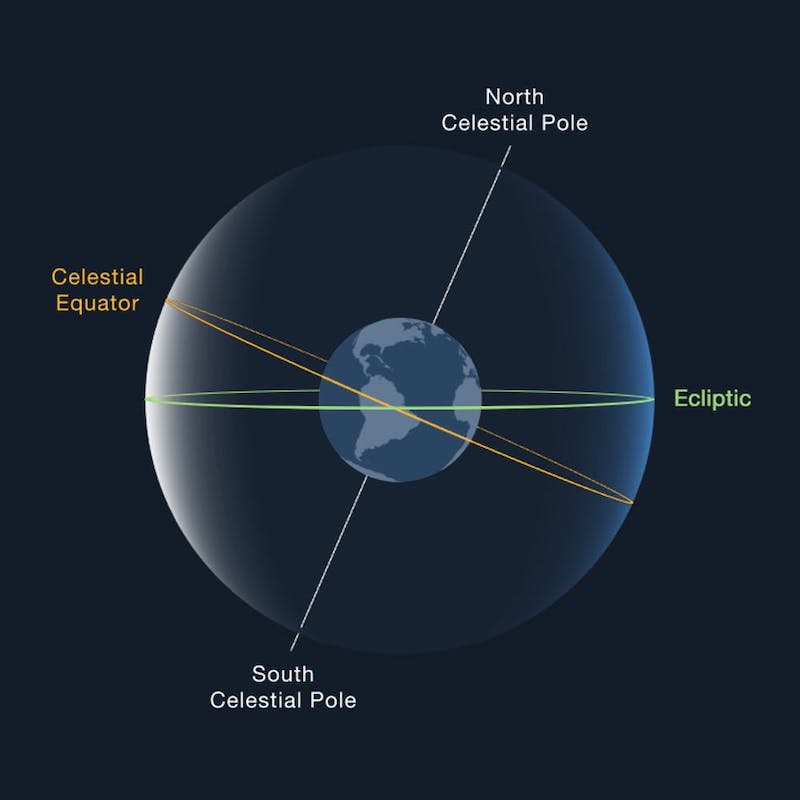
In software development, specifically within game engines like Unreal Engine or Unity, “due east” is often represented as a unit vector on the X-axis (1,0,0). When developers build digital twins of real-world cities, they must align these mathematical vectors with geographic coordinates. This process, known as georeferencing, ensures that when a user in a VR environment moves “due east,” their movements correspond exactly to the physical layout of the world. This alignment of the digital X-axis with the physical 90-degree bearing is a fundamental task for developers working in the Metaverse and spatial computing.
“Due East” as a Metaphor for Technical Alignment and Strategy
Beyond the hardware, the term “due east” is increasingly used in tech project management and software architecture to describe “True North” metrics and directional alignment. In a fast-paced development environment, knowing your “due east” means having a clear, unwavering objective for your product’s trajectory.
Alignment with Core Technical Objectives
In the lifecycle of a software product, “feature creep” can often lead a project off-course. Tech leads use the concept of a “cardinal direction” to keep teams focused. If the product’s “due east” is user privacy, every new API integration or data collection tool must be measured against that 90-degree heading. If a feature deviates from that path, it is discarded. Here, “due east” represents the direct path to a Minimum Viable Product (MVP) or a successful version launch.
Scaling through Precision Metrics
For SaaS (Software as a Service) companies, “due east” can refer to the linear scaling of infrastructure. When a system is designed to scale “due east,” it means it is built for horizontal growth—adding more machines to a cluster to handle increased load without changing the underlying architecture. This architectural directionality is crucial for cloud computing specialists who must ensure that as the company grows, the tech stack moves in a predictable, efficient direction rather than becoming a tangled web of legacy systems.
The Digital Roadmap: Navigating the Hype Cycle
The tech industry is notoriously prone to “noise”—the constant buzz of new frameworks, languages, and trends. For a CTO, maintaining a “due east” heading involves distinguishing between transformative technology (like Generative AI) and passing fads. A professional tech strategy involves setting a “due east” roadmap that accounts for emerging trends while remaining anchored in the company’s core technological strengths.
The Future of Precision: Quantum Sensors and the Next Generation of Orientation
As we look toward the future of technology, the way we define and detect “due east” is set to undergo a radical transformation. We are moving beyond the limitations of silicon-based MEMS and toward quantum-level accuracy.
Quantum Magnetometry
One of the most exciting frontiers in tech is quantum sensing. Researchers are developing nitrogen-vacancy (NV) center diamonds that can detect infinitesimal changes in magnetic fields. This technology will allow devices to determine “due east” with zero reliance on satellites. This is a game-changer for “GNSS-denied” environments, such as deep-sea exploration, underground mining, or even navigation on other planets where a global satellite grid doesn’t exist.
The Convergence of AI and Geospatial Intelligence
Artificial Intelligence is currently being integrated into the very fabric of how we interpret direction. AI models are being trained to recognize “spatial context.” For instance, an AI-enhanced camera can look at the shadows on a street and the moss on a tree to estimate “due east” when GPS signals are jammed or spoofed. This “cognitive navigation” represents the next step in tech evolution—where machines don’t just follow sensor data, but understand the environment in a way that mimics (and eventually surpasses) human intuition.
Ethical Implications of Hyper-Precision
As our ability to track “due east” reaches sub-millimeter precision, the tech industry faces new ethical challenges. Precision navigation enables precision tracking. The same software that helps a “due east” delivery drone find a porch also enables unprecedented levels of surveillance. As tech professionals, defining “due east” also means defining the boundaries of privacy and the ethical use of geospatial data.
In summary, “what does due east mean” in the tech world is a question that spans from the microscopic vibration of a MEMS sensor to the high-level strategic planning of a global software firm. It is a testament to our desire for order and precision in a complex, digital-first world. Whether it’s a vector in a codebase or a heading for a satellite, “due east” remains a vital constant in the ever-shifting landscape of technology.
aViewFromTheCave is a participant in the Amazon Services LLC Associates Program, an affiliate advertising program designed to provide a means for sites to earn advertising fees by advertising and linking to Amazon.com. Amazon, the Amazon logo, AmazonSupply, and the AmazonSupply logo are trademarks of Amazon.com, Inc. or its affiliates. As an Amazon Associate we earn affiliate commissions from qualifying purchases.