
For decades, the mood necklace has served as a cultural touchstone—a piece of jewelry that purports to reveal the wearer’s inner emotional landscape through a shifting spectrum of colors. While often dismissed as a nostalgic novelty from the 1970s, the “dark blue” state of a mood necklace is actually a fascinating entry point into the world of thermotropic technology, biofeedback, and the rapidly evolving field of emotional wearable tech.
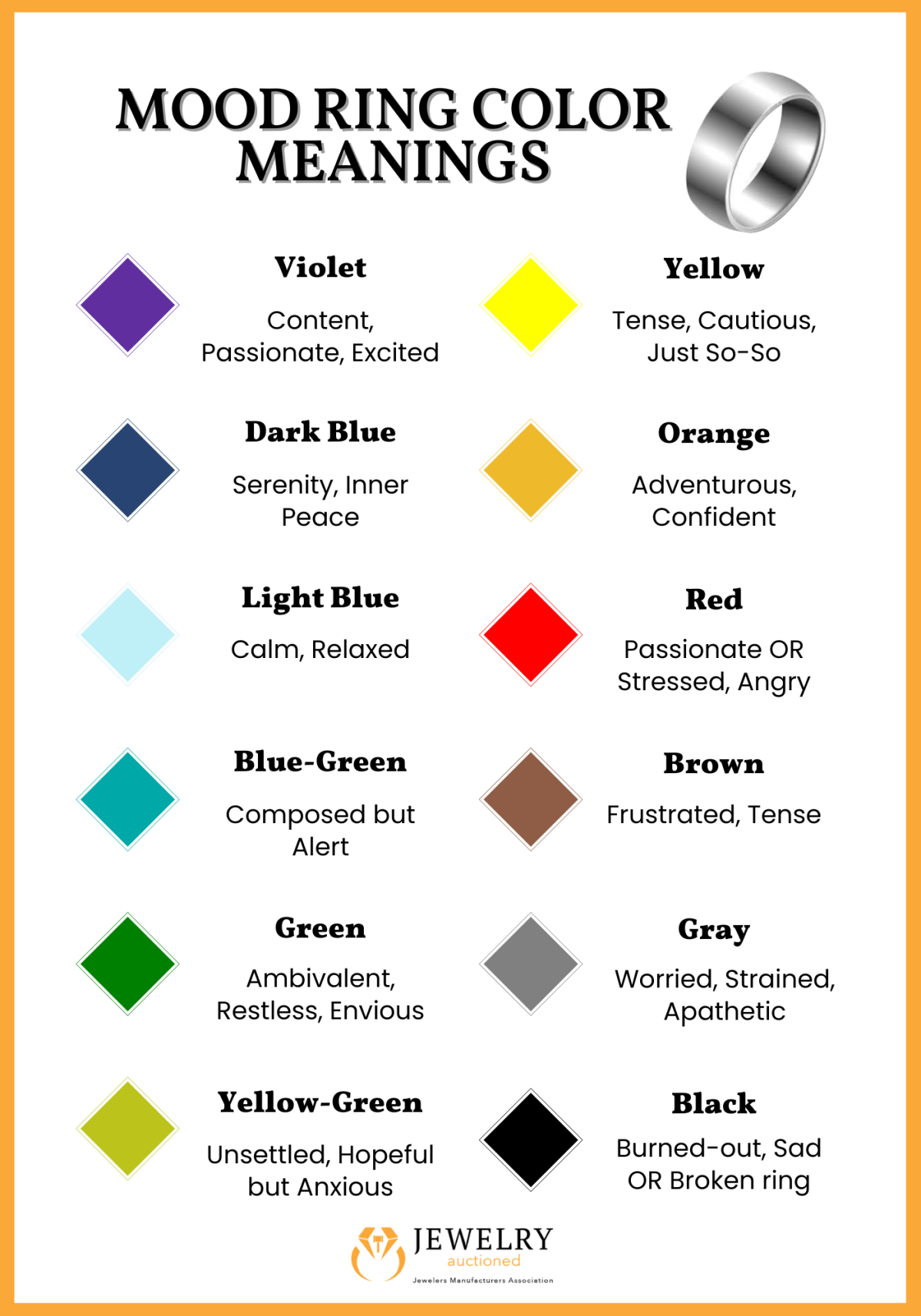
In the lexicon of these devices, dark blue is traditionally associated with feelings of intense happiness, passion, or deep relaxation. However, from a technical perspective, the meaning of dark blue is less about “mood” and more about “thermal data.” Understanding why a necklace turns dark blue requires a deep dive into the engineering of liquid crystals and how this primitive form of sensor technology paved the way for the sophisticated biometric gadgets we wear on our wrists today.
The Engineering of the Color Shift: Thermotropic Liquid Crystals
The core technology behind a mood necklace is not mystical; it is chemical engineering. The “stone” in a mood necklace is typically a hollow glass shell or a clear quartz dome filled with a thin layer of thermotropic liquid crystals. These crystals are a unique state of matter that exhibits properties of both liquids and solid crystals.
The Mechanism of Molecular Reorientation
Thermotropic liquid crystals are highly sensitive to thermal energy. When the temperature changes, the molecular structure of the crystals undergoes a physical reorientation. This shift in structure changes the way the material reflects and absorbs light. As the crystals are heated or cooled, their “twisting” or “tilting” alters the wavelength of light that is reflected back to the observer.
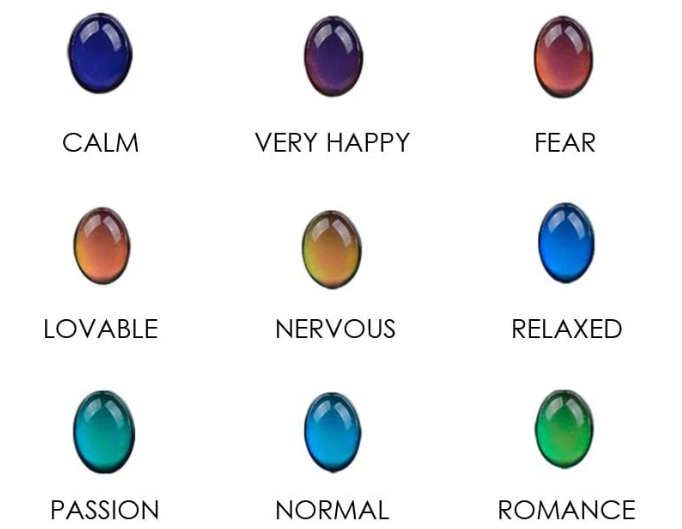
When the necklace displays a dark blue hue, it signifies that the liquid crystals have reached a specific high-temperature threshold. In the calibration of most mood jewelry, the spectrum moves from black (cold) to reddish-brown, yellow, green, and finally, blue and violet (hot). Dark blue represents the peak of the calibrated range, indicating that the wearer’s skin temperature is at its highest relative to the device’s setting.
Material Science and Calibration
Not all mood necklaces are created equal. The specific temperature at which a necklace turns dark blue depends on the chemical composition of the liquid crystal mixture. Manufacturers can “tune” these mixtures to react to very specific temperature ranges. For a wearable device, the crystals are typically calibrated to react between 82°F and 98°F. If the environment is too cold, the crystals may remain in their “ground state” (black). If the wearer is experiencing high peripheral blood flow, the crystals transition through the spectrum to reach that coveted dark blue.
Dark Blue as a Data Point: Biofeedback and Peripheral Blood Flow
To understand why a dark blue color is equated with positive emotions like joy or passion, we must look at the physiological response of the human body. This is the intersection where analog jewelry meets the principles of modern biofeedback.
The Physiology of Temperature
The human body’s internal temperature is tightly regulated, but our peripheral temperature—the heat at the surface of our skin—fluctuates significantly based on our autonomic nervous system. When a person is stressed, anxious, or cold, the body undergoes vasoconstriction. The nervous system pulls blood away from the extremities and toward the internal organs as part of the “fight or flight” response. This results in cooler skin on the neck and fingers, often causing the mood necklace to turn grey or amber.
Conversely, when a person is relaxed, happy, or experiencing physiological arousal, the body undergoes vasodilation. Blood flow increases to the skin’s surface. This surge in peripheral blood flow raises the surface temperature of the skin. Because the mood necklace is in direct contact with the epidermis, it registers this heat increase. Therefore, the “dark blue” state is a visual representation of high peripheral blood flow, which is physiologically correlated with a state of calm or high-energy positive emotion.
The Accuracy of Analog Biofeedback
While a mood necklace is a binary and somewhat crude sensor, it functions on the same fundamental principles as a Galvanic Skin Response (GSR) sensor or a modern thermistor found in high-end smartwatches. It provides a visual feedback loop. When a wearer sees their necklace turn dark blue, they receive a visual confirmation of their physiological state. This is the essence of biofeedback: using a device to gain awareness of internal biological functions with the goal of being able to manipulate them at will.
From Liquid Crystals to AI: The Evolution of Emotional Tech
The transition from a simple mood necklace to modern emotional AI is a significant leap in software and hardware integration, but the objective remains the same: the digitization of human affect. Today’s tech industry has moved far beyond liquid crystals, utilizing complex arrays of sensors to map the human “mood” with surgical precision.
The Rise of Multi-Modal Sensing
Modern wearables, such as the Oura Ring, Whoop, or Apple Watch, do not rely on a single thermal data point. Instead, they use multi-modal sensing. To determine if a user is “relaxed” (the digital equivalent of dark blue), these devices analyze:
- Heart Rate Variability (HRV): The variation in time between each heartbeat, which is a key indicator of autonomic nervous system balance.
- Electrodermal Activity (EDA): Measuring the micro-sweat gland activity on the skin, often used to detect stress levels.
- Skin Temperature: Using high-precision thermistors that can detect changes as small as 0.1 degrees Celsius.
When these data points are fed into a machine-learning algorithm, the device can provide a much more nuanced report than a color-changing stone. However, the dark blue mood necklace was the conceptual precursor to these “readiness” and “stress” scores.
Emotional AI and Pattern Recognition
The next frontier in this technology is Emotional AI, or Affective Computing. This involves software that can interpret the “dark blue” state within a broader context. For instance, an AI might look at your skin temperature, your recent calendar events, and your voice tonality to conclude that your “dark blue” state isn’t just relaxation—it’s the specific excitement of a successful business meeting. Companies are currently developing “smart fabrics” and “haptic jewelry” that can not only sense your mood but respond to it by cooling the skin or providing a gentle vibration to help you maintain that “dark blue” state of calm.
Digital Security and the Privacy of Your Emotions
As we move from analog mood necklaces to smart jewelry that records emotional data, we enter a complex landscape of digital security and data privacy. A mood necklace is private; only those in your immediate physical proximity can see the color. A digital emotional wearable, however, creates a permanent record of your physiological responses.
The Biometric Data Goldmine
Biometric data is increasingly valuable to marketers and data brokers. If a device can track when you are in a “dark blue” state (highly receptive, happy, relaxed) versus a “red” state (stressed, agitated), that data can be used to trigger targeted advertisements. For example, an app might wait until your wearable signals a “dark blue” state to show you an expensive luxury item, knowing you are in a more receptive psychological state for spending.
Protecting the Emotional Footprint
The shift toward emotional tech necessitates robust encryption and decentralized data storage. If your “mood” is being tracked via cloud-connected sensors, the risk of “emotional hacking” becomes real. This refers to the unauthorized access to a person’s biological state data to manipulate their behavior. As the tech industry refines the sensors that detect our “dark blue” moments, the software industry must equally refine the security protocols that keep those moments private.
The Future of Smart Jewelry and Haptic Interfaces
The legacy of the mood necklace lives on in the burgeoning field of smart jewelry. Designers are now blending high fashion with high technology to create pieces that are functional, aesthetic, and emotionally intelligent.
Haptic Feedback Loops
The mood necklaces of the future won’t just change color; they will interact with the wearer. Imagine a necklace that detects a drop in skin temperature and a rise in heart rate (the onset of stress) and begins to pulsate at a rhythmic frequency to guide the wearer through a breathing exercise. This turns the “dark blue” state from a passive observation into an active goal.

The Aesthetic of Data
We are seeing a return to the “dark blue” aesthetic in digital interfaces. Data visualization experts often use deep blues and purples to signify “flow states” or “optimal performance” in productivity apps. The color has become a universal UI/UX shorthand for a balanced, high-functioning system.
As wearable technology becomes more invisible—embedded in our clothing and our accessories—the simple logic of the mood necklace remains relevant. It reminds us that our technology is at its best when it helps us understand ourselves. Whether it is a layer of thermotropic liquid crystals on a piece of jewelry or a complex AI algorithm on a silicon chip, the goal is to find the “dark blue”—that perfect alignment of physical warmth and mental peace.
aViewFromTheCave is a participant in the Amazon Services LLC Associates Program, an affiliate advertising program designed to provide a means for sites to earn advertising fees by advertising and linking to Amazon.com. Amazon, the Amazon logo, AmazonSupply, and the AmazonSupply logo are trademarks of Amazon.com, Inc. or its affiliates. As an Amazon Associate we earn affiliate commissions from qualifying purchases.