
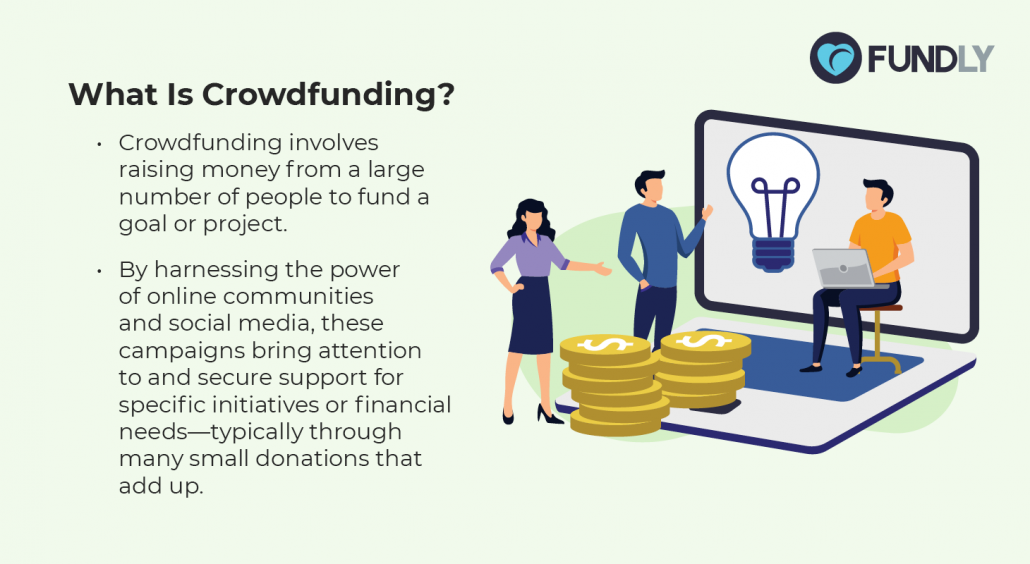
Crowdfunding represents a transformative approach to capital acquisition, democratizing the traditional financial landscape by enabling individuals and organizations to raise funds from a large number of people, typically via internet platforms. At its core, it’s a collective effort where many individuals contribute small amounts of money towards a common goal, be it a new product, a business venture, a creative project, or a charitable cause. This method bypasses conventional financial intermediaries like banks or venture capitalists, allowing direct interaction between capital seekers and potential funders.
The Genesis and Evolution of Collective Capital
While the concept of collective financial support isn’t entirely new – historical examples range from community barns to subscription models for publications – the modern iteration of crowdfunding is inextricably linked to the advent of the internet and digital platforms. The early 2000s saw the emergence of dedicated online platforms that streamlined the process, making it accessible to a global audience. This shift transformed fundraising from an exclusive domain of high-net-worth investors and financial institutions into a more inclusive model where anyone with an internet connection could participate, either as a project creator or a backer.
The motivations behind crowdfunding are diverse. For entrepreneurs and creators, it offers a lifeline, often proving to be the only viable path to secure initial capital for innovative ideas that might be deemed too risky or niche by traditional lenders. It also serves as a powerful market validation tool, as the willingness of a crowd to invest provides tangible proof of demand and interest. For funders, crowdfunding opens doors to a broad spectrum of investment opportunities, ranging from supporting causes they believe in to potentially earning financial returns from promising startups or creative endeavors.
Deconstructing the Financial Models of Crowdfunding
The term “crowdfunding” itself is an umbrella encompassing several distinct financial models, each with its unique structure regarding what funders receive in exchange for their contributions. Understanding these distinctions is crucial for both those seeking funds and those looking to invest.
Reward-Based Crowdfunding
This is perhaps the most widely recognized form, popularized by platforms like Kickstarter and Indiegogo. In reward-based crowdfunding, individuals contribute money in exchange for non-monetary rewards related to the project. These rewards vary greatly depending on the project type and contribution level, ranging from early access to a product, exclusive merchandise, a personalized thank you, or even experiences.
From a financial perspective, reward-based crowdfunding acts more like a pre-sale or pre-order system. Project creators receive capital upfront, which helps finance production, development, or execution, without relinquishing equity or incurring debt. Funders are essentially consumers paying in advance for a product or service, with the added benefit of supporting its creation. While there’s no direct financial return, the “return” is the promised reward and the satisfaction of contributing to something new. This model carries inherent risks for funders, as projects may fail to deliver rewards or even collapse entirely, leading to a loss of their contribution.
Donation-Based Crowdfunding
Primarily used for charitable causes, social initiatives, and personal fundraising, donation-based crowdfunding involves individuals contributing money without the expectation of any financial or material return. Platforms like GoFundMe are prominent in this space. Funders are motivated by altruism, a desire to support a cause, or help someone in need.
Financially, this model is straightforward: it’s a direct transfer of funds from donor to recipient. It provides a crucial source of capital for non-profits, individuals facing medical emergencies, or communities rallying for a specific social project. While there are no financial returns for donors, the benefit lies in the direct impact of their contribution and often, the tax deductibility of their donations.
Equity Crowdfunding
This model directly taps into the investment aspect, allowing a large number of individuals to invest small amounts of capital in private companies in exchange for equity (ownership shares). Platforms like SeedInvest and Republic facilitate these transactions. Unlike traditional venture capital, which targets institutional or accredited investors, equity crowdfunding typically targets both accredited and non-accredited investors, democratizing access to early-stage investment opportunities.
From a financial standpoint, equity crowdfunding offers potential for significant financial returns if the company succeeds and eventually sells or goes public. However, it also carries substantial risks. Early-stage companies are inherently volatile, and the majority fail, leading to a complete loss of investment. Furthermore, these investments are often illiquid, meaning shares cannot be easily sold for many years, if at all. Diligence is paramount for investors, as they are buying into a business’s future prospects. For companies, it’s a way to raise significant capital without needing to secure a single large investor, while also building a community of loyal shareholders.
Debt-Based Crowdfunding (P2P Lending)

Also known as peer-to-peer (P2P) lending, this model involves individuals lending money to other individuals or businesses with the expectation of repayment plus interest. Platforms like LendingClub and Prosper connect borrowers directly with lenders, bypassing traditional banks.
Financially, this functions much like a personal loan or business loan. Borrowers seek capital for various purposes, from debt consolidation to business expansion, and agree to repay the principal along with an agreed-upon interest rate over a set period. For lenders, it offers an opportunity to earn interest income, potentially higher than traditional savings accounts, while diversifying their investment portfolio. However, lenders face credit risk – the possibility that borrowers may default on their loans, leading to a loss of principal and anticipated interest. Platforms often conduct credit assessments to mitigate this, but risk remains a significant factor.
The Financial Landscape: Opportunities and Risks
Crowdfunding has reshaped financial access and investment avenues, presenting both compelling opportunities and considerable risks for participants on both sides of the transaction.
For Capital Seekers (Project Creators, Businesses)
Opportunities:
- Access to Capital: Enables funding for ideas and projects that might be too unconventional or small for traditional finance.
- Market Validation: A successful campaign indicates demand and market interest, providing crucial data.
- Community Building: Engages a loyal customer base or investor community from the outset.
- Marketing & Publicity: Campaigns generate buzz and media attention, acting as a powerful marketing tool.
- Retained Control: In reward and donation models, creators retain full ownership and control, unlike equity funding where ownership is diluted.
Risks:
- Failure to Fund: Many campaigns don’t reach their funding goal, resulting in no capital.
- Reputational Damage: Failed campaigns or inability to deliver rewards can harm future credibility.
- Overhead & Fees: Platforms charge fees, and managing a campaign requires significant time and effort.
- Delivery Challenges: Mismanaging production, logistics, or scaling can lead to project delays or complete failure, disappointing backers.
- Dilution (Equity): In equity crowdfunding, giving away shares means diluting ownership and future profits.
For Funders (Backers, Investors, Donors)
Opportunities:
- Diversification: Provides access to a wide range of unique investment or support opportunities outside traditional markets.
- Direct Impact: Donors and reward backers can directly support causes, creators, or products they believe in.
- Potential Returns: Equity and debt crowdfunding offer the possibility of financial gains, potentially significant in the case of successful startups.
- Early Access/Exclusive Rewards: Reward backers often receive products before general release or unique items.
Risks:
- Loss of Capital: The most significant risk across all models, especially equity and debt, where companies can fail or borrowers default. Reward-based funders may not receive promised goods.
- Lack of Liquidity: Investments in equity crowdfunding are typically long-term and illiquid, making it difficult to sell shares quickly.
- Fraud and Misrepresentation: While platforms have safeguards, the potential for fraudulent campaigns exists.
- Project Delays/Failure to Deliver: Even legitimate projects can face unforeseen challenges, leading to delays or non-delivery of rewards or product.
- Lack of Information: Especially for non-accredited investors, comprehensive due diligence can be challenging with limited public information on private companies.
Navigating the Crowdfunding Landscape as a Financial Tool
For anyone considering crowdfunding, either as a creator seeking funds or an individual looking to contribute or invest, strategic financial planning and due diligence are paramount.
For Project Creators:
- Define Your Financial Goal: Clearly articulate how much capital is needed and precisely how it will be utilized.
- Choose the Right Model: Select the crowdfunding type that aligns with your project’s nature, your ownership goals, and your target audience’s motivations.
- Craft a Compelling Narrative: Financial success is often tied to storytelling. Clearly communicate your vision, business plan (for equity), or cause, and demonstrate financial viability.
- Budget for Campaign Expenses: Factor in platform fees, marketing, reward fulfillment costs, and potential legal/accounting fees.
- Plan for Post-Campaign: For product-based projects, have a robust plan for manufacturing, shipping, customer service, and ongoing financial management. For businesses, detail how the capital will lead to profitability or growth.

For Funders/Investors:
- Understand the Model: Be clear about what you are getting in return (reward, interest, equity, or nothing).
- Assess Risk Tolerance: Understand that crowdfunding involves high risk, especially in equity and debt models. Only invest what you can afford to lose.
- Due Diligence: Research the project, the creator/company, and the platform. For equity investments, scrutinize financial projections, team experience, market analysis, and legal terms.
- Diversify: Don’t put all your funds into a single project. Spreading contributions across multiple ventures can mitigate risk.
- Read the Fine Print: Understand the terms and conditions, refund policies, and the platform’s role in dispute resolution.
Crowdfunding has solidified its position as a significant force in the financial ecosystem, offering innovative pathways for capital formation and investment. It’s a testament to the power of collective action, transforming how businesses are launched, projects are realized, and causes are supported, all while presenting a new frontier for personal and business finance.
aViewFromTheCave is a participant in the Amazon Services LLC Associates Program, an affiliate advertising program designed to provide a means for sites to earn advertising fees by advertising and linking to Amazon.com. Amazon, the Amazon logo, AmazonSupply, and the AmazonSupply logo are trademarks of Amazon.com, Inc. or its affiliates. As an Amazon Associate we earn affiliate commissions from qualifying purchases.