
The unsettling symphony of a failing automotive component can be a source of significant anxiety for any vehicle owner. Among the most common and often audible culprits is a bad wheel bearing. Understanding the specific sounds associated with this issue is crucial, not only for diagnosing the problem accurately but also for preventing potentially catastrophic failures and costly repairs. This article delves into the technical nuances of wheel bearing sounds, providing a comprehensive guide for vehicle owners seeking to understand what their car is trying to tell them.

The Mechanics of Wheel Bearing Noise: Understanding the Source
Wheel bearings are unsung heroes of the automotive world, silently enabling your wheels to rotate smoothly and efficiently. However, when these vital components begin to deteriorate, they can manifest their distress through a variety of auditory clues. To truly grasp the nature of these sounds, it’s essential to understand the underlying mechanical principles at play.
### The Role of Ball Bearings and Races
At its core, a wheel bearing consists of a series of hardened steel balls (or sometimes rollers) housed within an inner and outer race. These races are precisely machined surfaces that guide the rolling elements. When the bearing is functioning correctly, the balls or rollers smoothly glide between these races, allowing for low-friction rotation.
### Common Causes of Bearing Failure
Several factors can lead to the premature demise of a wheel bearing. These include:
- Wear and Tear: Over time and with significant mileage, the constant stress and friction can cause the bearing surfaces to wear down. This microscopic wear can lead to increased play and uneven contact.
- Contamination: The ingress of water, dirt, or other debris into the bearing assembly is a major cause of failure. These contaminants act as abrasives, accelerating wear and compromising the lubricating grease.
- Impact Damage: Hitting potholes, curbs, or other road debris can subject the wheel bearing to sudden, extreme forces. This shock can deform the races or fracture the rolling elements, leading to immediate or progressive damage.
- Improper Installation: If a wheel bearing is not installed with the correct torque specifications or if the hub assembly is damaged during installation, it can lead to premature failure.
- Corrosion: Exposure to road salt and moisture, especially in regions with harsh winters, can lead to corrosion of the bearing components, weakening them and increasing friction.
As these issues manifest, the smooth, concentric motion of the rolling elements is disrupted. This disruption is what translates into the characteristic sounds of a failing wheel bearing.
Decoding the Sounds: Common Wheel Bearing Noises and Their Significance
The auditory cues provided by a bad wheel bearing are not random; they often correlate directly with the type and severity of the damage. By carefully listening and observing the conditions under which these sounds occur, you can often pinpoint the problematic wheel.
### The Humming or Growling Sound
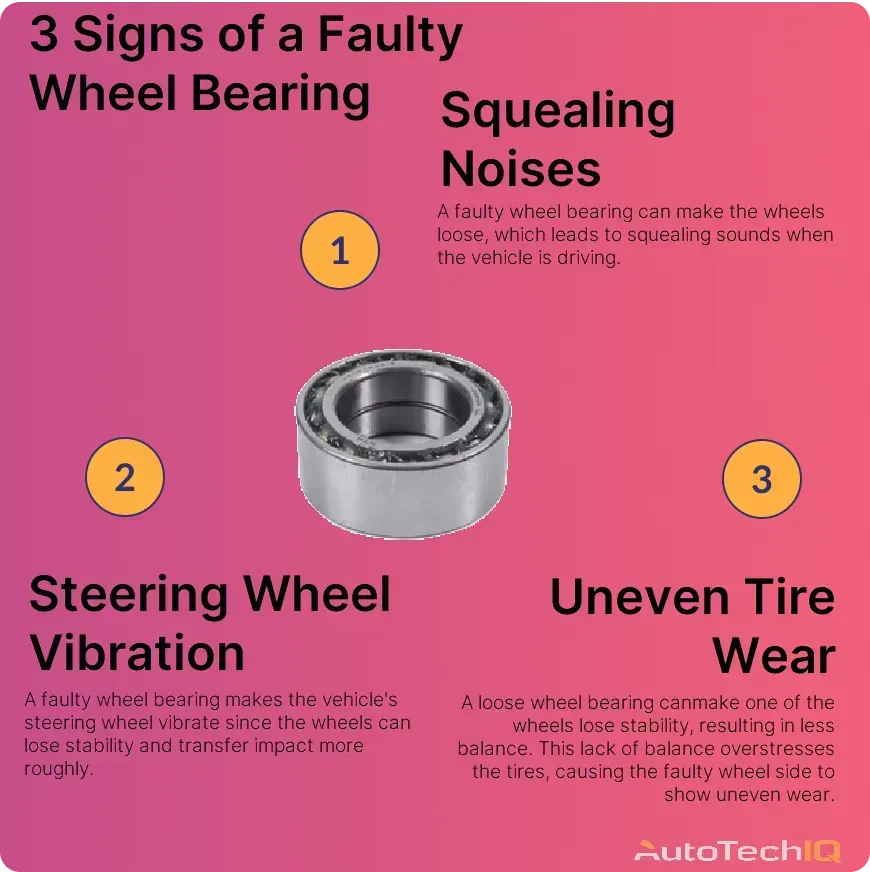
Perhaps the most common and recognizable symptom of a failing wheel bearing is a humming or growling noise. This sound typically starts subtly and becomes progressively louder as the bearing deteriorates.
- Pitch and Intensity: The pitch of the hum often increases with vehicle speed. At first, it might be a low, indistinct rumble. As the bearing wears further, it can evolve into a more pronounced growl, sometimes described as a “whine” or a “drone.”
- Speed Dependence: This is a crucial indicator. The noise will almost always be directly proportional to the speed of the wheel. If it gets louder as you accelerate and quieter or disappears when you decelerate, it strongly suggests a wheel bearing issue.
- Turning as a Diagnostic Tool: A key diagnostic maneuver involves turning the steering wheel gently. When you turn towards the side with the failing bearing, the load on that bearing increases, often making the noise louder. Conversely, turning away from the problematic side can momentarily relieve the pressure, causing the noise to decrease or temporarily disappear. This characteristic behavior is a strong tell-tale sign.
### The Grinding or Scraping Noise
A more severe stage of wheel bearing failure can manifest as a grinding or scraping sound. This noise indicates a more significant mechanical problem within the bearing.
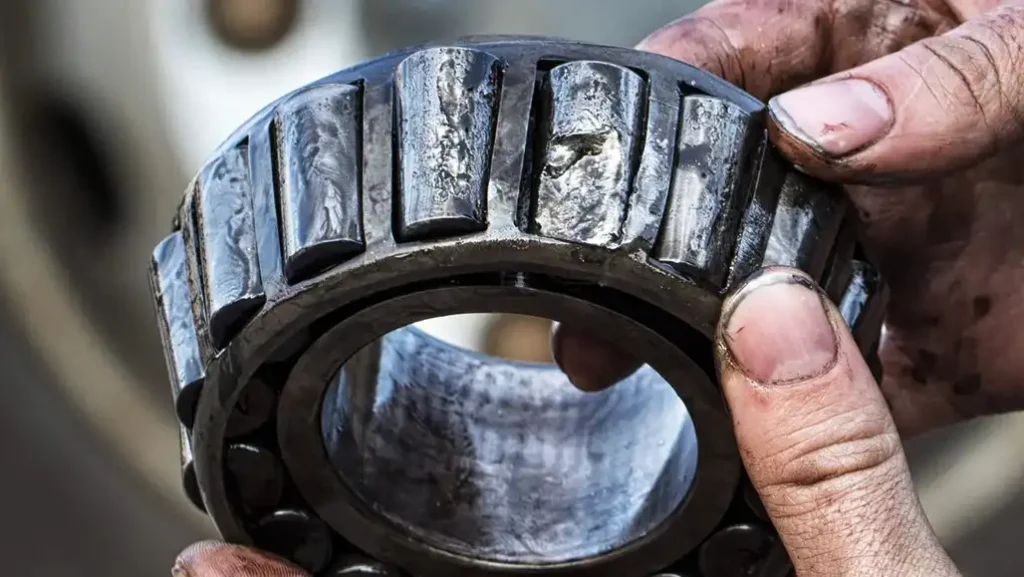
- Metal-on-Metal Contact: Grinding typically occurs when the rolling elements have severely worn or fractured, leading to metal-on-metal contact between the races. This can also happen if the bearing has completely seized or if debris has become significantly lodged within the assembly.
- Harsh and Abrupt: Unlike the gradual hum, grinding sounds are often harsher, more metallic, and can feel more abrupt. It may sound like rocks being churned within a metal container.
- Potential for Immediate Failure: This level of noise is a serious warning sign. It suggests that the bearing is on the verge of complete disintegration. Continuing to drive with a grinding wheel bearing can lead to the wheel detaching from the vehicle, which is an extremely dangerous situation.
### The Clicking or Popping Sound
While less common for wheel bearings themselves, a clicking or popping sound, especially when turning, can sometimes be associated with related components that are impacted by a failing wheel bearing or a hub assembly issue.
- Loose Components: In some cases, a severely worn wheel bearing can lead to excessive play in the hub assembly. This play might allow other components, such as the CV joints (in front-wheel-drive vehicles) or the brake calipers, to shift slightly, producing a clicking noise, particularly under load during turns.
- Distinguishing from Other Issues: It’s important to differentiate this from clicking noises caused by other sources, such as worn CV axles or loose suspension components. However, if the clicking is accompanied by the humming or grinding that suggests a wheel bearing issue, it’s prudent to investigate the bearing as a potential root cause.
Locating the Problem: Pinpointing the Source of the Noise
Once you can identify the type of sound and its behavior, the next critical step is to pinpoint which wheel is the source of the problem. This requires a systematic approach and often a bit of trial and error.
### The Turning Test
As mentioned earlier, the turning test is invaluable.
- Straight Line Observation: First, drive in a straight line at a consistent speed, listening carefully to the noise. Note its intensity and how it changes with speed.
- Gentle Turns: Then, execute gentle turns to the left and right.
- If the noise intensifies when turning left, the problem is likely in the right wheel bearing. This is because turning left shifts weight to the right side of the vehicle, putting more stress on the right wheel bearing.
- If the noise intensifies when turning right, the problem is likely in the left wheel bearing. Turning right shifts weight to the left side.
- Intermittent Disappearance: Observe if the noise disappears or significantly diminishes when turning away from the suspected side. This confirms the load-bearing relationship.
### The Elevated Diagnostic (For the Technically Inclined)
For those comfortable with basic vehicle maintenance, an elevated diagnostic can be performed on a level surface.
- Safety First: Ensure the vehicle is safely supported on jack stands. Never rely solely on a jack.
- Spinning the Wheels: With the vehicle in neutral, manually spin each wheel by hand. Listen for any grinding, humming, or excessive roughness in the rotation. You may also feel resistance or hear a catch.
- Wiggling for Play: While the wheel is off the ground, grip it at the 12 and 6 o’clock positions and try to wiggle it. Then do the same at the 3 and 9 o’clock positions. Excessive play or looseness, especially if you can feel it in the hub assembly as you wiggle, is a strong indicator of a worn wheel bearing. A very small amount of play might be acceptable in some suspension designs, but significant looseness is a red flag.
The Consequences of Neglect: Why Ignoring Wheel Bearing Sounds is Risky
Ignoring the auditory warnings of a failing wheel bearing can have serious and far-reaching consequences, extending beyond mere inconvenience.
### Safety Hazards
The most critical concern is safety. A severely worn wheel bearing can fail completely, leading to:
- Loss of Wheel Control: If the bearing disintegrates, the wheel can detach from the vehicle while in motion, causing an immediate and potentially uncontrollable loss of steering and braking on that corner. This is an extremely dangerous scenario that can easily lead to severe accidents.
- Brake System Compromise: A failing wheel bearing can also affect the functionality of the brake system. The rotor might become unstable, leading to reduced braking efficiency or even brake failure.
### Escalating Repair Costs
Postponing necessary repairs will invariably lead to more extensive and expensive damage.
- Damage to Associated Components: A grinding or seized bearing can damage the brake rotor, the hub assembly itself, and potentially even the suspension components. Replacing a bearing might be a relatively straightforward repair, but if it leads to the need for a new hub, rotor, and possibly other parts, the cost will skyrocket.
- Increased Labor Time: Technicians will spend more time diagnosing and repairing the damage if the initial problem has progressed significantly, translating to higher labor charges.
### Reduced Vehicle Performance and Fuel Efficiency
While perhaps less immediately critical than safety or repair costs, a degraded wheel bearing can subtly impact your driving experience.
- Increased Friction: A worn or contaminated bearing creates more friction, requiring the engine to work harder to maintain speed. This can lead to a noticeable decrease in fuel efficiency.
- Vibration and Unpleasant Driving Experience: The vibrations and noises generated by a bad bearing can make for an uncomfortable and fatiguing driving experience, especially on longer journeys.
Conclusion: The Importance of Proactive Diagnosis and Maintenance
The sounds a bad wheel bearing makes are not merely annoying noises; they are critical diagnostic signals from your vehicle. By understanding the specific characteristics of these sounds – the hum, the grind, the click – and by employing simple diagnostic techniques like the turning test, you can often identify a problem before it becomes a severe safety hazard or an expensive repair.
Regular vehicle inspections, paying close attention to any new or unusual noises, and addressing them promptly are hallmarks of responsible vehicle ownership. When in doubt, always consult a qualified mechanic. Their expertise can ensure accurate diagnosis and prevent potentially dangerous situations, keeping you and your passengers safe on the road while preserving the longevity and performance of your vehicle. Don’t let the subtle symphony of a failing wheel bearing go unheard; listen, diagnose, and act.
aViewFromTheCave is a participant in the Amazon Services LLC Associates Program, an affiliate advertising program designed to provide a means for sites to earn advertising fees by advertising and linking to Amazon.com. Amazon, the Amazon logo, AmazonSupply, and the AmazonSupply logo are trademarks of Amazon.com, Inc. or its affiliates. As an Amazon Associate we earn affiliate commissions from qualifying purchases.