
The elliptical trainer has become a staple in gyms and home fitness setups worldwide, lauded for its low-impact yet effective cardio workout. But beyond the general understanding of “getting a workout,” what exactly does this piece of equipment do for your body? The answer lies in its innovative design and the technology that allows it to mimic natural human movement while offering a controlled and customizable exercise experience. This article will delve into the technological intricacies of the elliptical, exploring how its engineering translates into tangible physical benefits.
The Engineering of Motion: How Elliptical Technology Mimics Natural Movement
At its core, the elliptical is a sophisticated piece of mechanical engineering designed to simulate the experience of walking, running, or stair climbing without the jarring impact on the joints. This is achieved through a precisely calibrated system of pedals, flywheels, and resistance mechanisms.
The Pedals: Simulating Gait with Advanced Biomechanics
The defining feature of an elliptical is its foot pedals, which move in an oval or elliptical path. This motion is not arbitrary; it’s a carefully engineered replication of a natural gait cycle. Unlike a treadmill where your feet repeatedly strike a surface, the elliptical pedals keep your feet elevated and in constant contact with the footplates.
Biomechanical Efficiency: Minimizing Stress on Joints
The elliptical path is designed to reduce the shock and impact typically associated with higher-impact activities like running. The smooth, gliding motion distributes pressure evenly across the feet, ankles, knees, and hips. This is a significant technological advantage for individuals recovering from injuries, those with joint pain, or anyone seeking a less stressful way to achieve cardiovascular fitness. The machine’s engineering prioritizes joint health by minimizing the vertical impact forces that can contribute to wear and tear over time.
Customizable Stride Length and Angle: Adapting to Individual Biomechanics
Modern ellipticals incorporate adjustable stride lengths and sometimes even adjustable pedal angles. This technological advancement allows users to tailor the machine to their unique body mechanics. A longer stride length, for example, can engage the glutes and hamstrings more intensely, while a shorter stride might focus more on the quadriceps. The ability to fine-tune these parameters ensures that the elliptical can effectively accommodate a wide range of body types and fitness levels, maximizing both comfort and workout efficacy.
The Flywheel: The Engine of Resistance and Smoothness
The flywheel is the hidden engine of the elliptical, responsible for generating resistance and ensuring the smooth, continuous motion of the pedals. The size and weight of the flywheel significantly influence the feel and effectiveness of the workout.
Inertial Resistance: A Foundation for Consistent Effort
Most ellipticals utilize a flywheel that rotates with each pedal stroke. The resistance is then applied to this flywheel, either through a magnetic system or a belt-driven system. Magnetic resistance is increasingly common in higher-end models due to its smooth, silent operation and precise control. This system uses magnets that move closer to or further from the flywheel, creating varying levels of magnetic drag. The result is a consistent and fluid resistance that doesn’t feel jerky or uneven. This technological approach allows for a seamless transition between different intensity levels, mirroring the natural resistance one might encounter when climbing a hill.
Momentum and Smoothness: The Feel of the Ride
A heavier flywheel generally provides more momentum, leading to a smoother and more natural feeling workout. This inertia helps to carry the user through the pedal stroke, reducing the effort required to initiate each movement and making the overall experience more pleasant. The engineering focus here is on creating a workout that feels fluid and continuous, avoiding the “dead spots” that can occur with less sophisticated resistance systems. This technological feature is crucial for user adherence, as a comfortable and engaging experience is more likely to be repeated.
Resistance Mechanisms: Precision Control for Targeted Training
The resistance mechanism is where the true power of the elliptical lies, allowing users to control the intensity of their workout with remarkable precision.
Magnetic Resistance: The Gold Standard for Control
As mentioned, magnetic resistance systems are prevalent and represent a significant technological leap in elliptical design. These systems offer near-silent operation and allow for incremental adjustments to resistance, often through a digital console. This means you can precisely dial in your desired intensity level, moving from a light warm-up to a challenging climb with the push of a button. The digital control of magnetic resistance also enables pre-programmed workouts that automatically adjust resistance to simulate various terrains or training protocols.
Other Resistance Technologies: Variations on a Theme
While magnetic resistance is dominant, older or more budget-friendly ellipticals might employ other systems, such as V-belt drive or friction-based resistance. These systems generally offer less precise control and can be noisier but still provide a functional workout. The evolution of resistance technology on ellipticals reflects a broader trend in fitness equipment to offer greater user control and a more personalized training experience.
The Full-Body Workout: How Elliptical Technology Engages Multiple Muscle Groups
One of the most celebrated benefits of the elliptical is its ability to provide a comprehensive full-body workout, engaging both the lower and upper body simultaneously. This is a direct result of its design and the technological integration of moving handlebars.
The Upper Body Component: The Power of Moving Arms
Many ellipticals feature movable handlebars that allow users to engage their upper body muscles as they pedal. This dual-action movement is a key technological innovation that distinguishes the elliptical from many other cardio machines.

Engaging the Core and Upper Torso: Beyond Just Legs
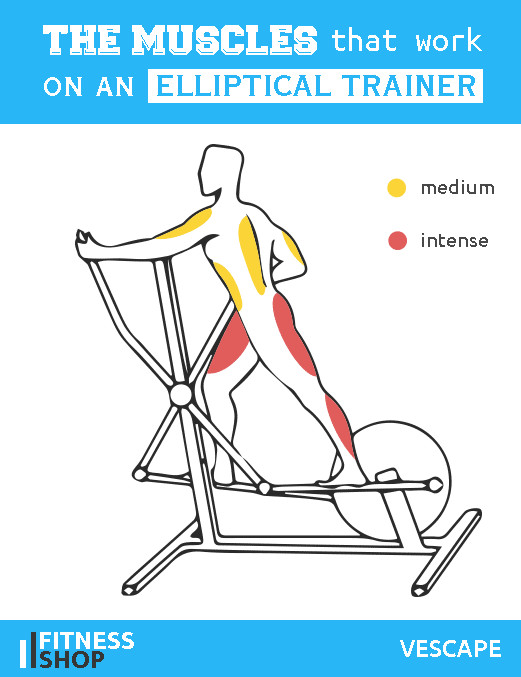
When you push and pull the handlebars in conjunction with your leg motion, you activate your core muscles – including your abdominals and back – to maintain stability and balance. Simultaneously, your arms, shoulders, chest, and back muscles are engaged in the pushing and pulling action. This coordinated movement significantly increases calorie expenditure and provides a more balanced and functional workout compared to isolating lower body exercises. The engineering of these handlebars is crucial, ensuring they move in a complementary fashion to the leg motion, facilitating a natural and effective upper body engagement.
Targeted Muscle Activation: Adapting to User Input
The intensity of upper body engagement can often be adjusted through resistance settings on the handlebars, allowing users to focus more on their upper body if desired. This level of customization in muscle activation is a testament to the technological sophistication of modern ellipticals, enabling users to tailor their workouts to specific fitness goals, whether it’s building upper body strength or simply increasing overall calorie burn.
The Lower Body Engagement: From Quads to Glutes
The elliptical’s pedal motion is expertly designed to work a variety of lower body muscles with minimal impact.
Quadriceps and Hamstrings: The Primary Movers
The forward and backward motion of the pedals directly targets the quadriceps (front of the thigh) and hamstrings (back of the thigh). As you push down and forward, your quads work to extend your leg. As you pull back, your hamstrings engage to flex your leg. The elliptical’s design allows for a continuous and controlled range of motion, ensuring these large muscle groups are effectively worked during the workout.
Gluteal Muscles and Calves: Adding Depth to the Workout
The elliptical’s stride pattern also engages the gluteal muscles (buttocks) and calf muscles. Pushing through the heel during the pedal stroke can increase glute activation, while the ankle movement in the motion works the calves. The ability to subtly alter your foot position on the pedals can further fine-tune which of these lower body muscles are emphasized, demonstrating the subtle yet effective biomechanical engineering at play.
The Technological Edge: Advanced Features Enhancing the Elliptical Experience
Beyond the fundamental mechanics, modern ellipticals are packed with technological features designed to enhance user experience, track progress, and provide structured training programs.
Console Technology: Data at Your Fingertips
The central console of an elliptical is a hub of technological innovation, providing users with real-time feedback and advanced training options.
Performance Metrics: Tracking Your Progress with Precision
The console typically displays crucial workout data such as duration, distance, speed, calorie burn, heart rate, and resistance level. This real-time feedback is invaluable for monitoring progress, staying motivated, and making informed adjustments to your workout. Advanced ellipticals often feature sophisticated algorithms to estimate calorie burn more accurately, taking into account factors like your heart rate and workout intensity.
Heart Rate Monitoring: Optimizing Training Zones
Most ellipticals incorporate heart rate monitors, either through hand sensors on the handlebars or compatibility with wireless chest straps. This technology allows users to train within specific heart rate zones, which is crucial for achieving different fitness goals, such as improving cardiovascular endurance, burning fat, or increasing aerobic capacity. The ability to monitor and manage your heart rate effectively transforms the elliptical from a simple cardio machine into a powerful training tool.
Pre-Programmed Workouts: Guided Training for Optimal Results
Modern ellipticals come equipped with a variety of pre-programmed workouts designed by fitness professionals. These programs automatically adjust resistance and incline (if applicable) to simulate different training scenarios, such as hill climbs, interval training, or fat-burning sessions.
Adaptive Training Protocols: Simulating Real-World Challenges
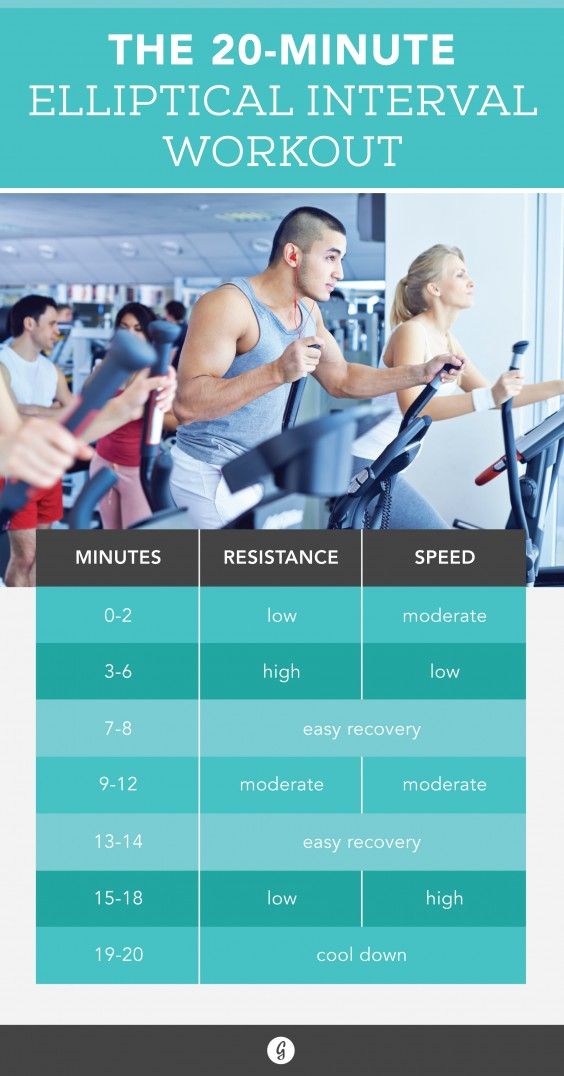
These programs leverage the machine’s technological capabilities to offer a structured and dynamic workout experience. For example, an interval training program might rapidly increase resistance for short bursts, followed by periods of lower intensity, mimicking the physiological demands of high-intensity interval training (HIIT). This adaptive programming takes the guesswork out of training, making it easier for users to achieve their fitness goals effectively and efficiently.
Connectivity and Smart Features: The Future of Fitness
The integration of smart technology has further elevated the elliptical experience. Many newer models offer Bluetooth connectivity, allowing users to sync their workout data with fitness apps and smartwatches.
App Integration and Virtual Coaching: Enhanced Motivation and Guidance
This connectivity opens up a world of possibilities, from tracking long-term progress to participating in virtual races or following guided workout routines led by on-screen instructors. Some ellipticals even offer virtual reality (VR) integration, immersing users in digital environments as they exercise. These technological advancements not only enhance the engagement factor but also provide valuable data analysis and personalized coaching, making the elliptical a more intelligent and adaptable fitness partner.
In conclusion, the elliptical trainer is a marvel of modern fitness technology. Its carefully engineered biomechanics, sophisticated resistance systems, and integrated smart features work in concert to provide a low-impact, full-body workout that is both effective and highly customizable. Understanding the technology behind the elliptical demystifies its benefits and empowers users to leverage its full potential for achieving their health and fitness aspirations.
aViewFromTheCave is a participant in the Amazon Services LLC Associates Program, an affiliate advertising program designed to provide a means for sites to earn advertising fees by advertising and linking to Amazon.com. Amazon, the Amazon logo, AmazonSupply, and the AmazonSupply logo are trademarks of Amazon.com, Inc. or its affiliates. As an Amazon Associate we earn affiliate commissions from qualifying purchases.