
Amazon’s transformation from a niche online bookseller in a garage to a trillion-dollar global behemoth is one of the most significant financial narratives of the 21st century. While most consumers interact with the brand through its ubiquitous orange-arrowed boxes, the true scope of what Amazon owns extends far beyond e-commerce. From a strategic investment perspective, Amazon is a diversified holding company that operates with the precision of a private equity firm, systematically acquiring assets that fortify its “flywheel” effect. For investors and business analysts, understanding what Amazon owns is essential to understanding the modern landscape of global capital and market dominance.

The Retail and E-commerce Powerhouse: Physical and Digital Assets
At its core, Amazon remains a retail giant, but its portfolio of owned subsidiaries reveals a calculated move toward controlling the entire supply chain and capturing specific high-value consumer demographics. Amazon doesn’t just own a storefront; it owns the infrastructure of modern consumption.
Whole Foods Market: The Brick-and-Mortar Anchor
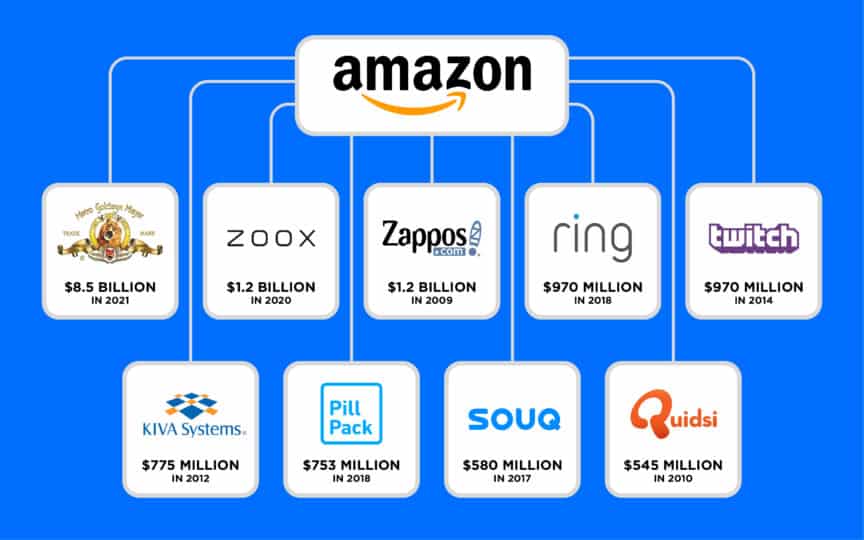
Amazon’s 2017 acquisition of Whole Foods Market for $13.7 billion remains its most significant foray into physical retail. From a financial standpoint, this was not merely a move to sell organic groceries. By acquiring Whole Foods, Amazon gained immediate access to high-income consumer data and hundreds of prime real estate locations in affluent urban centers. These locations serve a dual purpose: they act as traditional retail outlets and as “last-mile” distribution hubs for Amazon’s grocery delivery services. This acquisition allowed Amazon to penetrate the “refrigerator” segment of the consumer wallet, a space that had previously been resistant to digital disruption.
Zappos, Shopbop, and Woot: Capturing Niche Markets
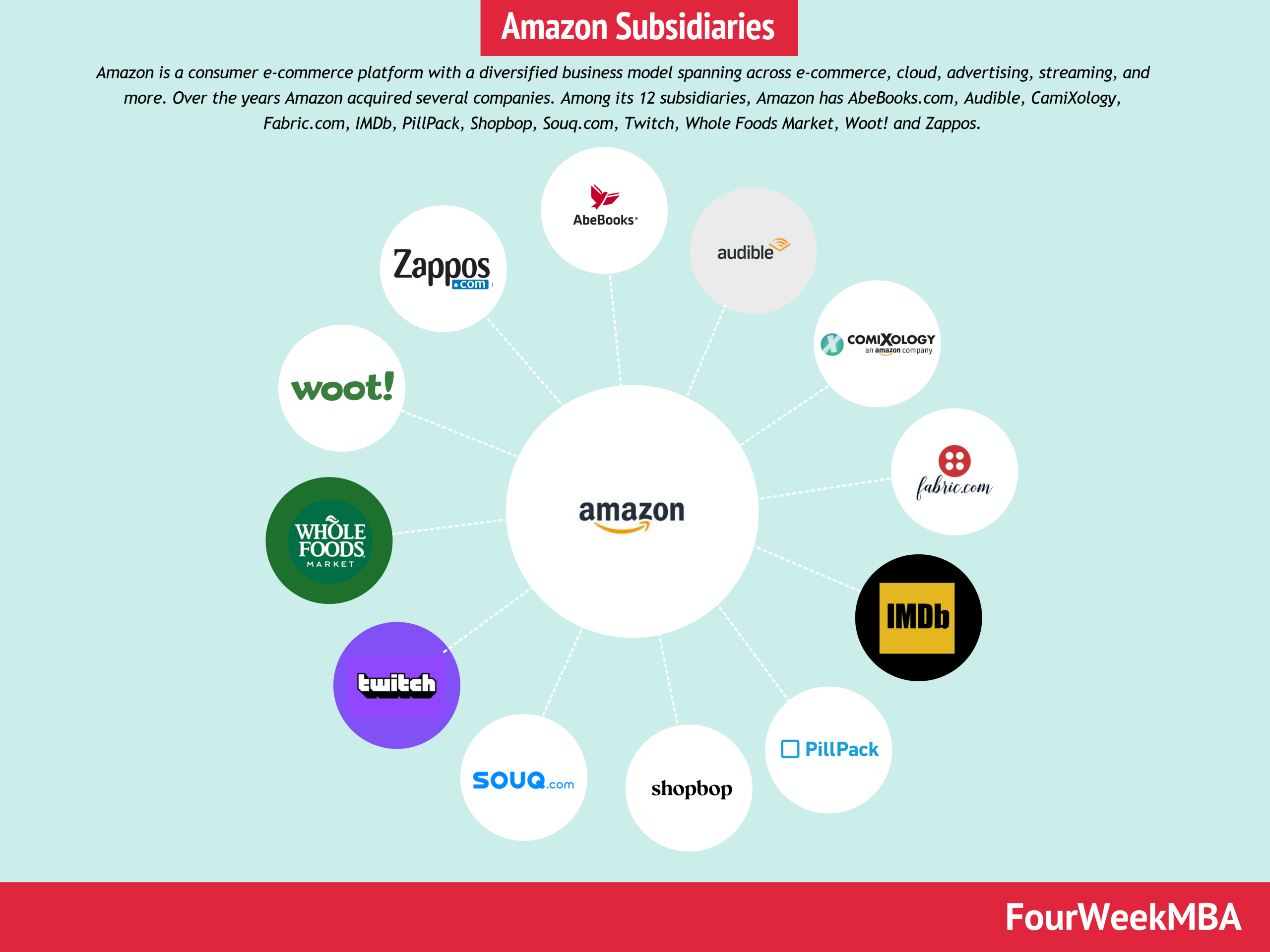
Amazon has a long history of acquiring competitors that have mastered specific niches. Zappos, purchased in 2009 for approximately $1.2 billion, gave Amazon a dominant foothold in the footwear market and, perhaps more importantly, an established blueprint for world-class customer service. Similarly, the acquisition of Shopbop allowed Amazon to enter the luxury fashion space, while Woot provided a platform for daily deals and liquidating inventory. By owning these distinct brands, Amazon can capture diverse market segments without diluting the primary Amazon.com brand identity, ensuring that multiple revenue streams flow back to the parent company.
PillPack and One Medical: The Healthcare Frontier
In recent years, Amazon has aggressively moved into the healthcare sector, identifying it as a trillion-dollar industry ripe for disruption. The acquisition of PillPack in 2018 for $753 million laid the groundwork for Amazon Pharmacy. More recently, the $3.9 billion acquisition of One Medical signaled Amazon’s intent to own the primary care relationship. From a business finance perspective, this is a move toward a recurring revenue model based on subscriptions and long-term patient data, diversifying Amazon’s income away from cyclical retail spending.
Diversifying Revenue through Media, Entertainment, and Intellectual Property
Amazon’s “Money” strategy is heavily predicated on the “Prime” ecosystem. To keep subscribers paying their annual fees, Amazon must provide a value proposition that extends beyond free shipping. This has led the company to invest billions in acquiring media assets and intellectual property.
MGM Studios: Buying a Century of Content
In 2022, Amazon closed an $8.5 billion deal to acquire MGM (Metro-Goldwyn-Mayer). This was a pure play for intellectual property. By owning MGM, Amazon gained control of over 4,000 film titles—including the James Bond and Rocky franchises—and 17,000 TV shows. In the streaming wars, content is the primary currency. Owning a legendary studio reduces Amazon’s long-term licensing costs and provides a steady stream of “exclusive” content for Prime Video, which in turn reduces churn in its Prime membership base.
Twitch: Dominating the Attention Economy
Amazon’s $970 million acquisition of Twitch in 2014 was initially viewed with skepticism by traditional investors. However, it has proven to be a masterstroke in capturing the “attention economy.” Twitch owns the lion’s share of the live-streaming market, particularly among Gen Z and Millennial demographics. Beyond the cultural impact, Twitch represents a massive advertising engine. By integrating Twitch into the Amazon ecosystem, the company can track consumer behavior from entertainment to purchase, creating a closed-loop marketing system that is incredibly valuable to advertisers.
Audible and Goodreads: The Literacy Ecosystem
Amazon’s ownership of Audible and Goodreads creates a vertical monopoly over the world of books. Audible is the undisputed leader in digital spoken-word entertainment, while Goodreads serves as the world’s largest site for book recommendations. By owning the platform where people discover books (Goodreads) and the platform where they consume them (Audible/Kindle), Amazon controls the entire financial lifecycle of a literary product.
Infrastructure and Enterprise Value: The Engines of Growth
While retail and media are the most visible parts of Amazon’s portfolio, the company’s highest-margin assets are those that provide infrastructure to other businesses. These subsidiaries are the “picks and shovels” of the digital age.
Amazon Web Services (AWS): The Profit Engine
It is impossible to discuss what Amazon owns without highlighting AWS. While technically a division rather than an acquired subsidiary, AWS is the financial backbone of the entire company. AWS provides cloud computing, storage, and database services to everyone from startups to the CIA. In many fiscal quarters, AWS accounts for the majority of Amazon’s operating income. By owning the infrastructure that the internet runs on, Amazon has created a high-margin, B2B revenue stream that subsidizes its lower-margin retail experiments.
Kiva Systems (Amazon Robotics)
In 2012, Amazon acquired Kiva Systems for $775 million. This was a strategic move to own the automation technology that powers its fulfillment centers. Now known as Amazon Robotics, this subsidiary creates the mobile robotic fulfillment systems that allow Amazon to process orders at a speed and cost that competitors cannot match. This is a classic example of vertical integration: by owning the technology, Amazon prevents its competitors from using it and significantly lowers its internal operating expenses.
Zoox and the Future of Logistics
Amazon’s $1.2 billion acquisition of Zoox, an autonomous vehicle company, represents a massive bet on the future of logistics and transportation. By owning self-driving technology, Amazon aims to eventually eliminate its largest variable cost: human delivery drivers. From a long-term financial perspective, Zoox could transform Amazon into a logistics-as-a-service provider, potentially rivaling companies like UPS or FedEx by offering autonomous delivery fleets to third parties.
The Strategic Philosophy of Amazon’s Acquisitions
Amazon’s acquisition strategy is rarely about buying immediate revenue; it is about buying “moats.” Each major acquisition is designed to make the Amazon ecosystem more indispensable to the consumer and more difficult for competitors to challenge.
Horizontal vs. Vertical Integration
Amazon utilizes both horizontal and vertical integration to secure its market position. Horizontally, it buys companies like Zappos or Souq (now Amazon.ae) to expand its geographic and category reach. Vertically, it buys companies like Kiva Systems or its fleet of Boeing 767 aircraft (Amazon Air) to control the means of production and distribution. This dual approach ensures that Amazon captures value at every stage of the transaction—from the moment a user sees an ad on Twitch to the moment a robot in a warehouse picks the product.
Building an Ecosystem of Recurring Revenue
The ultimate goal of Amazon’s portfolio is to move away from “one-off” transactions toward recurring revenue. Prime is the centerpiece of this strategy. Every acquisition—whether it’s a pharmacy, a grocery chain, or a movie studio—is integrated into the Prime membership. This creates a “lock-in” effect where the financial cost of leaving the Amazon ecosystem becomes too high for the consumer, ensuring a predictable and growing cash flow for the parent company.
Conclusion: The Financial Scale of the Amazon Empire
What Amazon owns is a testament to a long-term capital allocation strategy that prioritizes market share and ecosystem growth over short-term profits. By diversifying into cloud computing (AWS), high-end retail (Whole Foods), entertainment (MGM and Twitch), and future-tech (Zoox), Amazon has shielded itself from the volatility of any single industry.
For the modern investor, Amazon is no longer just a “tech stock” or a “retail stock.” It is a diversified conglomerate that owns the essential infrastructure of modern life. Its portfolio represents a new kind of corporate entity—one that uses its massive cash reserves to buy its way into every facet of the global economy. As Amazon continues to acquire and integrate new assets, the question is no longer just “what does Amazon own,” but rather, “is there any sector of the economy where Amazon doesn’t have a stake?” The answer, increasingly, is no.
aViewFromTheCave is a participant in the Amazon Services LLC Associates Program, an affiliate advertising program designed to provide a means for sites to earn advertising fees by advertising and linking to Amazon.com. Amazon, the Amazon logo, AmazonSupply, and the AmazonSupply logo are trademarks of Amazon.com, Inc. or its affiliates. As an Amazon Associate we earn affiliate commissions from qualifying purchases.