
The humble pine beetle, a small insect often measuring no more than a few millimeters, belies its significant impact on forest ecosystems. For those tasked with forest health monitoring, pest management, or even concerned homeowners, accurately identifying these wood-boring insects is the crucial first step in mitigating their destructive potential. However, the challenges of visual identification in the field, coupled with the sheer scale of affected areas, necessitate a technological approach. This article delves into the visual characteristics of pine beetles, but with a specific lens on how technology aids in their identification, from advanced imaging to sophisticated analytical tools.

The Visual Anatomy of a Pine Beetle: Decoding the Details
Understanding the specific physical attributes of pine beetles is the foundation for any identification effort, whether manual or technologically assisted. While there are many species of bark beetles, the most notorious for their impact on conifer forests are often within the Dendroctonus genus. Their appearance, though small, possesses distinct features that can be discerning, especially when magnified or analyzed through specialized equipment.
Size and Shape: The Subtle but Significant Indicators
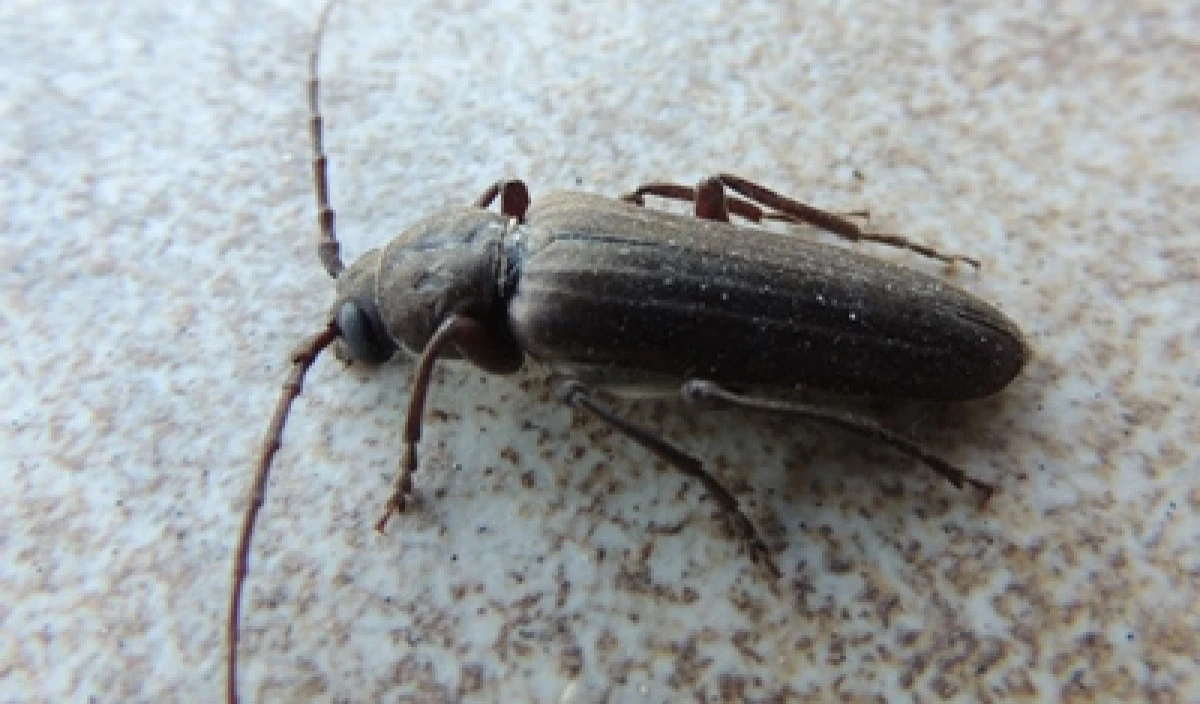
Pine beetles are generally small, ranging from 2 to 9 millimeters in length. This diminutive size makes them difficult to spot with the naked eye, particularly when they are in their natural habitat on tree bark. Their bodies are typically elongated and cylindrical, often described as “robust.” The color can vary significantly depending on the species and life stage, but commonly ranges from dark reddish-brown to black. The overall shape is key; they are not as flattened or broad as some other beetle families. When identifying using image analysis software or specialized cameras, these subtle variations in proportion and silhouette can be critical distinguishing features. Modern AI algorithms are trained on vast datasets of insect imagery, learning to differentiate species based on these minute differences in morphology that a human eye might overlook or misinterpret.
Coloration and Markings: Clues in the Cuticle
The exoskeleton, or cuticle, of a pine beetle provides several identification clues. While many are uniformly dark, some species exhibit subtle banding or lighter shades on their elytra (the hardened forewings). The head capsule is also important, often being proportionally larger or having distinct sculpturing. The antennae are typically elbowed (geniculate) and clubbed, a feature that, while difficult to see without magnification, is a defining characteristic of the beetle suborder. Technologically, this translates to the need for high-resolution imaging. Advanced microscopes, coupled with digital imaging software, allow for detailed examination of these markings. Furthermore, hyperspectral imaging techniques, while still emerging for widespread pest detection, can differentiate subtle variations in pigment and surface texture, offering a new frontier in identifying species based on their unique spectral signatures.
Distinguishing Features: Beyond the Basic Silhouette
Beyond general size and color, specific morphological details are crucial for precise identification. This includes the shape and arrangement of punctures on the elytra, the structure of the pronotum (the part of the exoskeleton behind the head), and the specific form of the legs and antennae. For example, the size and density of the “striae” (grooves) and “interstriae” (ridges) on the elytra can vary between species.
In a technological context, this level of detail is where computational entomology shines. Machine learning models, trained on datasets of high-resolution images captured by drones, ground sensors, or even automated traps, can analyze these fine details. Algorithms can be programmed to measure distances between punctures, assess the curvature of the pronotum, or even analyze the segmentation of the antennae, all contributing to a highly accurate identification that far surpasses the capabilities of casual observation.
Technological Aids for Pine Beetle Identification: From Drones to Data Analytics
The sheer scale of forests and the subtle nature of early pine beetle infestations present significant challenges for traditional, manual identification methods. This is where technology plays an indispensable role in modern pest management. From aerial surveillance to ground-based sensors and advanced data analysis, technological solutions are transforming how we detect and understand pine beetle presence.
Aerial Surveillance and Remote Sensing: The Eyes in the Sky
Drones equipped with high-resolution cameras and multispectral sensors have become invaluable tools for monitoring forest health and detecting signs of pine beetle activity. These drones can cover vast areas quickly, providing aerial imagery that reveals patterns of tree stress and mortality indicative of beetle infestations. While a drone cannot “see” an individual beetle in flight, it can identify the symptoms of their presence: discolored foliage, thinning canopies, and the characteristic red or brown flagging of dying trees.
AI-Powered Image Analysis: The raw data from drone surveys is immense. This is where Artificial Intelligence (AI) becomes critical. Machine learning algorithms are trained to analyze these aerial images, identifying patterns associated with early-stage infestations. These AI models can detect subtle changes in foliage color that might be imperceptible to the human eye, distinguish between different types of tree stress, and even map the spread of an infestation with remarkable accuracy. This allows for targeted interventions, saving resources and minimizing damage.
Ground-Penetrating Radar and Thermal Imaging: While less common for direct beetle identification, these technologies can assist in understanding the impact on the tree itself. Ground-penetrating radar can assess root health, which can be compromised by beetle activity, and thermal imaging can detect subtle temperature variations in trees that might indicate internal stress or infestation.
Ground-Based Sensors and Automated Traps: Capturing the Culprits
While aerial methods are excellent for broad-scale monitoring, ground-based technologies offer more granular detection and direct evidence of pine beetle presence. Automated traps, often baited with pheromones that mimic the scent signals used by pine beetles to attract mates and aggregations, are deployed in strategic locations within forests.
Smart Traps with Integrated Imaging and AI: The next generation of these traps are not just passive collectors. They are increasingly equipped with small cameras and sensors that can capture images of trapped insects. AI algorithms can then analyze these images in real-time, identifying the species of beetle caught and even estimating the population density. This data is transmitted wirelessly, providing forest managers with up-to-the-minute information on beetle activity. This allows for rapid response and adjustments to control strategies.

Acoustic and Vibration Sensors: Emerging technologies are exploring the use of acoustic sensors to detect the characteristic sounds of pine beetles boring into wood. These subtle vibrations and noises can be picked up by sensitive microphones and analyzed by AI to identify potential infestations before they become visually apparent. This represents a truly novel approach to “listening” for the presence of these pests.
The Role of Machine Learning in Species Differentiation
Even when a suspected beetle is found, distinguishing between native, non-damaging species and invasive, destructive ones can be challenging. This is where machine learning algorithms trained on vast datasets of insect morphology excel. By feeding these algorithms thousands of high-resolution images of different pine beetle species, they can learn to identify subtle differences in shape, size, coloration, and surface texture.
Algorithmic Identification of Morphological Traits: Machine learning models can be trained to recognize specific features like the number and spacing of punctures on the elytra, the exact curvature of the antennae, or the shape of the mandibles. This level of precise, objective analysis is often superior to human identification, especially for individuals without extensive entomological training.
Predictive Modeling for Infestation Risk: Beyond identification, AI can analyze data from various sources – including weather patterns, forest composition, historical infestation data, and the results from automated traps – to predict areas at high risk for future pine beetle outbreaks. This allows for proactive management strategies, such as targeted thinning or the application of preventative treatments, before an infestation even takes hold.
Challenges and Future Directions in Tech-Enabled Pine Beetle Identification
While technology offers powerful solutions for identifying and managing pine beetles, several challenges remain, and ongoing advancements promise even more sophisticated approaches in the future. The cost of implementing some of these technologies, the need for robust data infrastructure, and the continuous evolution of both beetle behavior and detection algorithms require ongoing innovation.
The Need for Scalable and Affordable Solutions
The vastness of forested landscapes in many regions means that deploying and maintaining advanced technological solutions can be costly. For individual landowners or smaller forestry operations, expensive drone fleets or networks of smart traps may be out of reach. Therefore, a key challenge is developing more affordable and scalable technologies that can be widely adopted.
Open-Source AI Models and Community Data Sharing: The development of open-source AI models for insect identification and the creation of platforms for sharing anonymized data from sensors and traps could democratize access to these powerful tools. This would allow for collaborative efforts in monitoring and research, benefiting all stakeholders.
Low-Cost Sensor Networks and DIY Technology: Innovations in low-cost sensor technology, coupled with user-friendly interfaces and mobile applications, could empower more people to participate in forest health monitoring. This could include affordable camera modules for traps or even citizen science initiatives utilizing smartphone-based image analysis tools.
Enhancing Accuracy and Real-Time Data Integration
While current technologies are impressive, there is always room for improvement in terms of accuracy and the speed at which data can be collected, analyzed, and acted upon. Real-time integration of data from multiple sources is crucial for effective response.
Sensor Fusion and Cross-Validation: Combining data from different types of sensors – such as optical imagery, acoustic detection, and pheromone trap catches – can provide a more comprehensive and accurate picture of beetle activity. This “sensor fusion” approach can help to reduce false positives and improve the reliability of identifications.
Edge Computing and On-Device AI: Moving AI processing closer to the data source, through “edge computing” on drones or smart traps, can enable faster decision-making and reduce the need for constant connectivity. This is particularly important in remote forest areas where internet access may be limited.
The Evolving Landscape of Pine Beetle Behavior and Technology
Pine beetles, like all living organisms, can adapt. As control strategies evolve, so too might their behaviors, and the technologies used to detect them must evolve in parallel. Furthermore, the ongoing development of AI and sensor technology itself presents continuous opportunities for improvement.
AI for Predicting Beetle Adaptations: Advanced AI models could potentially be used to predict how pine beetle populations might adapt to changing environmental conditions or resistance to certain control methods. This foresight can inform future management strategies.
Next-Generation Imaging and Sensing: The development of new imaging techniques, such as quantum dot-based sensors or advanced lidar systems, could offer even greater detail and sensitivity for detecting subtle signs of infestation. Similarly, advancements in material science could lead to more durable and efficient sensor technologies for harsh forest environments.
In conclusion, understanding “what a pine beetle looks like” is no longer solely an exercise in manual entomology. It is an integral part of a sophisticated technological ecosystem. By leveraging advancements in AI, remote sensing, sensor networks, and data analytics, we are gaining unprecedented capabilities to identify, monitor, and ultimately protect our valuable forest resources from the devastating impact of these small, but mighty, insects. The future of pine beetle management lies in the intelligent integration of these technological tools, empowering us with the knowledge and precision to act effectively.
aViewFromTheCave is a participant in the Amazon Services LLC Associates Program, an affiliate advertising program designed to provide a means for sites to earn advertising fees by advertising and linking to Amazon.com. Amazon, the Amazon logo, AmazonSupply, and the AmazonSupply logo are trademarks of Amazon.com, Inc. or its affiliates. As an Amazon Associate we earn affiliate commissions from qualifying purchases.