
In the intricate world of computer networking, efficient communication and data integrity are paramount. Every device connected to a network, from a humble desktop computer to a powerful server, plays a role in this communication flow. However, not all devices interact in the same way, and the way they are connected significantly impacts how data is transmitted and how potential conflicts are managed. One of the fundamental concepts that governs this is the collision domain. Understanding what a collision domain is, and how it’s managed, is crucial for anyone involved in designing, maintaining, or troubleshooting modern networks.
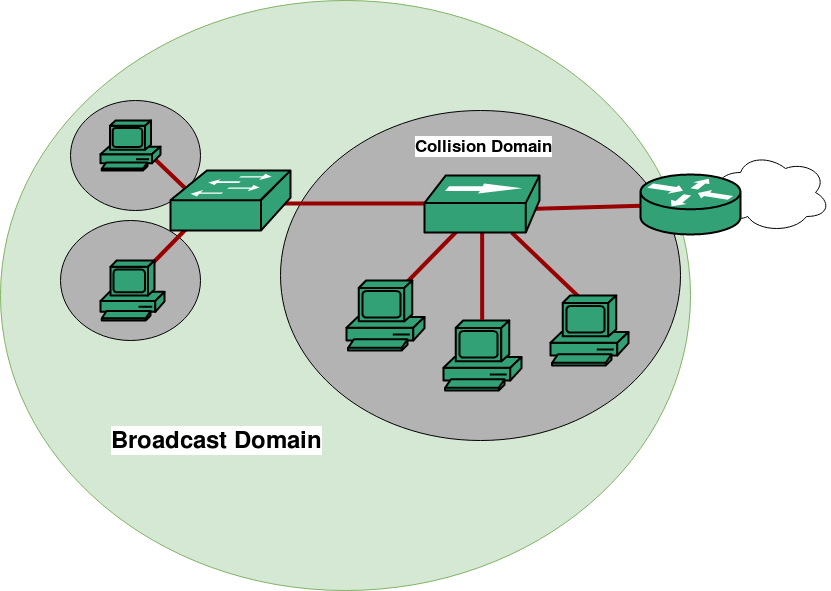
At its core, a collision domain refers to a network segment where data packets can collide. A collision occurs when two or more devices attempt to transmit data simultaneously over the same shared transmission medium. This simultaneous transmission results in corrupted data, as the signals from the different devices interfere with each other, making it impossible for any device to correctly interpret the incoming information. The network, therefore, needs a mechanism to detect and resolve these collisions to ensure reliable data transfer.
The prevalence and impact of collision domains have evolved significantly with networking technologies. In the early days of networking, particularly with the widespread adoption of technologies like coaxial cable and hubs, collision domains were a significant concern. These shared mediums meant that all devices on that segment were essentially competing for access to the wire, making collisions a frequent occurrence, especially in busy networks. The advent of more sophisticated network devices and topologies has dramatically reduced the size and impact of collision domains, leading to more robust and efficient networks.
The Mechanics of Collisions in Shared Media Networks
To truly grasp the significance of collision domains, it’s essential to delve into the underlying mechanics of how data transmission can lead to collisions, especially in older or simpler network architectures. The concept originates from the physical layer and data link layer of the OSI model, where the transmission of electrical signals or light pulses over a shared medium takes place.
Shared Transmission Mediums and Simultaneous Access
The defining characteristic of a network segment that constitutes a single collision domain is its reliance on a shared transmission medium. Imagine a single lane on a highway. If multiple cars try to enter that lane at exactly the same time from different on-ramps, they are bound to collide. In networking, this shared medium could be an Ethernet cable in a traditional hub-based network or even the airwaves in some wireless scenarios where devices are not properly managing their transmission times.
When a device on such a segment decides to transmit data, it essentially “listens” to the medium to see if it’s busy. If it’s free, the device sends its data. However, there’s a minuscule delay between a device deciding the medium is free and actually starting its transmission. During this tiny window, another device on the same segment could also decide the medium is free and begin transmitting. When their signals reach each other on the shared medium, they interfere, resulting in a collision.
Collision Detection and Resolution: The CSMA/CD Protocol
The most common mechanism for handling collisions in Ethernet networks that use shared media is the Carrier Sense Multiple Access with Collision Detection (CSMA/CD) protocol. This protocol is designed to manage access to the shared medium and deal with the inevitable collisions that occur.
- Carrier Sense: Before transmitting, a device “listens” to the network medium to determine if another device is already transmitting. If the medium is detected as busy, the device waits for a random amount of time before attempting to transmit again.
- Multiple Access: This means that multiple devices can access the same transmission medium.
- Collision Detection: While transmitting, a device continuously monitors the medium for signs of a collision. If it detects that its transmitted signal is being interfered with by another signal (indicating a collision), it immediately stops transmitting.
- Backoff Algorithm: After a collision is detected, both devices involved in the collision stop transmitting and wait for a random amount of time before attempting to retransmit. This random waiting period, known as the “backoff algorithm,” is crucial for preventing the same two devices from colliding again immediately. The longer the network has experienced collisions, the longer the devices will wait before retrying, helping to de-escalate the collision situation.
The efficiency of CSMA/CD diminishes significantly as the number of devices on the collision domain increases or as network traffic intensifies. Each collision not only corrupts the data being sent but also requires a retransmission, consuming valuable bandwidth and increasing latency.
The Impact of Collisions on Network Performance
Collisions, especially when they occur frequently, can have a detrimental effect on network performance.
- Increased Latency: Every time a collision occurs, the data packets involved are lost and must be retransmitted. This delay in successful data delivery directly translates to increased latency for applications and users.
- Reduced Throughput: The effective data transfer rate, or throughput, of a network segment is reduced when collisions are prevalent. Bandwidth that should be used for legitimate data transfer is instead consumed by aborted transmissions and retransmissions.
- Unpredictable Performance: The random nature of the backoff algorithm means that network performance can become highly unpredictable, especially under heavy load. Users might experience sudden slowdowns that are difficult to diagnose without understanding the concept of collision domains.
- Increased CPU Utilization: Network interface cards (NICs) and the network stacks on devices have to dedicate processing power to detect, report, and handle collisions, which can increase CPU utilization.
Evolving Beyond Collision Domains: The Rise of Collision-Free Technologies
The inherent limitations of shared media and the issues associated with collision domains spurred the development of networking technologies that effectively eliminate or drastically reduce collisions, leading to more efficient and scalable networks. The key to this evolution lies in segmenting the network and providing dedicated transmission paths.

The Role of Hubs: A Single, Large Collision Domain
Hubs were early networking devices that acted as a central connection point for multiple devices on a network. However, they operated at the physical layer and functioned by simply repeating any incoming electrical signal to all other connected ports. This meant that all devices connected to a hub were part of the same collision domain. If two devices transmitted simultaneously, a collision occurred, and all other devices on the hub would also be affected. This design made hubs unsuitable for anything beyond very small and lightly used networks.
Switches: Creating Micro-Segments and Eliminating Collisions
Network switches represent a significant leap forward from hubs. Switches operate at the data link layer (Layer 2) and are far more intelligent. Instead of blindly repeating signals, switches learn the MAC addresses of devices connected to each of their ports.
When a switch receives a frame of data, it examines the destination MAC address. It then looks up this address in its MAC address table and forwards the frame only to the specific port where the destination device is located. This intelligent forwarding mechanism has a profound impact on collision domains:
- Per-Port Collision Domains: Each port on a switch effectively becomes its own collision domain. This means that a collision can only occur between devices directly connected to the same port if that port is not operating in full-duplex mode.
- Full-Duplex Communication: Modern switches and network interface cards support full-duplex communication. In full-duplex mode, a device can send and receive data simultaneously on the same connection without interfering with each other. This effectively eliminates collisions on the link between a device and a switch port, creating a collision-free segment for each connected device.
Bridges: The Precursors to Switches
Before the widespread adoption of switches, network bridges were used to segment larger networks into smaller collision domains. Bridges operate at the data link layer and connect two or more network segments. Like switches, they learn MAC addresses and forward traffic based on them. A bridge effectively divides a single large collision domain into two smaller ones, thereby reducing the likelihood and impact of collisions. While bridges are less common in modern networks, their principle of segmentation laid the groundwork for the more advanced capabilities of switches.
Understanding Collision Domains in Modern Networks
In contemporary network design, the concept of a collision domain has largely been relegated to historical context or specific, often legacy, configurations. Modern switched networks, particularly those utilizing full-duplex communication, have almost entirely eradicated the problem of collisions as a performance bottleneck. However, understanding collision domains remains vital for several reasons:
Network Troubleshooting and Diagnosis
Even in a predominantly switched environment, awareness of collision domains is essential for effective network troubleshooting. If a network engineer encounters performance issues, they might still need to consider potential scenarios where collisions could arise, such as:
- Misconfigured Devices: A switch port configured to operate in half-duplex mode when it should be full-duplex can reintroduce collision issues.
- Faulty Hardware: A damaged network cable or a malfunctioning network interface card could lead to signal integrity problems, potentially causing what appears to be a collision or disrupting proper communication.
- Legacy Devices: Networks that still incorporate older equipment like hubs will naturally have larger collision domains.
- Wireless Networks: While wireless uses a different mechanism (Carrier Sense Multiple Access with Collision Avoidance – CSMA/CA), the underlying principle of managing shared airwaves to prevent simultaneous transmissions that would interfere with each other shares conceptual similarities with collision domains.
Network Design and Segmentation Best Practices
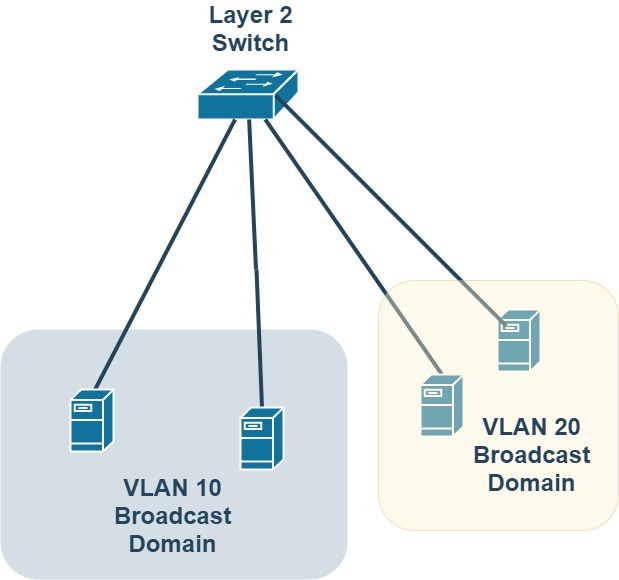
While switches create micro-segments, the principle of segmentation is still relevant for managing network traffic and enhancing security. Network architects design networks by dividing them into logical segments, often using Virtual Local Area Networks (VLANs). Each VLAN effectively creates a separate broadcast domain, and by extension, can be considered to manage traffic within a series of collision-free or highly segmented collision domains. Proper segmentation helps to:
- Reduce Broadcast Traffic: Broadcast messages are sent to all devices on a network. Segmenting a network limits the scope of broadcasts, reducing unnecessary traffic.
- Improve Security: By isolating devices and segments, security policies can be applied more granularly, preventing unauthorized access between different parts of the network.
- Enhance Performance: Smaller, well-defined segments can lead to more efficient data flow and reduced congestion.
The Evolution of Network Technologies
The journey from shared Ethernet with its pervasive collision domains to the sophisticated, collision-free switched networks of today is a testament to the continuous innovation in networking technology. Concepts like hubs, CSMA/CD, and collision domains are foundational to understanding this evolution. As networks become more complex, incorporating technologies like 10 Gigabit Ethernet, 40 Gigabit Ethernet, and even faster speeds, the importance of efficient data transmission and the elimination of any form of signal interference becomes even more critical. Understanding collision domains provides the historical context and the fundamental principles that have guided the development of these advanced networking solutions.
In conclusion, a collision domain is a network segment where data collisions can occur due to multiple devices attempting simultaneous transmission over a shared medium. While largely mitigated by modern switched networks and full-duplex communication, the concept remains a cornerstone of network fundamentals. Its historical significance, role in troubleshooting, and the principles of segmentation it embodies continue to inform how we design, manage, and understand the intricate pathways of data in the digital world.
aViewFromTheCave is a participant in the Amazon Services LLC Associates Program, an affiliate advertising program designed to provide a means for sites to earn advertising fees by advertising and linking to Amazon.com. Amazon, the Amazon logo, AmazonSupply, and the AmazonSupply logo are trademarks of Amazon.com, Inc. or its affiliates. As an Amazon Associate we earn affiliate commissions from qualifying purchases.