
In the world of mechanical engineering and ballistic technology, few designations carry as much historical weight and modern relevance as the “.380 ACP.” To the uninitiated, these alphanumeric identifiers might seem like arbitrary codes, but they represent a precise set of engineering specifications that have defined the landscape of compact hardware for over a century. Understanding what .380 ACP means requires moving beyond a simple definition and exploring the intersection of material science, Newtonian physics, and the evolution of semi-automatic cycling systems.
Understanding the Nomenclature: The Science of Measurement and Origin
To decode the term “.380 ACP,” one must first understand the conventions of industrial nomenclature. This designation is not merely a name but a technical data sheet compressed into a single phrase. It informs the user of the bore diameter, the mechanical lineage, and the specific chambering requirements for the hardware in question.
The Numerical Value: Decoding the .380 Bore
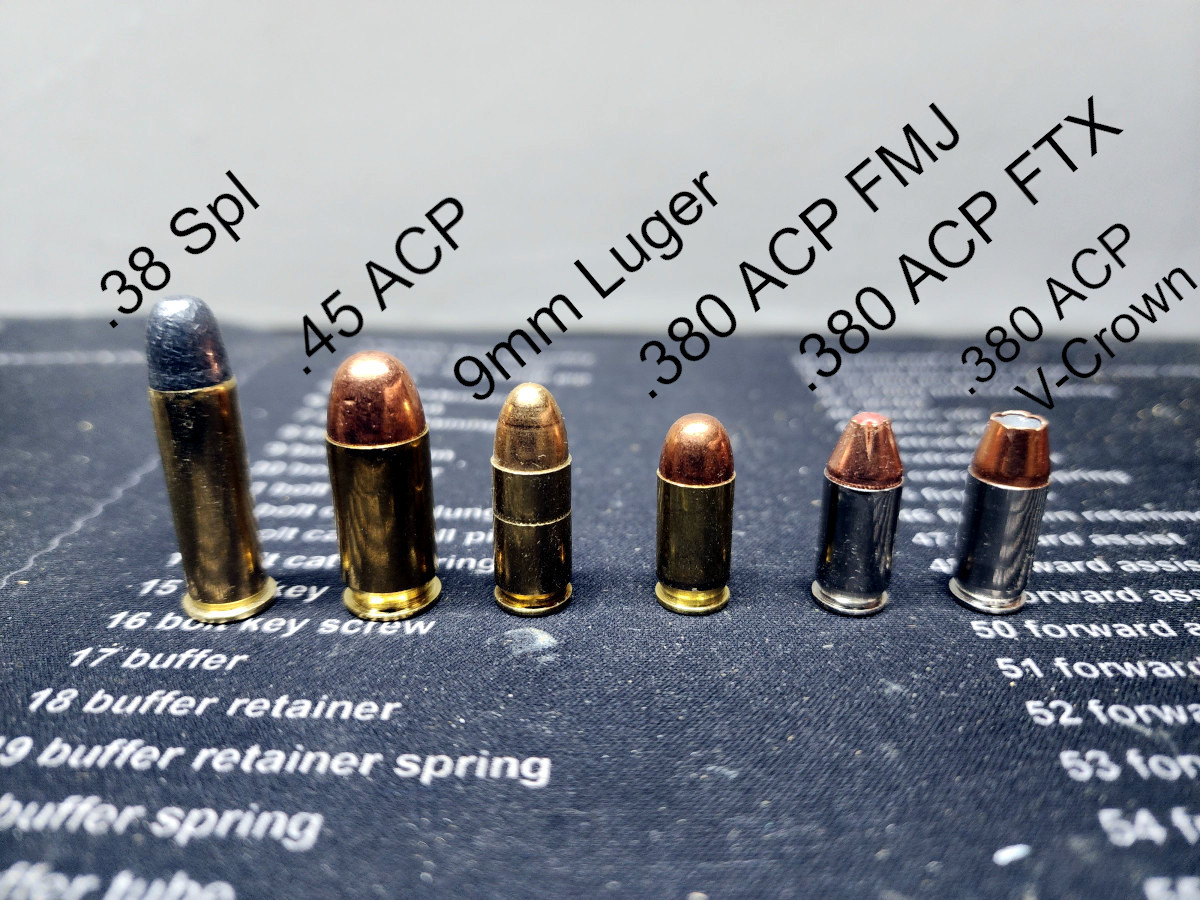
The “.380” refers to the approximate caliber of the projectile, measured in inches. Specifically, the bullet diameter used in this cartridge is typically .355 inches (9.0 mm). While the name says .380, the engineering reality is closer to the 9mm family. This discrepancy is common in ballistic tech, often stemming from historical measurement techniques that accounted for the outer diameter of the cartridge case or the transition from black powder to smokeless powder specifications. In modern technical terms, the .380 ACP is a “short” 9mm, often referred to internationally as the 9x17mm.
ACP: The Legacy of Automatic Colt Pistol Technology
The “ACP” acronym stands for Automatic Colt Pistol. This is a brand and engineering mark signifying the cartridge’s design origin. Developed by the legendary polymath engineer John Moses Browning, the designation was created to differentiate his rimless, straight-walled designs from the rimmed cartridges used in revolvers. The ACP suffix indicates a cartridge specifically engineered for the feeding mechanisms of semi-automatic slides, where a flush-fitting rim is essential for reliable extraction and magazine stacking.
Historical Context: John Browning’s Engineering Vision
Introduced in 1908, the .380 ACP was Browning’s answer to a specific technological gap. He sought to create a cartridge that offered a “Goldilocks” solution: enough kinetic energy to be effective for defensive applications, yet low enough pressure to allow for simple, lightweight firearm designs. This led to the creation of the Colt Model 1908 Pocket Hammerless, a piece of hardware that revolutionized the concept of portable security.
The Mechanics of Performance: Ballistic Specifications and Energy Transfer
When analyzing the .380 ACP through a technological lens, we must look at the “Tech Stack” of the cartridge itself: the propellant, the projectile, and the casing. The performance of this caliber is a study in efficiency within a constrained physical footprint.
Case Dimensions and Pressure Ratings (SAAMI Specs)
The Sporting Arms and Ammunition Manufacturers’ Institute (SAAMI) provides the technical blueprints for cartridge standardization. For the .380 ACP, the maximum pressure is generally set around 21,500 psi (pounds per square inch). Compared to the 35,000 psi of a standard 9mm Luger, the .380 ACP operates in a significantly lower stress environment. This lower pressure threshold allows engineers to utilize different materials and simpler mechanical actions in the guns that fire them, which is a critical consideration in hardware design.
Velocity vs. Mass: The Balancing Act
The technical performance of a caliber is often measured by its muzzle energy, calculated by the formula $E = frac{1}{2}mv^2$. A standard .380 ACP projectile typically weighs between 90 and 95 grains (approximately 6 grams). When fired, it achieves a muzzle velocity of roughly 900 to 1,000 feet per second. Because the velocity ($v$) is squared in the energy equation, even small increases in speed result in significant gains in “stopping power.” However, the .380 ACP is engineered to stay just below the supersonic threshold in many barrel lengths, reducing the acoustic signature and mechanical wear on the host device.
Terminal Performance: How Modern Tech Enhances Expansion
In the past, the .380 ACP was criticized for its lack of “terminal depth.” However, modern material science has changed this narrative. Advanced jacketed hollow-point (JHP) technology uses computer-aided design (CAD) to create petals in the projectile that expand reliably upon impact. By utilizing skived jackets and specialized lead alloys, modern .380 ACP rounds can expand to nearly twice their original diameter, significantly increasing the efficiency of energy transfer without requiring higher chamber pressures.
Engineering for Modern Hardware: The Rise of Micro-Compacts
The .380 ACP has seen a massive resurgence in the last decade, driven by innovations in CAD/CAM manufacturing and the demand for “micro-compact” devices. As hardware gets smaller, the physics of recoil and cycling become more difficult to manage.
Recoil Management Systems
One of the primary benefits of the .380 ACP tech profile is its manageable recoil impulse. In small devices, excessive recoil can lead to “limp-wristing” malfunctions, where the frame does not remain stationary enough for the slide to cycle. Engineers have leveraged the lower pressure of the .380 ACP to design dual-spring recoil assemblies. These telescopic spring systems allow for a smoother deceleration of the slide, making the hardware accessible to a wider demographic of users who may lack the grip strength required for higher-pressure calibers.
Slide Velocity and Timing in Blowback vs. Locked-Breech Designs
Historically, .380 ACP pistols utilized “straight blowback” actions, where only the weight of the slide and the strength of the spring held the chamber closed. While simple, this required a heavy slide. Modern engineering has migrated many .380 designs to “delayed-blowback” or “short-recoil” systems (like the Tilting Barrel system). This technological shift allows for much lighter slides and thinner profiles, as the mechanical lock-up handles the initial pressure spike rather than raw mass.
Material Science in Modern Polymer Frames
The evolution of glass-filled nylon and proprietary polymers has allowed manufacturers to create frames that are both incredibly light and structurally sound. Because the .380 ACP generates less heat and vibrational stress than larger calibers, engineers can push the limits of thinness in the grip and frame. This has resulted in the “pocket pistol” revolution, where a fully functional semi-automatic device can weigh less than 12 ounces.
Comparing the Tech Stack: .380 ACP vs. 9mm Luger
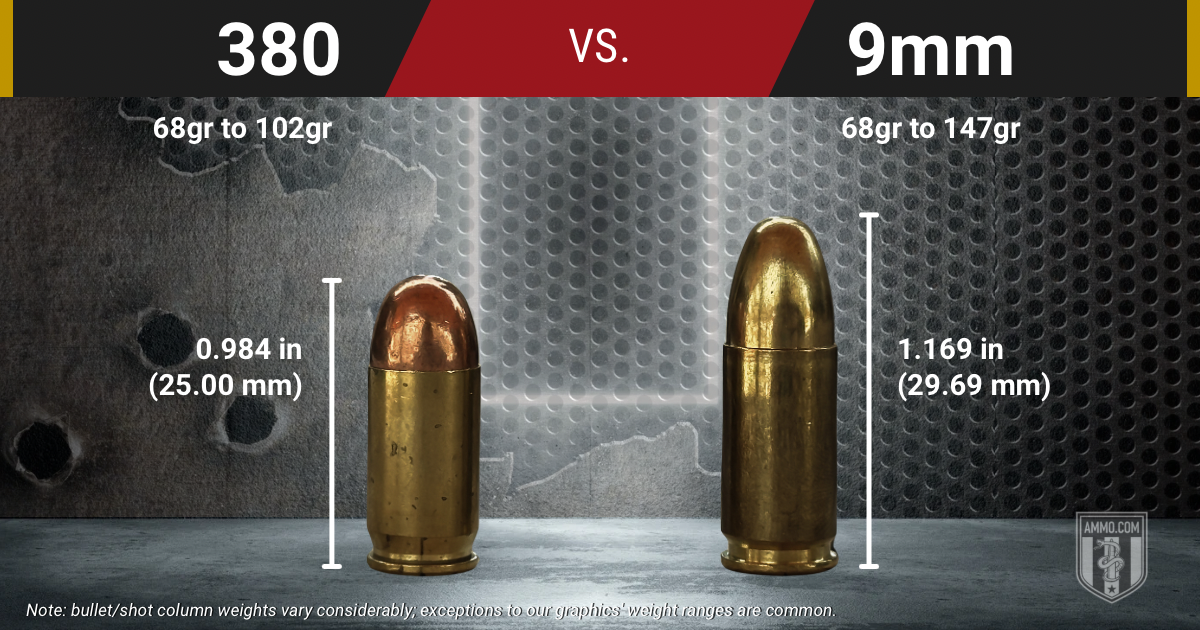
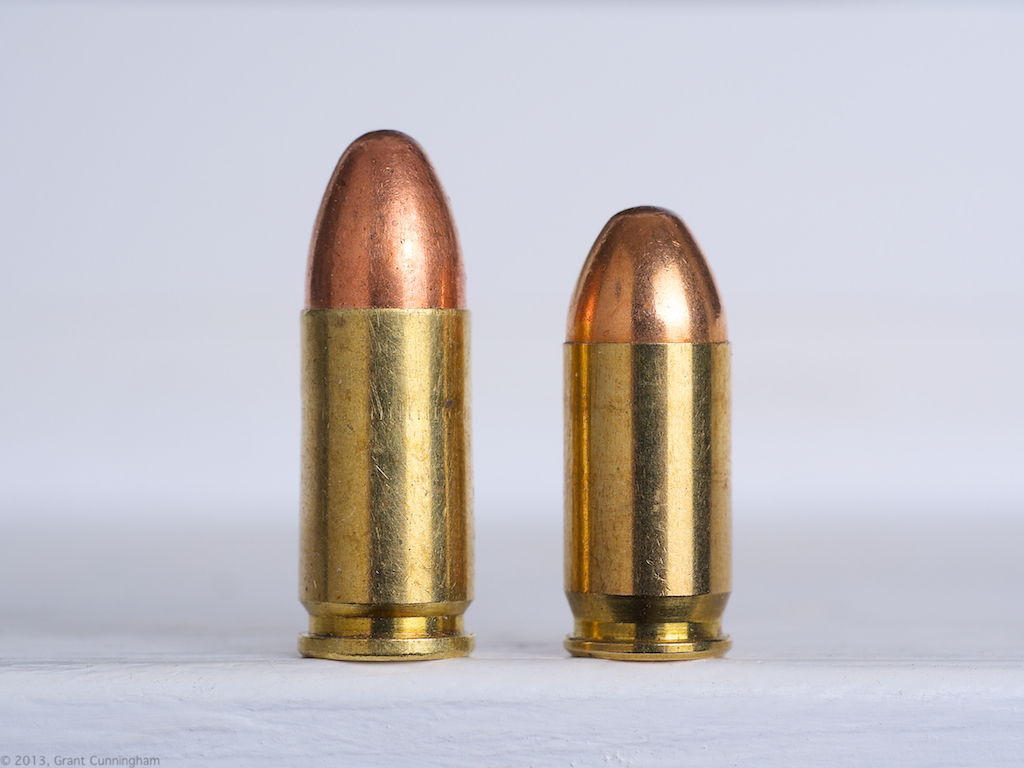
In any technical review, benchmarking against the industry standard is essential. The 9mm Luger (9x19mm) is the benchmark for modern handguns, and comparing it to the .380 ACP (9x17mm) reveals the specific use-case for the latter.
Efficiency in Short-Barreled Devices
The 9mm Luger requires a certain barrel length to fully burn its propellant and reach optimal velocity. When the barrel is shortened significantly (under 3 inches), the 9mm loses a large percentage of its efficiency, often resulting in unburnt powder and excessive muzzle flash. The .380 ACP, however, uses faster-burning propellants engineered for short-stroke cycles. In extremely compact hardware, the .380 ACP often achieves its “design intent” more efficiently than a 9mm, providing a more consistent ballistic profile from a 2.5-inch barrel.
The Tech-Driven “9mm Lite” Revolution
In the software world, we often see “Lite” versions of heavy applications. The .380 ACP is essentially the “Lite” version of the 9mm. It offers 70-80% of the performance with 50% of the recoil. For users prioritizing “concealability” and “shootability”—two key metrics in the user experience (UX) of defensive hardware—the .380 ACP represents a superior compromise in the “Power-to-Weight” ratio.
The Future of Small-Caliber Tech: Advanced Propellants and Projectiles
The .380 ACP is not a static technology; it continues to evolve through advancements in computational fluid dynamics and chemical engineering.
Computational Fluid Dynamics in Bullet Design
Modern manufacturers now use sophisticated software to simulate how a projectile moves through various mediums before a single physical mold is ever cast. This has led to the development of “fluted” or “monolithic” copper projectiles. These designs do not rely on expansion (which can be inconsistent in lower-velocity rounds like the .380) but instead use fluid displacement to create a larger permanent wound cavity. This is a purely technological solution to a physics problem that has plagued the .380 ACP for a century.
Smart Manufacturing and Precision Load Consistency
The integration of AI and machine learning in the manufacturing process has increased the reliability of the .380 ACP. Automated optical inspection (AOI) systems check every cartridge for primer seating depth, case tension, and powder charge consistency. For a caliber that operates on the edge of “effective” power, this reduction in variance is critical. When the technical margin for error is slim, precision manufacturing becomes the deciding factor in performance.
Conclusion
What does .380 ACP mean? It is far more than a simple caliber designation. It is a century-old engineering specification that has been revitalized by modern tech. It represents a specific balance of mechanical simplicity, material efficiency, and human-centric design. In an era where “smaller, faster, and more efficient” is the mantra of the tech world, the .380 ACP stands as a testament to the enduring power of well-executed ballistic engineering. Whether it is the CAD-designed hollow points or the polymer-framed micro-pistols that house them, the .380 ACP remains a pinnacle of compact hardware technology.
aViewFromTheCave is a participant in the Amazon Services LLC Associates Program, an affiliate advertising program designed to provide a means for sites to earn advertising fees by advertising and linking to Amazon.com. Amazon, the Amazon logo, AmazonSupply, and the AmazonSupply logo are trademarks of Amazon.com, Inc. or its affiliates. As an Amazon Associate we earn affiliate commissions from qualifying purchases.