
The acoustic piano, a marvel of mechanical engineering, offers a vast expressive palette to its users, and central to this capability are its three distinct pedals. Far from being mere accessories, these foot-operated mechanisms represent a sophisticated interface that modulates the instrument’s core acoustic output, allowing for nuanced control over sustain, tone, and volume. Understanding their design and function is crucial for any user aiming to unlock the full expressive potential of this complex device.
The Mechanical Ingenuity of the Piano Pedals
Each of the three pedals on a standard grand or upright piano is a feat of mechanical design, translating foot pressure into precise alterations of the instrument’s sound production system. They are not merely on/off switches but rather analog controllers, offering a spectrum of effects depending on the degree and duration of engagement.

The Sustain Pedal (Damper Pedal): Prolonging Acoustic Output
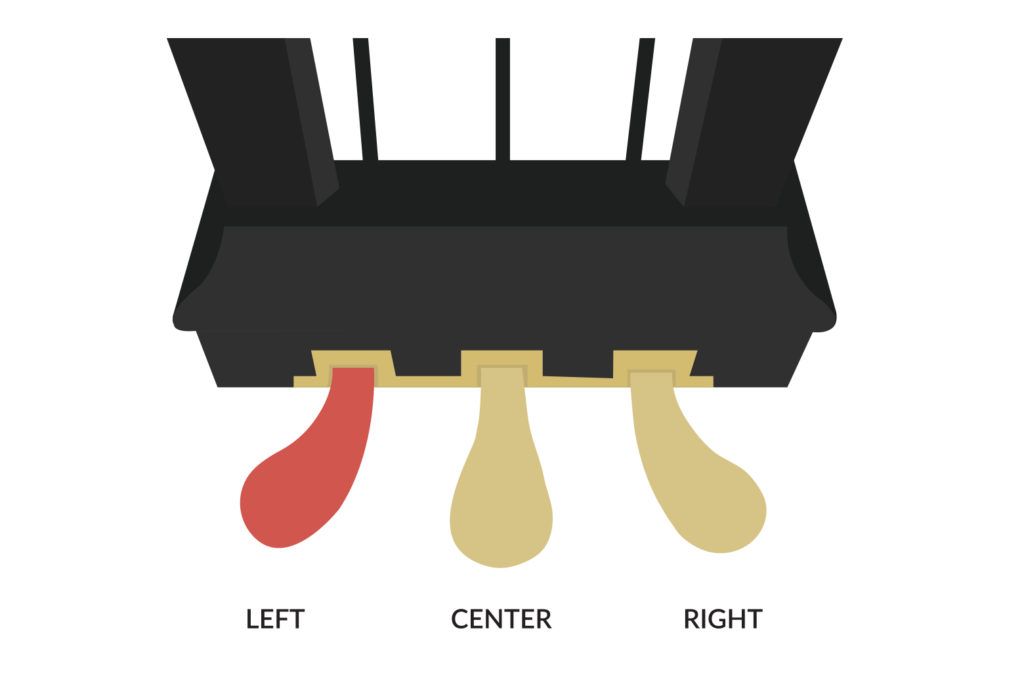
Positioned on the right, the sustain pedal, often referred to as the damper pedal, is arguably the most frequently used and immediately impactful. Its primary function is to lift all the dampers simultaneously from the piano strings. In a piano’s default state, each key’s corresponding damper rests on its string(s), preventing vibration once the key is released. When the sustain pedal is depressed, these felt dampers are raised, allowing any struck string to vibrate freely and continuously until its energy dissipates naturally or the pedal is released.
From a technical perspective, this pedal disengages the primary sound-stopping mechanism, extending the sonic output beyond the initial keypress. This creates a rich, resonant soundscape where notes blend and harmonics intermingle, essential for legato playing and creating a lush, ethereal sound. The depth to which the pedal is pressed can also subtly influence the resonance, allowing for ‘half-pedaling’ techniques that partially lift the dampers, offering granular control over decay and sustain. This mechanical design effectively transforms transient note production into a sustained, flowing auditory experience.
The Soft Pedal (Una Corda Pedal): Modifying Sonic Intensity
Located on the left, the soft pedal, historically known as the una corda (Italian for “one string”) pedal, offers a fascinating manipulation of the piano’s acoustic architecture to alter its sonic intensity and timbre. On a grand piano, engaging this pedal shifts the entire keyboard and hammer mechanism slightly to the right. This causes the hammers, which normally strike three strings per note (for most of the instrument’s range), to instead strike only two, or in some cases, a softer part of the hammer felt on three strings. This reduction in the number of strings excited, or the change in impact point, directly lowers the volume and produces a noticeably softer, mellower tone.
For an upright piano, the mechanism differs. Depressing the soft pedal moves the hammer rest closer to the strings, significantly reducing the distance the hammers travel before striking. This results in less kinetic energy being transferred to the strings, producing a quieter sound without altering the number of strings struck. Both designs achieve the objective of reducing the instrument’s acoustic output and modifying its tonal character, effectively offering a built-in sound attenuation system controlled by the user’s foot.
The Sostenuto Pedal: Selective Sustenance
The middle pedal, the sostenuto pedal, is a more sophisticated and less universally present feature, typically found on higher-end grand pianos and some advanced digital instruments. Its function is to selectively sustain only those notes that are being held down at the exact moment the pedal is engaged. All subsequent notes played after the pedal is pressed will remain undamped once the keys are released, but they will not be sustained by the sostenuto pedal; their dampers will return to the strings as normal.
Technically, the sostenuto pedal operates by lifting the dampers only from the strings whose keys are currently depressed when the pedal is activated. It achieves this through a complex mechanical linkage that isolates the action of specific dampers from the general damper lift mechanism of the sustain pedal. This allows a performer to sustain a particular chord or bass note, creating a continuous sonic bed, while simultaneously playing other notes or melodic lines without them being affected by the same sustained resonance. This advanced control mechanism opens up unique compositional and performance possibilities, offering a level of sonic layering not achievable with the other two pedals.
Engineering for Expressive Control: How Pedals Augment Performance Dynamics
The design and integration of these pedals within the piano’s overall system underscore a deep understanding of human interface and acoustic manipulation. They transform the piano from a mere note-producing machine into an instrument capable of immense emotional depth and dynamic range.
Beyond Simple On/Off: Nuances of Pedal Engagement
While each pedal has a primary function, their utility extends far beyond simple binary activation. The analog nature of their operation allows for a spectrum of effects. ‘Half-pedaling’ on the sustain pedal, for instance, involves partially lifting the dampers, creating a less resonant, more controlled sustain. This technique relies on the mechanical friction and spring resistance of the pedal mechanism, allowing a skilled user to modulate the sustain duration and resonance with remarkable precision. Similarly, the soft pedal can be engaged partially to achieve subtle shifts in tonal character and volume, offering a gradient of softness rather than an abrupt change.
This nuanced control highlights the sophisticated mechanical feedback loop designed into the piano. The feel of the pedal, its resistance, and the audible response of the instrument combine to give the user real-time feedback, enabling refined adjustments that are critical for expressive performance.
The Interplay of Mechanics and Acoustics
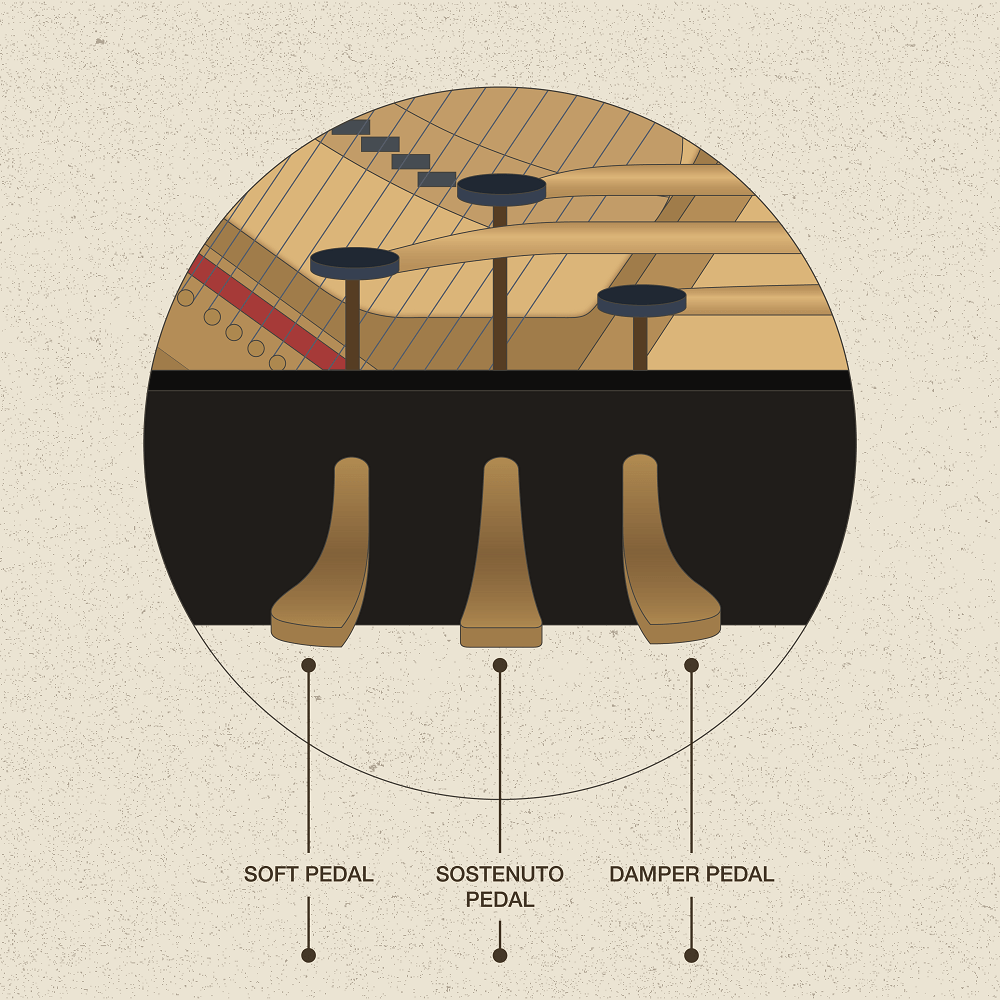
The genius of the piano’s pedal system lies in how these mechanical inputs interact with the instrument’s acoustic properties. When the sustain pedal is used, not only do the struck strings vibrate, but other undamped strings also begin to vibrate sympathetically, enriching the harmonic content and adding complexity to the overall sound. This phenomenon, known as sympathetic resonance, is a key component of the piano’s rich timbre, and the sustain pedal actively facilitates and enhances it.
The soft pedal, by altering the hammer-string interaction or reducing the number of strings struck, directly manipulates the initial sound wave generation, impacting not just volume but also the overtone series present in the tone. This modification of timbre is a direct result of the mechanical alteration of the energy transfer from hammer to string. The sostenuto pedal, by isolating sustain, allows for distinct layers of acoustic information to coexist, demonstrating advanced acoustic engineering for complex soundscapes.
The Evolution of Pedal Technology: From Acoustic to Digital Emulation
The concept of piano pedals has evolved over centuries, reflecting advancements in both musical expression and instrument design. More recently, digital piano technology has sought to accurately replicate the sophisticated functionality of acoustic pedals.
Historical Development and Standardization
Early pianos often featured only one or two pedals, or sometimes hand stops, to modify sound. The sustain pedal, in various forms, was one of the earliest additions, recognized for its dramatic impact on resonance. The soft pedal, particularly the una corda mechanism, emerged as piano builders sought to offer more dynamic and tonal variation. The sostenuto pedal is a much later invention, appearing in the mid-19th century, primarily popularized by Steinway & Sons, and its inclusion remains a mark of a high-quality instrument due to its mechanical complexity.
The standardization of the three-pedal configuration (sustain on the right, soft on the left, sostenuto in the middle) became prevalent in the late 19th and early 20th centuries. This standardized interface allows musicians to transfer their skills across different instruments, much like a universal keyboard layout.
Digital Piano Pedals: Replicating the Acoustic Experience
In the realm of digital pianos, the challenge has been to accurately emulate the nuanced, analog behavior of acoustic pedals. Early digital instruments often featured simple on/off switches, severely limiting expressive control. Modern digital pianos, however, employ sophisticated sensor technology to capture the continuous movement of the pedals. These sensors, often optical or magnetic, translate the physical travel of the pedal into digital data, allowing for ‘half-pedaling’ and other advanced techniques that mimic the varying degrees of damper lift or hammer displacement found in acoustic instruments.
Advanced digital signal processing (DSP) algorithms are then used to simulate the sympathetic resonance, decay characteristics, and tonal shifts associated with each pedal. For instance, when the digital sustain pedal is pressed, the DSP might apply algorithms that simulate the blending of harmonics and the longer decay times. Similarly, pressing the digital soft pedal triggers algorithms that alter the waveform’s envelope and spectral content to mimic the mellower, quieter sound of an acoustic soft pedal. Some high-end digital pianos even incorporate physical resistance mechanisms in their pedals to provide tactile feedback comparable to an acoustic instrument, enhancing the user experience and control.
Optimizing Your Interaction: Mastering Pedal Usage
Effectively utilizing the piano pedals transforms a basic performance into a work of art, demanding both technical proficiency and an intuitive understanding of their impact.
Practical Applications and Common Misconceptions
The sustain pedal is invaluable for creating legato phrases, enriching harmonies, and producing lush soundscapes. However, overuse can lead to a muddy, indistinct sound where notes clash rather than blend. Mastering its use involves precise timing—often lifting the pedal briefly between chord changes or melodic phrases to “clear” the sound, a technique known as “pedal changes.”
The soft pedal is ideal for delicate passages, creating contrast, or adding a specific tonal color. It’s not merely for playing quietly; its timbre-altering effect can be used expressively even at moderate volumes. A common misconception is to use it as a crutch for poor dynamic control; instead, it should be integrated intentionally for its unique sonic contribution.
The sostenuto pedal, while less frequently employed, is a powerful tool for complex textures. It allows a composer to sustain a deep bass note or a shimmering chord while maintaining clarity in a melodic line played above it. Its effectiveness lies in its precise timing of engagement, capturing only the desired notes for sustain.
Integrating Pedal Dynamics into Your Playing Workflow
For any aspiring pianist, the pedals are an extension of their technical apparatus, not an afterthought. Developing proficiency with them requires deliberate practice, much like mastering finger technique. Integrating pedal usage into the playing workflow involves:
- Auditory Awareness: Actively listening to the subtle and dramatic changes each pedal introduces.
- Physical Coordination: Developing the muscle memory to operate the pedals smoothly and precisely, often in conjunction with rapid finger movements.
- Contextual Understanding: Learning when and how to apply each pedal based on musical style, harmonic content, and desired expressive outcome.
The three pedals on a piano are more than simple mechanisms; they are sophisticated control interfaces designed to enhance the expressive capabilities of a complex acoustic instrument. From the broad resonance of the sustain pedal to the subtle tonal shifts of the soft pedal and the selective sustain of the sostenuto pedal, each component represents a crucial element in the piano’s technological design, enabling users to craft intricate, dynamic, and deeply expressive musical experiences.
aViewFromTheCave is a participant in the Amazon Services LLC Associates Program, an affiliate advertising program designed to provide a means for sites to earn advertising fees by advertising and linking to Amazon.com. Amazon, the Amazon logo, AmazonSupply, and the AmazonSupply logo are trademarks of Amazon.com, Inc. or its affiliates. As an Amazon Associate we earn affiliate commissions from qualifying purchases.