
To the uninitiated, “.223” is merely a number etched into the brass casing of a cartridge. However, within the realms of mechanical engineering, materials science, and digital ballistic modeling, the .223 Remington represents one of the most successful intersections of precision technology and standardized manufacturing in the last century. While the question “what caliber is 223” seems to seek a simple measurement, the technical reality involves a complex ecosystem of tolerances, pressure dynamics, and computational physics.
In the modern technology landscape, the .223 is less of a “bullet” and more of a “hardware specification” that must interface perfectly with various “operating systems”—the rifles designed to fire it. From the CNC machining of the brass to the AI-driven ballistics calculators used to predict its flight, the .223 is a masterpiece of technical evolution.

The Physics of Precision: Defining the .223 Technical Specifications
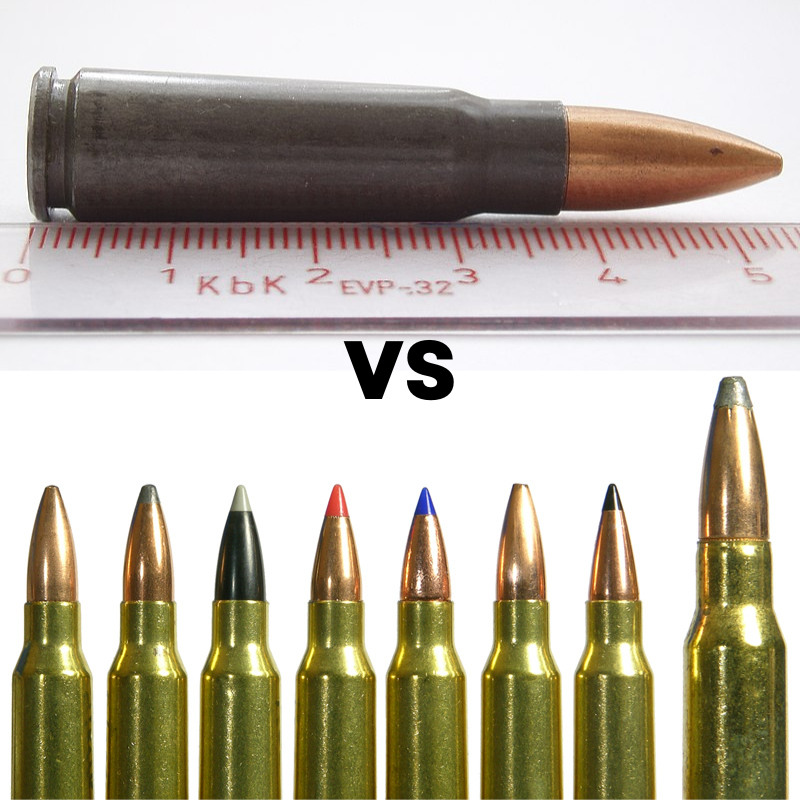
At its core, the .223 Remington is a cartridge with a bullet diameter of .224 inches (5.7 mm). However, “caliber” in a technical sense refers to much more than just the width of the projectile. It encompasses the internal volume of the case, the angle of the shoulder, and the specific metallurgy required to contain explosive pressures.
Micron-Level Tolerance in Manufacturing
Modern ammunition manufacturing has transitioned from simple mechanical pressing to high-precision, automated production lines. The .223 Remington requires tolerances measured in microns. If the case head is too thick, the “hardware” (the rifle’s bolt) cannot lock; if the wall thickness is inconsistent, the pressure distribution becomes unpredictable.
High-tech manufacturers now use laser micrometers and ultrasonic sensors to ensure that every .223 case adheres to the Sporting Arms and Ammunition Manufacturers’ Institute (SAAMI) specifications. This digital oversight ensures that the cartridge acts as a reliable component within a larger mechanical system.
Metallurgy and Stress Management
The cartridge case is typically made of 70/30 cartridge brass—a specific alloy designed for its elastic properties. When a .223 is fired, the tech behind the brass allows it to expand to seal the chamber and then contract instantly for extraction. This is a feat of materials science. Modern engineering has refined this alloy to withstand pressures up to 55,000 PSI (pounds per square inch), a threshold that requires precise annealing (heat treatment) of the case neck to prevent cracking while maintaining a hard base.
The Technical Divergence: .223 Remington vs. 5.56 NATO
One of the most frequent technical discussions in the firearms industry involves the distinction between .223 Remington and 5.56x45mm NATO. While they appear identical to the naked eye, their “firmware”—the internal pressure specifications and chamber geometry—differs significantly.
Chamber Geometry and the “Leade”
In engineering terms, the “leade” or “throat” is the distance between the mouth of the cartridge and the point where the rifling begins. The 5.56 NATO specification (a military tech standard) features a longer leade than the .223 Remington.
From a technical standpoint, firing a high-pressure 5.56 NATO round in a .223 Remington chamber (which has a shorter leade) can result in a massive pressure spike. This is an “interoperability” issue. Modern gunsmithing has solved this with the “Wylde” chamber—a hybrid technical design that uses CAD-optimized geometry to safely and accurately cycle both “operating systems.”
Pressure Transducers and Data Logging
How do engineers know the difference? They use piezoelectric pressure transducers. By drilling a hole into a test barrel and inserting a sensor, technicians can map the pressure curve of a .223 cartridge in real-time. This data is fed into software that analyzes the “burn rate” of the propellant. The technical difference isn’t just in the size; it’s in the digital data gathered during the millisecond-long combustion event.
Ballistics Software: The Digital Layer of the .223 Experience

In the 21st century, the performance of the .223 caliber is managed as much by software as it is by hardware. Long-range precision with such a light projectile requires sophisticated computational modeling to account for environmental variables.
Predictive Algorithms and Ballistic Coefficients
The .223 projectile is relatively light, often weighing between 55 and 77 grains. Because of this, its flight path is highly susceptible to wind drift and air density. To solve this, developers have created “Ballistic Calculators”—apps like Applied Ballistics or Hornady 4DOF.
These tools use Modified Point Mass Models to predict exactly where a .223 bullet will land at 500 yards. Users input technical data points:
- Ballistic Coefficient (BC): A numerical value representing the projectile’s aerodynamic efficiency.
- Muzzle Velocity: Measured via Doppler radar chronographs.
- Atmospheric Pressure: Often pulled via Bluetooth from specialized weather meters.
The Role of Doppler Radar in Tech Reviews
In the past, measuring a caliber’s performance was done with simple light-screen chronographs. Today, the tech industry uses LabRadar—a device that utilizes continuous-wave Doppler radar to track a .223 bullet along its entire flight path. This allows engineers to see exactly when a bullet transitions from supersonic to subsonic speeds, providing a level of data granularity that was impossible two decades ago.
Hardware Evolution: The Semi-Automatic Platform as a Gadget
If the .223 is the “software,” the AR-15 platform is the “hardware.” The technical synergy between the .223 caliber and modern rifle platforms has turned the firearm into a modular gadget, much like a customizable PC.
CNC Machining and Modular Design
Modern rifles chambered in .223 are products of advanced CNC (Computer Numerical Control) machining. Aerospace-grade 7075-T6 aluminum is milled to exacting specifications to create the receivers. This modularity allows for the “plug-and-play” installation of various technical components:
- Electronic Optics: High-tech “Smart” scopes that include integrated rangefinders and digital overlays.
- Trigger Groups: Precision-engineered modules that use specific spring weights and sear geometries to reduce “latency” between the user’s input and the firing pin’s strike.
- Free-Floating Handguards: Mechanical designs that prevent any physical stress on the barrel, ensuring that the “harmonics” of the .223 shot remain consistent.
Barrel Rifling and Twist Rates
The “twist rate” is a critical technical specification of any .223-caliber barrel. It refers to the distance the bullet travels down the barrel to complete one full rotation (e.g., a 1:7 twist). This is essentially the “clock speed” of the barrel. Engineers have found that heavier .223 projectiles (77-grain) require a faster “clock speed” (1:7) to stabilize, while lighter projectiles (55-grain) perform better with a 1:9 or 1:12 twist. This level of technical customization allows the user to optimize their hardware for specific ballistic software.
Security and Future-Proofing: The Tech Outlook for .223
As we look toward the future, the .223 Remington is undergoing a digital and structural transformation. Innovation in this space is focusing on “smart” integration and sustainable manufacturing.
Smart Scopes and IoT Integration
The next frontier for the .223 caliber is the “Internet of Things” (IoT) for shooting. We are seeing the rise of optics that connect via Wi-Fi to smartphones, allowing for live-streaming of the “viewfinder” and automatic logging of every shot fired. This “Digital Logbook” technology helps shooters track the “barrel life” of their .223 hardware, notifying them when the rifling has worn down to a point where accuracy will degrade.
Polymer Cased Ammunition
In an effort to reduce weight and heat transfer—two major technical hurdles in small arms—companies are developing polymer-cased .223 ammunition. This replaces the traditional brass “hardware” with high-strength, heat-resistant plastics. The technical benefit is twofold: it reduces the weight of the “package” by nearly 30% and acts as an insulator, keeping the rifle’s chamber cooler during high-volume data… or rather, high-volume fire.
Conclusion: More Than Just a Measurement
When someone asks, “what caliber is 223,” the answer isn’t just “.223 inches.” The real answer lies in the massive technical infrastructure that supports it. It is a caliber defined by high-pressure physics, refined through aerospace-grade metallurgy, and optimized by sophisticated digital algorithms.
The .223 Remington is a testament to how traditional mechanical industries have embraced the tech revolution. Whether it is through the use of Doppler radar to map its flight or the use of CNC machines to craft its vessel, the .223 remains at the cutting edge of ballistic technology. It is a standardized, high-performance “data link” between a shooter and their target, powered by a century of engineering innovation.
aViewFromTheCave is a participant in the Amazon Services LLC Associates Program, an affiliate advertising program designed to provide a means for sites to earn advertising fees by advertising and linking to Amazon.com. Amazon, the Amazon logo, AmazonSupply, and the AmazonSupply logo are trademarks of Amazon.com, Inc. or its affiliates. As an Amazon Associate we earn affiliate commissions from qualifying purchases.