
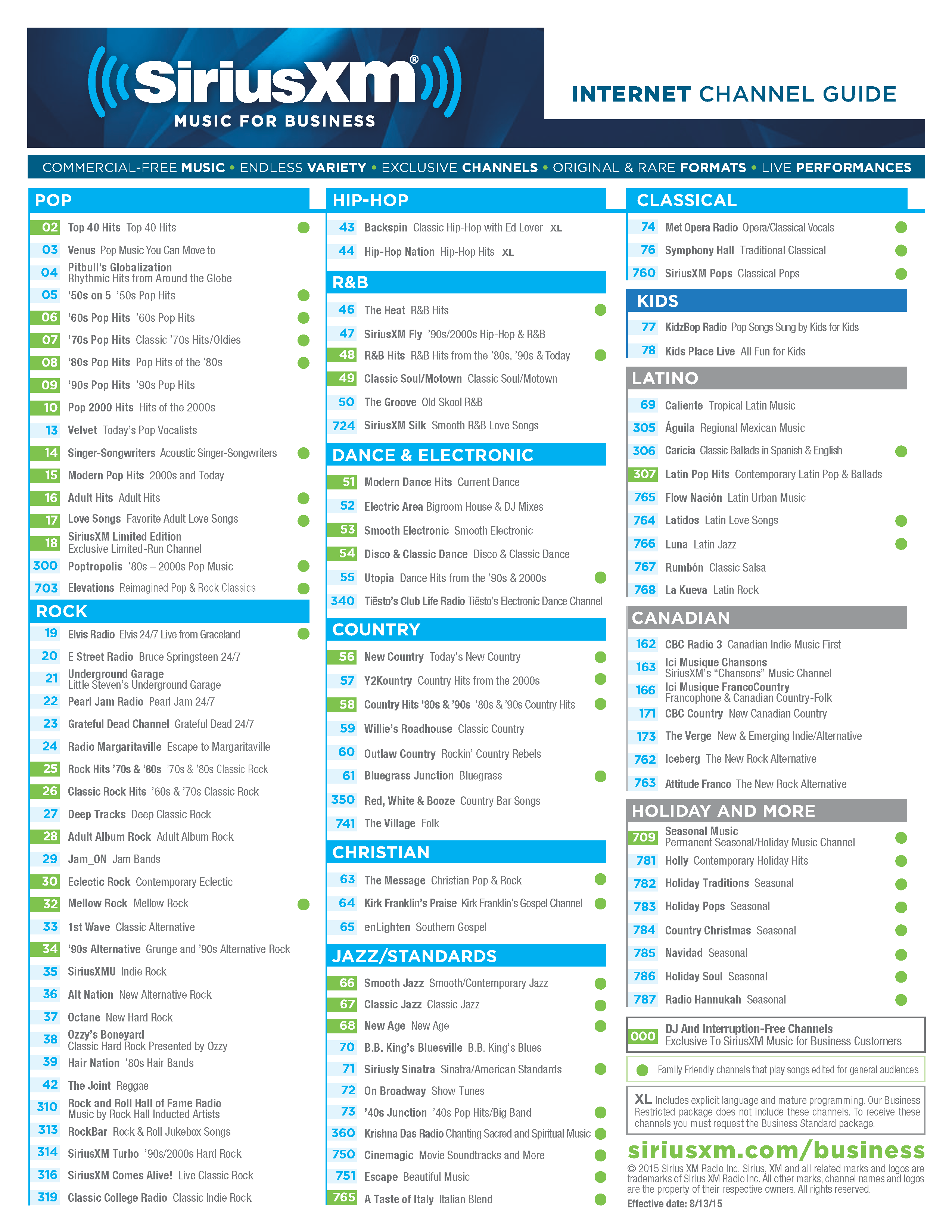
In the landscape of modern media, SiriusXM stands as a titan of hybrid broadcasting, bridging the gap between traditional radio and high-bandwidth digital streaming. When consumers ask, “What are the Sirius channels?” they are often looking for a list of music or talk stations. However, from a technological standpoint, the answer is far more complex. The “channels” are discrete digital data streams delivered via a sophisticated network of geostationary satellites and terrestrial IP-based infrastructures.
SiriusXM operates a massive ecosystem that includes over 150 satellite channels and upwards of 400 streaming-exclusive channels. This network is categorized not just by content, but by the delivery mechanism and the software architecture that allows users to access high-fidelity audio in moving vehicles, on mobile devices, and through smart home integrations. Understanding these channels requires a look at the technology that powers the SiriusXM platform, the categorization of its vast content library, and the digital features that differentiate satellite radio from standard terrestrial FM/AM broadcasting.
The Technical Infrastructure: How Sirius Channels Reach the User
The backbone of the Sirius channel lineup is a sophisticated dual-delivery system. Unlike traditional radio, which relies on local towers and analog signals prone to interference, SiriusXM utilizes a proprietary digital platform that ensures a consistent user experience regardless of geographic location.
Satellite Delivery and S-Band Technology
The core “Satellite” channels (typically channels 2 through 170 on most hardware) are beamed down from a fleet of satellites in geostationary orbit. SiriusXM utilizes S-band frequencies (2.3 GHz), which provide enough bandwidth for high-quality digital audio and metadata. This metadata is what allows your car’s head unit to display the artist name, song title, and album art in real-time.
To combat “signal shadowing”—the loss of signal caused by buildings, tunnels, or mountains—the system uses a technology called Time Division Multiplexing (TDM). Furthermore, a network of terrestrial repeaters in urban areas fills in the gaps where the satellite’s line-of-sight might be obstructed. This seamless handoff between space-based and ground-based hardware is what keeps the channels active during a cross-country drive.
The 360L Platform and IP-Based Streaming
In recent years, the definition of Sirius channels has expanded through the introduction of the “360L” platform. This is a hybrid technology integrated into modern vehicle infotainment systems that combines satellite delivery with a 4G/5G cellular connection.
The 360L software allows users to access “Xtra” channels—stations that exist only in the digital realm and are not broadcast via satellite. This effectively doubles the available channel count and allows for features like “Start Now” (restarting a live song) and personalized recommendations based on algorithmic listening patterns, similar to Spotify or Apple Music.
Decoding the Channel Categories: Music, News, and Sports
The SiriusXM channel grid is meticulously organized into “neighborhoods” to optimize user navigation and content discovery. Each category represents a massive investment in licensing, curation software, and human programming.
The Music Neighborhoods
The music channels are the most frequented part of the spectrum. They are generally categorized by decade or genre:
-
Decades (Ch. 2–12): These include flagship channels like ’80s on 8 and ’90s on 9. These channels use advanced scheduling software to maintain a “live” feel while ensuring a deep rotation of hits and deep cuts.
-
Rock and Alt (Ch. 18–41): Channels like Lithium (90s Alternative) and Octane (New Hard Rock) are legendary for their curated playlists. From a tech perspective, these channels often feature “Artist-Branded” takeovers where the metadata and imaging are updated dynamically to reflect a specific guest DJ.
-
Hip-Hop and R&B (Ch. 42–55): The Spectrum and LL COOL J’s Rock The Bells Radio showcase the platform’s ability to blend classic hits with modern digital exclusives.
Talk, News, and Entertainment
SiriusXM is the industry leader in premium talk content. This includes exclusive partnerships with major media entities:
-
Howard Stern (Ch. 100 & 101): These channels are the crown jewels of the platform, requiring specialized high-priority bandwidth to ensure the highest possible audio fidelity for the “King of All Media.”
-
News and Politics: The lineup includes simulcasts of CNN, MSNBC, Fox News, and the BBC. Technologically, these channels are unique because they often require lower bitrates for voice-only content, allowing SiriusXM to allocate more bandwidth to music channels where audio fidelity is more critical.
-
Comedy: Channels like Netflix Is A Joke Radio and Laugh Out Loud Radio utilize digital archiving software to cycle through thousands of hours of stand-up clips without repetitive loops.
Professional and College Sports
SiriusXM holds the digital broadcasting rights for almost every major sports league, including the NFL, MLB, NBA, NHL, and NASCAR. During game days, the “Sports Play-by-Play” neighborhood (Ch. 800+ on the app) expands significantly. The technology behind this involves dynamic channel allocation, where “blank” bandwidth is suddenly activated to host a live broadcast of a specific game, then deactivated once the event concludes.

The Evolution of the User Interface (UI) and App Experience
The way users interact with Sirius channels has shifted from physical knobs and buttons to sophisticated software interfaces. The SiriusXM app is a masterclass in modern digital streaming architecture.
Personalized Stations and AI Integration
Beyond the live channels, the SiriusXM app offers “Personalized Stations Powered by Pandora.” This integration uses the Music Genome Project—a complex AI algorithm that analyzes hundreds of attributes for every song—to create a custom channel for the user. When a user “thumbs up” or “thumbs down” a track on these digital channels, the software recalibrates the stream in real-time.
Xtra Channels and On-Demand Content
The app features hundreds of “Xtra” channels that are not available on older satellite-only receivers. These are often hyper-niche, such as ’80s on 8 Party or Chill Instrumental. Additionally, the “On Demand” feature allows the software to cache thousands of hours of content, enabling users to download shows for offline listening. This transition from “linear” broadcasting (where everyone hears the same thing at the same time) to “asynchronous” listening is a major shift in the brand’s technological roadmap.
Cross-Platform Connectivity
The SiriusXM software is designed for an “always-on” lifestyle. Through APIs (Application Programming Interfaces), the service integrates with:
-
Smart Speakers: Alexa and Google Home skills allow users to call up channels by voice command.
-
Apple CarPlay and Android Auto: These interfaces mirror the app’s functionality on the vehicle’s dashboard, utilizing the phone’s data connection to provide a high-resolution UI and access to the full 400+ channel lineup.
-
Sonos and High-End Audio: For home audiophiles, SiriusXM provides high-bitrate streams that take advantage of superior DACs (Digital-to-Analog Converters) in premium hardware.
Security, Encryption, and Subscription Management
One of the most impressive technical aspects of the Sirius channel ecosystem is how it manages millions of individual subscriptions via a one-way satellite signal.
The ESN and SID System
Every SiriusXM receiver has a unique Electronic Serial Number (ESN) or Radio ID. Because the satellites cannot “talk back” to the radio, the system uses a “tiering” encryption method. The satellite constantly broadcasts a “hit” or an “authorization signal.” When you subscribe, the satellite sends out a specific encrypted packet that corresponds to your ESN. Your radio captures this packet, decrypts it, and “unlocks” the channels included in your package.
Digital Rights Management (DRM)
To prevent the piracy of high-value content (like live concerts or exclusive interviews), SiriusXM employs robust DRM software. This ensures that the digital streams are encrypted during transit and can only be decoded by authorized hardware or verified app logins. In the streaming app, this is handled through standard TLS/SSL encryption, while the satellite side uses proprietary hardware-level decryption chips.

The Future of Sirius Channels: 5G and Beyond
As we look toward the future of in-car entertainment and digital audio, the “channels” on SiriusXM are likely to become even more integrated with AI and high-speed data networks.
The transition toward 5G will likely see the satellite component become a “fail-safe” or a secondary delivery method, while the primary “channel” experience becomes an interactive, high-definition IP stream. We are already seeing the beginning of this with “Pandora-powered” curation and interactive polls within the SiriusXM app.
Furthermore, as autonomous driving technology matures, the “channels” may evolve into multi-modal experiences involving video, interactive data overlays, and spatial audio (Dolby Atmos). The SiriusXM platform is no longer just “radio”; it is a sophisticated software-defined media service that leverages the best of space-age hardware and modern cloud computing to deliver a massive array of curated content to a global audience.
In summary, the Sirius channels are a testament to how legacy broadcasting can successfully pivot into the digital age. By combining the reliability of satellite technology with the flexibility of IP streaming and AI-driven personalization, SiriusXM provides a robust, secure, and diverse audio ecosystem that continues to define the standard for premium audio content.
aViewFromTheCave is a participant in the Amazon Services LLC Associates Program, an affiliate advertising program designed to provide a means for sites to earn advertising fees by advertising and linking to Amazon.com. Amazon, the Amazon logo, AmazonSupply, and the AmazonSupply logo are trademarks of Amazon.com, Inc. or its affiliates. As an Amazon Associate we earn affiliate commissions from qualifying purchases.