
For most individuals, purchasing a home represents the single largest financial transaction of their lives. It’s a cornerstone of the American Dream, a place for families to grow, and often a significant long-term investment. However, few people have the cash on hand to buy a home outright, which is where mortgage loans come into play. A mortgage is a secured loan used to finance the purchase of real estate, with the property itself serving as collateral. Understanding the various types of mortgage loans available is not merely an academic exercise; it’s a critical step in making an informed financial decision that will impact your budget and lifestyle for decades to come.
Navigating the mortgage landscape can feel overwhelming, with a dizzying array of terms, conditions, and acronyms. Yet, armed with the right knowledge, prospective homeowners can confidently select a loan product that aligns with their financial capacity, risk tolerance, and long-term goals. This comprehensive guide will demystify the world of home mortgage loans, breaking down the most common types and highlighting their key features, benefits, and potential drawbacks.
Understanding the Fundamentals of Mortgage Lending
Before diving into the specifics of different loan types, it’s essential to grasp the core concepts that underpin all mortgage agreements. A mortgage is fundamentally a contract between a borrower (you) and a lender (a bank, credit union, or mortgage company) where the lender provides funds for the purchase of a home, and you agree to repay that money over a set period, typically with interest.
What Constitutes a Mortgage?
At its heart, a mortgage is a loan secured by real property. This means if you fail to make your agreed-upon payments, the lender has the legal right to take possession of your home through a process called foreclosure to recover their investment. This security is what allows lenders to offer large sums of money for property purchases.
Key Components of a Mortgage Loan
Every mortgage loan is characterized by several critical components that dictate the cost and structure of your repayment plan:
-
Principal: This is the actual amount of money you borrow to purchase the home.
-
Interest Rate: This is the cost of borrowing the principal, expressed as a percentage. It directly influences the total amount you will pay over the life of the loan.
-
Loan Term: This is the duration over which you agree to repay the loan, commonly 15, 20, or 30 years. A shorter term typically means higher monthly payments but less interest paid overall, and vice-versa for longer terms.
-
Monthly Payment (PITI): Your regular payment often comprises four parts: Principal, Interest, Taxes (property taxes), and Insurance (homeowner’s insurance). Sometimes, it also includes private mortgage insurance (PMI) if your down payment is less than 20%.
The Role of Interest Rates
Interest rates are perhaps the most significant factor affecting your mortgage’s affordability and total cost. They can be fixed, meaning they remain constant for the life of the loan, or adjustable, meaning they can change periodically based on market conditions. Fluctuations in interest rates can dramatically impact your monthly payments and overall financial burden, making the choice between fixed and adjustable rates a pivotal decision.
Fixed-Rate Mortgages: Stability and Predictability
The fixed-rate mortgage is the most popular and straightforward type of home loan, celebrated for its stability and predictability. With a fixed-rate mortgage, the interest rate you secure at the outset remains unchanged for the entire duration of the loan.
How Fixed-Rate Mortgages Work
Once you lock in your interest rate, your principal and interest payment will never change, regardless of what happens in the broader economy or with prevailing interest rates. This consistency makes budgeting easier and offers peace of mind, as you know precisely what your core housing cost will be each month for the next several decades. Property taxes and homeowner’s insurance premiums can still fluctuate, leading to slight changes in your total monthly PITI payment, but the principal and interest portion remains constant.
Common Fixed-Rate Terms
While various terms are available, the two most common fixed-rate mortgage terms are:
-
30-Year Fixed-Rate Mortgage: This is the most popular choice, offering the lowest monthly payments due to the extended repayment period. However, it typically results in paying significantly more interest over the life of the loan compared to shorter terms.
-
15-Year Fixed-Rate Mortgage: With a shorter repayment period, monthly payments are substantially higher than a 30-year loan. The trade-off is a much lower total interest paid and faster equity build-up, allowing you to own your home free and clear in half the time.
Pros and Cons of Fixed-Rate Mortgages
Pros:
-
Predictable Payments: Consistent principal and interest payments make budgeting straightforward.
-
Protection from Rising Rates: If market interest rates increase, your rate stays the same, saving you money.
-
Simplicity: Easy to understand and less complex than other loan types.
Cons:
-
Higher Initial Interest Rates: Fixed rates are often slightly higher than the initial rates of adjustable-rate mortgages.
-
No Benefit from Falling Rates: If market interest rates drop significantly, you won’t benefit unless you refinance your loan.
Adjustable-Rate Mortgages (ARMs): Flexibility with Risk
Adjustable-Rate Mortgages (ARMs) offer a different approach to home financing, providing an initial period of fixed interest rates followed by periodic adjustments based on market indexes. ARMs can be attractive to certain borrowers, particularly those who anticipate moving or refinancing before the fixed-rate period ends.
How ARMs Work: Introductory Periods and Caps
ARMs typically begin with an “introductory period” during which the interest rate is fixed, often for 3, 5, 7, or 10 years. This initial rate is usually lower than what a fixed-rate mortgage would offer at the time, making the ARM seem more appealing initially.
After the introductory period, the interest rate becomes adjustable. It will fluctuate based on a specified financial index (like the Secured Overnight Financing Rate – SOFR or the U.S. Treasury Bill index) plus a margin set by the lender. These adjustments usually occur annually.
To protect borrowers from extreme rate swings, ARMs include “caps” that limit how much the interest rate can change:
-
Initial Cap: Limits the first adjustment after the fixed-rate period ends.
-
Periodic Cap: Limits how much the rate can change during subsequent adjustment periods (e.g., annually).
-
Lifetime Cap: Sets an upper limit on how high the interest rate can go over the life of the loan.
Types of ARMs
ARMs are often identified by two numbers, such as 5/1 ARM or 7/1 ARM. The first number indicates the length of the initial fixed-rate period in years, and the second number indicates how frequently the rate will adjust after that period (e.g., 1 means annually).
-
5/1 ARM: Fixed rate for five years, then adjusts annually.
-
7/1 ARM: Fixed rate for seven years, then adjusts annually.
-
Hybrid ARMs: These are the most common, combining features of both fixed and adjustable rates.
Pros and Cons of Adjustable-Rate Mortgages
Pros:
-
Lower Initial Payments: The introductory fixed rate is often lower than comparable fixed-rate mortgages, making early homeownership more affordable.
-
Benefit from Falling Rates: If market interest rates decline, your mortgage rate can decrease, leading to lower payments.
-
Good for Short-Term Ownership: Ideal for those who plan to sell or refinance before the adjustable period begins.
Cons:
-
Payment Volatility: After the fixed period, your monthly payments can increase significantly if interest rates rise.
-
Budgeting Uncertainty: Makes long-term financial planning more challenging due to unpredictable future payments.
-
Complexity: ARMs can be more complex to understand due to indices, margins, and caps.
Government-Insured Loans: Expanding Access to Homeownership
Beyond conventional fixed and adjustable-rate mortgages, several government-backed loan programs exist to make homeownership more accessible, particularly for specific groups of borrowers or those with unique financial situations. These loans are not directly issued by the government but are insured by government agencies, reducing the risk for lenders and allowing them to offer more favorable terms.
FHA Loans: Making Homeownership Accessible
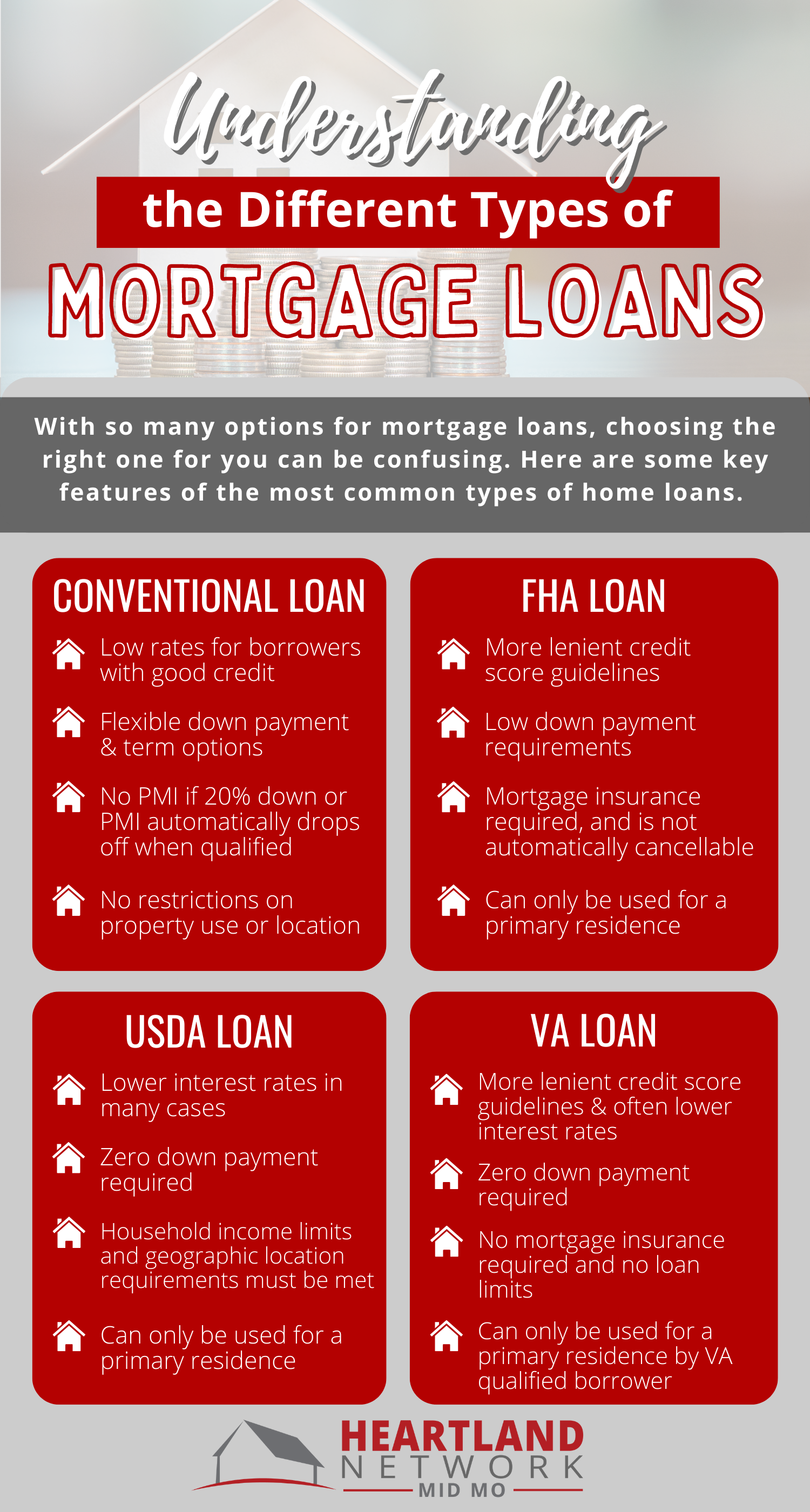
Insured by the Federal Housing Administration (FHA), FHA loans are designed to help low-to-moderate-income borrowers purchase homes. They are particularly appealing because of their more lenient credit requirements and lower down payment options.
-
Key Features: Low minimum down payment (as little as 3.5%), flexible credit score requirements, and mandatory mortgage insurance premiums (MIP) for the life of the loan (or a significant portion of it).
-
Who Benefits: First-time homebuyers, individuals with less-than-perfect credit, or those with limited savings for a down payment.
VA Loans: Benefits for Service Members and Veterans
Backed by the U.S. Department of Veterans Affairs (VA), VA loans offer exceptional benefits to eligible service members, veterans, and their surviving spouses. These loans are among the most powerful tools for military families seeking to buy a home.
-
Key Features: No down payment required (for eligible borrowers with full entitlement), no private mortgage insurance (PMI), competitive interest rates, and limited closing costs. A VA funding fee is typically required, but it can often be financed into the loan.
-
Who Benefits: Active-duty military personnel, veterans, members of the National Guard and Reserves, and certain surviving spouses.
USDA Loans: Rural Development Opportunities
Insured by the U.S. Department of Agriculture (USDA), these loans are aimed at promoting homeownership in designated rural and suburban areas. They are a fantastic option for eligible borrowers looking to purchase homes outside of densely populated urban centers.
-
Key Features: No down payment required for eligible borrowers, competitive interest rates, and income limitations for applicants. The property must be located in an eligible rural area as defined by the USDA.
-
Who Benefits: Low-to-moderate-income individuals and families purchasing homes in qualifying rural or suburban areas.
Pros and Cons of Government Loans
Pros:
-
Lower Down Payments: Often require little to no down payment, making homeownership more attainable.
-
More Lenient Credit Requirements: Can be easier to qualify for than conventional loans, especially for those with lower credit scores.
-
Competitive Interest Rates: Government backing often leads to more favorable rates.
-
Specific Benefits: VA loans offer unique advantages like no PMI and no down payment.
Cons:
-
Mortgage Insurance: FHA and USDA loans typically require mortgage insurance premiums, increasing the total cost.
-
Property Restrictions: USDA loans are limited to specific geographic areas.
-
Loan Limits: Government loans often have maximum loan limits, which vary by location.
-
Funding Fees/MIPs: Additional costs like VA funding fees or FHA MIPs can add to the loan’s expense.
Other Specialized Mortgage Products
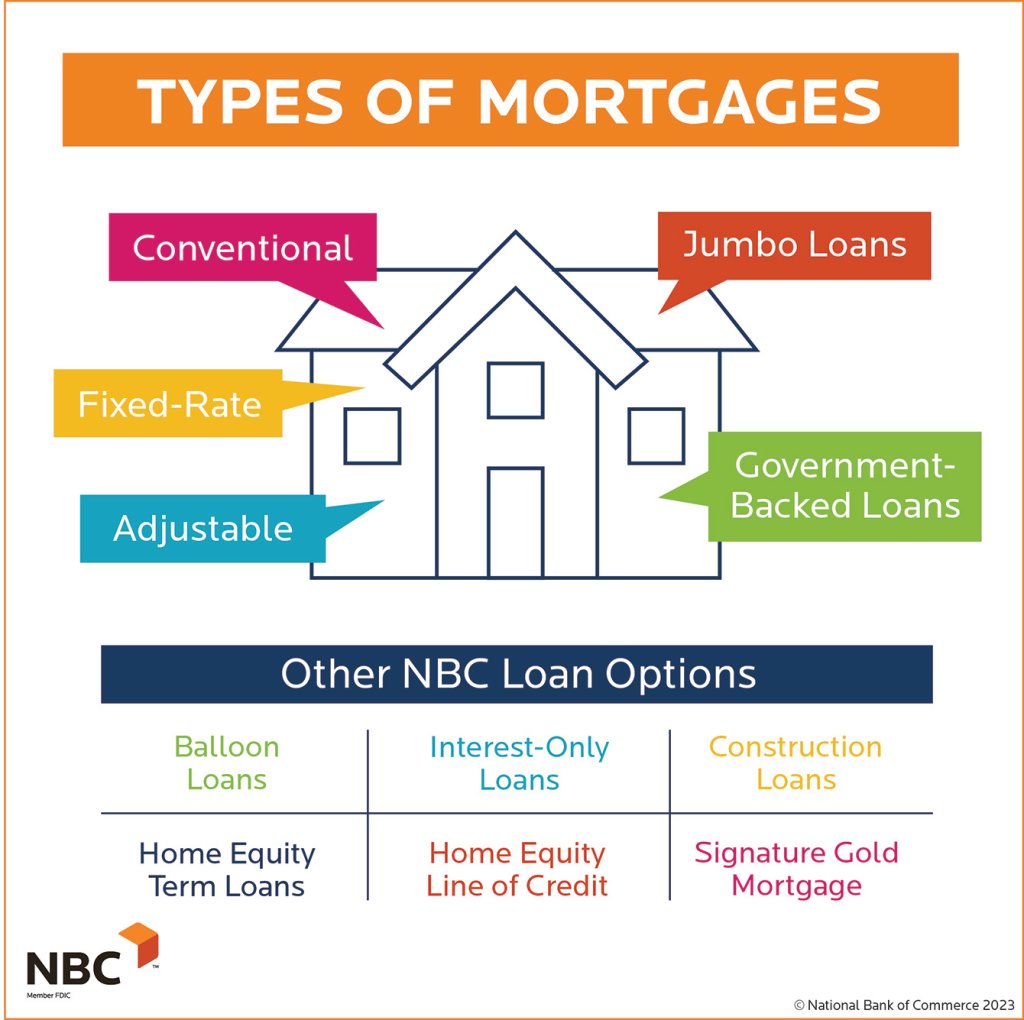
While fixed-rate, adjustable-rate, and government-backed loans cover the vast majority of the mortgage market, several specialized products cater to unique financial situations or property types.
Jumbo Loans
Jumbo loans are non-conforming mortgages that exceed the maximum loan limits set by government-sponsored enterprises like Fannie Mae and Freddie Mac. These are typically required for purchasing high-value properties.
-
Key Features: Larger loan amounts, often higher credit score requirements, and potentially higher interest rates due to increased risk for lenders.
-
Who Benefits: Borrowers purchasing luxury homes or properties in high-cost-of-living areas.
Construction Loans
A construction loan is a short-term loan used to finance the building of a new home. Unlike traditional mortgages, the funds are disbursed incrementally as construction milestones are met.
-
Key Features: Typically short-term (1 year or less), variable interest rates, and usually convert into a permanent mortgage once construction is complete (construction-to-permanent loan).
-
Who Benefits: Individuals or developers building custom homes.
Reverse Mortgages
Reverse mortgages are designed for homeowners aged 62 or older who have significant equity in their homes. They allow homeowners to convert a portion of their home equity into cash without having to sell the home or make monthly mortgage payments (though property taxes and insurance must still be paid).
-
Key Features: Borrowers receive payments from the lender (lump sum, line of credit, or monthly installments), the loan becomes due when the last borrower moves out, sells the home, or passes away.
-
Who Benefits: Seniors looking to supplement their income, pay off existing debt, or cover healthcare costs while remaining in their homes.
Choosing the Right Mortgage for You
Selecting the appropriate mortgage loan is a deeply personal financial decision. There’s no one-size-fits-all answer, as the best loan depends entirely on your individual circumstances, risk tolerance, and future plans.
Assessing Your Financial Situation
Before applying for any mortgage, take an honest look at your finances:
-
Credit Score: A higher credit score generally qualifies you for better interest rates.
-
Income Stability: Lenders want to see a steady income history.
-
Debt-to-Income Ratio (DTI): This ratio compares your monthly debt payments to your gross monthly income. Lower DTI is preferred.
-
Down Payment Savings: How much cash do you have available to put down?
-
Emergency Fund: Ensure you have enough savings to cover unexpected expenses after closing.
Considering Market Conditions
Current interest rate environments play a significant role. In a low-interest-rate environment, a fixed-rate mortgage might be more appealing to lock in a favorable rate. In a high-rate environment, an ARM with a low introductory rate might be a strategic move if you plan to move or refinance when rates fall.

The Importance of Professional Advice
The mortgage process is complex, and making the wrong choice can have long-lasting financial repercussions. It is highly advisable to consult with multiple qualified mortgage lenders and brokers. They can help you:
-
Understand Your Eligibility: Determine which loan programs you qualify for.
-
Compare Rates and Terms: Shop around for the best interest rates and closing costs.
-
Model Scenarios: See how different loan types and terms will impact your monthly payments and total costs over time.
-
Navigate the Application Process: Guide you through the paperwork and approvals.
Ultimately, the goal is to find a mortgage that not only gets you into your dream home but also provides financial security and peace of mind for years to come. By understanding the diverse landscape of mortgage loan options, you are well-equipped to make a confident and sound financial decision on your path to homeownership.
aViewFromTheCave is a participant in the Amazon Services LLC Associates Program, an affiliate advertising program designed to provide a means for sites to earn advertising fees by advertising and linking to Amazon.com. Amazon, the Amazon logo, AmazonSupply, and the AmazonSupply logo are trademarks of Amazon.com, Inc. or its affiliates. As an Amazon Associate we earn affiliate commissions from qualifying purchases.