
The human body is a marvel of biological engineering, a complex and intricately interconnected network of organs that work in concert to sustain life. Understanding these organ systems is fundamental to grasping human physiology, health, and disease. However, in the modern era, our appreciation and interaction with these vital systems are increasingly shaped by technological advancements. From sophisticated diagnostic tools to wearable health monitors, technology is not merely observing our organ systems; it’s actively involved in their assessment, treatment, and even augmentation. This exploration delves into the fundamental concept of organ systems and, more importantly, how technology is fundamentally redefining our relationship with them.

The Foundation: Understanding the Body’s Eight Major Organ Systems
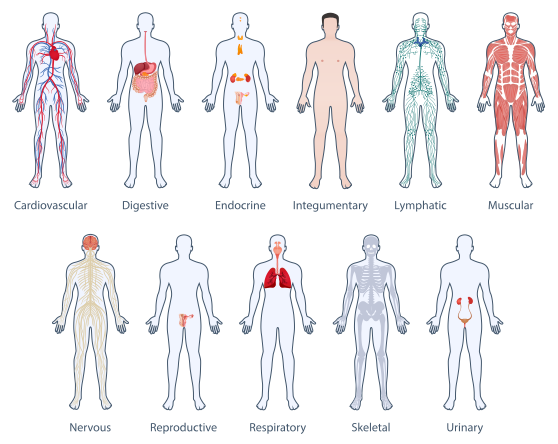
Before we delve into the technological frontiers, it’s crucial to establish a clear understanding of what constitutes an organ system. Organ systems are groups of organs that work together to perform a specific, major function within the body. While different classifications exist, a common framework identifies eight principal organ systems, each with distinct roles but interdependent functions. Their efficient operation is paramount for maintaining homeostasis, the stable internal environment necessary for survival.
The Integumentary System: Our Body’s Outer Frontier
The integumentary system, primarily comprising the skin, hair, and nails, acts as our body’s primary interface with the external world. It’s a crucial barrier against pathogens, a regulator of body temperature, and a sensory organ.
- Skin’s Role: Beyond its protective function, the skin plays a vital role in vitamin D synthesis and regulating fluid balance. Its vast network of nerve endings allows us to perceive touch, pressure, pain, and temperature, providing essential environmental feedback.
- Technological Interventions: In the realm of tech, the integumentary system is becoming a canvas for innovation. Wearable devices, from smartwatches to advanced biosensors, directly interact with the skin to monitor vital signs like heart rate, blood oxygen levels, and even electrodermal activity, which can indicate stress. Research is also progressing in bio-integrated electronics, where sensors are implanted or adhered to the skin for continuous, long-term health monitoring. Furthermore, advancements in dermatology utilize AI-powered image analysis to detect early signs of skin cancer and other dermatological conditions with remarkable accuracy.
The Skeletal and Muscular Systems: The Body’s Framework and Mobility
The skeletal system provides structural support, protects internal organs, facilitates movement through muscle attachment, and is the site of blood cell production. The muscular system, working in tandem with the skeletal system, enables all forms of locomotion and internal bodily movements.
- Synergy of Structure and Movement: The intricate interplay between bones, cartilage, tendons, and ligaments, supported by the vast network of muscles, allows for complex and precise movements. This system is essential for everything from standing upright to intricate motor skills.
- Technological Enhancements: This domain has seen significant technological disruption. 3D printing is revolutionizing prosthetics, creating custom-fit limbs and assistive devices with unparalleled precision. Exoskeletons, powered by advanced robotics and AI, are restoring mobility to individuals with paralysis and enhancing the capabilities of soldiers and industrial workers. In diagnostics, advanced imaging techniques like MRI and CT scans, powered by sophisticated algorithms, provide detailed anatomical views for diagnosing skeletal and muscular injuries and diseases. Surgical robots are also enhancing precision in orthopedic procedures, leading to faster recovery times.
The Nervous System: The Body’s Command and Control Center
The nervous system, encompassing the brain, spinal cord, and peripheral nerves, is responsible for rapid communication throughout the body, processing sensory information, and coordinating responses. It’s the seat of thought, emotion, and consciousness.
- Information Highway: This intricate network of neurons transmits electrical and chemical signals, allowing for instantaneous communication between different parts of the body and enabling complex cognitive functions.
- Tech’s Deep Dive: The nervous system is a primary focus for technological innovation. Brain-computer interfaces (BCIs) are rapidly advancing, allowing individuals to control external devices with their thoughts. This has profound implications for individuals with severe motor disabilities. AI-powered neuroimaging analysis is enhancing the early detection and understanding of neurological disorders like Alzheimer’s and Parkinson’s. Deep learning algorithms are being used to decipher brain signals, paving the way for more intuitive BCIs and advanced prosthetics. Furthermore, the development of neuromorphic computing aims to mimic the structure and function of the human brain in artificial systems, promising a new era of computing.
The Cardiovascular and Respiratory Systems: Life’s Essential Circulation and Respiration
The cardiovascular system, comprising the heart, blood vessels, and blood, is responsible for transporting oxygen, nutrients, hormones, and waste products throughout the body. The respiratory system, including the lungs and airways, facilitates the exchange of oxygen and carbon dioxide.
- Vital Exchange: The continuous flow of oxygenated blood through the body, fueled by the rhythmic pumping of the heart and the efficient gas exchange in the lungs, is fundamental to cellular function and survival.
- Technological Lifelines: These systems have benefited immensely from technological advancements. Implantable cardiac devices, such as pacemakers and defibrillators, are life-saving technologies that regulate heart rhythm. Advanced medical imaging, including echocardiograms and cardiac CT scans, provides detailed insights into heart structure and function. Artificial intelligence is being employed to predict cardiac events and personalize treatment plans. In respiratory care, ventilators and oxygen concentrators are critical in managing respiratory distress, while AI-driven diagnostics are improving the early detection of lung diseases. Smart inhalers are also emerging, providing data on medication usage and adherence.
The Digestive and Urinary Systems: Processing and Elimination
The digestive system breaks down food into absorbable nutrients, while the urinary system filters waste products from the blood and excretes them from the body. Both are crucial for maintaining metabolic balance and eliminating toxins.
- Nutrient Acquisition and Waste Removal: These systems are responsible for transforming ingested material into usable energy and building blocks, while simultaneously purging the body of harmful byproducts.
- Tech-Driven Efficiency: Technological advancements are streamlining the diagnosis and treatment of digestive and urinary disorders. Minimally invasive surgical techniques, often aided by robotic systems, are reducing recovery times for procedures. AI-powered diagnostic tools are improving the accuracy of interpreting endoscopic images and analyzing lab results. The development of advanced prosthetics for the urinary tract and digestive assist devices is also on the horizon. Furthermore, wearable sensors are being explored to monitor gut health and fluid balance non-invasively.
The Endocrine and Reproductive Systems: Regulation and Continuity
The endocrine system uses hormones to regulate a wide range of bodily functions, including growth, metabolism, and reproduction. The reproductive system is responsible for producing offspring, ensuring the continuation of the species.
- Balancing Acts and Legacy: The intricate hormonal signaling of the endocrine system orchestrates many of our body’s fundamental processes, while the reproductive system ensures the transmission of genetic material to future generations.
- Technological Advancements: Technology is transforming how we understand and manage these systems. Assisted reproductive technologies (ART), such as IVF, are enabling countless individuals to start families. Hormone replacement therapies are becoming more sophisticated, with advancements in drug delivery systems. AI is being used to analyze genetic data for reproductive health and to predict hormonal fluctuations. In endocrinology, continuous glucose monitors (CGMs) have revolutionized diabetes management, providing real-time data and enabling more precise insulin dosing. Research into bio-compatible hormone implants also holds promise for long-term therapeutic applications.

The Technological Integration: A New Era of Understanding and Intervention
The relationship between organ systems and technology is no longer one of passive observation. We are entering an era where technology actively participates in understanding, monitoring, diagnosing, treating, and even enhancing the functions of our biological systems. This integration is driven by a confluence of factors, including rapid advancements in computing power, artificial intelligence, sensor technology, and materials science.
Decoding Complexity with AI and Big Data
Artificial intelligence and the vast quantities of data being generated by health monitoring devices are fundamentally changing how we understand organ systems. AI algorithms can process complex patterns in physiological data that might be invisible to the human eye, leading to earlier and more accurate diagnoses.
- Predictive Analytics: Machine learning models are being trained on massive datasets to predict the onset of diseases affecting specific organ systems. For instance, AI can analyze medical images to identify subtle signs of cancer in the lungs or digestive tract long before they become clinically apparent.
- Personalized Medicine: By analyzing an individual’s unique genetic makeup, lifestyle, and real-time physiological data, AI can help tailor treatments and interventions to specific organ systems, maximizing efficacy and minimizing side effects. This moves us away from a one-size-fits-all approach to healthcare.
- Drug Discovery and Development: AI is accelerating the process of discovering new drugs and therapies by simulating molecular interactions and predicting the efficacy and safety of potential compounds that target specific organ system pathways.
Miniaturization and Ubiquity: Wearable and Implantable Technologies
The miniaturization of sensors and computational power has led to the proliferation of wearable and implantable devices that continuously monitor the state of our organ systems.
- Proactive Health Monitoring: Smartwatches, fitness trackers, and specialized biosensors can track heart rate variability, sleep patterns, blood glucose levels, and even detect irregular heart rhythms, providing early warnings of potential issues within the cardiovascular and endocrine systems.
- Remote Patient Monitoring: For individuals with chronic conditions affecting organ systems like the heart or kidneys, remote monitoring devices allow healthcare providers to track their health status from afar, enabling timely interventions and reducing hospital readmissions.
- Bio-integrated Electronics: Emerging technologies are exploring the integration of electronics directly with biological tissues. This could lead to advanced prosthetics that seamlessly integrate with the nervous system, or smart implants that regulate organ function.
Advanced Diagnostics and Interventions: Precision and Minimally Invasive Solutions
Technological advancements have dramatically improved the precision and efficacy of diagnostic tools and therapeutic interventions for organ systems.
- High-Resolution Imaging: MRI, CT scans, and advanced ultrasound technologies, powered by sophisticated software, provide incredibly detailed anatomical and functional views of organs, enabling earlier and more accurate diagnoses of a wide range of diseases.
- Robotic Surgery: Robotic surgical systems offer enhanced dexterity, precision, and visualization for surgeons, leading to minimally invasive procedures with smaller incisions, reduced pain, and faster recovery times for a variety of organ system surgeries.
- Gene Editing and Therapy: Technologies like CRISPR-Cas9 are opening up possibilities for correcting genetic defects at the source, offering potential cures for diseases affecting various organ systems by directly modifying DNA.
The Future Horizon: Augmenting and Regenerating Organ Systems
The ongoing dialogue between biology and technology promises a future where we not only understand and manage organ systems better but also have the capacity to augment and even regenerate them.
Organoids and Bio-printing: Building Blocks for Regeneration
The creation of organoids – three-dimensional cell cultures that mimic the structure and function of organs – and the advancement of bio-printing technologies are paving the way for the future of organ repair and replacement.
- Disease Modeling: Organoids derived from a patient’s own cells can be used to study diseases in a petri dish and test the efficacy of different treatments without risking harm to the patient.
- Tissue Engineering: Bio-printing allows for the creation of functional tissues and even rudimentary organs by layering cells and biomaterials. This holds immense potential for repairing damaged tissues and eventually creating fully functional replacement organs.
- Personalized Therapies: The ability to grow patient-specific organoids or tissues means that future therapies can be highly personalized, addressing the unique needs of an individual’s organ system.
Neuro-enhancement and Cognitive Augmentation
As our understanding of the nervous system deepens, technologies aimed at enhancing cognitive functions and brain capabilities are becoming increasingly sophisticated.
- Cognitive Training Tools: Advanced software and virtual reality applications are being developed for targeted cognitive training, aiming to improve memory, attention, and problem-solving skills.
- Direct Brain Stimulation: While still largely in the research phase, techniques like transcranial magnetic stimulation (TMS) are being explored for their potential to modulate brain activity and treat neurological and psychological conditions.
- AI Companionship and Assistance: AI-powered assistants are evolving to not only perform tasks but also to provide emotional support and cognitive companionship, particularly for the aging population, indirectly supporting mental well-being which is intrinsically linked to nervous system health.
The Ethical and Societal Implications
As technology becomes more intertwined with our organ systems, crucial ethical and societal considerations come to the forefront. Questions surrounding data privacy, equitable access to advanced technologies, the definition of “enhancement” versus “treatment,” and the potential for unforeseen consequences of altering fundamental biological processes will require careful deliberation and robust regulatory frameworks. The dialogue needs to be inclusive, involving scientists, ethicists, policymakers, and the public to ensure that these powerful technological advancements are harnessed for the benefit of humanity.
In conclusion, the question of “what are the organ systems” is no longer confined to biology textbooks. The technological revolution has transformed our understanding and interaction with these fundamental biological structures. From AI-powered diagnostics to the promise of regenerative medicine, technology is not just a tool for observing our organ systems; it is an active partner in their preservation, enhancement, and even their future evolution. As we continue to push the boundaries of what’s possible, the synergy between technology and human biology will undoubtedly redefine what it means to be healthy and to live a fulfilling life.
aViewFromTheCave is a participant in the Amazon Services LLC Associates Program, an affiliate advertising program designed to provide a means for sites to earn advertising fees by advertising and linking to Amazon.com. Amazon, the Amazon logo, AmazonSupply, and the AmazonSupply logo are trademarks of Amazon.com, Inc. or its affiliates. As an Amazon Associate we earn affiliate commissions from qualifying purchases.