
In the current economic landscape, characterized by fluctuating interest rates and the lingering effects of global supply chain disruptions, the purchase of a vehicle has shifted from a rite of passage to a complex financial calculation. For the modern consumer, the question “What are the cheapest cars to buy?” is rarely just about the lowest sticker price. Instead, it is a deep dive into the total cost of ownership, the preservation of capital, and the mitigation of depreciation.
When viewed through the lens of personal finance, a car is primarily a depreciating liability. Therefore, the goal of a savvy buyer is to minimize the “burn rate” of their capital while securing reliable transportation. This guide examines the most affordable vehicles on the market today from a strategic financial perspective, focusing on initial outlay, long-term maintenance, and the secondary market value.
1. The Financial Strategy of Low-Cost Vehicle Acquisition
Before identifying specific models, one must understand the underlying financial principles of vehicle acquisition. The “cheapest” car is the one that leaves the most money in your investment accounts over a five-year horizon.
Defining the True Cost of Ownership (TCO)
The sticker price—the Manufacturer’s Suggested Retail Price (MSRP)—is often the most misleading number in personal finance. To find the truly cheapest car, a buyer must calculate the True Cost of Ownership (TCO). This includes the purchase price, sales tax, financing interest, insurance premiums, fuel costs, maintenance, and, most importantly, depreciation. A $20,000 car that retains 60% of its value over five years is significantly “cheaper” than an $18,000 car that retains only 30%. In the Money niche, we treat a car as a tool for productivity, and minimizing the TCO is the primary objective.
The 20/4/10 Rule and Financing
For those not paying in cash, the structure of the loan dictates the ultimate cost of the vehicle. Financial experts often recommend the 20/4/10 rule: put down at least 20%, limit the loan term to no more than 4 years, and ensure that total monthly transportation costs (including insurance and fuel) do not exceed 10% of your gross income. By choosing one of the market’s cheapest cars, adhering to this rule becomes significantly easier, preventing “lifestyle creep” from cannibalizing your ability to contribute to retirement or brokerage accounts.
Navigating the New vs. Used Dilemma
Historically, the advice was to always buy a two-to-three-year-old used car to avoid the initial “drive-off-the-lot” depreciation hit. However, in the current market, the price gap between new entry-level cars and used ones has narrowed. When you factor in the higher interest rates typically associated with used car loans and the peace of mind provided by a 5-to-10-year manufacturer warranty, a new “cheap” car can often be a more fiscally responsible choice than a mid-range used vehicle with potential hidden maintenance liabilities.
2. Top Contenders for Budget-Conscious Buyers in the New Market
In the current market, the “sub-$20,000” category is shrinking, but several manufacturers still prioritize the budget-conscious consumer. These vehicles are designed for maximum utility and minimal overhead.
Subcompacts: The Leaders in Minimalism
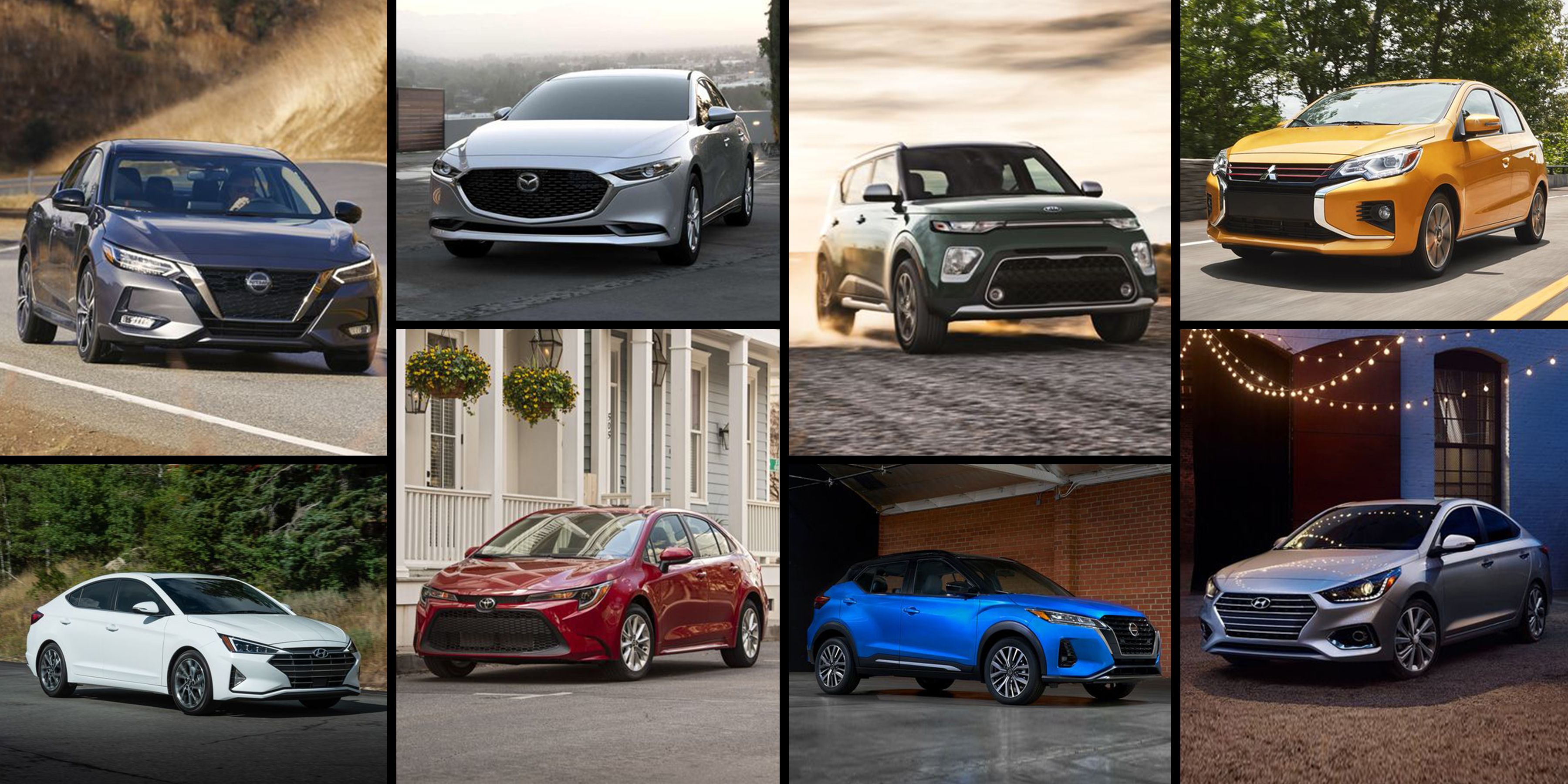
The Mitsubishi Mirage and the Nissan Versa currently stand as the stalwarts of the ultra-affordable new car market. The Nissan Versa, in particular, offers a sophisticated suite of safety features and a comfortable interior for a price point that sits well below the average national car price (which has hovered near $48,000). From a financial standpoint, the Versa is an excellent hedge against inflation; it provides a modern driving experience and a full warranty while requiring a minimal monthly debt service.
The Mitsubishi Mirage, while less refined, often boasts the lowest TCO due to its exceptional fuel economy and one of the best powertrain warranties in the industry (10 years/100,000 miles). For a buyer looking to lock in their transportation costs for a decade, the Mirage offers a level of financial predictability that few other assets can match.
Compact Sedans: Balancing Price and Longevity
If the budget can stretch slightly into the low $20,000s, vehicles like the Kia Forte, Hyundai Elantra, and the Toyota Corolla emerge as the “Blue Chips” of the affordable car world. The Kia Forte and Hyundai Elantra provide a massive value proposition through their long warranties and high-tech standard features.
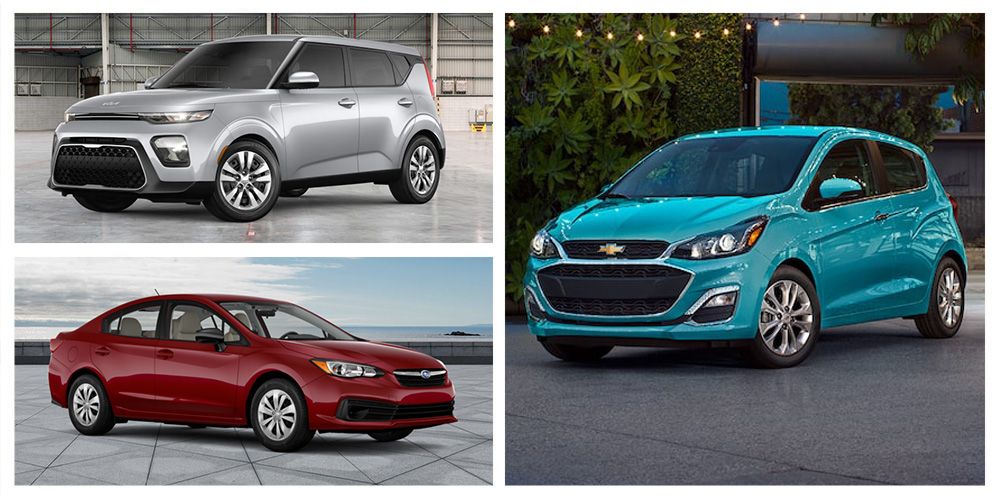
However, the Toyota Corolla often wins the long-term financial race. While its initial price may be higher than a Nissan Versa, its legendary reliability and high resale value mean that your “cost per mile” over five to ten years is often the lowest in the industry. In the world of investing, this is known as paying for quality to avoid future capital calls (repairs).
3. Maximizing Value in the Pre-Owned Market
For those who refuse to pay the “new car premium,” the used market offers opportunities to acquire reliable transportation for a fraction of the cost—if one knows where to look.
Depreciation as a Tool for Savings
The key to buying a cheap used car is identifying “over-depreciated” assets. These are vehicles that have lost significant value due to brand perception rather than mechanical failure. For example, while a used Toyota Prius holds its value exceptionally well, a used Mazda3 or a Buick Encore might depreciate more rapidly despite having solid reliability ratings. By targeting these “value” brands, a buyer can often get a younger vehicle with lower mileage for the same price as an older, high-mileage “premium” economy car.
Identifying Reliable High-Mileage Models
When shopping at the bottom of the price bracket (the $5,000 to $10,000 range), the goal shifts from “features” to “mechanical longevity.” At this level, the cheapest car is the one that doesn’t require a $3,000 transmission replacement three months after purchase. Financial discipline here requires a pre-purchase inspection (PPI). Spending $150 on a mechanic’s review is an essential “insurance policy” against a catastrophic loss of capital. Focus on naturally aspirated engines and traditional automatic or manual transmissions, as these are generally cheaper to maintain than turbocharged engines or complex Continuously Variable Transmissions (CVTs) found in older models.
The “Hidden Gems” of the Used Market
Savvy financial buyers often look for “grandma cars”—sedans like the Mercury Grand Marquis, Buick LeSabre, or older Toyota Avalons. These cars were often owned by individuals who performed meticulous maintenance and drove few miles. While they may not be “cool” or the most fuel-efficient, their low purchase price and extreme durability make them some of the cheapest vehicles to own on a total-dollar basis.
4. Long-Term Financial Optimization of Your Vehicle
Buying the car is only the first step. To ensure it remains the “cheapest” car, you must manage the ongoing expenses with the same rigor you would use for a business’s P&L statement.
Reducing Recurring Ownership Costs
Insurance is one of the most significant variable costs in vehicle ownership. Before purchasing a “cheap” car, get an insurance quote. Some entry-level cars have higher insurance premiums because they lack certain anti-theft features or are statistically involved in more accidents. Furthermore, once a car’s value drops below a certain threshold (often around $5,000), it may make financial sense to drop “collision” and “comprehensive” coverage and carry only “liability,” effectively self-insuring against the loss of the vehicle to save on monthly premiums.
Maintenance as Capital Preservation
The fastest way to turn a cheap car into an expensive mistake is to neglect preventative maintenance. Following the manufacturer’s service schedule is not just about safety; it’s about protecting the asset’s residual value. Regular oil changes, tire rotations, and fluid flushes prevent “cascading failures” where one neglected part destroys a more expensive component. From a personal finance perspective, a $100 oil change is a high-yield investment in the longevity of a $20,000 asset.
Resale Value: Protecting Your Capital
Eventually, you will want to exit your position in the vehicle. To maximize your return on investment, keep meticulous service records. A car sold with a documented history of care can often command a 10-20% premium on the private market compared to one with no records. In the “Money” niche, we understand that the “sale price” at the end of the term is just as important as the “buy price” at the beginning.

Conclusion: The Mindset of the Fiscally Responsible Driver
Finding the cheapest car to buy is an exercise in discipline and data analysis. It requires looking past the marketing gloss of the automotive industry and focusing on the cold, hard numbers of depreciation, maintenance, and opportunity cost. Whether you choose a brand-new Nissan Versa for its warranty and predictability or a decade-old Toyota for its legendary durability, the smartest financial move is to view your vehicle as a utility rather than a status symbol.
By minimizing the capital tied up in a depreciating asset, you free up cash flow for investments that actually build wealth, such as retirement accounts, real estate, or diversified index funds. In the end, the cheapest car isn’t just the one that costs the least at the dealership—it’s the one that helps you achieve financial independence the fastest.
aViewFromTheCave is a participant in the Amazon Services LLC Associates Program, an affiliate advertising program designed to provide a means for sites to earn advertising fees by advertising and linking to Amazon.com. Amazon, the Amazon logo, AmazonSupply, and the AmazonSupply logo are trademarks of Amazon.com, Inc. or its affiliates. As an Amazon Associate we earn affiliate commissions from qualifying purchases.