
In the contemporary marketing landscape, the term “contest” has evolved far beyond a simple game of chance. For modern brands, a contest is a sophisticated strategic tool designed to foster deep engagement, catalyze brand awareness, and build a community of loyal advocates. At its core, a contest is a promotional activation where participants compete for prizes based on merit, skill, or specific actions, rather than mere luck. Unlike a lottery or a simple giveaway, a well-executed brand contest invites the consumer to become an active participant in the brand’s narrative.
Understanding the mechanics, psychology, and strategic implementation of contests is essential for any brand looking to cut through the digital noise. Whether it is a global corporation or a burgeoning personal brand, the contest serves as a bridge between a company’s value proposition and the consumer’s desire for recognition and reward.
Defining the Contest in the Modern Branding Landscape
To utilize contests effectively, one must first distinguish them from other promotional formats. While the terms are often used interchangeably in casual conversation, the strategic implications differ significantly depending on the structure of the event.
The Psychology of Competition and Reward
The efficacy of a contest lies in human psychology. Humans are inherently competitive and driven by the “overconfidence effect,” where individuals believe their skills or contributions are unique. By framing a promotion as a contest—requiring a photo, a caption, a video, or a creative solution—a brand taps into the participant’s ego and creativity. This creates a higher level of emotional investment compared to a passive “enter-to-win” sweepstakes. When a participant puts effort into an entry, they develop a psychological connection with the brand, making the subsequent reward (or even the recognition of participation) more impactful.
Contests vs. Sweepstakes vs. Giveaways
In brand strategy, precision in terminology is vital. A sweepstakes is a game of chance where winners are chosen at random; there is no barrier to entry other than providing contact information. A giveaway is a broad term often used for low-friction promotions.
A contest, however, is merit-based. Winners are selected based on specific criteria, such as the quality of a submission, the number of votes received from the community, or the execution of a creative task. This distinction is crucial for brand positioning. While sweepstakes are excellent for rapid lead generation, contests are superior for building brand equity and generating high-quality User-Generated Content (UGC).
Core Types of Brand-Driven Contests
Different business goals require different contest structures. A brand must align its contest format with its current strategic needs, whether that is content creation, platform growth, or product innovation.
User-Generated Content (UGC) Challenges
UGC contests are perhaps the most powerful tool in a brand’s arsenal. In this format, participants are asked to create content—such as photos of themselves using a product, testimonial videos, or creative artwork—and share it under a specific brand hashtag. This serves a dual purpose: it provides the brand with a library of authentic marketing material and turns participants into brand ambassadors. Authentic content created by peers often carries more weight than high-production corporate advertisements, significantly boosting social proof.
Social Media Referral Contests
Referral contests focus on the viral expansion of a brand’s digital footprint. In these scenarios, participants earn “entries” or “points” by referring friends, sharing posts, or following the brand across multiple platforms. This structure leverages the participant’s own social network to increase the brand’s reach exponentially. For a brand looking to launch a new identity or enter a new market, the referral contest acts as a high-velocity growth engine.
Skill-Based Design and Innovation Competitions
High-end corporate brands often utilize contests to crowdsource innovation or design. For example, a brand might hold a contest for a new logo iteration, a limited-edition packaging design, or even a solution to a functional product flaw. These contests position the brand as an open, collaborative entity that values the intelligence and creativity of its audience. It fosters a sense of co-creation, making the audience feel like stakeholders in the brand’s future.
The Strategic Benefits of Implementing Contests

Why do leading brands dedicate significant portions of their marketing budgets to contests? The benefits extend far beyond the immediate influx of social media likes.
Accelerating Brand Awareness and Reach
In an era of declining organic reach on social media, contests provide a legitimate reason for users to share content. When a contest goes viral, it introduces the brand to thousands of potential customers who might never have encountered it through traditional advertising. The “shareability” of a contest is its greatest asset, turning every participant into a temporary megaphone for the brand’s message.
Cultivating Community Loyalty and Advocacy
Contests are a form of “gamification.” By introducing elements of play into the brand-consumer relationship, companies can break down the formal barriers of commerce. A recurring contest (such as a “Fan of the Month” competition) rewards long-term engagement, transforming casual buyers into a dedicated community. This advocacy is vital for long-term brand health, as loyalists are more likely to defend the brand during crises and provide honest feedback for improvement.
Data Acquisition and Lead Generation
While contests are about engagement, they are also a goldmine for data. Entry forms allow brands to collect valuable information such as email addresses, demographic data, and consumer preferences. Unlike “cold” data lists, contest leads are “warm”; these individuals have already interacted with the brand and expressed interest in its offerings. This data can then be used for segmented email marketing and highly targeted retargeting campaigns, improving the brand’s overall marketing efficiency.
Designing a Successful Brand Contest: Step-by-Step
A contest that is poorly planned can backfire, leading to legal issues or a negative brand image. Professional execution requires a structured approach.
Setting Measurable Objectives
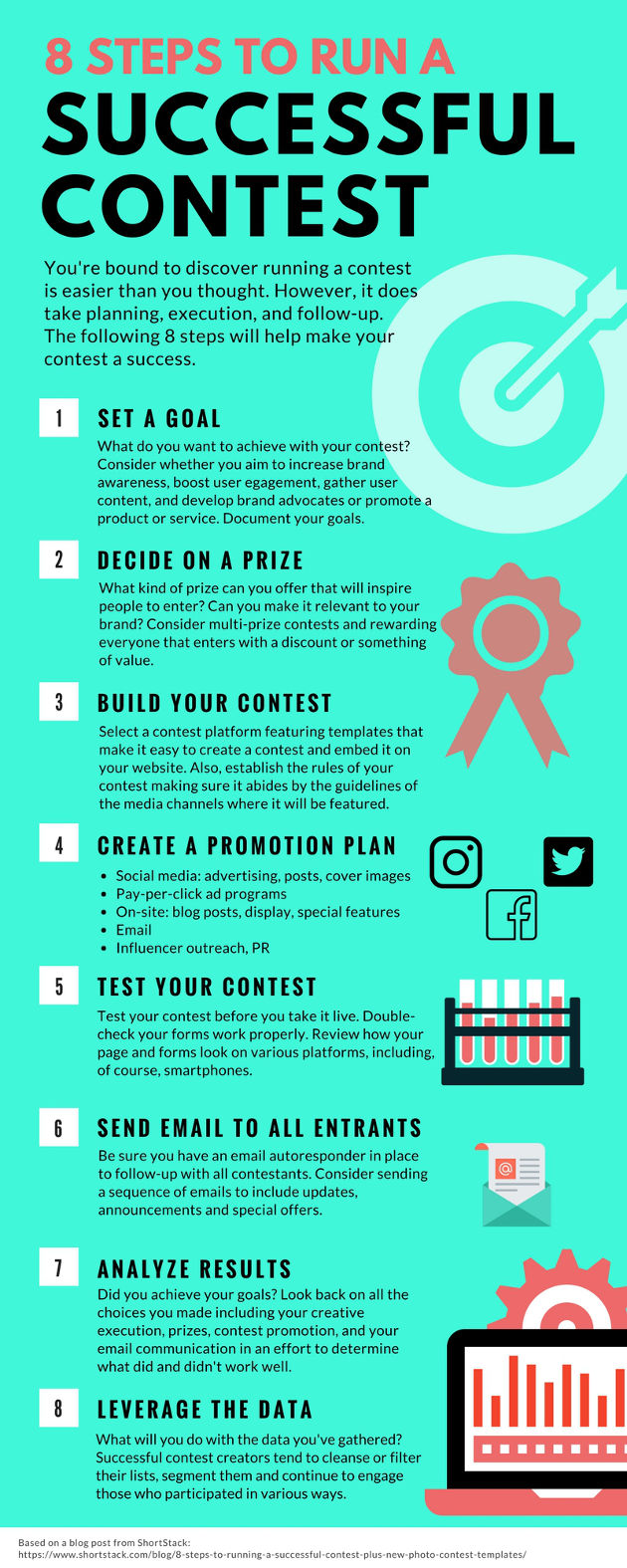
Before launching, a brand must define what success looks like. Is the goal to gain 10,000 new Instagram followers? To collect 500 high-quality product photos? Or to increase the email subscriber list by 20%? Setting Key Performance Indicators (KPIs) ensures that the contest mechanics (the “how”) actually serve the brand strategy (the “why”).
Compliance and Legal Considerations
Contests are subject to various local and international laws, particularly regarding “consideration” (requiring a purchase to enter) and transparency. A professional brand must draft clear Terms and Conditions that outline eligibility, entry methods, judging criteria, and prize delivery. Failure to do so can result in “contest fatigue” or, worse, legal action that tarnishes the corporate identity.
Promotion and Multi-Channel Distribution
A contest is only as successful as its promotion. A multi-channel approach ensures maximum visibility. This includes:
- Email Marketing: Notifying the existing loyal base.
- Influencer Partnerships: Leveraging third-party credibility to reach new niches.
- Paid Social: Using targeted ads to reach the ideal demographic.
- On-Site Integration: Featuring the contest prominently on the brand’s homepage.
Measuring ROI and Long-Term Impact
The conclusion of a contest is not the end of the strategy; it is the beginning of the analysis phase. Brands must evaluate the return on investment (ROI) to justify the spend and refine future efforts.
Analyzing Engagement Metrics
Quantitative data—such as the number of entries, total reach, and website traffic—provides a baseline for success. However, qualitative data is equally important. Analyzing the “sentiment” of the entries and the comments surrounding the contest can reveal how the public perceives the brand identity. Did the contest make the brand seem more approachable? Innovative? Fun?

From Contestants to Customers: The Conversion Funnel
The ultimate goal of most brand contests is to drive revenue. The “after-care” of a contest is where conversions happen. This involves sending a “thank you” email to all non-winners, perhaps offering a small discount code as a consolation prize. This transitions the participant from the “competition” phase into the “customer” phase of the journey. By maintaining the momentum generated during the contest, a brand can turn a short-term spike in engagement into long-term financial growth.
In conclusion, a contest is much more than a simple giveaway; it is a multi-faceted brand strategy. When executed with professional insight, it acts as a catalyst for community building, content creation, and market expansion. By understanding the psychology of the participant and aligning the contest’s goals with the brand’s broader identity, organizations can create powerful experiences that resonate long after the prizes have been awarded.
aViewFromTheCave is a participant in the Amazon Services LLC Associates Program, an affiliate advertising program designed to provide a means for sites to earn advertising fees by advertising and linking to Amazon.com. Amazon, the Amazon logo, AmazonSupply, and the AmazonSupply logo are trademarks of Amazon.com, Inc. or its affiliates. As an Amazon Associate we earn affiliate commissions from qualifying purchases.