
The financial landscape of the United States is dominated by a handful of colossal institutions, often referred to as “too big to fail” due to their immense scale and profound impact on the national and global economies. Understanding which banks are the biggest, and more importantly, how we define “bigness” in the banking sector, is crucial for investors, businesses, policymakers, and individual consumers alike. These financial behemoths not only manage trillions of dollars in assets but also play a critical role in facilitating commerce, funding innovation, and safeguarding the financial stability of millions.

This article delves into the metrics that define the largest banks, introduces the primary players in the U.S. banking arena, explores their economic significance, and offers insights into what their dominance means for various stakeholders. Far beyond mere statistics, the sheer scale of these institutions shapes everything from interest rates and investment opportunities to the accessibility of credit and the very fabric of our financial system.
Defining “Bigness” in Banking
Determining the “biggest” bank isn’t as straightforward as it might seem. While often correlated, different metrics can paint slightly different pictures of a bank’s size, influence, and market standing. A comprehensive understanding requires looking beyond a single number to appreciate the multifaceted nature of financial power.
Total Assets
Perhaps the most commonly cited metric for a bank’s size is its total assets. This figure represents everything a bank owns or is owed, including cash, investments, loans outstanding, real estate, and other financial instruments. A larger asset base generally indicates a bank’s capacity to lend, invest, and absorb potential losses, making it a critical measure of financial strength and operational scale. Banks with trillions in assets possess incredible leverage and market reach, capable of financing massive projects and weathering significant economic downturns. This metric is fundamental because it reflects the raw financial power and operational footprint of an institution.
Market Capitalization
For publicly traded banks, market capitalization offers another crucial perspective. Calculated by multiplying the bank’s share price by the total number of outstanding shares, market capitalization reflects the market’s valuation of the bank as a going concern. While total assets measure what the bank has, market capitalization represents what the market thinks it’s worth. This figure is highly dynamic, fluctuating with investor sentiment, financial performance, and broader economic conditions. A high market cap often signals investor confidence in a bank’s future earnings potential and strategic direction, making it an important indicator for investors and a measure of prestige in the financial world.
Total Deposits
Deposits represent the funds customers (individuals, businesses, governments) have entrusted to the bank. A large deposit base signifies customer trust and provides a stable, low-cost funding source for the bank’s lending activities. Banks with extensive deposit networks, often through a vast branch footprint or robust digital platforms, demonstrate strong consumer relationships and liquidity. The ability to attract and retain significant deposits is a cornerstone of banking operations, directly impacting a bank’s capacity to extend credit and generate revenue, thereby influencing its overall size and financial health.
Global Presence and Revenue Diversity
Beyond these core financial metrics, “bigness” can also be inferred from a bank’s global operational footprint and the diversity of its revenue streams. Banks that operate across multiple continents, offering a wide array of services—from retail banking and wealth management to investment banking and corporate finance—are inherently larger in scope and influence. Their ability to generate revenue from various geographies and business segments enhances their stability and market power, often distinguishing them from more regionally focused or specialized institutions.
The Titans of U.S. Banking: A Closer Look
The U.S. banking sector is dominated by a few household names, each boasting an extensive array of financial services and a formidable presence both domestically and internationally. These are the institutions that routinely top lists of the biggest banks by assets and market capitalization.
JPMorgan Chase & Co.
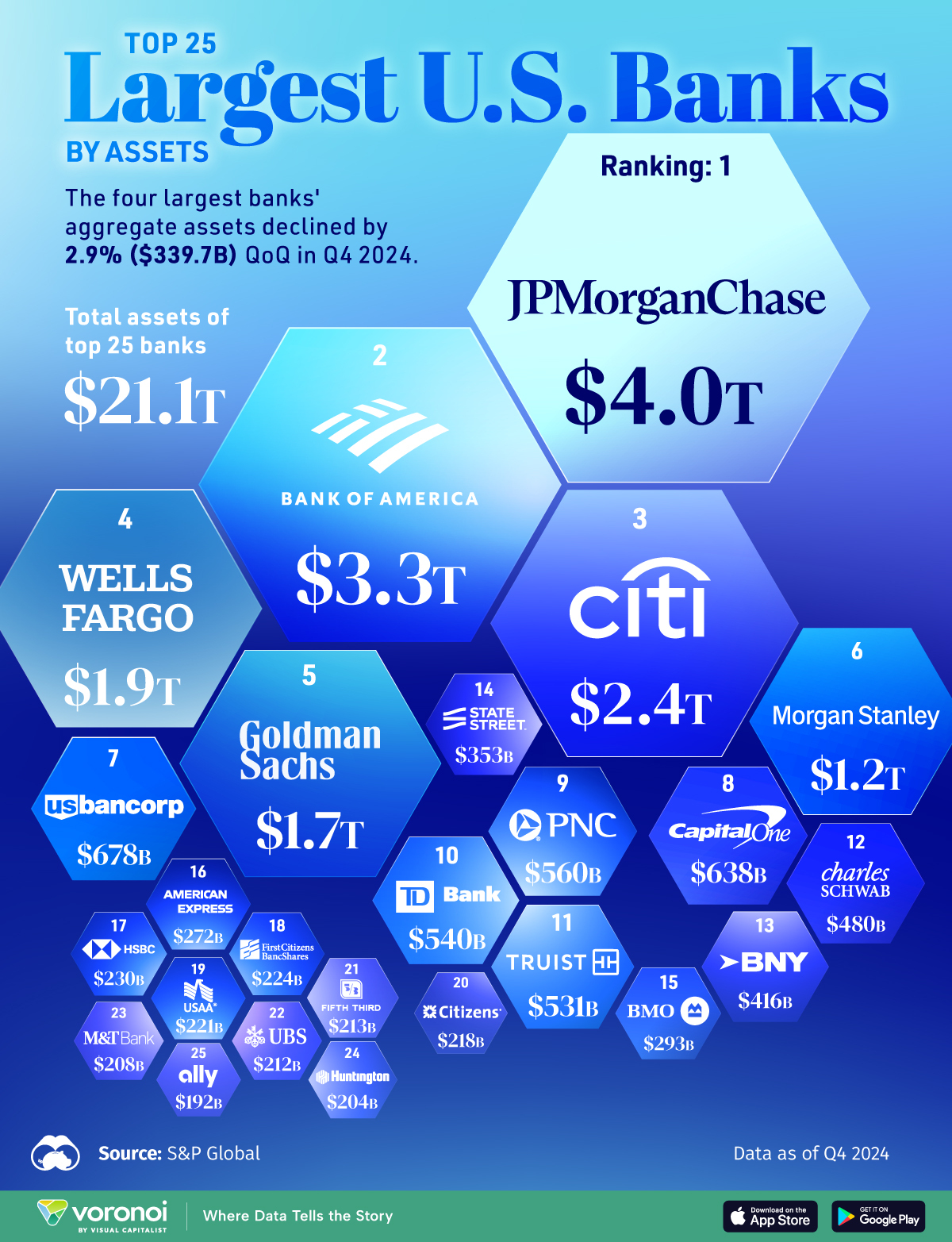
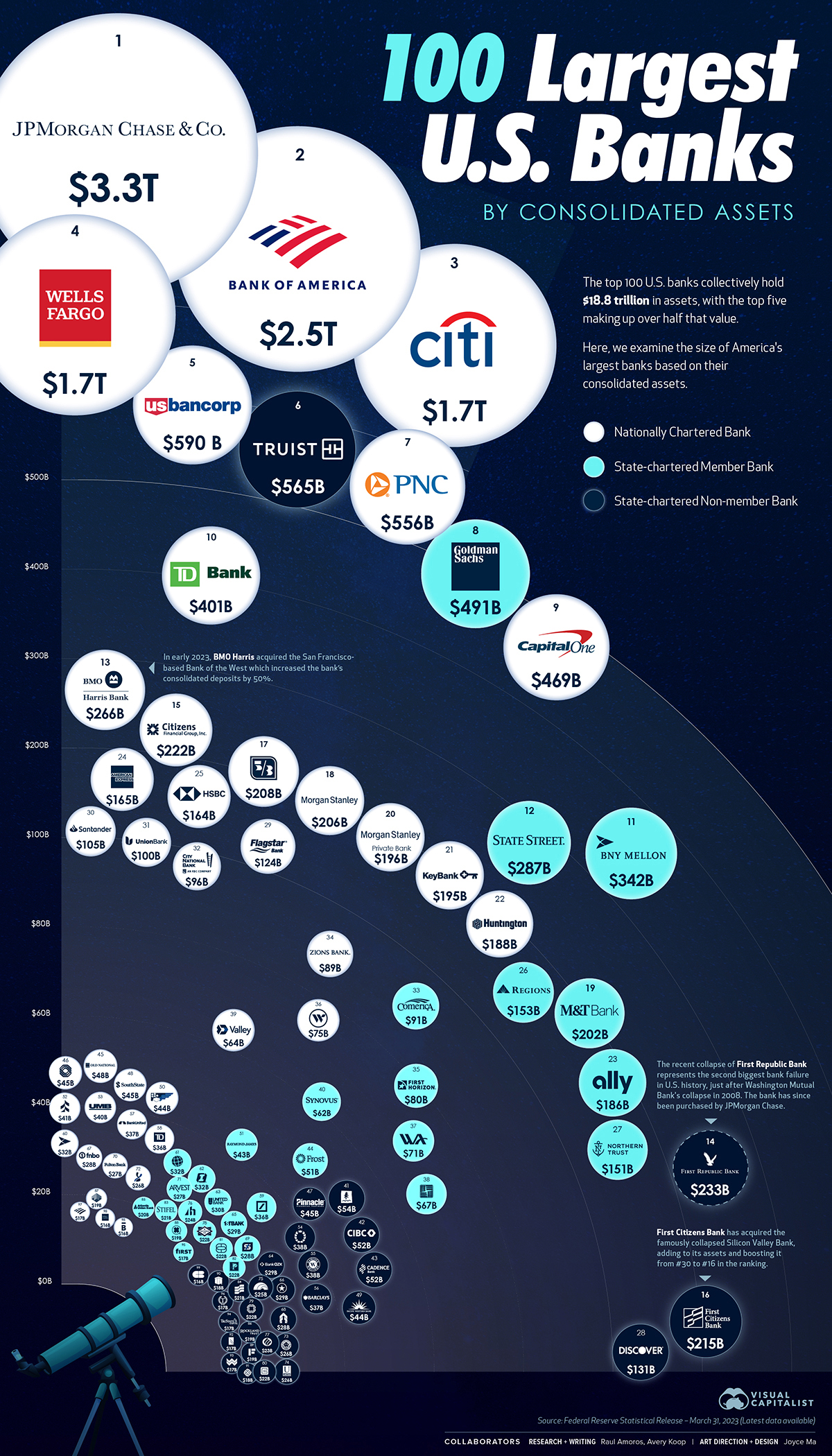
Consistently ranking as one of the largest banks in the world by assets, JPMorgan Chase & Co. is a financial titan with a diversified portfolio spanning virtually every aspect of finance. With assets often exceeding $3 trillion, it is a dominant force in investment banking, retail banking (under the Chase brand), commercial banking, and asset management. Its extensive branch network, coupled with a robust digital presence, serves millions of consumers and businesses across the country. JPMorgan Chase’s strength lies in its ability to cater to a vast spectrum of clients, from individual savers and small businesses to multinational corporations and institutional investors, making it a central pillar of the U.S. and global financial systems.
Bank of America Corp.
Bank of America holds a prominent position, particularly in consumer banking and wealth management. It boasts one of the largest retail branch networks in the U.S. and serves a substantial portion of American households. Beyond its consumer focus, Bank of America is also a major player in corporate and investment banking, global markets, and Merrill Lynch Wealth Management. Its asset base routinely hovers around $2.5 to $3 trillion, underpinning its capacity to offer a full suite of financial products and services. The bank’s strategic focus on technology and digital solutions further solidifies its reach and appeal to a broad customer base.
Wells Fargo & Co.
Historically renowned for its extensive mortgage lending and strong retail banking presence, Wells Fargo & Co. has long been a top-tier U.S. bank. Despite facing significant challenges and scandals in recent years, the bank maintains a massive asset base, typically well over $1.5 trillion. It continues to serve millions of customers through its vast network of branches and ATMs, offering consumer banking, home lending, small business lending, and commercial banking services. Wells Fargo’s ongoing efforts to rebuild trust and enhance its operational integrity are critical to its sustained position among the largest financial institutions in the nation.
Citigroup Inc.
Citigroup Inc. distinguishes itself with a strong global focus and a significant presence in international markets, complementing its substantial U.S. operations. While it has a retail banking footprint in the U.S. (Citibank), its strength truly shines in institutional client services, including investment banking, corporate lending, and treasury and trade solutions for multinational corporations and governments worldwide. With assets often exceeding $1.7 trillion, Citigroup’s global reach and comprehensive offerings for large institutional clients make it a unique and indispensable component of the world’s financial infrastructure, connecting businesses and markets across continents.
The Economic Impact of Mega-Banks
The presence of these mega-banks is not merely a matter of scale; it profoundly influences the entire economic ecosystem, from driving growth and fostering innovation to posing systemic risks that require stringent regulatory oversight.
Systemic Importance (“Too Big to Fail”)
The sheer size and interconnectedness of the biggest banks mean that their failure could trigger a cascading effect throughout the financial system, leading to widespread economic disruption. This concept, often termed “too big to fail,” necessitates enhanced regulatory scrutiny and capital requirements to ensure their stability. Regulators implement stress tests, capital buffers, and resolution plans specifically for these systematically important financial institutions (SIFIs) to mitigate potential risks. This oversight is crucial for maintaining public confidence and preventing a recurrence of crises seen in the past.
Driving Economic Growth
Mega-banks are essential engines of economic growth. They provide the capital necessary for businesses—from startups to multinational corporations—to invest, expand, and create jobs. Through commercial loans, lines of credit, and investment banking services, they facilitate mergers and acquisitions, fund infrastructure projects, and support international trade. For consumers, these banks offer mortgages, auto loans, and personal credit, enabling major purchases and contributing to consumer spending, a key driver of economic activity. Their extensive capital pools and sophisticated financial mechanisms underpin much of the economic dynamism in the U.S.
Competition and Innovation
While their dominance might suggest limited competition, mega-banks are constantly challenged by each other and by emerging fintech companies. This competition often spurs innovation within the banking sector. To maintain their market share and attract new customers, large banks invest heavily in digital banking platforms, mobile apps, artificial intelligence, and cybersecurity. They are at the forefront of developing new payment systems, personalized financial tools, and sophisticated data analytics, pushing the boundaries of what financial services can offer and ultimately benefiting consumers through improved access, efficiency, and convenience.
Navigating the Landscape: What It Means for Consumers and Businesses
For individuals and businesses, the dominance of mega-banks presents both compelling advantages and potential drawbacks. Understanding these implications is key to making informed financial decisions.
Advantages for Customers
The biggest banks offer unparalleled convenience and a comprehensive suite of financial services. Their extensive branch and ATM networks provide widespread physical access, while their substantial investments in digital technology offer sophisticated online and mobile banking experiences. Customers benefit from a vast array of products, including checking and savings accounts, credit cards, mortgages, auto loans, investment services, and wealth management under one roof. Moreover, the perceived stability and security of a large institution often provide peace of mind, backed by substantial capital and deposit insurance up to regulatory limits. For businesses, large banks offer complex financial solutions, international banking capabilities, and access to capital markets for financing large-scale operations and growth.
Potential Drawbacks
Despite their advantages, dealing with a mega-bank can also have its downsides. The sheer size of these institutions can sometimes lead to less personalized customer service, with clients feeling like a number rather than an individual. Complex fee structures, though often transparent, can be difficult to navigate, and certain services might be more expensive than those offered by smaller, more agile competitors. Furthermore, decision-making processes can be slower, and their vast bureaucratic structures can make resolving unique issues more challenging. For businesses, while large banks offer broad capabilities, smaller firms might find more tailored and relationship-driven services from regional or community banks.
Choosing the Right Bank
When selecting a bank, focusing solely on size might not be the most effective strategy. While the stability and breadth of services offered by mega-banks are attractive, it’s crucial to consider individual needs and priorities. For personal finance, factors such as fees, interest rates on savings, loan rates, customer service quality, digital banking features, and branch accessibility are paramount. For businesses, considerations might include specific lending products, treasury management services, international banking capabilities, and the responsiveness of dedicated relationship managers. Exploring options among national, regional, and community banks, as well as credit unions, allows individuals and businesses to find a financial partner that best aligns with their specific requirements and values.
In conclusion, the biggest banks in the United States are colossal financial entities that are deeply interwoven into the fabric of the nation’s economy. Defined by their immense assets, market capitalization, and deposit bases, institutions like JPMorgan Chase, Bank of America, Wells Fargo, and Citigroup wield tremendous power and influence. Their roles as drivers of economic growth, sources of capital, and innovators within the financial sector are undeniable. While they offer significant advantages in terms of convenience and comprehensive services, understanding their scale and potential drawbacks is essential for consumers and businesses navigating the complex world of finance. As the financial landscape continues to evolve, these mega-banks will undoubtedly remain central, adapting to new technologies, regulations, and market demands, perpetually shaping the economic future of the United States and beyond.
aViewFromTheCave is a participant in the Amazon Services LLC Associates Program, an affiliate advertising program designed to provide a means for sites to earn advertising fees by advertising and linking to Amazon.com. Amazon, the Amazon logo, AmazonSupply, and the AmazonSupply logo are trademarks of Amazon.com, Inc. or its affiliates. As an Amazon Associate we earn affiliate commissions from qualifying purchases.