
Unpacking the Core Elements of American Sign Language for Technological Innovation
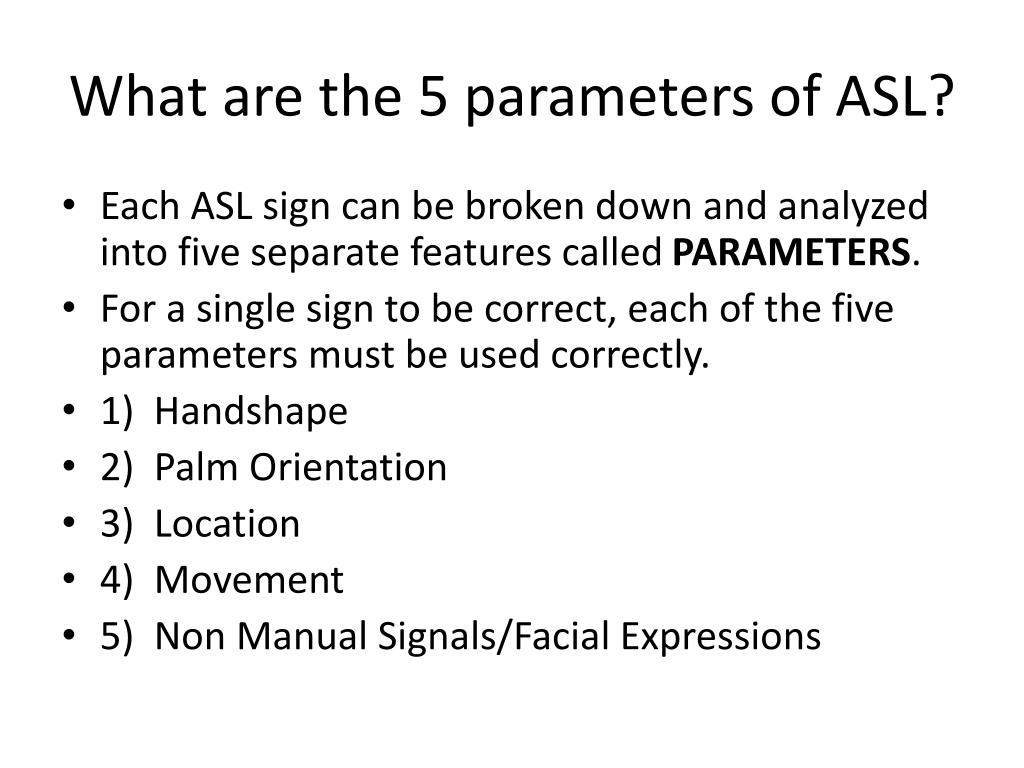
American Sign Language (ASL) is a rich, natural language with its own unique grammar and syntax, distinct from spoken English. Unlike spoken languages, which rely on auditory cues, ASL is a visual-gestural language. Understanding its fundamental building blocks – often referred to as the five parameters – is not merely an academic exercise for linguists; it is a critical foundation for anyone venturing into the realm of technology designed to interact with, interpret, or teach sign language. For developers, AI researchers, and user experience designers focusing on accessibility, comprehending these parameters is essential for creating effective, intuitive, and truly inclusive digital tools. These five parameters are Handshape, Palm Orientation, Location, Movement, and Non-Manual Markers. Each plays a pivotal role in conveying meaning and presents unique challenges and opportunities for technological advancement.

Handshape: The Digital Canvas of Meaning
Handshape, or hand configuration, refers to the specific form the hand takes during a sign. In ASL, a wide array of distinct handshapes exists, each analogous to a phoneme or basic sound unit in spoken language. From an open palm to a closed fist, a “V” shape, or a hand mimicking a specific letter of the English alphabet (as used in fingerspelling), each configuration carries semantic weight. A single handshape can be part of many different signs, with its meaning altered by other parameters. For instance, the “A” handshape is used in signs like “HELLO,” “THANK YOU,” and “ASL” itself.
Technological Implications for Handshape Recognition
For technology, recognizing precise handshapes is a primary challenge in developing accurate sign language interpretation and translation systems. Computer vision algorithms, particularly those leveraging deep learning and neural networks, are at the forefront of tackling this.
- AI Training: AI models must be trained on vast datasets of signers exhibiting diverse handshapes, captured from multiple angles and under various lighting conditions. This allows the AI to generalize and identify handshapes accurately despite individual variations.
- Sensor Technology: High-resolution cameras and depth-sensing technologies (like those found in advanced gaming consoles or specialized motion capture systems) are crucial for capturing the intricate details of finger positions and joint angles that define a specific handshape.
- Real-time Processing: For live translation or communication aids, the system must process and identify handshapes in real-time, demanding efficient algorithms and powerful processing capabilities to minimize latency.
- Augmented Reality (AR) & Virtual Reality (VR) Learning Tools: In educational apps, AR can overlay correct handshapes onto a user’s live hand movements, providing immediate visual feedback. VR environments can simulate signing partners, allowing users to practice and receive feedback on their handshape accuracy in an immersive setting.
Palm Orientation: Guiding the Digital Gaze
Palm Orientation refers to the direction the palm of the hand faces during a sign. It can face upward, downward, sideways, towards the signer, or away from the signer. Even a subtle change in palm orientation can drastically alter the meaning of a sign. For example, the sign for “MAYBE” uses a similar handshape and movement to “PLEASE,” but a different palm orientation distinguishes the two.
Advancements in Palm Orientation Detection
Accurately detecting palm orientation is vital for AI systems to correctly interpret the signer’s intent.
- 3D Pose Estimation: Advanced 3D hand pose estimation techniques are employed to not only identify the handshape but also its precise spatial orientation. This involves mapping key points on the hand and fingers in three-dimensional space.
- Multi-View Camera Systems: Some cutting-edge systems use multiple cameras positioned around the signer to capture different perspectives, which can then be triangulated to accurately determine palm orientation, especially when parts of the hand might be obscured.
- Machine Learning for Nuance: Machine learning models are trained to understand the subtle shifts in palm orientation that differentiate signs, often requiring large annotated datasets to capture this granularity. This is particularly relevant for disambiguating signs that are otherwise identical in handshape, location, and movement.
- Feedback in Educational Software: Learning applications can utilize this data to provide specific feedback to students, indicating if their palm orientation deviates from the standard, thereby improving their signing accuracy.
Location: Spatial Anchors in the Digital Realm

Location, also known as the Place of Articulation, refers to where a sign is produced in relation to the signer’s body or in the neutral space in front of them. Signs can be made on the head (e.g., “UNDERSTAND”), near the chest (e.g., “ME”), in front of the body (e.g., “LEARN”), or on the arm (e.g., “SICK”). The precise location is critical; for instance, the sign for “KNOW” made on the temple is distinct from “DON’T KNOW,” which involves a different movement from the temple.
Location Tracking in Assistive Technology
Technology must accurately track the spatial relationship between the hands and the signer’s body to correctly interpret signs.
- Skeletal Tracking and Body Pose Estimation: Technologies like Microsoft Azure Kinect or Google MediaPipe, which perform skeletal tracking, are invaluable. They map the signer’s body joints, allowing systems to understand where a sign is being made relative to the head, torso, or limbs.
- Spatial Mapping: For signs made in neutral space, systems need to accurately map the 3D space around the signer. This can involve environmental sensors or sophisticated algorithms that learn the typical “signing space” of an individual.
- Virtual and Augmented Reality: These platforms offer powerful ways to teach and practice location. In VR, users can see where a sign should be made in 3D space, and in AR, digital markers can guide them to place their hands correctly relative to their own body.
- Telepresence and Video Communication: For sign language to be effectively communicated remotely, video conferencing solutions must offer high-fidelity video that preserves spatial depth and allows clear visibility of the signing space, often requiring wider fields of view and robust compression algorithms.
Movement: Dynamics of Digital Expression
Movement refers to the path the hands take, the manner of movement (e.g., straight, circular, arcing), its repetition, and its speed. Movement adds dynamic information to a sign. For example, the sign for “GO” involves a forward movement, while “COME” involves a movement towards the body. The sign for “WEEK” is made with a “G” handshape moving across the palm of the non-dominant hand. The speed and repetition of movement can also differentiate meaning (e.g., “WALK” vs. “WALKING FOR A LONG TIME”).
Capturing and Interpreting Movement for AI
Capturing the complex trajectories and nuances of movement is a major engineering feat for sign language technology.
- Temporal Analysis in AI: AI systems don’t just analyze static images; they process sequences of frames, building a temporal understanding of the movement. Recurrent Neural Networks (RNNs) and transformer models are often used to analyze these sequences and predict the intended sign.
- Inertial Measurement Units (IMUs): Wearable sensors, such as gloves equipped with IMUs (accelerometers and gyroscopes), can provide highly accurate data on hand and finger movement, including speed, direction, and acceleration. This can augment or sometimes replace camera-based tracking in specific applications.
- Trajectory Prediction and Smoothing: Noise in sensor data or slight inconsistencies in a signer’s movement must be accounted for. Algorithms are used to smooth trajectories and predict probable sign paths, ensuring robust interpretation.
- Expressive Synthesis: For generating sign language avatars, accurately replicating the fluidity and natural rhythm of movement is crucial to avoid robotic or unnatural signing, which relies on sophisticated animation engines driven by movement parameters.
Non-Manual Markers (NMMs): The Emotional & Grammatical Overlay for AI
Non-Manual Markers encompass facial expressions, head tilts, body posture, shoulder shrugs, and eye gaze. These elements are not merely embellishments; they are an integral and grammatical part of ASL. NMMs can convey questions, commands, intensity, adverbs, or emotional states. For instance, raising eyebrows indicates a “yes/no” question, while furrowing eyebrows indicates a “wh-question” (who, what, where, etc.). A specific mouth morpheme (a particular mouth movement or shape) can function as an adverb, indicating how something is done, e.g., “cha” for big, or “pow” for forget.
The Apex Challenge for AI: Interpreting NMMs
Interpreting NMMs is arguably the most complex parameter for technology due to its subtlety, variability, and the need for multimodal analysis.
- Multimodal AI: Advanced AI systems employ multimodal input, combining video streams for manual signs with separate analysis streams for facial expressions, head posture, and body language. This often involves combining techniques from facial recognition, emotion detection, and body pose estimation.
- Emotion and Grammatical Inference: AI models are being developed to not just detect a raised eyebrow but to infer that it indicates a question, or that a specific facial expression denotes a certain emotional tone or adverbial meaning. This requires extensive training on annotated video data that links NMMs to specific grammatical or semantic functions.
- Contextual Understanding: The meaning of an NMM can sometimes be context-dependent. Future AI systems will need to incorporate higher-level natural language processing (NLP) to understand the full linguistic context of a signed utterance, integrating NMMs with manual signs for holistic interpretation.
- Ethical Considerations and Cultural Nuance: Developing AI that understands NMMs requires careful consideration of cultural variations and biases in training data. Involvement of the Deaf community is paramount to ensure that technologies accurately and respectfully interpret these vital linguistic components without misrepresenting cultural nuances.
The Future of ASL Technology: Bridging Communication Gaps
A comprehensive understanding of the five parameters of ASL is not just academic; it’s the bedrock for building the next generation of inclusive and effective communication technologies. From creating more accurate AI-driven sign language translators and robust educational apps to designing more intuitive human-computer interfaces for Deaf and hard-of-hearing individuals, each parameter presents a specific set of challenges and opportunities for technological innovation. As technology advances in areas like computer vision, AI, and multimodal processing, our ability to understand, interpret, and generate ASL will continue to improve, fostering a more connected and accessible digital world. The ongoing collaboration between linguists, technologists, and the Deaf community will be crucial in ensuring that these advancements truly meet the needs and respect the richness of ASL as a complete and vibrant language.
aViewFromTheCave is a participant in the Amazon Services LLC Associates Program, an affiliate advertising program designed to provide a means for sites to earn advertising fees by advertising and linking to Amazon.com. Amazon, the Amazon logo, AmazonSupply, and the AmazonSupply logo are trademarks of Amazon.com, Inc. or its affiliates. As an Amazon Associate we earn affiliate commissions from qualifying purchases.