
The Strategic Investment in Restorative Dentistry
In the landscape of modern dentistry, the decision to undergo restorative work is rarely just a clinical choice; it is a financial investment in one’s health and long-term asset management. Patients often find themselves at a crossroads between direct composite fillings, which are budget-friendly but prone to degradation, and full-coverage crowns, which are invasive and expensive. Dental onlays occupy a sophisticated middle ground, offering a high-value proposition for those who prioritize both the durability of their dental “hardware” and the preservation of natural tooth structure.
From a financial perspective, a dental onlay is best understood as a strategic mid-term to long-term asset. While the upfront cost is higher than a standard filling, the return on investment—measured in years of service, reduced frequency of replacement, and the prevention of further tooth damage—is significantly superior. Understanding the “onlay” as a financial instrument for your oral health involves looking past the immediate dental procedure and considering the total cost of ownership over a decade.
The Cost-Benefit Analysis of Restorative Options
When evaluating dental work, practitioners and patients must perform a cost-benefit analysis. A common mistake in personal finance regarding healthcare is opting for the cheapest immediate solution (the filling), only to incur significantly higher “maintenance” costs (crowns, root canals, or extractions) down the line.
The True Cost of “Cheap” Fillings
Direct composite fillings are the entry-level tier of restorative dentistry. They are inexpensive and quick to perform. However, they possess a lower life expectancy. When a cavity is large, a filling provides structural integrity that is often inadequate. Over time, these fillings shrink, crack, or leak, leading to recurrent decay. If this cycle repeats, you are forced into a “replacement loop,” where the cumulative cost of repeated fillings, combined with the risk of eventual tooth fracture, far exceeds the price of a more durable, single-intervention solution like an onlay.
The Value Proposition of the Onlay
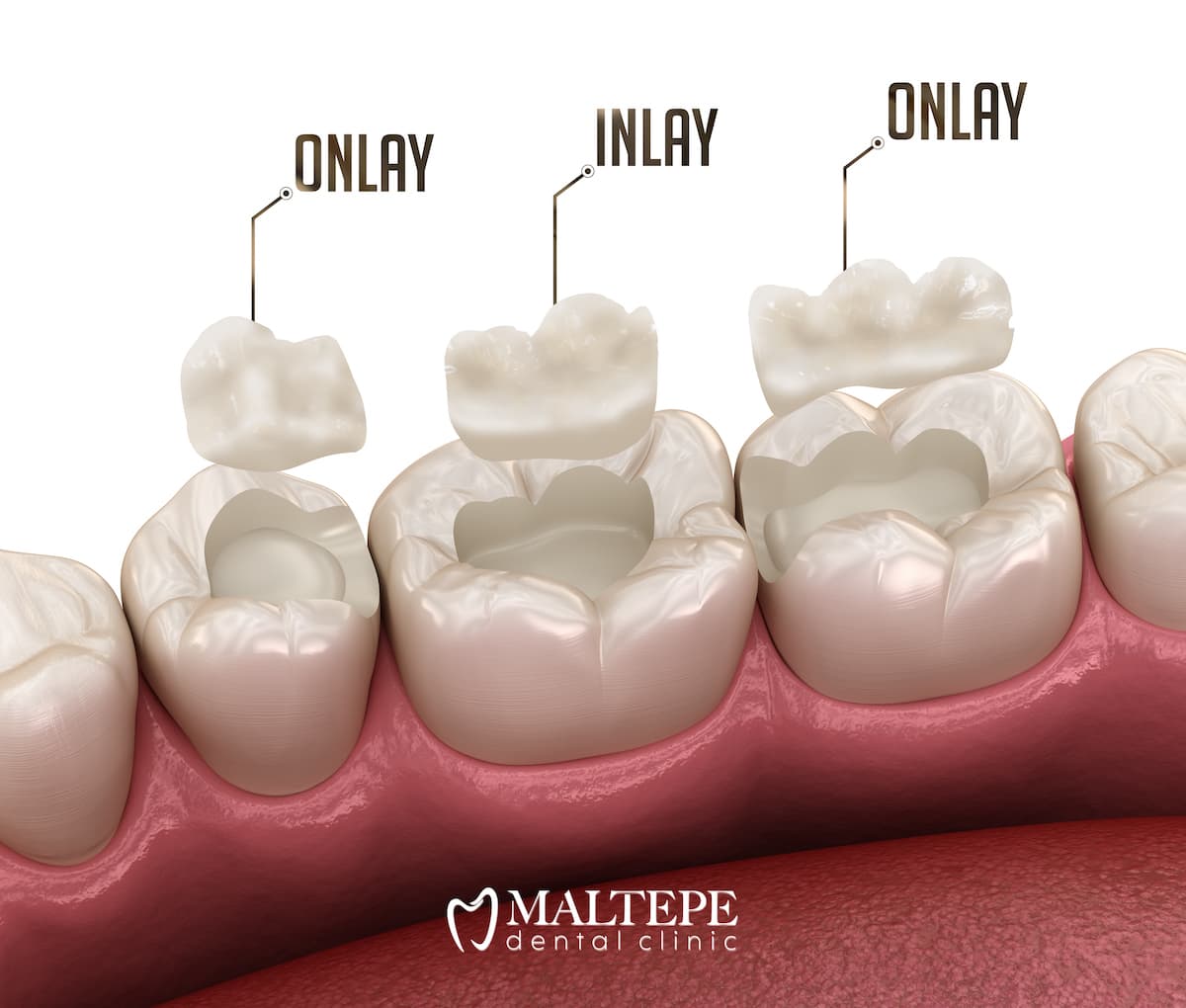
An onlay functions as a “partial crown.” It is fabricated in a laboratory, typically from porcelain, ceramic, or gold, and is designed to fit precisely into the prepared grooves of a tooth. Because it is manufactured under controlled conditions, the material properties—hardness, wear resistance, and margin integrity—are vastly superior to any material placed directly into the mouth.
By investing in an onlay, you are front-loading the cost to avoid the “hidden” expenses associated with failure. When you calculate the cost per year of service, the onlay becomes a highly efficient financial choice. It protects the remaining natural tooth structure, which is the most valuable asset in your mouth. Unlike a crown, which requires the removal of significant amounts of healthy tooth enamel, an onlay is conservative. It allows you to retain the maximum amount of your natural tooth, which is an asset that, once lost, cannot be reclaimed.
Asset Preservation: Why Structure Matters
In any professional assessment of assets, the goal is to maintain the integrity of the core structure. In dentistry, the tooth itself is the core asset. The dental onlay is essentially an insurance policy for that asset.
The Financial Risk of Aggressive Treatments
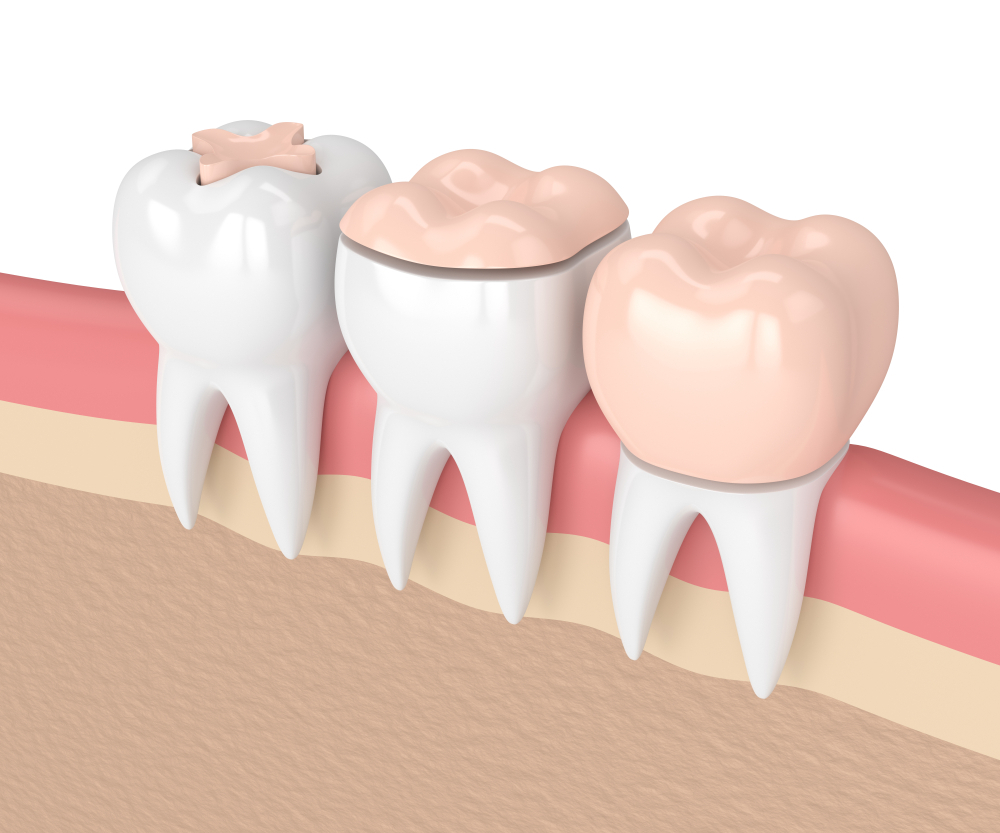
Full dental crowns are the “heavy artillery” of restorative dentistry. They are necessary in cases of extreme decay, but they are also destructive. Preparing a tooth for a crown involves grinding away significant amounts of tooth structure to accommodate the thickness of the crown material. If that crown fails, the options for further treatment are limited because so little of the original tooth remains.
Leveraging Onlays for Long-Term Equity
The onlay allows for a more conservative preparation. By choosing an onlay, you preserve the natural tooth’s structural equity. This is a critical financial decision for younger or middle-aged patients who need their teeth to remain functional for several more decades. If you undergo an onlay procedure now, you are essentially “compounding” the longevity of your dental health. You are avoiding the aggressive, more expensive, and less reversible procedures that often become necessary later in life when early, over-conservative treatments fail.
Budgeting for Dental Health: A Strategic Framework
Managing dental expenses requires a shift from viewing health costs as unexpected liabilities to viewing them as planned capital expenditures. Integrating dental onlays into your personal financial strategy involves evaluating the long-term impact on your net worth.
Evaluating ROI Through Longevity
When you choose a dental onlay, consider the “Total Cost of Ownership” (TCO). A $500 filling that lasts four years costs $125 per year, plus the hidden costs of time, potential discomfort, and the inevitable secondary decay that may lead to more expensive procedures. An onlay, which might cost significantly more upfront, can last 15 to 20 years or longer. When amortized over two decades, the onlay is often the more economical choice.
The Role of Dental Insurance and Financing
Most dental insurance plans have annual maximums, which act as a budget ceiling. If you require significant restorative work, an onlay can be a strategic way to maximize your insurance benefits without hitting those ceilings too quickly. Many dental offices offer financing options—such as health-specific credit lines—that allow you to pay for the higher initial cost of an onlay in monthly installments. This transforms a sudden, potentially budget-breaking expense into a manageable monthly payment, effectively spreading the cost over the period during which you are enjoying the benefit of the restoration.
Making the Informed Decision
The terminology used in dental offices can be overwhelming, but when filtered through a professional and financial lens, the choice becomes clear. The onlay represents the intersection of quality craftsmanship and long-term financial foresight.

Identifying the Need for an Onlay
How do you know if an onlay is the right financial move for you?
- The Size of the Decay: If your dentist indicates that a cavity is too large for a filling but doesn’t quite reach the threshold for a full crown, the onlay is your most efficient option.
- Structural Integrity: If you have cracks or heavy wear patterns, an onlay provides a reinforced cap that distributes bite forces more evenly, protecting the tooth from catastrophic failure.
- The Lifetime Outlook: If you are planning your financial health, consider the cost of maintaining your teeth versus the cost of replacing them. Dental implants and bridges are significantly more expensive than even the most premium onlay. Investing in an onlay is essentially an early-stage intervention that keeps you away from the expensive world of tooth replacement.
Ultimately, the dental onlay is a testament to the idea that quality is not an expense—it is an investment. By choosing a restorative path that emphasizes durability, structural preservation, and long-term value, you are not just caring for your teeth; you are managing your personal health assets with the same discipline you would apply to any other portfolio. In the long run, the most expensive dental work is the kind that you have to do twice. By selecting the onlay, you are choosing to do it once, correctly, and ensuring your oral health remains a sustainable, low-maintenance asset for years to come.
aViewFromTheCave is a participant in the Amazon Services LLC Associates Program, an affiliate advertising program designed to provide a means for sites to earn advertising fees by advertising and linking to Amazon.com. Amazon, the Amazon logo, AmazonSupply, and the AmazonSupply logo are trademarks of Amazon.com, Inc. or its affiliates. As an Amazon Associate we earn affiliate commissions from qualifying purchases.