
In educational and corporate environments, network administrators frequently deploy strict content filters to manage bandwidth and maintain focus. These security protocols often categorize gaming websites as recreational or potentially hazardous, resulting in widespread blocks. For students, professionals, or remote employees looking for a brief mental reset, identifying games that bypass these filters is a common pursuit. Understanding how these games function—and why some remain accessible while others are prohibited—requires a look at web architecture, cloud technology, and the nature of lightweight browser-based software.
The Mechanics of Network Filtering and Unblocked Access
To understand why some games remain accessible, one must first understand the infrastructure that blocks the others. Network administrators use Domain Name System (DNS) filtering, firewalls, and deep packet inspection to identify and restrict traffic based on category tags. When a site is flagged as a “game,” the firewall automatically denies the request.

Browser-Based Architecture vs. Installed Software
The primary reason some games are not blocked is that they are either hosted on trusted platforms or use lightweight, decentralized architectures that do not trigger alarm bells in security software. Many “unblocked” games are built using HTML5, a standard that allows developers to run sophisticated software directly within the browser without requiring external plugins like Adobe Flash, which was notorious for security vulnerabilities.
The Role of Proxy Servers and Web-Based Wrappers
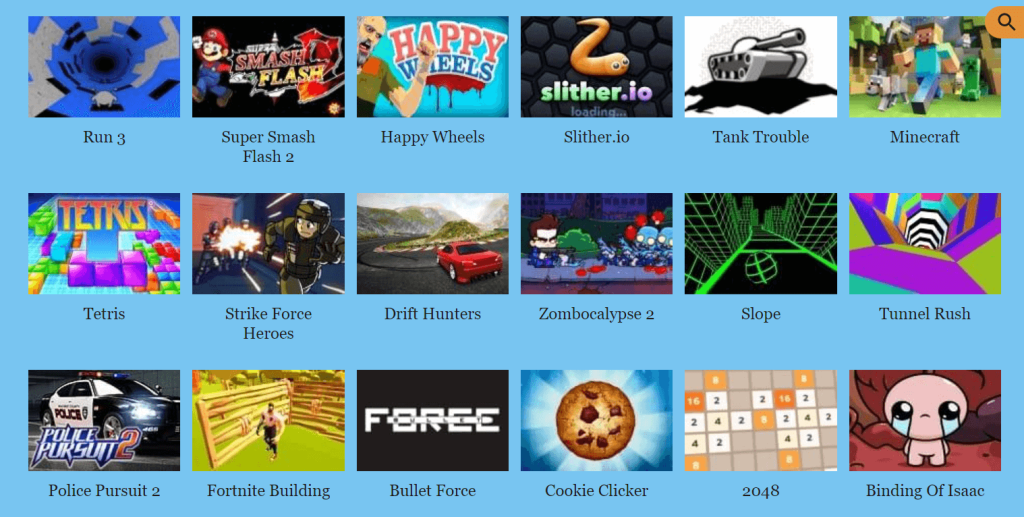
Many websites labeled as “unblocked game sites” act as proxies or wrappers. They host games on unconventional domains or within frames that the network filter has not yet indexed as recreational. When a game is hosted on a domain that appears to be a legitimate utility or educational tool, it often sails past automated filters. However, this cat-and-mouse game between administrators and developers is constant, meaning today’s unblocked site may be tomorrow’s restricted URL.
Categories of Accessible Browser-Based Games
While the landscape is shifting, several categories of games frequently bypass standard filters because they do not rely on high-bandwidth servers or external gaming platforms that typically get flagged.
Logic and Puzzle Challenges
Browser-based puzzle games—often hosted on sites dedicated to mathematics, brain training, or logic—are the most likely to remain unblocked. Because these tools are often integrated into educational curricula, administrators are hesitant to block them. Games like variants of Sudoku, classic logic-grid puzzles, or geometric construction tools are frequently categorized under “Education” rather than “Entertainment” by web-filtering algorithms.
Minimalist Open-Source Projects
The open-source community plays a significant role in creating accessible browser games. Projects hosted on platforms like GitHub Pages are often overlooked by filters because the domain itself is a legitimate hub for software development. Minimalist games that rely on simple JavaScript and CSS code are essentially text-heavy documents to a firewall, making them incredibly difficult to filter without inadvertently blocking essential programming documentation.
Educational Simulation Platforms
Several platforms provide simulations for physics, biology, or chemistry. These games are designed for classroom use and are therefore whitelisted by default in many school and enterprise settings. These simulations often function as games, providing interactive mechanics that challenge the user, yet they maintain a high degree of “social utility” that prevents them from being flagged as time-wasting content.
Ensuring Digital Security While Playing
Finding games that are not blocked is only half the battle. The security of the network and the integrity of the user’s data are paramount. When bypassing restrictions, one must be cognizant of the risks associated with third-party web portals.
Risks of Third-Party Game Hubs
Many sites that claim to host unblocked games are actually ad-heavy portals. These sites frequently utilize intrusive advertising scripts that can lead to tracking or, in worst-case scenarios, malware injection. Even if the game itself is safe, the host environment may not be. Users should prioritize games hosted on reputable developer domains rather than generic “free game” aggregators.
Avoiding Browser Hijackers and Malicious Extensions
A common tactic for accessing restricted content is the use of browser extensions or VPNs. While these tools can effectively bypass network blocks, they also introduce significant security vulnerabilities. Browser extensions often require permissions that allow them to read and change all data on the websites you visit. In a professional or educational environment, these extensions can compromise sensitive login credentials or proprietary information. The most secure way to enjoy accessible games is to stick to native, browser-based options that require no additional software or plugins.
Future-Proofing Access and Responsible Usage
The landscape of web filtering is evolving as Artificial Intelligence (AI) becomes integrated into network security suites. Future firewalls will not just look at a website’s domain or metadata; they will analyze the content of the page in real-time to determine if it is a game.
The Shift Toward AI-Powered Filtering
As AI-driven content inspection becomes the standard, the “unblocked” status of many games will disappear. Administrators will no longer rely on static lists of blocked domains. Instead, the network will be able to recognize the presence of game loops, interactive canvas elements, and keyboard-based control schemes, automatically flagging them as “unauthorized” regardless of where they are hosted.
Maintaining Professional Integrity
For those utilizing these games to manage stress or take breaks, the key is balance. The intent of network filtering is to ensure that bandwidth is preserved for critical tasks and to mitigate distractions. Accessing these games during designated downtime is rarely an issue; however, utilizing work or school infrastructure to bypass security protocols can lead to disciplinary actions or a loss of network privileges.
Recommendations for Safe Access
- Prioritize Official Developer Sites: Play games directly from the source (e.g., an indie developer’s personal site or GitHub project page) rather than third-party aggregators.
- Use Incognito Mode (With Caution): While private browsing does not bypass network filters, it prevents local storage and cookies from accumulating, reducing the footprint left on shared or institutional hardware.
- Focus on Lightweight Tech: Prefer games built in pure HTML5 and JavaScript. These are the most stable and least likely to require external server requests, which is where many firewalls detect and block unauthorized content.
- Practice Network Hygiene: Never attempt to circumvent enterprise security measures in a professional setting. If you require access to specific software, the most professional path is always to request that your IT department whitelist the domain, citing its educational or productive value.
By focusing on games that align with educational or logic-based purposes and prioritizing secure, minimalist platforms, users can enjoy brief moments of digital recreation without compromising the integrity of the network or their personal data. As the technology behind filtering continues to advance, the ability to find “unblocked” games will rely less on finding loopholes and more on finding high-quality content that serves a legitimate purpose within the environment.
aViewFromTheCave is a participant in the Amazon Services LLC Associates Program, an affiliate advertising program designed to provide a means for sites to earn advertising fees by advertising and linking to Amazon.com. Amazon, the Amazon logo, AmazonSupply, and the AmazonSupply logo are trademarks of Amazon.com, Inc. or its affiliates. As an Amazon Associate we earn affiliate commissions from qualifying purchases.