
In today’s interconnected global economy, the ability to accept online payments is no longer a luxury but a fundamental necessity for businesses and individuals alike. From the burgeoning e-commerce entrepreneur to the established service provider, mastering the art of receiving digital funds is paramount to financial sustainability and growth. This comprehensive guide delves into the financial underpinnings of online payment systems, offering insights into selecting, implementing, and optimizing solutions to safeguard and enhance your income streams.
The shift from cash and checks to digital transactions has been swift and profound. Consumers increasingly expect seamless, secure, and convenient ways to pay for goods and services from anywhere in the world. For those seeking to generate income, expand market reach, or simply manage personal finances in a digital age, understanding the mechanisms and implications of online payments is critical. This article will explore the financial landscape of digital transactions, guide you through various payment solutions, and arm you with the strategic considerations needed to make informed financial decisions regarding how you receive your money.
The Imperative of Digital Transactions in the Modern Economy
The digital revolution has fundamentally reshaped the way money changes hands. Businesses that fail to adapt risk not only falling behind competitors but also significantly limiting their potential for revenue generation and market expansion. Embracing online payments is not merely about technological adoption; it’s a strategic financial move that opens doors to broader customer bases and more efficient operational models.
The Evolving Landscape of Commerce: A Financial Imperative
The rise of e-commerce, the gig economy, and remote work has transformed consumer and business expectations. Customers today demand flexibility and speed, often preferring to complete transactions with a few clicks from their mobile devices or computers. For businesses, this means that the inability to accept online payments directly translates into lost sales opportunities and a shrinking market share. Investing in robust online payment infrastructure is, therefore, an investment in future revenue streams and market relevance. It’s about meeting your customers where they are and facilitating their purchasing journey, ultimately impacting your bottom line.
Beyond direct sales, accepting online payments allows businesses to tap into international markets without the complexities of cross-border cash transactions or the delays associated with traditional banking methods. This global reach can significantly amplify potential income, transforming a local enterprise into an international player. For freelancers and service professionals, digital payment methods ensure timely compensation for services rendered, crucial for personal financial management and consistent cash flow.
Beyond Convenience: The Financial Advantages of Online Payments
While convenience is a major draw, the financial benefits of accepting online payments extend far deeper. One of the most significant advantages is the potential for faster cash flow. Unlike traditional methods like checks, which can take days or weeks to clear, many online payment systems offer near-instantaneous or same-day settlement. This immediate access to funds is vital for managing working capital, paying suppliers, and making timely investments—all crucial aspects of sound financial health.
Furthermore, online payment systems often lead to reduced administrative costs. The automation inherent in these systems minimizes manual data entry, reconciliation errors, and the labor associated with handling physical currency or processing paper checks. This operational efficiency translates directly into cost savings, freeing up valuable resources that can be reallocated to core business activities or strategic growth initiatives. The detailed transaction records generated by these systems also simplify financial reporting, auditing, and tax preparation, saving time and reducing the potential for costly errors.
Finally, the security features embedded in most online payment platforms, such as encryption and fraud detection tools, offer a layer of protection that cash transactions simply cannot. While not entirely immune to risk, the sophisticated algorithms and compliance standards (like PCI DSS) employed by reputable providers significantly reduce the likelihood of financial fraud and chargebacks, thereby protecting your revenue.
Navigating the Spectrum of Online Payment Solutions
The digital payment ecosystem is vast and continually evolving, offering a multitude of solutions tailored to different business models and individual needs. Understanding the financial implications and operational mechanisms of each type is key to making an informed choice that aligns with your financial objectives.
Payment Gateways and Processors: The Core Mechanics
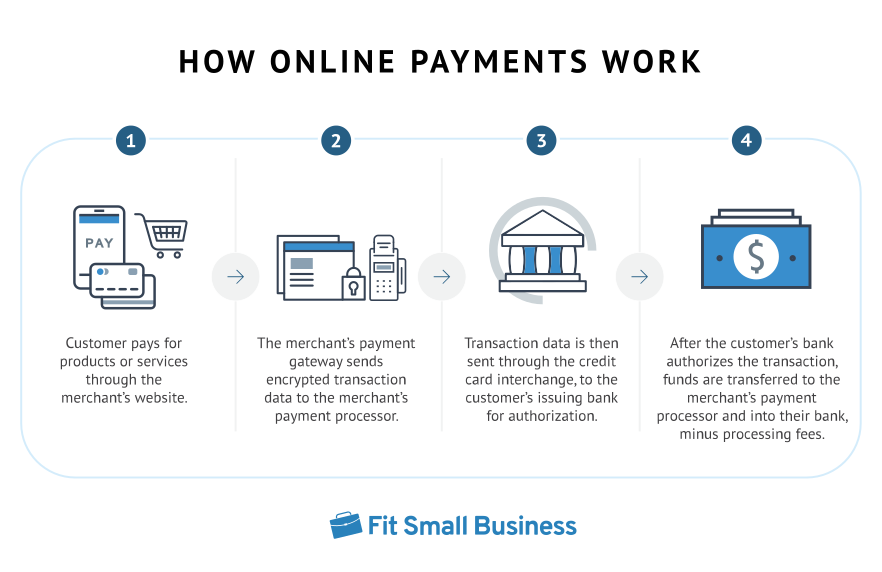
At the heart of most online transactions are payment gateways and processors. These entities are the crucial intermediaries that authorize, process, and settle credit card and other digital payments. Providers like Stripe, PayPal Business, and Square offer comprehensive solutions that integrate seamlessly with websites, e-commerce platforms, and point-of-sale (POS) systems. From a financial perspective, these services facilitate the transfer of funds from a customer’s bank account or credit card to your merchant account.
The financial considerations for choosing a gateway or processor revolve primarily around transaction fees and settlement times. Most charge a percentage of each transaction, often coupled with a small fixed fee (e.g., 2.9% + $0.30). These fees directly impact your profit margins, so understanding and comparing different providers’ structures based on your average transaction volume and value is essential. Settlement times, which dictate how quickly funds are deposited into your bank account, can vary from next-day to several business days and are critical for managing your cash flow. Global reach and multi-currency support are also important financial considerations for businesses targeting international customers, as they can affect exchange rates and cross-border transaction costs.
Direct Bank Transfers and Digital Wallets
Beyond traditional card processors, other significant players offer distinct financial advantages depending on the scenario. Direct bank transfers, such as ACH (Automated Clearing House) in the US or SEPA (Single Euro Payments Area) in Europe, allow for money to be transferred directly between bank accounts. These are often used for larger transactions, recurring payments, or B2B invoicing, typically incurring lower fees than credit card processing. The trade-off can be slower processing times and less robust fraud protection compared to card-based systems, requiring businesses to implement their own verification processes to mitigate financial risk.
Digital wallets and mobile payment apps (e.g., Apple Pay, Google Pay, Venmo, Cash App) have become incredibly popular for their convenience and speed, especially among consumers. For businesses, accepting these methods can significantly boost sales by reducing friction at checkout. While they often leverage existing payment networks (like credit cards) and incur similar transaction fees, their widespread adoption makes them indispensable for maximizing customer conversion and ensuring broad financial accessibility. For individuals, these apps provide an easy way to receive payments from friends, family, or clients for informal services, though it’s crucial to understand the difference between personal and business accounts regarding fees and tax reporting.
Emerging Payment Technologies: Cryptocurrencies and Beyond
The financial landscape is also seeing the emergence of new payment technologies. Cryptocurrencies like Bitcoin and Ethereum offer a decentralized alternative, potentially allowing for lower transaction fees and faster international payments by bypassing traditional banking intermediaries. However, their significant price volatility introduces a substantial financial risk. Businesses accepting crypto must carefully consider how to manage this volatility—whether to convert immediately to fiat currency or hold crypto, taking on investment risk. The regulatory environment for cryptocurrencies is also evolving, posing compliance challenges from a financial reporting perspective.
Other innovations, such as Buy Now, Pay Later (BNPL) services (e.g., Klarna, Affirm), while technically a form of consumer credit, are becoming crucial payment options for businesses. By offering customers flexible payment plans, businesses can increase average order value and conversion rates, despite the fees charged by BNPL providers. These financial tools effectively absorb the credit risk, allowing businesses to receive full payment upfront while customers pay in installments.
Strategic Considerations for Selecting Your Payment System
Choosing the right online payment system is a critical financial decision that impacts everything from operational costs to revenue security. It requires a holistic evaluation of various factors, always with an eye on your bottom line and financial health.
Fee Structures and Cost-Benefit Analysis

Understanding and comparing fee structures is paramount. Payment providers employ various models:
- Per-transaction fees: A fixed percentage plus a flat fee per transaction (common for credit cards).
- Monthly fees: A recurring fee, sometimes with reduced per-transaction rates.
- Tiered pricing: Different rates based on transaction volume or card type (can be complex to track).
- Interchange-plus pricing: Passes on the exact interchange fee (paid to the issuing bank) plus a small markup from the processor, offering transparency for high-volume merchants.
A thorough cost-benefit analysis involves projecting your expected transaction volume and average transaction size to calculate the total cost for each provider. Consider the impact of these fees on your profit margins. Small differences in percentage rates can accumulate into significant costs over time, particularly for high-volume or low-margin businesses. Also, inquire about hidden fees such as chargeback fees, international transaction fees, or PCI compliance fees.
Security and Fraud Prevention from a Financial Standpoint
Protecting your revenue from fraud is non-negotiable. Robust security features are not just about compliance; they are about safeguarding your financial assets. Ensure your chosen provider is PCI DSS compliant (Payment Card Industry Data Security Standard), which dictates how credit card data is handled. Look for features like:
- Encryption and tokenization: To protect sensitive customer financial data.
- Fraud detection tools: AI-powered systems that flag suspicious transactions.
- Chargeback protection: Mechanisms to help prevent or mitigate losses from disputed transactions.
While these features often come with a cost, the financial loss from a single significant fraud incident or a high volume of chargebacks can far outweigh the expense of preventative measures. Chargebacks not only mean lost revenue but can also incur additional fees and damage your business’s reputation, potentially leading to higher processing rates or even account termination. Investing in strong security is a proactive financial measure that protects your long-term viability.
Currency Conversion and International Transactions
For businesses with an international clientele, managing currency conversion and international transaction fees is a key financial consideration. Many payment gateways support multiple currencies, but the exchange rates applied and any associated fees can significantly impact the final amount received. Some providers offer dynamic currency conversion (DCC), allowing customers to pay in their home currency, but this often comes with less favorable exchange rates.
Evaluate providers based on their transparent pricing for international transactions. Understanding the real cost of converting foreign currencies and the speed at which international payments settle is crucial for accurate financial forecasting and ensuring profitability on global sales. Businesses should also consider localized payment methods popular in target countries to maximize conversion rates and revenue from international customers.
Integration with Accounting and Business Management Systems
The seamless integration of your payment system with your existing accounting software (e.g., QuickBooks, Xero) and business management tools is critical for financial efficiency. Automated reconciliation of transactions saves countless hours of manual effort, reduces the risk of human error, and provides real-time insights into your financial performance. This means:
- Accurate financial reporting: Easier generation of profit and loss statements, balance sheets, and cash flow reports.
- Streamlined tax preparation: Automated categorization of income and expenses simplifies compliance.
- Improved financial analysis: Better data for identifying trends, optimizing pricing, and making informed business decisions.
A payment system that integrates well acts as a financial backbone, ensuring that all revenue streams are tracked, accounted for, and easily accessible for strategic financial planning. The upfront effort to ensure proper integration pays dividends in ongoing operational efficiency and financial clarity.
Optimizing Your Online Payment Workflow for Financial Health
Once you’ve selected your online payment solutions, the focus shifts to optimizing their implementation and ongoing management to ensure maximum financial benefit and minimal risk. A well-tuned payment workflow is essential for sustained financial health.
Streamlining Onboarding and Customer Experience
A smooth and intuitive payment process directly impacts your revenue. A convoluted or unreliable checkout can lead to high cart abandonment rates, resulting in significant lost sales. To optimize the customer experience and boost your bottom line:
- Offer multiple payment options: Catering to customer preferences increases the likelihood of purchase.
- Ensure mobile responsiveness: A seamless experience on all devices is critical given the prevalence of mobile shopping.
- Prioritize speed and simplicity: Minimize clicks, form fields, and extraneous steps.
- Provide clear communication: Keep customers informed about payment status, security measures, and any potential delays.
From a financial perspective, a low abandonment rate means more completed transactions and higher revenue. Regularly review your payment funnel for bottlenecks and utilize analytics to understand customer behavior and continuously refine the process.
Managing Cash Flow and Payout Schedules
Understanding your payment provider’s payout schedule is crucial for effective cash flow management. Some providers offer daily payouts, while others have weekly or even bi-weekly cycles. Aligning these schedules with your operational expenses, supplier payments, and payroll cycles is vital for maintaining liquidity and avoiding financial shortfalls. Businesses with significant upfront costs or tight working capital may prefer providers with faster settlement times, even if it means slightly higher transaction fees.
Beyond regular payouts, consider setting up reserves or rolling reserves with your payment processor. While these can temporarily tie up a portion of your revenue to cover potential chargebacks or disputes, they serve as a financial safety net, protecting your business from sudden cash flow shocks. Proactive management of your payout schedules and understanding their impact on your available funds is a cornerstone of prudent financial planning.
Reconciliation and Financial Reporting
Accurate reconciliation is fundamental to sound financial management. Regularly matching the funds received in your bank account with the transactions recorded by your payment processor and sales data ensures accuracy and helps identify discrepancies quickly. Automated integration with accounting software significantly simplifies this process, providing a clear audit trail and reducing the risk of financial errors.
Robust financial reporting, enabled by good reconciliation practices, offers invaluable insights:
- Performance analysis: Track sales trends, identify best-selling products/services, and analyze customer spending habits.
- Expense management: Monitor payment processing fees and other related costs to optimize expenditure.
- Tax compliance: Easily generate reports required for VAT, sales tax, income tax, and other regulatory filings.
This level of financial visibility empowers you to make data-driven decisions, allocate resources more effectively, and ensure compliance, all of which contribute to your long-term financial stability and growth.

Strategies for Minimizing Chargebacks and Disputes
Chargebacks are a significant financial headache, resulting in lost revenue, additional fees, and administrative burden. Proactive strategies to minimize chargebacks and disputes are essential:
- Clear product descriptions and transparent pricing: Prevent customer misunderstandings.
- Excellent customer service: Resolve issues before they escalate to disputes.
- Confirmation emails and tracking information: Provide proof of purchase and delivery.
- Strong fraud prevention tools: As discussed, these protect against malicious chargebacks.
- Prompt refunds: Process legitimate refund requests quickly to avoid disputes.
From a financial risk management perspective, every chargeback prevented is revenue retained and a potential fee avoided. A high chargeback rate can also lead to penalties from payment networks or even account termination, posing a severe threat to your ability to receive online payments altogether. Implementing a comprehensive strategy to manage disputes is a critical aspect of protecting your financial integrity.
In conclusion, receiving online payments is more than a technical capability; it’s a financial strategy. By carefully selecting providers, understanding fee structures, prioritizing security, optimizing workflows, and meticulously managing your finances, businesses and individuals can unlock significant growth potential, improve cash flow, and build a resilient financial future in the digital age. The journey to effective online payment management is continuous, requiring ongoing evaluation and adaptation to technological advancements and evolving financial landscapes.
aViewFromTheCave is a participant in the Amazon Services LLC Associates Program, an affiliate advertising program designed to provide a means for sites to earn advertising fees by advertising and linking to Amazon.com. Amazon, the Amazon logo, AmazonSupply, and the AmazonSupply logo are trademarks of Amazon.com, Inc. or its affiliates. As an Amazon Associate we earn affiliate commissions from qualifying purchases.