
Tax season is often viewed through a lens of stress and complexity, yet it represents one of the most significant financial events of the year for the average household. Beyond mere compliance with the law, filing your taxes is a critical exercise in personal financial management. It is the moment where your annual income, investment performance, and spending habits are distilled into a single report for the government. Being well-prepared does more than just speed up the filing process; it ensures you are not leaving money on the table in the form of unclaimed deductions or overlooked credits.

To navigate this process effectively, you must approach your documentation with the precision of a professional auditor. Gathering the right information allows you to maximize your refund or minimize your liability, providing a clearer picture of your overall net worth and cash flow.
Establishing Your Identity: The Essential Personal Records
Before delving into the complexities of capital gains or business expenses, you must establish the foundation of your tax return: identity and filing status. The Internal Revenue Service (IRS) requires precise identification for every individual listed on a return to prevent fraud and ensure that credits are allocated correctly.
Social Security Numbers and ITINs
The most fundamental requirement for filing is a valid Social Security Number (SSN) for yourself, your spouse, and every dependent you intend to claim. If you or a family member do not have a Social Security Number, you will need an Individual Taxpayer Identification Number (ITIN). Ensuring these numbers are accurate is paramount; a single digit error can lead to a rejected return or significant delays in processing your refund.
Determining Your Filing Status
Your filing status is a pivot point that determines your standard deduction and your tax brackets. You must decide whether you are filing as Single, Married Filing Jointly, Married Filing Separately, Head of Household, or Qualifying Surviving Spouse. This decision often requires looking at your legal standing as of December 31st of the tax year. For those who may qualify as Head of Household, additional documentation regarding the costs of maintaining a home and the residency of dependents is necessary to justify the more favorable tax rates and higher standard deduction associated with this status.
Records for Dependents and Qualifying Relatives
If you are claiming children or elderly parents as dependents, you must have their personal information ready. This includes birth dates and, in cases of divorced or separated parents, legal documentation regarding who has the right to claim the child for the current tax year. Furthermore, if you are paying for childcare so you can work or look for work, you will need the provider’s name, address, and Taxpayer Identification Number (TIN) to claim the Child and Dependent Care Credit.
Tracking Every Dollar: Income Documentation from All Sources
In the eyes of the IRS, almost all income is taxable unless specifically excluded by law. For the modern taxpayer, income often flows from multiple streams—traditional employment, freelance “side hustles,” investment portfolios, and even digital assets. Compiling a complete record of these inflows is the most time-consuming but vital part of the preparation process.
Traditional Employment: The W-2 Form
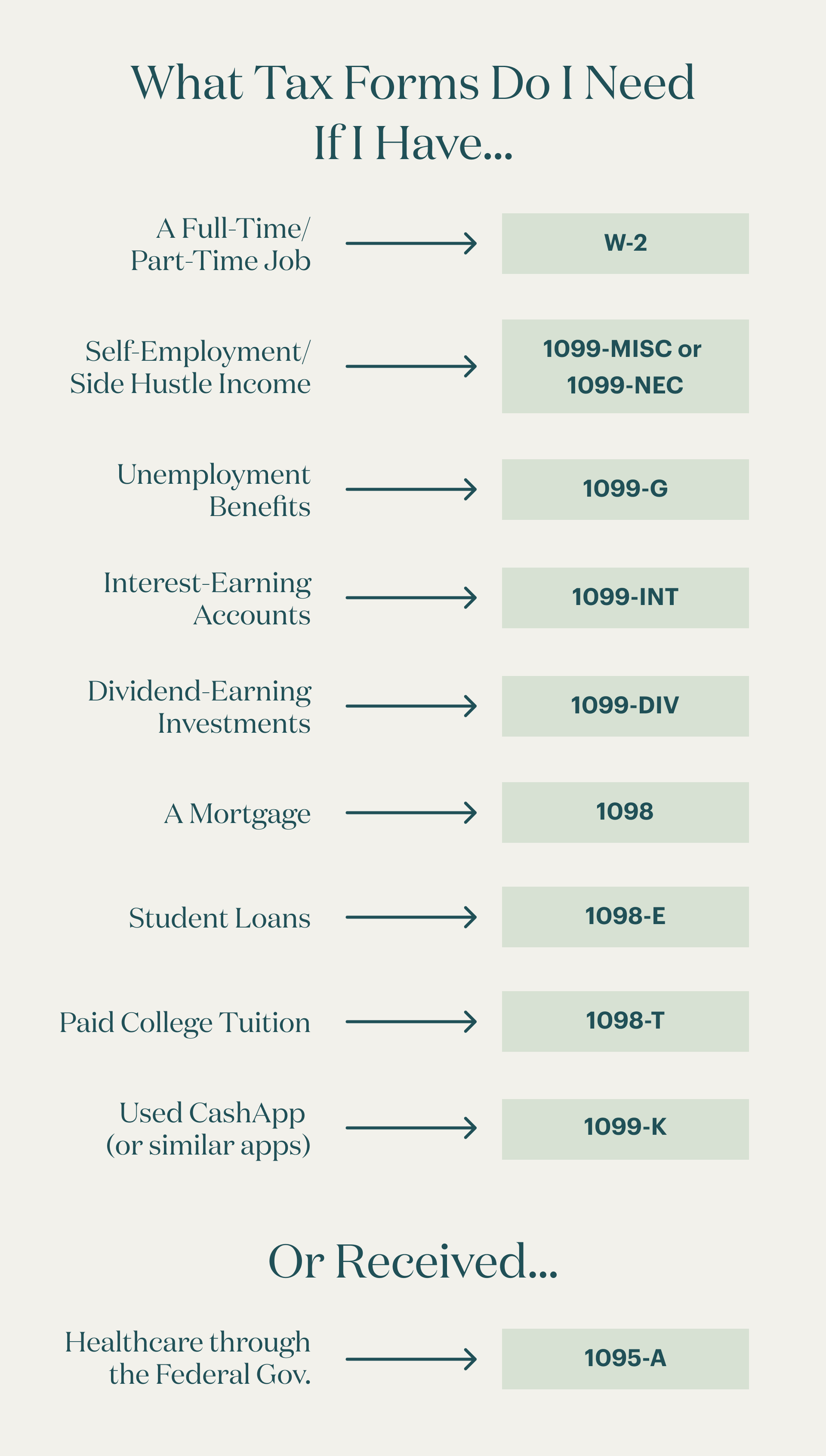
For those in a standard employer-employee relationship, the W-2 Wage and Tax Statement is the primary document. This form summarizes your total earnings, as well as the federal, state, and local taxes already withheld. It also includes information on contributions to retirement plans like a 401(k) and premiums paid for health insurance, which can impact your taxable income.
The Gig Economy and Self-Employment: 1099-NEC and 1099-MISC
The rise of the gig economy has made the 1099 series of forms increasingly common. If you performed contract work, freelanced, or operated a small service-based business, you should receive a Form 1099-NEC (Non-employee Compensation) for any client who paid you $600 or more during the year. Even if you do not receive a form—perhaps because you earned less than the $600 threshold from a specific source—you are still legally required to report that income. Maintaining a robust bookkeeping system throughout the year is essential for reconciling these forms against your actual bank deposits.
Investment and Passive Income: 1099-INT, 1099-DIV, and 1099-B
Wealth building requires investment, and investments generate taxable events. You will need:
-
1099-INT: Reports interest earned on savings accounts, CDs, or bonds.
-
1099-DIV: Reports dividends and distributions from stocks or mutual funds.
-
1099-B: This is perhaps the most complex form, as it reports the proceeds from the sale of securities. To accurately report capital gains or losses, you must know the “cost basis”—the original price you paid for the asset, including commissions.
-
Cryptocurrency Records: The IRS treats digital assets as property. You must keep detailed records of every trade, sale, or use of cryptocurrency to buy goods, as these are all taxable events that require reporting on Form 8949.
Retirement Distributions and Social Security Benefits
If you have reached the age where you are withdrawing from a traditional IRA or 401(k), you will receive a 1099-R. Similarly, if you are receiving Social Security benefits, the SSA-1099 will detail the total amount received, a portion of which may be taxable depending on your other income levels.
Strategic Deductions and Credits: Reducing Your Taxable Income
Once your total income is established, the focus shifts to reducing that number through deductions and credits. This is where strategic financial planning pays off.
Standard vs. Itemized Deductions
The majority of taxpayers opt for the standard deduction, which is a fixed dollar amount based on filing status. However, if your eligible expenses exceed the standard deduction amount, you should “itemize” using Schedule A. This requires a much higher level of documentation. To determine which path is best, you need to aggregate receipts and statements for several categories.
Homeownership and Mortgage Interest
For homeowners, the Form 1098 (Mortgage Interest Statement) is vital. It details the interest paid on your home loan, which is often the largest itemized deduction available. Additionally, you should have records of any property taxes paid, as these are deductible up to the $10,000 State and Local Tax (SALT) limit.
Education Expenses and Student Loan Interest
The cost of higher education can be offset by several tax breaks. The Form 1098-T provided by educational institutions is necessary to claim the American Opportunity Tax Credit (AOTC) or the Lifetime Learning Credit (LLC). Furthermore, if you are paying off student loans, your lender will provide a 1098-E showing the interest paid, which can be deducted even if you do not itemize.
Charitable Contributions and Healthcare Costs
If you itemize, you must have written acknowledgment for any charitable gift over $250. For healthcare, you can deduct unreimbursed medical and dental expenses that exceed a certain percentage of your Adjusted Gross Income (AGI). This requires meticulous record-keeping of doctor visits, prescriptions, and even travel costs for medical care.
Navigating the Complexities of Small Business and Side Hustle Expenses
For entrepreneurs and side hustlers, the tax return is not just about income; it is about the “ordinary and necessary” expenses required to generate that income. These expenses are deducted on Schedule C, and they directly reduce the amount of self-employment tax you owe.
Business Use of the Home and Travel
If you use a portion of your home exclusively for business, you may be eligible for the home office deduction. You will need to know the square footage of your office relative to the total square footage of your home, along with records for utilities, insurance, and repairs. For business travel, a mileage log is the gold standard. You must track the date, purpose, and distance of every business trip if you intend to use the standard mileage rate.
Equipment, Supplies, and Professional Services
Every computer, software subscription, and piece of office furniture purchased for your business is a potential deduction. Large purchases may need to be depreciated over several years, while smaller expenses can be deducted in the year they are incurred. You should also keep records of fees paid to lawyers, accountants, and consultants, as these are fully deductible business expenses.
Finalizing the Process: Payment Information and Record Maintenance
The final stage of filing involves the logistics of sending and receiving funds. While this seems straightforward, errors here can lead to lost refunds or missed deadlines.
Direct Deposit and Payment Vouchers
To receive a refund as quickly as possible, you will need your bank’s routing number and your account number for direct deposit. Conversely, if you owe money, you must decide how to pay. If you cannot pay the full amount immediately, you will need to look into IRS payment plans, which require their own set of financial disclosures.
The Importance of Previous Returns
Always keep a copy of your tax return from the previous year. You will often need your prior-year AGI to verify your identity when e-filing. Additionally, looking at last year’s return serves as a blueprint, reminding you of the types of income and deductions you typically report and helping you spot any major discrepancies that might trigger an audit.

Digital Organization and Long-Term Storage
In a modern financial environment, digital record-keeping is superior to paper files. Scanning receipts and storing them in encrypted cloud folders ensures that you can produce documentation years down the line if the IRS questions a return. Generally, the IRS can audit returns from the last three years, but in cases of substantial errors, they may go back six years. Maintaining organized records for at least seven years is a prudent financial habit that protects your assets and provides peace of mind.
By treating tax filing as a year-round process of financial documentation rather than a one-time chore, you position yourself to make better-informed decisions regarding investments, business spending, and long-term wealth preservation. Knowing exactly what you need is the first step toward mastering your personal finances.
aViewFromTheCave is a participant in the Amazon Services LLC Associates Program, an affiliate advertising program designed to provide a means for sites to earn advertising fees by advertising and linking to Amazon.com. Amazon, the Amazon logo, AmazonSupply, and the AmazonSupply logo are trademarks of Amazon.com, Inc. or its affiliates. As an Amazon Associate we earn affiliate commissions from qualifying purchases.