
In the modern landscape of the subscription economy, the concept of “value” has shifted from the mere acquisition of goods to the optimization of ecosystems. For the individual focused on personal finance and household budgeting, a subscription is not merely a recurring expense; it is a capital allocation decision. Amazon Prime, perhaps the most ubiquitous membership model in the global marketplace, represents a complex bundle of services that requires a rigorous cost-benefit analysis. To understand what comes with a Prime membership from a financial perspective, one must look beyond the convenience of “free shipping” and analyze the internal rate of return generated by its various verticals.

From a budgetary standpoint, the annual fee for a Prime membership is an upfront investment designed to reduce variable costs throughout the fiscal year. Whether you are a side hustler looking to minimize overhead, a family looking to consolidate entertainment expenses, or an investor seeking to maximize cashback rewards, the utility of the membership depends on how effectively you leverage its multi-faceted toolkit.
The Core Value Proposition: Calculating the Shipping and Delivery ROI
The foundational pillar of the Prime membership is its logistics network. For the finance-conscious consumer, shipping costs are often “leakage”—small, recurring fees that erode monthly savings. Prime effectively converts these variable costs into a single, predictable fixed cost.
Eliminating Per-Transaction Shipping Costs
The primary financial benefit of Prime is the removal of the minimum purchase threshold for free shipping. In a standard retail environment, a consumer might add unnecessary items to their cart simply to reach a “free shipping” limit, leading to lifestyle creep and unplanned spending. Prime allows for “just-in-time” purchasing. By ordering only what is needed, when it is needed, a member can maintain a leaner household inventory and keep more cash liquid in high-yield savings accounts rather than tied up in bulk pantry items.
The Economic Value of Time and Logistics
In the realm of personal finance, time is a non-renewable asset with a specific dollar value. The “Fast and Free” delivery options—ranging from Same-Day to Two-Day shipping—serve as a productivity tool. For entrepreneurs and side hustlers, the ability to receive a critical piece of hardware or office supply within hours without leaving their workspace represents a significant reduction in “opportunity cost.” When you factor in the rising price of fuel and the wear and tear on a vehicle, the logistics perk of a Prime membership often pays for itself solely through the mitigation of transportation expenses.
Leveraging Digital Ecosystems for Budget Optimization
A sophisticated financial strategy involves “stacking” benefits to eliminate redundant services. One of the most overlooked aspects of Prime is its ability to act as a substitute for multiple standalone subscriptions, potentially saving a household hundreds of dollars annually.
Consolidation of Entertainment Expenses
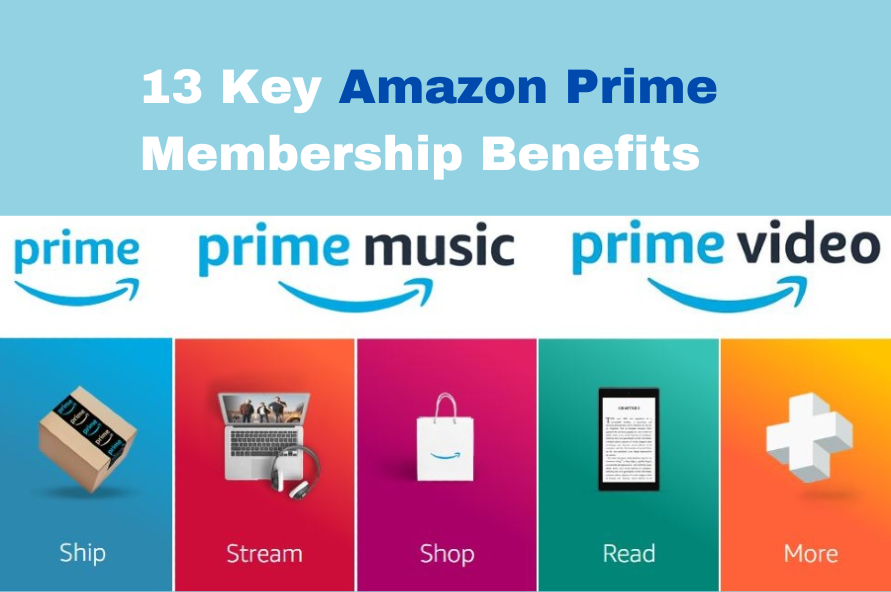
The inclusion of Prime Video and Amazon Music (Prime tier) offers a direct path to cutting “cord-cutting” costs. By utilizing Prime Video as a primary streaming service, users can potentially cancel other platforms like Netflix or Hulu, which have seen consistent price hikes. From a personal finance perspective, if Prime Video replaces a $15.99/month subscription elsewhere, the membership has already generated a net positive return before a single package is even shipped.
Furthermore, for those who consume digital media, Prime Reading and the Rotating Kindle Store selection provide a high-margin substitute for book purchases or additional reading subscriptions. By treating the Prime digital suite as an all-in-one entertainment fund, you can streamline your discretionary spending and reallocate those funds toward debt repayment or investment portfolios.
Gaming and Professional Development Perks
Prime Gaming (formerly Twitch Prime) provides monthly free games and a free channel subscription. For the demographic that allocates a portion of their budget to gaming, this represents a recurring “dividend” of digital content. Additionally, the inclusion of unlimited photo storage through Amazon Photos provides a secure, cloud-based asset management tool that can replace paid tiers of Google Photos or iCloud, further trimming the “digital overhead” of a modern household.
Direct Financial Incentives: Discounts, Rewards, and Cashback

Beyond service-based value, a Prime membership offers direct avenues for capital preservation through exclusive pricing and integrated financial tools.
Exclusive Deals and Prime Day Arbitrage
Prime members receive exclusive access to Lightning Deals and the annual Prime Day event. While these events can tempt impulsive spending, a disciplined shopper can use them for “strategic procurement.” By tracking prices and purchasing high-ticket items—such as electronics, appliances, or home office gear—during these windows, the savings can exceed the annual membership fee in a single transaction. This is essentially a form of retail arbitrage for the consumer, securing goods at a lower cost basis than the general public.
Grocery Savings at Whole Foods Market
The acquisition of Whole Foods Market by Amazon integrated a high-end grocery chain into the Prime ecosystem. Members receive an additional 10% off sale items and access to exclusive “member-only” deals. For families who prioritize organic or high-quality nutrition, these micro-discounts add up over the course of 52 weekly grocery trips. When combined with the Amazon Fresh delivery service, the membership facilitates a more controlled shopping environment where one can see the running total in real-time, preventing the “checkout shock” that often occurs in physical stores.
Credit Card Synergies: The 5% Cashback Factor
One of the most powerful financial tools associated with the membership is the Amazon Prime Visa Card. For members, this card often offers 5% back on all Amazon.com and Whole Foods Market purchases. In the world of investing, a guaranteed 5% return is significant. By routing all essential household spending through this card and paying the balance in full, the “cashback” effectively acts as a discount on the cost of living. For a household spending $500 a month on Amazon and Whole Foods, the $300 in annual cashback not only covers the membership fee but provides a $150 surplus.
Hidden Wealth-Building and Health-Cost Mitigation
Modern financial planning must include a strategy for healthcare and long-term asset protection. Prime has expanded into these sectors, offering memberships features that function as a form of “lifestyle insurance.”
Rx Pass and Pharmacy Benefits
Amazon Pharmacy and the “Rx Pass” for Prime members represent a significant disruption in the cost of healthcare. For a flat monthly fee (exclusive to Prime members), users can get all their eligible generic medications delivered to their door. For those managing chronic conditions, the savings compared to traditional pharmacy co-pays can be substantial. Reducing the cost of essential medicine is a fundamental step in protecting one’s “human capital”—the ability to work and generate income.
Protection for Digital Assets
As mentioned previously, Amazon Photos offers unlimited full-resolution photo storage. From a legacy and estate planning perspective, securing digital memories is often a costly endeavor involving external hard drives or expensive cloud tiers. Prime provides a “set-and-forget” solution for this, ensuring that personal data assets are preserved without the need for additional financial outlays for storage hardware.
The Final Audit: Is the Annual Fee a Sound Investment?
To determine if a Prime membership belongs in your financial plan, you must perform a “Break-Even Analysis.” This is the point at which the total value of the services consumed equals the cost of the membership fee.
Determining the Break-Even Point
If the annual fee is $139, and the average shipping cost for a non-member is $6.99, you only need to make 20 orders a year to break even on shipping alone. However, if you also use Prime Video (valued at approximately $9/month) and the 5% cashback card, your break-even point occurs much earlier.
The sophisticated money manager looks at “ecosystem efficiency.” Does this membership simplify your financial life, or does it encourage “leaky” spending through the ease of one-click ordering? The membership is most profitable for those who use it as a tool for consolidation—merging their shopping, entertainment, and grocery needs into one streamlined channel.
Subscription Fatigue vs. Ecosystem Efficiency
The risk of any subscription is “ghost spending”—paying for a service you do not use. To ensure the Prime membership remains a high-ROI asset, it is essential to conduct a quarterly audit. Review your “Year in Review” stats provided by Amazon to see how much you saved on shipping and how many movies you watched. If the data shows that your savings and utility exceed the prorated monthly cost, the membership remains a cornerstone of a smart financial strategy.
In conclusion, what comes with a Prime membership is not just a box at your door. It is a comprehensive suite of financial levers—from shipping cost elimination and entertainment consolidation to grocery discounts and high-yield cashback rewards. When managed with the discipline of an investor, it serves as a powerful tool for optimizing a household’s budget and maximizing the value of every dollar spent.
aViewFromTheCave is a participant in the Amazon Services LLC Associates Program, an affiliate advertising program designed to provide a means for sites to earn advertising fees by advertising and linking to Amazon.com. Amazon, the Amazon logo, AmazonSupply, and the AmazonSupply logo are trademarks of Amazon.com, Inc. or its affiliates. As an Amazon Associate we earn affiliate commissions from qualifying purchases.