
Purchasing a vehicle is no longer a simple transaction involving a sticker price and a monthly payment. In the modern economy, high-ticket items like the Tesla Model 3 represent a complex intersection of upfront capital investment, government subsidies, and long-term operational savings. For the financially conscious consumer, the question “How much does it cost?” requires a multi-layered analysis that looks beyond the Manufacturer’s Suggested Retail Price (MSRP) to understand the Total Cost of Ownership (TCO) over a five-to-ten-year horizon.
To accurately assess the financial impact of a Tesla Model 3, one must evaluate the initial outlay, the shifting landscape of tax incentives, the recurring costs of energy and maintenance, and the eventual residual value of the asset.

Understanding the Initial Capital Outlay
The entry point for the Tesla Model 3 is dynamic. Unlike traditional dealerships that rely on negotiated pricing, Tesla utilizes a direct-to-consumer model with transparent, albeit fluctuating, pricing. As of the current market cycle, the Model 3 is categorized into three distinct tiers, each serving a different financial and utility profile.
The Trim Levels and MSRP
The base model, often referred to as the Model 3 Rear-Wheel Drive (RWD), serves as the most accessible entry point. This version is designed for the budget-conscious commuter, offering the lowest initial price point while maintaining the core features of the platform. Moving up the hierarchy, the Model 3 Long Range All-Wheel Drive (AWD) represents a significant jump in price, catering to those who require higher utility and longer intervals between “fueling.” At the top of the spectrum lies the Model 3 Performance, which commands a premium price for high-tier acceleration and handling characteristics.
Investors and buyers must monitor Tesla’s pricing strategy closely, as the company is known for frequent adjustments based on supply chain efficiencies and market demand. A price drop shortly after a purchase can lead to immediate negative equity, a risk factor that must be weighed against the benefits of early adoption.
Delivery Fees and Mandatory Costs
The MSRP is rarely the final number on the invoice. Prospective owners must account for the “Destination and Doc Fee,” a non-negotiable charge that covers the transport of the vehicle and the administrative costs of the sale. Furthermore, depending on the jurisdiction, registration fees and sales taxes can add thousands to the final cost. When calculating the initial cash outflow, it is prudent to add approximately 8% to 12% to the listed MSRP to account for these localized financial obligations.
Navigating Federal and State Tax Incentives
One of the most compelling aspects of the Model 3 from a personal finance perspective is the potential for significant tax mitigation. These incentives act as a “soft” discount, lowering the effective cost of the vehicle after the fact—or, in some cases, at the point of sale.
The Federal EV Tax Credit (Section 30D)
Under current regulations, such as the Inflation Reduction Act in the United States, certain configurations of the Model 3 may qualify for a federal tax credit of up to $7,500. However, this is not a universal discount. The credit is subject to strict criteria, including:
-
Income Caps: Single filers, heads of households, and joint filers must stay below specific Adjusted Gross Income (AGI) thresholds to qualify.
-
Battery Component Sourcing: The vehicle’s battery materials must meet specific domestic sourcing requirements, which can change annually, potentially disqualifying certain trims.
-
MSRP Limits: The vehicle must be priced below a certain ceiling (typically $55,000 for sedans) to remain eligible.
From a financial planning standpoint, the ability to apply this credit at the point of sale is a transformative tool, as it immediately reduces the amount financed, thereby lowering monthly interest payments.
State-Specific Rebates and Perks
Beyond federal intervention, many states offer additional financial “carrots.” States like California, New York, and Colorado have historically offered rebates ranging from $500 to $5,000. Additionally, many regions offer non-monetary financial benefits, such as HOV lane access, which can be quantified as time-savings value, and reduced vehicle registration fees for zero-emission vehicles. When building a budget for a Model 3, a thorough audit of state and local energy programs is essential.
The Total Cost of Ownership (TCO) vs. Internal Combustion Engines
The true financial narrative of the Tesla Model 3 is found in the Total Cost of Ownership. While the initial purchase price may be higher than a comparable gas-powered sedan, the “fuel” and maintenance savings often flip the script over the life of the loan.
Fuel Savings and Electricity Rates
The most immediate shift in a household budget after purchasing a Model 3 is the elimination of gasoline expenditures. To calculate the ROI (Return on Investment) of this shift, one must compare the local price of gasoline per gallon against the cost of electricity per kilowatt-hour (kWh).
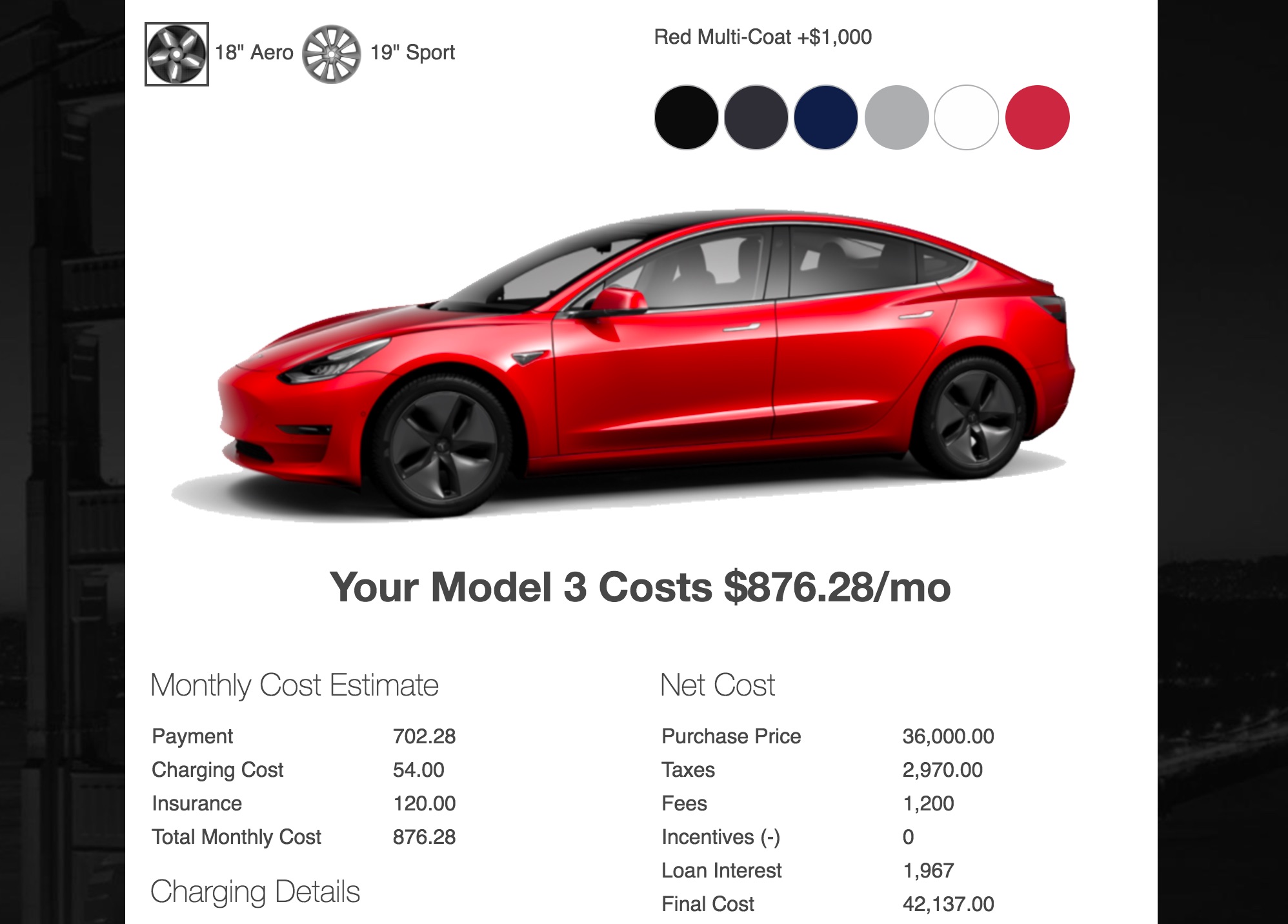
On average, charging an EV at home is significantly cheaper than refueling at a gas station. For instance, if a Model 3 achieves roughly 4 miles per kWh and electricity costs $0.15 per kWh, the “fuel” cost is roughly $0.037 per mile. In contrast, a gas car getting 30 MPG at $3.50 per gallon costs $0.116 per mile. For a driver covering 15,000 miles per year, this represents an annual saving of over $1,100. Over a six-year ownership period, the $6,600 in fuel savings effectively lowers the purchase price of the Tesla.
Maintenance and Long-term Reliability
Internal Combustion Engine (ICE) vehicles require a litany of recurring services: oil changes, spark plug replacements, timing belt swaps, and transmission fluid flushes. The Model 3 utilizes a simplified drivetrain with far fewer moving parts.
Financially, this translates to lower “sunk costs” in maintenance. Aside from tire rotations, cabin air filter changes, and windshield wiper fluid, the Model 3 requires very little scheduled service in its first 100,000 miles. Furthermore, the use of regenerative braking significantly extends the life of brake pads and rotors, often allowing them to last twice as long as those on a conventional vehicle. These savings should be factored into the long-term cash flow analysis.
Depreciation and Resale Value
Depreciation is the largest hidden cost of any vehicle. Historically, Teslas held their value exceptionally well due to high demand and frequent over-the-air software updates that kept older models feeling “current.” However, as the EV market matures and Tesla increases production volume, depreciation rates have begun to normalize toward industry averages.
A savvy buyer should view the Model 3 as a depreciating asset rather than an investment. Projecting a 50% value retention over five years is a conservative and safe financial benchmark for most buyers, though this can be impacted by future technological leaps in battery density or sudden shifts in Tesla’s new-car pricing.
Financing and Leasing Strategies
How you pay for a Model 3 can be just as impactful as the price you pay. The financing structure dictates the ultimate “cost” of the car when interest is factored in.
Direct Financing vs. Traditional Loans
Tesla offers in-house financing, but the rates are not always the most competitive in the market. Many credit unions offer “Green Auto Loans” with preferential interest rates specifically for electric vehicles. By securing a rate even 1% or 2% lower than the standard market rate, a buyer can save thousands of dollars over a 60-month or 72-month term. In a high-interest-rate environment, the “cost” of the car is heavily weighted by the cost of the capital used to acquire it.
The Pros and Cons of Leasing an EV
Leasing a Model 3 can be a strategic financial move for those who are wary of long-term battery degradation or rapid technological obsolescence. Leasing allows the consumer to “rent” the vehicle’s most productive years and return it before the warranty expires.
However, there is a major financial caveat: Tesla’s lease terms often do not allow the lessee to purchase the vehicle at the end of the term. This means the driver builds zero equity. From a wealth-building perspective, financing to own is generally superior, provided the owner intends to keep the vehicle for seven to ten years to fully realize the operational savings.
Hidden Costs and Infrastructure Investments
To get the most out of a Model 3, a buyer often needs to invest in supporting infrastructure. These are “day one” costs that are frequently overlooked in the excitement of the purchase.
Home Charging Installation
While the Model 3 can be charged via a standard 120V wall outlet, this is too slow for most users. A Level 2 home charging setup is the standard recommendation. This involves purchasing a Tesla Wall Connector (approx. $450–$500) and hiring an electrician to install a 240V circuit. Depending on the age of the home’s electrical panel, this installation can range from $500 to $2,500. This is a capital improvement to the home, but it is an essential part of the Model 3’s “startup cost.”

Insurance Premiums for Performance EVs
Insurance is another variable that can inflate the monthly cost. Because Teslas are high-tech machines with specialized parts and aluminum bodies, they can be more expensive to repair than a traditional economy car. Consequently, insurance premiums for a Model 3 are often higher than those for a similarly priced internal combustion vehicle.
Many owners mitigate this by using Tesla Insurance, which uses real-time driving data to determine premiums. For a safe driver, this can result in substantial savings, but for those with a “spirited” driving style, it could lead to higher monthly costs. It is vital to get an insurance quote before signing the purchase agreement to ensure the monthly carry cost fits within your financial plan.
In summary, the cost of a Tesla Model 3 is not a static figure. It is a calculation derived from the initial price, minus tax incentives, plus infrastructure costs, and offset by years of reduced energy and maintenance expenses. For the individual focused on long-term financial efficiency, the Model 3 often proves to be one of the most cost-effective vehicles in its class, provided the buyer navigates the complex web of incentives and financing with diligence.
aViewFromTheCave is a participant in the Amazon Services LLC Associates Program, an affiliate advertising program designed to provide a means for sites to earn advertising fees by advertising and linking to Amazon.com. Amazon, the Amazon logo, AmazonSupply, and the AmazonSupply logo are trademarks of Amazon.com, Inc. or its affiliates. As an Amazon Associate we earn affiliate commissions from qualifying purchases.