
Deciding when to claim Social Security is one of the most critical financial decisions you will make in your lifetime. For many Americans, Social Security serves as the foundation of their retirement income, providing a guaranteed, inflation-adjusted stream of payments for life. However, the system is nuanced, and the “right” age to begin receiving benefits depends on a complex interplay of your birth year, your financial needs, your health status, and your long-term goals.
The question “What age do I get Social Security?” does not have a single answer. Instead, there is a window of eligibility that opens at age 62 and offers increasing rewards for those who can afford to wait until age 70. Understanding the mechanics of these choices is essential for maximizing your lifetime wealth and ensuring a stable financial future.
Understanding Your Full Retirement Age (FRA)
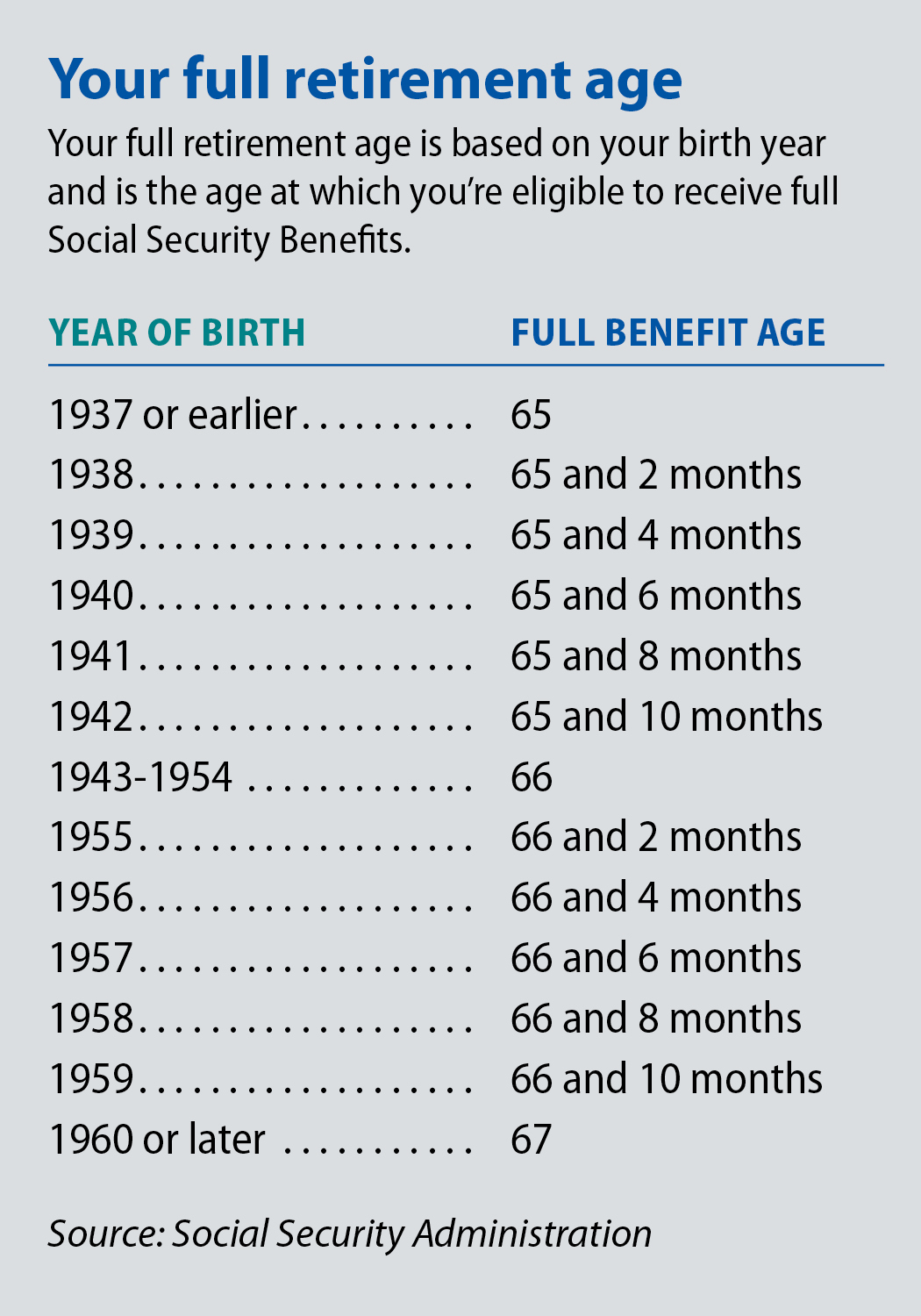
At the heart of the Social Security system is the concept of Full Retirement Age (FRA). This is the age at which you are entitled to 100% of your primary insurance amount (PIA), which is calculated based on your highest 35 years of indexed earnings. For decades, the FRA was 65, but legislative changes in 1983 implemented a gradual increase to account for longer life expectancies.
The Birth Year Breakdown
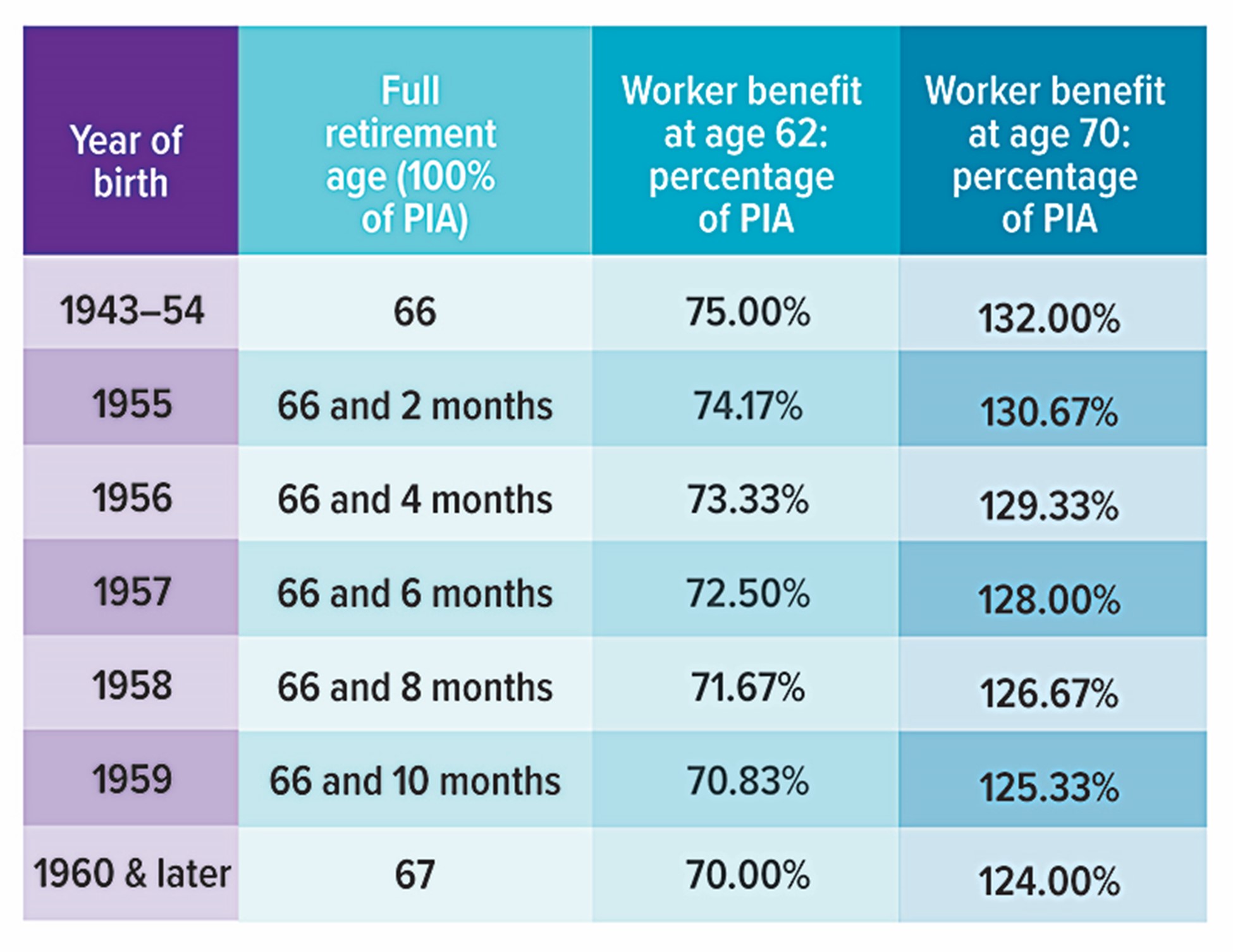
Your FRA is determined strictly by the year you were born. If you were born between 1943 and 1954, your FRA is 66. For those born between 1955 and 1959, the FRA increases in two-month increments for every birth year. For anyone born in 1960 or later, the FRA is 67.
Knowing your FRA is the baseline for all retirement planning. If you claim benefits even one month before reaching this age, your monthly check will be permanently reduced. Conversely, if you wait until after your FRA, your benefit will grow.
Why FRA is the Benchmark
The Social Security Administration (SSA) uses the FRA to maintain actuarial balance. The system is designed so that if an individual lives to their average life expectancy, they should receive roughly the same total lifetime benefit regardless of whether they claim early or late. However, “average” is a statistical abstraction. For the individual investor and retiree, the goal is often to optimize for their specific circumstances, which often means deviating from the FRA based on health and other assets.
The Financial Impact of Early Claims (Age 62 to FRA)
You are eligible to begin receiving Social Security retirement benefits as early as age 62. While the lure of an immediate income stream is strong, it comes with a significant financial penalty that lasts for the rest of your life.
The Reduction Penalty
If your FRA is 67 and you choose to file at 62, your monthly benefit will be reduced by approximately 30%. This reduction is calculated monthly: the benefit is reduced by 5/9 of 1% for each month before FRA, up to 36 months, and 5/12 of 1% for each month beyond that.
For a retiree whose FRA benefit would be $2,000, filing at 62 would result in a monthly check of only $1,400. Over a 20-year retirement, this represents a difference of $144,000 in nominal dollars, not accounting for cost-of-living adjustments (COLA) which are applied as percentages of the base amount.
The Earnings Test
Another critical factor for early filers is the Social Security Earnings Test. If you claim benefits before reaching your FRA and continue to work, the SSA may withhold part of your benefits if your earnings exceed a certain threshold. For 2024, if you are under FRA for the entire year, the SSA deducts $1 from your benefit payments for every $2 you earn above $22,320.
While these withheld benefits are not truly “lost”—they are added back into your monthly payment once you reach FRA—the immediate reduction can disrupt a cash-flow strategy centered on early retirement.
When Early Filing Makes Sense
Despite the reduction, there are scenarios where filing at 62 is the optimal financial move. If you have a chronic health condition that may shorten your life expectancy, claiming early ensures you receive as much from the system as possible. Additionally, if you are unemployed and have no other assets to cover basic living expenses, Social Security can prevent the accumulation of high-interest debt, which would be far more damaging to your net worth than the benefit reduction.
The Power of Patience: Delaying Until Age 70
On the opposite end of the spectrum is the option to delay benefits beyond your FRA. For every month you delay, your future benefit increases. This growth continues until you reach age 70, at which point the benefit reaches its maximum.

Delayed Retirement Credits
The primary incentive for waiting is the “Delayed Retirement Credit.” For those born in 1943 or later, your benefit increases by 8% per year (or 2/3 of 1% per month) for every year you wait past your FRA. This is a guaranteed, simple-interest return that is virtually unmatched by any low-risk investment in the private market.
If your FRA is 67 and you wait until 70, you will receive 124% of your PIA. Using our previous example of a $2,000 FRA benefit, waiting until 70 would boost that monthly check to $2,480. This higher base also makes future COLA increases more impactful, as an annual percentage increase is applied to a larger number.
Longevity Insurance
From a personal finance perspective, Social Security is best viewed as “longevity insurance.” Most private investments carry market risk or interest rate risk. Social Security is a government-backed, inflation-adjusted annuity. By waiting until age 70, you are effectively buying the largest possible “insurance policy” against the risk of outliving your money. If you live into your late 80s or 90s, the cumulative total of those higher payments will far exceed the total you would have received by starting at 62 or 67.
Integrating with Other Assets
Delaying Social Security often requires spending down other assets first, such as a 401(k) or IRA. While it may feel counterintuitive to drain your savings while letting your Social Security sit, the math often favors this approach. Using 401(k) funds to bridge the gap between age 67 and 70 allows your Social Security benefit to “grow” at a guaranteed 8% rate—a return that is difficult to guarantee in the stock or bond markets.
Strategic Factors in Personal Finance and Tax Planning
The “when to claim” decision cannot be made in a vacuum. It must be integrated into a broader financial strategy that considers taxes, spousal dynamics, and total portfolio volatility.
Tax Implications of Social Security
Many retirees are surprised to learn that Social Security benefits can be taxable. Depending on your “combined income” (adjusted gross income + tax-exempt interest + half of your Social Security benefits), you may pay federal income tax on up to 85% of your benefits.
Strategically timing your claim can help manage your tax brackets. For instance, if you have a year with high capital gains or a large Roth conversion, delaying Social Security can keep your taxable income lower for that specific period.
Spousal and Survivor Benefits
For married couples, the decision becomes even more complex. A lower-earning spouse may be eligible for a spousal benefit worth up to 50% of the higher-earning spouse’s FRA amount. However, the most critical consideration for couples is often the survivor benefit.
When one spouse dies, the survivor is entitled to the higher of the two monthly checks. By having the higher-earning spouse wait until 70 to maximize their benefit, they are effectively ensuring that the surviving spouse will have the largest possible income stream for the rest of their life. This is one of the most effective ways to protect a surviving spouse from poverty in extreme old age.
The Break-Even Analysis
Financial advisors often perform a “break-even analysis” to help clients visualize the impact of their choice. This calculation determines the age at which the total cumulative benefits of waiting surpass the total cumulative benefits of claiming early. Generally, the break-even age for waiting until 70 versus claiming at 62 is around 78 to 80 years old. If you believe you will live past age 80, waiting is mathematically the superior choice.
How to Calculate Your Potential Benefit
To make an informed decision, you need accurate data. The Social Security Administration provides several tools to help you estimate your future payments based on your actual earnings history.
Creating a “my Social Security” Account
The first step for any worker is to create an account on the SSA website. Here, you can view your Social Security Statement, which lists your yearly earnings and provides estimates for benefits at ages 62, FRA, and 70. It is vital to review this statement for accuracy, as your future benefits are based entirely on these reported numbers. If an employer failed to report income correctly, your benefit could be lower than it should be.
Accounting for Inflation (COLA)
While the estimates on your statement are in today’s dollars, the actual amount you receive will be adjusted for inflation. The Cost-of-Living Adjustment (COLA) is announced every October and is based on the Consumer Price Index for Urban Wage Earners and Clerical Workers (CPI-W). These adjustments ensure that your purchasing power remains relatively stable, a feature that many private pensions lack.
The Role of Professional Advice
Given the thousands of dollars at stake, many individuals consult with a financial planner who specializes in retirement income. Advanced software can run scenarios that include tax projections, market volatility, and different life expectancy assumptions. This holistic view ensures that your Social Security strategy complements your investment portfolio rather than working against it.
Ultimately, the age at which you get Social Security is a personal decision that balances mathematical optimization with the reality of your health and financial needs. Whether you choose the immediate liquidity of age 62, the standard path of your Full Retirement Age, or the maximized growth of age 70, understanding the trade-offs is the key to a successful and secure retirement.
aViewFromTheCave is a participant in the Amazon Services LLC Associates Program, an affiliate advertising program designed to provide a means for sites to earn advertising fees by advertising and linking to Amazon.com. Amazon, the Amazon logo, AmazonSupply, and the AmazonSupply logo are trademarks of Amazon.com, Inc. or its affiliates. As an Amazon Associate we earn affiliate commissions from qualifying purchases.