
In the world of finance, the question “What is today’s rate?” is rarely as simple as a single number. Depending on whether you are a homebuyer, a saver, a day trader, or a business owner, the answer shifts dramatically. “Today’s rate” is a moving target that dictates the cost of debt, the reward for saving, and the overall temperature of the global economy. In an era defined by rapid shifts in monetary policy and inflationary pressures, understanding how these rates are calculated, why they fluctuate, and how they impact your bottom line is essential for making informed financial decisions.
The Foundation of Finance: Understanding Central Bank Interest Rates
At the heart of every financial rate we encounter is the benchmark rate set by a nation’s central bank. In the United States, this is the Federal Funds Rate, established by the Federal Open Market Committee (FOMC). This figure is the fundamental “price of money.” When the Federal Reserve raises or lowers this rate, it sets off a chain reaction that affects everything from the interest on your credit card to the yield on a government bond.
The Role of the Federal Reserve and the “Prime Rate”
The Federal Funds Rate is the interest rate at which commercial banks lend to one another overnight to maintain their required reserves. While consumers do not borrow at this rate directly, it serves as the basis for the “Prime Rate.” The Prime Rate is typically set about 3% above the Federal Funds Rate and is the starting point for most consumer loan products.
When you ask about today’s rate for a personal loan or a line of credit, you are essentially looking at the Prime Rate plus a margin based on your creditworthiness. Therefore, monitoring the FOMC meetings is not just for Wall Street analysts; it is a vital practice for anyone looking to optimize their debt management.
How Policy Rates Influence Your Borrowing Power
Central banks use interest rates as a tool to manage economic growth and inflation. When inflation is high, central banks raise rates to “cool” the economy by making borrowing more expensive, which reduces spending. Conversely, in a recession, rates are lowered to encourage borrowing and investment.
For the average individual, a “high rate” environment means that the purchasing power of a loan is diminished. A monthly payment that could have secured a $500,000 mortgage at a 3% rate might only cover a $350,000 mortgage at a 7% rate. Understanding the current stance of monetary policy allows you to predict whether rates are likely to rise further or if a pause is on the horizon, enabling better timing for major purchases.
Mortgage Rates and the Real Estate Market Today
For many, “today’s rate” refers specifically to the interest rate on a 30-year fixed-rate mortgage. This is perhaps the most scrutinized number in personal finance because even a fraction of a percentage point can result in tens of thousands of dollars in interest over the life of a loan.
Fixed vs. Adjustable Rates: Making the Right Choice
When investigating today’s mortgage rates, borrowers must choose between stability and initial affordability. Fixed-rate mortgages offer a locked-in interest rate for the duration of the loan, protecting the borrower from future market volatility.
Adjustable-Rate Mortgages (ARMs), on the other hand, typically offer a lower “teaser” rate for an initial period (such as five or seven years) before adjusting based on current market benchmarks. In a high-rate environment, some borrowers opt for ARMs with the hope that they can refinance into a lower fixed rate before the adjustment period begins. However, this strategy carries significant risk if “today’s rate” continues to climb in the future.
External Factors Driving Today’s Housing Costs
Mortgage rates do not move in a vacuum. They are closely tied to the yield on the 10-year Treasury note. When investors feel the economy is risky, they flock to the safety of government bonds, driving prices up and yields down. When the 10-year yield drops, mortgage rates often follow.
Additionally, today’s rates are influenced by the appetite of the secondary mortgage market. Institutional investors buy mortgage-backed securities (MBS); if they demand a higher return to compensate for inflation or economic uncertainty, lenders will raise the rates offered to consumers. Keeping an eye on the “spread”—the difference between the 10-year Treasury yield and the average 30-year mortgage rate—can help you identify whether today’s rates are being driven by broader economic trends or specific stresses in the housing market.
Maximizing Returns: Today’s Rates on Savings and Investments

While high rates are a burden for borrowers, they are a boon for savers. For over a decade, interest rates on traditional savings accounts were near zero, meaning money sitting in the bank effectively lost value against inflation. Today, the landscape has shifted, offering several avenues for low-risk growth.
High-Yield Savings Accounts (HYSA) and Certificates of Deposit (CDs)
The most immediate way to benefit from today’s higher interest rates is through High-Yield Savings Accounts and CDs. Unlike traditional “big bank” savings accounts, which often lag behind market trends, online-focused banks and credit unions frequently adjust their APY (Annual Percentage Yield) to reflect central bank hikes.
Today’s CD rates are particularly attractive for those who can afford to lock their money away for a set period. A “CD ladder” strategy—where you open multiple CDs with different maturity dates—allows you to take advantage of today’s peak rates while maintaining some liquidity as the various accounts mature.
The Yield Curve: What Treasury Rates Tell Us About the Future
For the sophisticated investor, “today’s rate” also refers to the Treasury yield curve. This is a graph that plots the interest rates of government bonds with different maturity dates. In a healthy economy, long-term bonds have higher rates than short-term bonds (a “normal” yield curve).
However, when today’s short-term rates are higher than long-term rates, the curve becomes “inverted.” This is often viewed as a harbinger of a recession. By monitoring the yields on 2-year and 10-year Treasuries, investors can gauge market sentiment regarding future economic growth. If today’s short-term rates are exceptionally high, it may be a signal to shift a portfolio toward more defensive assets.
Currency Exchange Rates in a Globalized Economy
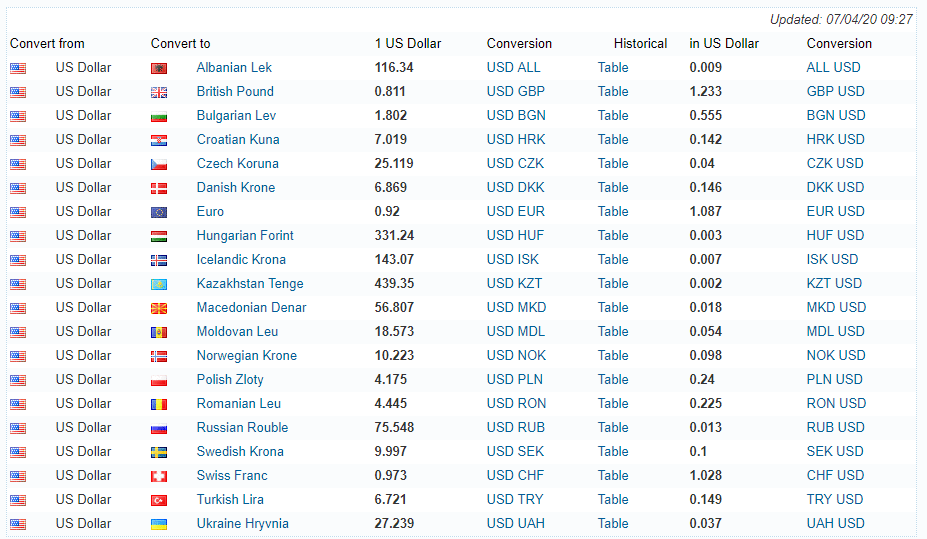
For those involved in international business, online income from foreign clients, or global travel, “today’s rate” refers to the Foreign Exchange (Forex) market. The value of one currency relative to another is a constant fluctuation that impacts the cost of imported goods and the profitability of overseas ventures.
Forex Market Volatility and Its Impact on International Business
Exchange rates are driven by differential interest rates between countries. If the U.S. Federal Reserve maintains high rates while the European Central Bank keeps rates low, the U.S. Dollar tends to strengthen against the Euro. This makes U.S. goods more expensive for Europeans to buy, but makes European vacations cheaper for Americans.
For entrepreneurs earning income in multiple currencies, today’s rate can dictate whether a project is profitable or a loss. Utilizing “hedging” tools or multi-currency accounts can help stabilize the impact of these fluctuations, but it requires a constant awareness of the daily mid-market rate.
Factors That Shift Currency Values Overnight
Beyond interest rates, today’s exchange rates are influenced by geopolitical stability and trade balances. A sudden political upheaval or a major change in a country’s export data can cause a currency to devalue in hours. For those looking to convert large sums of money, “today’s rate” should be compared against the 30-day or 90-day average to determine if the current window is an opportune moment or a period of temporary volatility.
Developing a Strategy to Counter Rate Fluctuations
Navigating the complexities of “today’s rate” requires more than just checking a ticker; it requires a proactive financial strategy. Whether you are dealing with debt or looking to grow your wealth, your approach should be flexible enough to withstand the changing tide of interest rates.
Hedging Against Inflation and Rate Hikes
In a rising-rate environment, the priority is often to lock in fixed rates for debt and move toward variable rates for savings. Consolidating high-interest credit card debt into a fixed-rate personal loan can shield you from the “today’s rate” of tomorrow. On the investment side, consider assets that traditionally perform well when rates are high, such as value stocks or commodities, which can act as a buffer against inflation.

Timing Your Financial Moves in a High-Rate Environment
Ultimately, understanding today’s rate is about perspective. While a 7% mortgage rate feels high compared to the historical lows of 2021, it is relatively moderate compared to the double-digit rates seen in the 1980s.
To thrive, businesses and individuals must focus on “real” rates—the interest rate minus the rate of inflation. If inflation is at 5% and your savings account is paying 4%, your “real” rate is negative 1%. Successful financial planning involves identifying where today’s rates offer a true premium over inflation and positioning your capital accordingly. By remaining vigilant and educated on these shifting indicators, you can transform the question “What is today’s rate?” from a point of uncertainty into a powerful tool for financial growth.
aViewFromTheCave is a participant in the Amazon Services LLC Associates Program, an affiliate advertising program designed to provide a means for sites to earn advertising fees by advertising and linking to Amazon.com. Amazon, the Amazon logo, AmazonSupply, and the AmazonSupply logo are trademarks of Amazon.com, Inc. or its affiliates. As an Amazon Associate we earn affiliate commissions from qualifying purchases.