
In the modern financial landscape, the word “stock” is frequently mentioned in news cycles, dinner conversations, and corporate boardrooms. Yet, despite its ubiquity, many people view the stock market as a complex, impenetrable labyrinth reserved for Wall Street elites. At its core, however, a stock is a remarkably simple concept. It is a fundamental building block of the global economy and one of the most effective tools ever created for personal wealth generation. To understand what a stock is, one must look past the flickering green and red numbers on a screen and see the underlying ownership of real-world businesses.

The Anatomy of Share Ownership
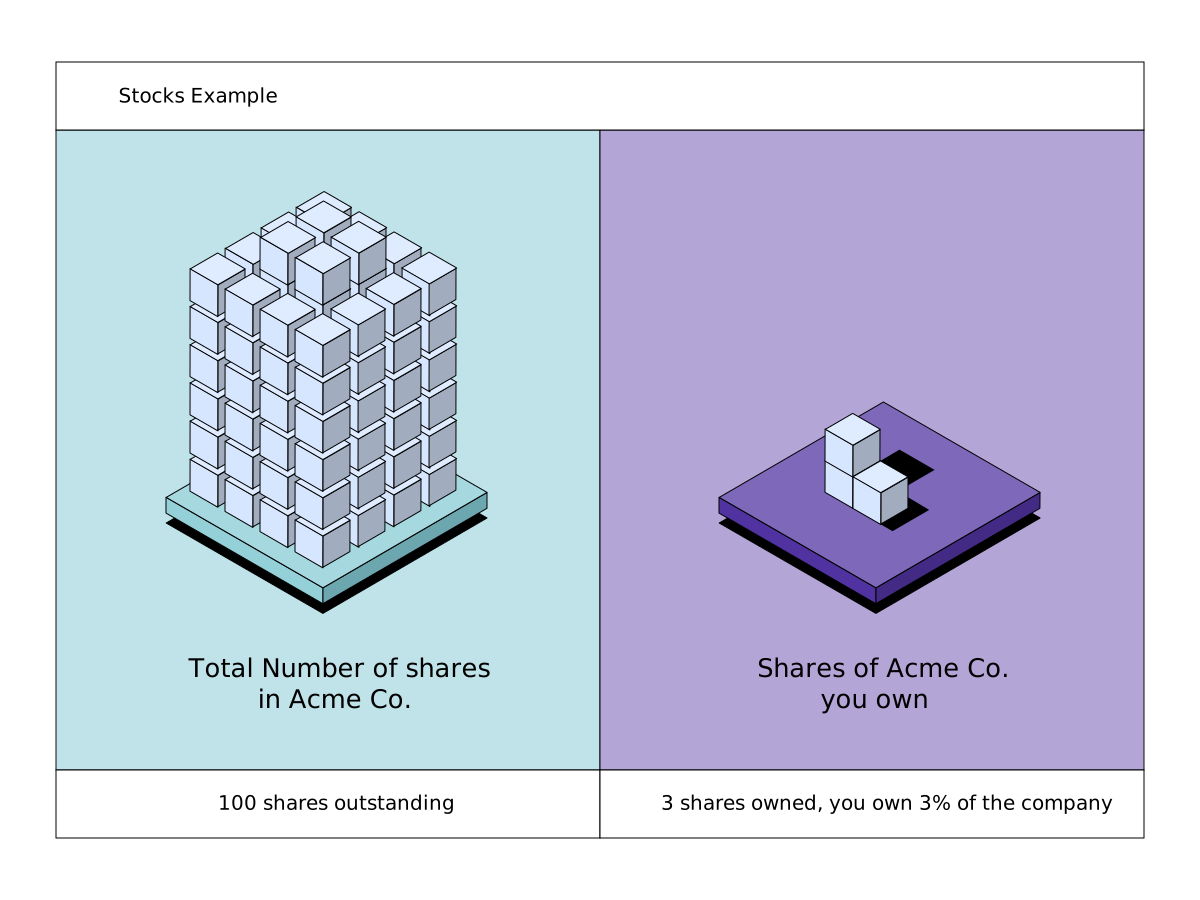
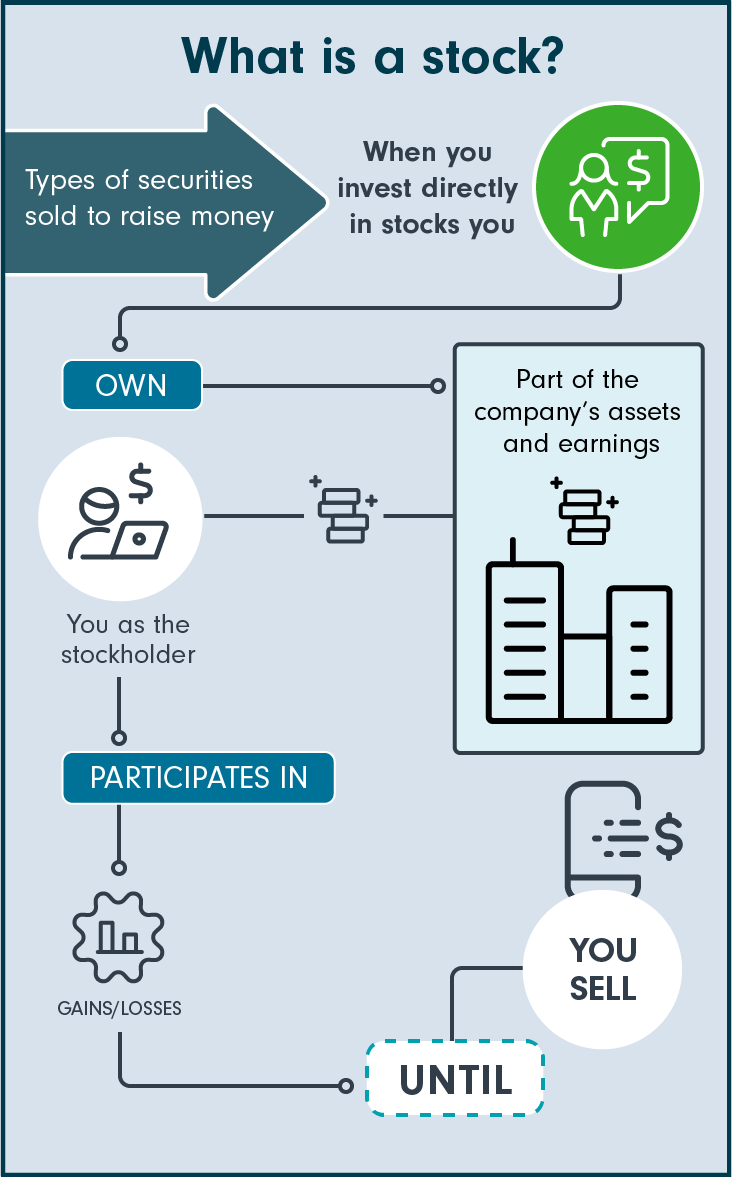
To understand a stock, you must first understand the concept of equity. When you buy a stock, you are purchasing a “share” of a corporation. This isn’t just a speculative bet; it is a legal claim on a portion of that company’s assets and earnings. If a company is a giant pie, a stock represents a single slice. The more slices you own, the larger your stake in the business.
Defining Equity and Ownership
When a company decides to “go public,” it divides its total value into millions of small units called shares. By purchasing even a single share, you become a partial owner, or a shareholder. This relationship is what differentiates stocks from bonds. When you buy a bond, you are a lender to the company; you are owed interest, but you have no say in how the company is run. When you buy a stock, you are an owner. You participate in the company’s triumphs and its failures. If the company develops a revolutionary product and its value doubles, your “slice” of the pie becomes twice as valuable.
The Legal and Financial Rights of a Shareholder
Ownership comes with specific rights, though these vary depending on the type of stock purchased. Most retail investors hold “common stock,” which typically grants them voting rights at annual meetings. Shareholders can vote on the board of directors and major corporate policy changes. Furthermore, as an owner, you have a “residual claim” on the company’s profits. This means that after the company has paid its employees, suppliers, tax authorities, and lenders, any remaining profit belongs to the shareholders. This profit can be reinvested into the company to drive further growth or distributed directly to you in the form of cash payments known as dividends.
Why Companies Issue Stock and Why Investors Buy It
The stock market exists because of a mutual need: companies need capital to grow, and individuals need a way to grow their savings. This symbiotic relationship is the engine of the “Money” niche, driving innovation and providing a path toward financial independence for the average person.
Capital Generation for Business Growth
For a business, issuing stock (often through an Initial Public Offering, or IPO) is a way to raise massive amounts of money without taking on debt. Unlike a bank loan, the money raised from selling stock does not have to be paid back with interest. Instead, the company trades away a piece of its ownership. This capital is often used for research and development, building new factories, expanding into international markets, or acquiring smaller competitors. By selling stock, a company can accelerate its growth far faster than it could by relying solely on its current cash flow.
Wealth Creation and Inflation Hedging for Individuals
For the investor, stocks represent an opportunity to participate in the success of the world’s most profitable enterprises. Historically, the stock market has provided higher returns than savings accounts, gold, or government bonds over long periods. One of the primary reasons people invest in stocks is to hedge against inflation. As the cost of living rises, companies often raise the prices of their products, which helps maintain their profit margins. Consequently, the value of their stock tends to rise alongside inflation, preserving the purchasing power of the investor’s capital. Over decades, the compounding effect of stock price appreciation and dividend reinvestment can turn modest monthly contributions into a substantial retirement nest egg.
The Mechanics of the Stock Market
While the concept of ownership is straightforward, the environment in which these ownership stakes are traded—the stock market—operates through a specific set of rules and structures. Understanding these mechanics is crucial for navigating the world of personal finance.
Primary vs. Secondary Markets
The stock market is divided into two main arenas. The “Primary Market” is where stocks are created. This is where companies sell shares to the public for the first time via an IPO. In this transaction, the money goes directly from the investors to the company. However, the vast majority of daily trading happens on the “Secondary Market.” When you buy shares of a well-known company like Apple or Coca-Cola through a brokerage app, you aren’t buying them from the company itself; you are buying them from another investor who wants to sell. The stock exchange (such as the NYSE or NASDAQ) acts as a highly regulated marketplace that facilitates these trades, ensuring that the process is fair, transparent, and efficient.
Common vs. Preferred Stock
Not all stocks are created equal. As mentioned, “Common Stock” is what most people mean when they talk about the stock market. It offers the highest potential for long-term capital gains but carries the most risk; if a company goes bankrupt, common shareholders are the last in line to get paid. “Preferred Stock,” on the other hand, functions more like a hybrid between a stock and a bond. Preferred shareholders usually do not have voting rights, but they receive a fixed dividend that must be paid out before any dividends are paid to common shareholders. In the event of liquidation, preferred shareholders also have a higher claim on assets than common shareholders.
Key Metrics for Evaluating Stock Value
To succeed in the “Money” niche, one must move beyond the “buy and hope” strategy. Professional investors and savvy individuals use specific metrics to determine whether a stock is a bargain or overpriced. Understanding these numbers is the difference between gambling and investing.
Market Capitalization and P/E Ratios
Market Capitalization, or “Market Cap,” is the total dollar value of all a company’s outstanding shares. It is calculated by multiplying the current share price by the number of shares available. This tells you the size of the company: Small-cap companies (under $2 billion) often have high growth potential but high risk, while Large-cap companies (over $10 billion) are usually more stable.
Another vital tool is the Price-to-Earnings (P/E) ratio. This is calculated by dividing the stock price by its annual earnings per share. It essentially tells you how much you are paying for every $1 of profit the company makes. A high P/E might suggest that investors expect massive growth in the future, while a low P/E might indicate that the stock is undervalued or that the company is facing challenges.
Dividend Yields and Earnings Per Share
Earnings Per Share (EPS) is a company’s profit divided by the number of outstanding shares. It is a direct indicator of profitability. If EPS is growing year over year, the company is generally considered healthy. For those seeking regular income, the “Dividend Yield” is the key. This is the annual dividend payment expressed as a percentage of the stock price. If a stock costs $100 and pays $3 in dividends per year, its yield is 3%. For many investors, particularly those in or near retirement, a portfolio of high-quality dividend-paying stocks provides a steady stream of “passive income” that requires no active work.
Building a Long-term Investment Strategy
The ultimate goal of understanding what a stock is is to use that knowledge to build a secure financial future. Investing in stocks is not about getting rich overnight; it is about the disciplined accumulation of assets over time.
The Power of Compound Interest
Albert Einstein reportedly called compound interest the “eighth wonder of the world.” In the context of stocks, compounding happens when your investments generate earnings, and those earnings are reinvested to generate their own earnings. Over years and decades, this creates an exponential growth curve. The most important factor in this equation isn’t how much money you start with, but how much time you give your money to grow. This is why financial advisors emphasize starting early; even small amounts invested in your 20s can far outperform much larger amounts invested in your 40s.
Diversification and Risk Management
While stocks are powerful wealth builders, they are not without risk. Markets can be volatile, and individual companies can fail. The primary defense against this is diversification—the practice of spreading your investments across many different companies, industries, and geographic regions. Rather than picking a single “winning” stock, many modern investors use Index Funds or Exchange-Traded Funds (ETFs). These are baskets of hundreds of different stocks. By owning an index fund that tracks the S&P 500 (the 500 largest companies in the US), you ensure that your financial fate isn’t tied to a single CEO or a single product launch, but rather to the collective growth of the entire economy.
In conclusion, a stock is more than just a ticker symbol; it is a vehicle for participation in the global economy. By understanding the rights of ownership, the mechanics of the market, and the metrics of value, individuals can transform from passive consumers into active owners. In the world of business finance, stocks remain the most accessible and proven path for individuals to build lasting wealth and achieve financial freedom.
aViewFromTheCave is a participant in the Amazon Services LLC Associates Program, an affiliate advertising program designed to provide a means for sites to earn advertising fees by advertising and linking to Amazon.com. Amazon, the Amazon logo, AmazonSupply, and the AmazonSupply logo are trademarks of Amazon.com, Inc. or its affiliates. As an Amazon Associate we earn affiliate commissions from qualifying purchases.