
For decades, the age of 65 was synonymous with retirement in the United States. It was the milestone when workers hung up their hats, received a gold watch, and began collecting their full Social Security checks. However, the landscape of personal finance and federal policy has shifted significantly. Today, claiming Social Security at age 65 is technically considered “early” for almost everyone currently in the workforce.
Understanding how much you will receive at age 65 requires a deep dive into the mechanics of the Social Security Administration (SSA) formulas, your personal earnings history, and the strategic implications of timing. This guide will break down the financial variables that determine your monthly check and help you decide if age 65 is the right moment to flip the switch on your retirement income.
Understanding the Fundamentals of Social Security Calculations
Before you can estimate your benefit at age 65, you must understand how the government determines your “Primary Insurance Amount” (PIA). Social Security is not a simple savings account; it is a social insurance program that uses a weighted formula to replace a portion of your pre-retirement income.
The Role of Your Primary Insurance Amount (PIA)
Your PIA is the base figure the SSA uses to determine your benefit. It is the amount you would receive if you waited until your Full Retirement Age (FRA) to claim. To calculate this, the SSA looks at your entire work history, but they don’t count every year. Instead, they focus on your 35 highest-earning years. If you worked for fewer than 35 years, the SSA averages in zeros for the remaining years, which can significantly drag down your monthly payment.
How the SSA Calculates Your Average Indexed Monthly Earnings (AIME)
To ensure that your earnings from 30 years ago are comparable to today’s dollar value, the SSA “indexes” your past wages. This adjustment accounts for changes in average wage levels over time. Once your top 35 years are indexed, they are averaged and divided by 12 to find your Average Indexed Monthly Earnings (AIME).
The SSA then applies “bend points” to this average. For 2024, the formula takes 90% of the first portion of your AIME, 32% of the middle portion, and 15% of the earnings above the top threshold. This progressive structure is designed to provide a higher percentage of income replacement for lower-wage earners than for high-wage earners.
The Impact of Claiming at Age 65 vs. Your Full Retirement Age (FRA)
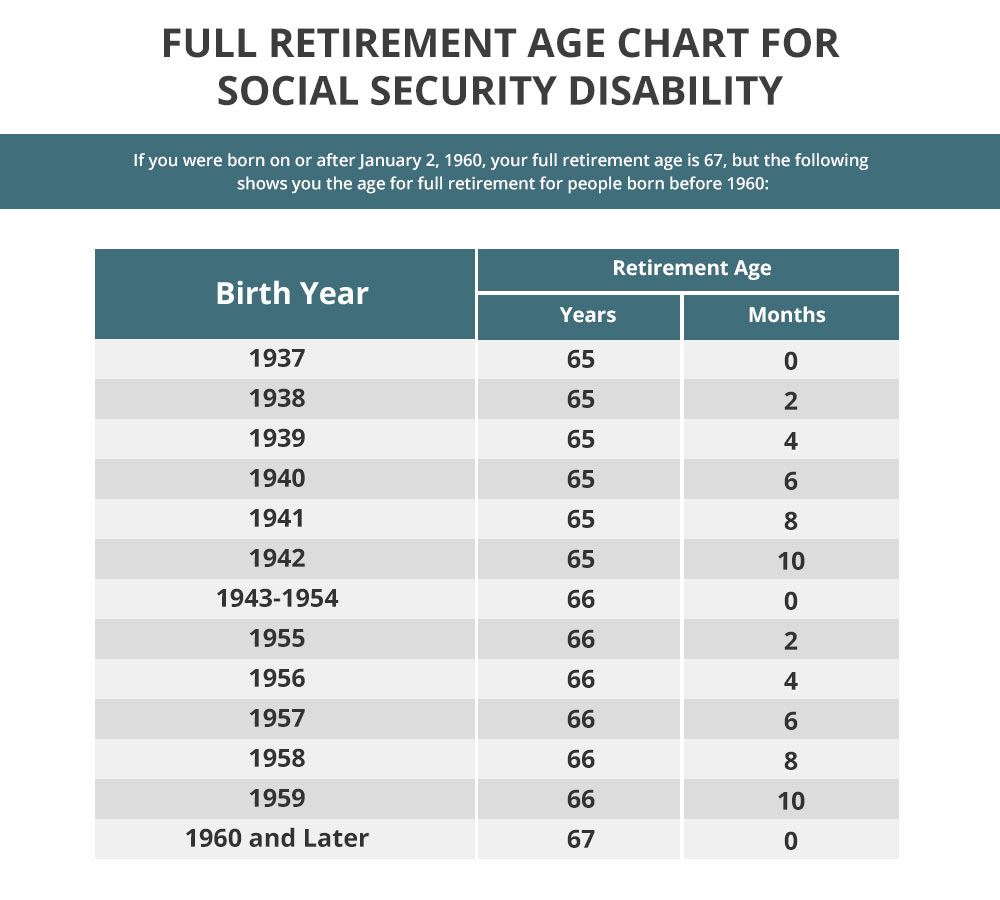
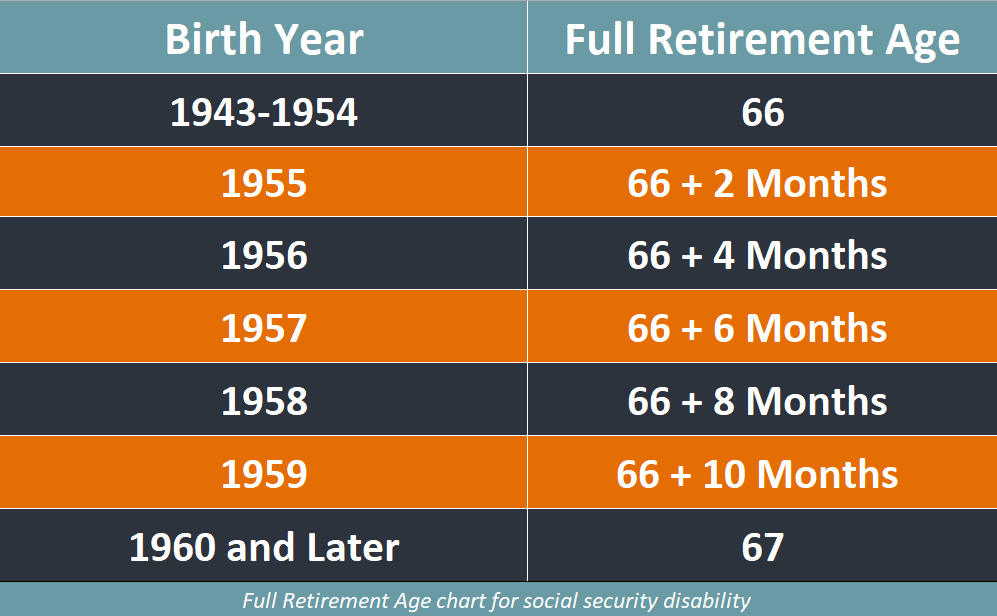
The most critical factor in answering “how much will I get at 65” is identifying your Full Retirement Age. For anyone born in 1960 or later, the FRA is 67. If you were born between 1943 and 1954, it is 66. For those born between 1955 and 1959, the FRA increases in two-month increments.
Understanding Full Retirement Age for Different Birth Years
If your FRA is 67 and you choose to claim at age 65, you are claiming 24 months early. This results in a permanent reduction of your monthly benefit. The SSA reduces benefits by 5/9 of 1% for each month before the FRA, up to 36 months. If you claim more than 36 months early, the reduction is 5/12 of 1% per month.
For someone with an FRA of 67, claiming at age 65 means receiving approximately 86.7% of their PIA. If your calculated full benefit was $2,000, claiming at 65 would reduce that check to roughly $1,734. This reduction is locked in for life, though you will still receive annual Cost-of-Living Adjustments (COLA).
The Permanent Reduction for Filing at 65
It is a common misconception that your benefit “bumps up” to the full amount once you reach your FRA. This is not the case. By choosing to take payments two years before your FRA, you are making a trade-off: you receive 24 additional monthly checks, but each check is significantly smaller than it would have been had you waited. Over a long retirement, this “early filing penalty” can amount to tens of thousands of dollars in lost cumulative income.
Estimating Your Benefit: Tools and Formulas
While the math behind Social Security is complex, there are several ways to arrive at a precise estimate. Financial planning requires working with real numbers rather than averages, as Social Security often makes up 30% to 50% of a retiree’s total income.
Using the Social Security Quick Calculator and My Social Security Account
The most accurate way to find your number is to create a “my Social Security” account on the SSA.gov website. This portal provides your actual earnings record and gives personalized estimates based on your real-time data.
If you prefer a “what-if” scenario, the SSA’s Quick Calculator allows you to input your current earnings and projected retirement date. For a 65-year-old high earner (someone who has consistently earned at or above the taxable maximum, which is $168,600 in 2024), the maximum possible benefit at age 65 would be notably lower than the maximum benefit at age 70. In 2024, the maximum benefit for someone retiring at FRA is $3,822, but that number drops if you retire at 65.
The Impact of High-Earning Years and Work History
If you are 62 or 63 and considering retirement at 65, your current earnings can still move the needle. Because the SSA uses the top 35 years of your career, high earnings in your 60s can replace lower-earning years from your 20s. This is particularly relevant for professionals whose peak earning years occur right before retirement. Increasing your AIME in these final years can slightly offset the reduction you face by claiming at 65.
Factors That Can Reduce or Increase Your Monthly Check
The number you see on your SSA statement is not necessarily the amount that will land in your bank account. Several “Money” factors—taxes, previous employment types, and current work status—can alter the final figure.
Taxation of Social Security Benefits
Many retirees are surprised to find that their Social Security is taxable. If your “combined income” (adjusted gross income + tax-exempt interest + half of your Social Security benefits) exceeds $25,000 for individuals or $32,000 for couples filing jointly, you will pay federal income tax on a portion of your benefits. Up to 85% of your benefit can be subject to tax, which effectively lowers your net “take-home” pay.
The Windfall Elimination Provision (WEP) and Government Pension Offset (GPO)
If you worked in a job where you did not pay Social Security taxes—such as a government position with a pension—your Social Security benefit may be reduced. The WEP affects your own benefits, while the GPO affects spousal or survivor benefits. If you fall into this category, the standard estimates provided by the SSA may be overinflated, and you should use a specialized WEP/GPO calculator to find your actual benefit at 65.
Working While Receiving Benefits
If you claim at age 65 but continue to work, you are subject to the Social Security Earnings Test. In 2024, if you are under your FRA, the SSA deducts $1 from your benefits for every $2 you earn above $22,320. While these “withheld” benefits are eventually returned to you in the form of a higher monthly check once you reach FRA, it can create a short-term cash flow crunch for those who expected both a full paycheck and a full Social Security check.
Strategic Planning: Is Age 65 the Right Time for You?
Deciding whether to take Social Security at 65 is a fundamental exercise in personal finance and risk management. It requires balancing your immediate need for cash flow against the risk of outliving your assets.
Health, Longevity, and Break-Even Analysis
The “break-even point” is the age at which the total value of higher monthly payments (from waiting) surpasses the total value of lower monthly payments (from starting early). Generally, the break-even age between claiming at 65 versus waiting until 67 is roughly 77 to 80 years old.
If you are in excellent health and have a family history of longevity, waiting until 67 or even 70 (to earn Delayed Retirement Credits) is often the better financial move. However, if you have immediate health concerns or a pressing need for liquidity to pay off high-interest debt, claiming at 65 can be a logical choice.
Coordinating with Spousal Benefits
For married couples, the decision is even more complex. You must consider the “Survivor Benefit.” When one spouse passes away, the survivor receives the higher of the two checks. If the higher earner claims at 65, they are effectively “locking in” a lower survivor benefit for their spouse. Strategically, it often makes sense for the lower-earning spouse to claim at 62 or 65, while the higher-earning spouse waits until 70 to maximize the eventual survivor benefit.

Conclusion: Weighing the Opportunity Cost
Ultimately, the amount of Social Security you get at age 65 is a reflection of your 35-year earning history, adjusted for the early filing penalty. While the average monthly payment for retirees is approximately $1,900, your specific number will depend on your AIME and your FRA.
Before making the decision, look at your retirement portfolio as a whole. Consider Social Security as the “fixed-income” portion of your strategy. If your private investments are aggressive, having the guaranteed, inflation-adjusted floor of Social Security is vital. By calculating your benefits accurately and understanding the long-term impact of the age 65 reduction, you can make a choice that ensures financial security for the rest of your life.
aViewFromTheCave is a participant in the Amazon Services LLC Associates Program, an affiliate advertising program designed to provide a means for sites to earn advertising fees by advertising and linking to Amazon.com. Amazon, the Amazon logo, AmazonSupply, and the AmazonSupply logo are trademarks of Amazon.com, Inc. or its affiliates. As an Amazon Associate we earn affiliate commissions from qualifying purchases.