
The digital landscape has evolved from a niche marketplace into the primary engine of global commerce. For the aspiring entrepreneur, starting an online business represents one of the most effective ways to build wealth, achieve financial independence, and create a scalable asset with relatively low entry barriers. However, the ease of entry often masks the financial complexity required to sustain and grow a digital enterprise.
To succeed in the modern economy, one must view an online business not just as a hobby or a passion project, but as a rigorous financial vehicle. This guide focuses on the “Money” aspect of your digital journey: from selecting a high-margin business model to managing cash flow and optimizing for long-term profitability.
1. Evaluating Profitable Online Business Models
The first step in starting an online business is selecting a model that aligns with your financial goals and risk tolerance. In the realm of online income, not all models are created equal regarding profit margins and scalability.
E-commerce and Dropshipping
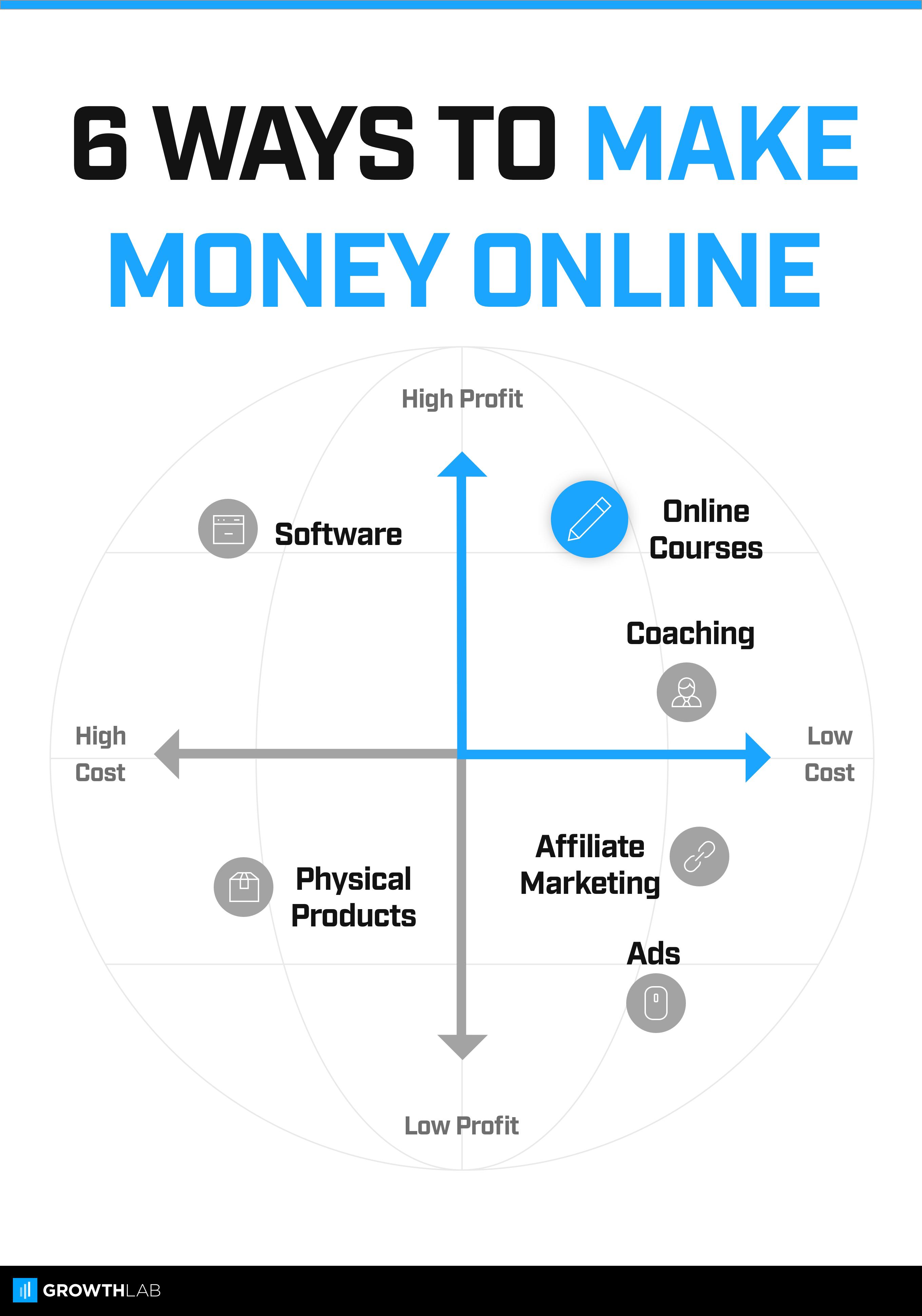
E-commerce remains a cornerstone of the digital economy. The traditional model involves purchasing inventory and selling it at a markup. While this requires more upfront capital, it offers higher profit margins and better control over the customer experience. Alternatively, dropshipping—where you act as a middleman and the supplier ships directly to the customer—minimizes your initial financial risk. The trade-off is significantly lower margins and less control over supply chain costs. When choosing this path, focus on high-ticket items or niche products with a high perceived value to ensure your marketing costs don’t swallow your profits.
Service-Based Consulting and Digital Products
For those looking to maximize ROI with minimal overhead, service-based businesses or digital products are ideal. Consulting, coaching, or freelance expertise relies on “intellectual capital” rather than physical goods. Once you establish authority, your margins can reach as high as 80-90%.
Digital products—such as online courses, e-books, or software-as-a-service (SaaS)—take this a step further. While they require a significant investment of time (and sometimes capital) to develop, the marginal cost of selling to the next customer is nearly zero. This creates a scalable income stream that can eventually become passive.
Subscription Models and Recurring Revenue
The “holy grail” of online business finance is recurring revenue. Subscription-based models—whether they provide digital tools, exclusive content, or monthly physical boxes—provide financial predictability. This stability allows you to forecast future earnings with greater accuracy, making it easier to plan for reinvestment and growth. Investors also value subscription businesses at much higher multiples than one-off sales companies, making this the most lucrative model if you ever plan to sell your business.
2. Capitalization and Financial Planning for Your Digital Venture
A common mistake in the online world is failing to treat the startup phase with financial discipline. Even though you can start a business for a few hundred dollars, understanding your “burn rate” and “runway” is essential for survival.
Estimating Startup Costs and Burn Rate
Your startup costs are the initial expenses required to get the business off the ground—domain registration, website hosting, initial inventory, and legal fees. Your burn rate is the amount of money you spend each month to keep the business running before it becomes profitable. To build a sustainable business, you should have at least six months of “runway” (operating capital) in reserve. This financial cushion prevents you from making desperate, short-term decisions that could hurt your brand’s long-term value.
Bootstrapping vs. External Funding
“Bootstrapping” means funding your business through personal savings and early sales. This is the most common path for online entrepreneurs because it allows you to retain 100% ownership and control. However, if your business requires significant technical development (like a SaaS platform) or large inventory orders, you may need to look at external funding. This could include small business loans, angel investors, or venture capital. Keep in mind that taking on debt or equity partners changes the financial math of your business, requiring a much higher growth rate to satisfy stakeholders.

Setting Up a Tax-Efficient Business Structure
From the moment you earn your first dollar, you must consider the tax implications. Registering your business as a legal entity (such as an LLC or a Corporation) not only protects your personal assets but also opens the door to significant tax deductions. Expenses like home office costs, software subscriptions, and even a portion of your internet bill can often be deducted from your taxable income. Consulting with a financial professional early on can save you thousands in unnecessary tax payments as your revenue grows.
3. Strategic Revenue Generation and Pricing Models
Revenue is the lifeblood of your business, but generating it requires more than just putting a “Buy Now” button on a website. You must master the math of customer acquisition and value-based pricing.
Competitive and Value-Based Pricing Strategies
Many new entrepreneurs fall into the trap of “cost-plus” pricing—taking the cost of their product and adding a small margin. However, in the online space, value-based pricing is often more effective. This involves pricing your product based on the result or transformation it provides to the customer.
For example, a $500 course that teaches someone how to save $5,000 on their taxes is an easy financial sell because the ROI is clear. Furthermore, implementing tiered pricing (Basic, Pro, and Premium levels) allows you to capture different segments of the market and increases your Average Order Value (AOV).
Customer Acquisition Cost (CAC) vs. Lifetime Value (LTV)
To determine if your business is financially healthy, you must understand the relationship between CAC and LTV.
- CAC (Customer Acquisition Cost): The total amount spent on marketing and sales divided by the number of new customers acquired.
- LTV (Lifetime Value): The total revenue you expect to earn from a single customer over the entire duration of your relationship.
A healthy online business typically aims for an LTV that is at least three times the CAC (a 3:1 ratio). If you are spending $50 to acquire a customer who only spends $40, you are not growing; you are buying your way into bankruptcy. Monitoring these metrics allows you to identify which marketing channels are profitable and which are draining your capital.
4. Optimizing Business Finance and Long-Term Scalability
Starting an online business is a sprint, but scaling it is a marathon. To move from a side hustle to a high-revenue enterprise, you must master the art of financial optimization.
Managing Cash Flow and Working Capital
Cash flow is the timing of money moving in and out of your business. It is possible for a business to be “profitable” on paper but still fail because it runs out of cash. This often happens in product-based businesses where cash is tied up in inventory that hasn’t sold yet. Utilizing financial tools like accounting software (QuickBooks, Xero) and maintaining a dedicated business bank account are non-negotiable steps. These tools provide real-time data, allowing you to see exactly where your money is going and identify “leaks” in your spending.
Reinvesting Profits for Exponential Growth
One of the biggest financial traps for online entrepreneurs is “lifestyle creep”—using early profits to fund personal luxuries. To achieve true wealth, you must view your profits as “fuel” for your business engine.
Reinvesting in automation tools, hiring virtual assistants, or increasing your advertising budget creates a compounding effect. For instance, investing $1,000 back into a high-performing ad campaign might return $3,000 in revenue. By continuously cycling your profits back into growth-oriented activities, you move from active labor to a system-driven business that generates income regardless of how many hours you work.
Preparing for an Exit Strategy
While it may seem premature to think about selling a business you just started, having an exit strategy is a smart financial move. Online businesses are often valued based on a multiple of their annual profit (SDE – Seller’s Discretionary Earnings). By keeping meticulous financial records, diversifying your traffic sources, and building a business that can run without your constant presence, you increase the “sellability” of your asset. Whether you choose to hold the business for decades or sell it for a seven-figure sum in five years, building with an exit in mind ensures that every financial decision you make adds tangible value to your net worth.
In conclusion, starting an online business is a powerful strategy for building a modern financial portfolio. By selecting the right model, planning your capital usage, mastering the metrics of acquisition, and reinvesting with discipline, you can transform a digital idea into a robust engine of wealth. The internet provides the platform, but your financial strategy will determine the height of your success.
aViewFromTheCave is a participant in the Amazon Services LLC Associates Program, an affiliate advertising program designed to provide a means for sites to earn advertising fees by advertising and linking to Amazon.com. Amazon, the Amazon logo, AmazonSupply, and the AmazonSupply logo are trademarks of Amazon.com, Inc. or its affiliates. As an Amazon Associate we earn affiliate commissions from qualifying purchases.