
In the vast and dynamic world of finance, numbers tell stories – stories of growth, decline, opportunity, and challenge. While absolute figures provide a snapshot, it is the rate of change that often paints the most comprehensive picture, especially when comparing performance across different periods or entities. This is where the concept of a percentage increase becomes indispensable. From tracking personal income growth and evaluating investment returns to analyzing business revenue surges and understanding economic indicators, mastering the calculation and interpretation of percentage increase is a fundamental skill for anyone navigating the financial landscape. It’s more than just a mathematical operation; it’s a powerful lens through which to view progress, identify trends, and make informed decisions that shape our financial futures.
Understanding the Essence of Percentage Increase in Finance
Before diving into the mechanics, it’s crucial to grasp why percentage increases hold such sway in financial analysis. They provide a standardized way to compare disparate figures, offering context that raw numbers simply cannot convey.
Why Percentage Increases Matter More Than Raw Numbers
Imagine an investment that grew by $1,000. On its own, this sounds positive. But what if the initial investment was $10,000? That’s a 10% increase. What if the initial investment was $100,000? That’s only a 1% increase. The absolute $1,000 gain is the same, but its significance varies dramatically based on the starting point. Percentage increases normalize this comparison, allowing us to understand the rate of growth, which is far more insightful for evaluating performance and potential. They provide context, enable comparability across different scales, and highlight the true magnitude of change relative to a baseline. This is vital whether you’re comparing the growth of two different stocks, assessing your salary increase against inflation, or benchmarking your business’s sales growth against industry averages.
Core Concepts: Initial Value, Final Value, and the Change
At its heart, calculating a percentage increase involves three core components:
- Initial Value (or Old Value): This is the starting point, the figure before the change occurred. It serves as the baseline for our calculation.
- Final Value (or New Value): This is the figure after the change has taken place.
- The Change (or Difference): This is simply the Final Value minus the Initial Value. For an increase, this number will always be positive.
Understanding these components is the first step towards accurately quantifying growth and applying it effectively in various financial scenarios.
The Fundamental Formula for Financial Growth
The beauty of the percentage increase lies in its elegant simplicity, captured in a single, powerful formula. Mastering this formula is your gateway to unlocking deeper financial insights.
Deconstructing the Percentage Increase Formula
The universal formula to calculate a percentage increase is as follows:
Percentage Increase = ((Final Value – Initial Value) / Initial Value) * 100
Let’s break down each part of this equation:
(Final Value - Initial Value): This first step determines the absolute change or the raw increase in the value. A positive result indicates an increase./ Initial Value: Dividing the absolute change by the Initial Value expresses this change as a decimal fraction of the original amount. This tells us what proportion of the original value the increase represents.* 100: Multiplying the result by 100 converts this decimal fraction into a percentage, making it easily understandable and comparable.
This formula is robust and applicable across an incredibly wide range of financial calculations, from the micro-level of personal budgeting to the macro-level of economic analysis.
Practical Application: A Step-by-Step Example
Let’s walk through a common financial scenario to illustrate the formula in action.
Scenario: Investment Growth
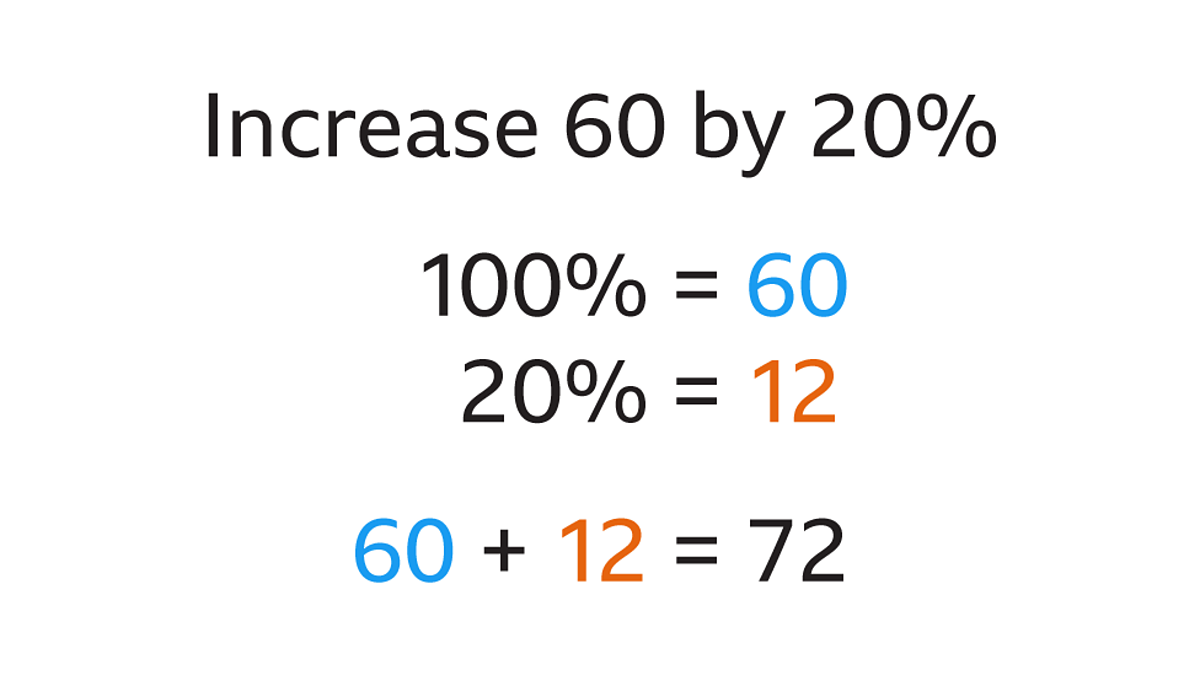
You invested $5,000 in a particular stock at the beginning of the year. By the end of the year, its value had grown to $5,750. What was your percentage increase in investment value?
- Identify the Initial Value: Initial Value = $5,000
- Identify the Final Value: Final Value = $5,750
- Calculate the Absolute Change: $5,750 – $5,000 = $750
- Divide the Change by the Initial Value: $750 / $5,000 = 0.15
- Multiply by 100 to get the Percentage: 0.15 * 100 = 15%
Therefore, your investment experienced a 15% increase over the year. This 15% figure is much more powerful than simply knowing you made $750, as it allows you to compare this performance to other investments, market benchmarks, or your own financial goals.
Real-World Applications Across the Financial Spectrum
The utility of percentage increase extends far beyond simple investment tracking. It’s a pervasive tool across every facet of finance, providing critical insights for individuals, businesses, and economists alike.
Personal Finance: Tracking Your Wealth and Income Growth
For individuals, understanding percentage increases is fundamental to managing and growing personal wealth.
- Salary Raises: If your annual salary increases from $60,000 to $63,000, that’s a 5% increase – crucial for assessing if your income is keeping pace with inflation or your cost of living.
- Savings Interest: A savings account offering a 0.5% annual percentage yield (APY) helps you calculate the growth of your deposited funds.
- Investment Portfolio Performance: Beyond single stocks, you’ll use percentage increases to evaluate the overall growth of your retirement accounts, mutual funds, and other investment vehicles over various periods. It helps you see if your portfolio is meeting your financial objectives.

Investing: Gauging Returns and Market Movements
In the investment world, percentage increase is the language of performance.
- Stock Price Appreciation: The primary measure of a stock’s success is its percentage increase over time.
- Mutual Fund Returns: Fund managers report returns as percentage increases (or decreases) to show how much value their funds have generated for investors.
- Compound Annual Growth Rate (CAGR): For investments over multiple periods, CAGR uses percentage increase principles to smooth out volatility and provide a more representative annual growth rate. This is particularly useful for understanding long-term investment performance.
Business Finance: Analyzing Sales, Profit, and Cost Efficiency
For businesses, percentage increases are vital for operational analysis, strategic planning, and assessing financial health.
- Revenue Growth: A key indicator of business success is the percentage increase in sales revenue from one quarter or year to the next.
- Profit Margin Improvement: Calculating the percentage increase in net profit allows businesses to understand the effectiveness of their cost management and pricing strategies.
- Customer Acquisition Cost (CAC) Reduction: A percentage decrease in CAC, or increase in customer lifetime value (CLTV), are critical metrics for marketing and sales teams.
- Productivity Gains: Measuring the percentage increase in output per employee or unit of time can highlight operational efficiencies.
Economic Indicators: Interpreting Inflation and GDP Growth
While slightly broader, understanding percentage increase is also essential for interpreting macroeconomic data.
- Inflation Rate: The percentage increase in the Consumer Price Index (CPI) over a period indicates the rate of inflation, directly impacting purchasing power.
- Gross Domestic Product (GDP) Growth: The percentage increase in a nation’s GDP reflects the overall health and growth of its economy, influencing government policy and business investment decisions.
Beyond the Basic Calculation: Nuances and Advanced Considerations
While the core formula is straightforward, real-world financial analysis often requires a deeper understanding of context and related concepts.
Annualized Growth Rates vs. Short-Term Spikes
A percentage increase can be calculated over any timeframe – a day, a month, a year, or a decade. It’s crucial to specify the period. An investment that jumps 5% in a week is very different from one that gains 5% in a year. Annualizing returns provides a standard basis for comparison, allowing you to evaluate investments consistently regardless of their holding period. This prevents misinterpretation of short-term volatility as sustainable long-term growth.
The Impact of Compounding on Percentage Increase
Compounding is the process where returns on an investment begin to earn returns themselves, leading to exponential growth. When an asset experiences a percentage increase, and those new, higher values then become the base for subsequent percentage increases, the overall growth accelerates significantly over time. Understanding compounding magnifies the power of even modest percentage increases over the long run, making it a cornerstone of long-term financial planning and investing.
Dealing with Decreases: The Sister Concept of Percentage Decrease
While our focus here is on increase, it’s worth noting that the formula for a percentage decrease is very similar. You would simply swap the positions of the Initial and Final Values in the numerator (Initial Value – Final Value) to ensure a positive difference, then divide by the Initial Value and multiply by 100. Understanding both increases and decreases is vital for a holistic financial picture.
When to Use Absolute Numbers vs. Percentages
Knowing when to use percentages versus absolute numbers is a mark of a skilled financial analyst. Absolute numbers are important for understanding the sheer scale of an amount (e.g., “we made an extra $1 million this quarter”). Percentages, however, excel at showing relative growth, efficiency, or impact (e.g., “our profits increased by 20%,” indicating strong performance relative to the previous period). Often, presenting both offers the most complete and nuanced understanding.
Leveraging Percentage Increase for Informed Financial Decisions
The ability to calculate and interpret percentage increases isn’t just an academic exercise; it’s a practical skill that empowers better financial decision-making.
Setting Realistic Financial Goals and Benchmarks
Whether it’s aiming for a 7% annual return on your investment portfolio, a 10% increase in your savings rate year-on-year, or a 15% growth in business revenue, percentage increases provide concrete targets. They allow you to quantify your aspirations and set realistic benchmarks against which to measure progress, adjusting your strategies as needed.
Identifying Trends and Making Projections
By consistently tracking percentage increases over time, you can identify upward or downward trends in your personal finances, investments, or business operations. This trend analysis is invaluable for forecasting future performance and making proactive decisions. For instance, consistent 8% quarterly sales growth might project a significant annual increase, allowing a business to plan for expansion.

Performance Evaluation and Strategic Adjustments
Percentage increases serve as a critical tool for evaluating performance. Are your investments outperforming inflation? Is your business’s profit growth surpassing industry averages? Is your salary increase keeping pace with your peers? By answering these questions through percentage analysis, you can assess success, identify areas for improvement, and make strategic adjustments to your financial plans or business operations. It’s the metric that often drives decisions to reallocate investments, adjust pricing strategies, or seek new income streams.
Mastering the art of finding a percentage increase transforms raw data into actionable intelligence. It provides clarity, context, and a universal language for understanding growth across all financial domains. For individuals, investors, and businesses alike, this fundamental mathematical concept is an indispensable tool, empowering you to navigate the complexities of money with greater confidence and strategic insight. By integrating this skill into your financial toolkit, you position yourself to not just observe financial changes, but to actively shape and optimize your financial future.
aViewFromTheCave is a participant in the Amazon Services LLC Associates Program, an affiliate advertising program designed to provide a means for sites to earn advertising fees by advertising and linking to Amazon.com. Amazon, the Amazon logo, AmazonSupply, and the AmazonSupply logo are trademarks of Amazon.com, Inc. or its affiliates. As an Amazon Associate we earn affiliate commissions from qualifying purchases.