
Selling a vehicle is more than just a logistical task; it is a significant financial transaction that requires a strategic approach to ensure you aren’t leaving money on the table. For most individuals, a car is one of the largest depreciating assets they own. When the time comes to liquidate that asset, the goal is clear: maximize the return on investment (ROI) and minimize the friction of the exchange.
In the world of personal finance, the process of selling a car should be treated with the same rigor as managing a stock portfolio or selling real estate. It involves market analysis, asset preparation, and skilled negotiation. This guide explores the financial intricacies of selling your car, providing a roadmap to turn your vehicle into the maximum possible liquid capital.

1. Valuation and Market Timing: Understanding Your Asset’s Worth
Before listing your car, you must move beyond sentimental value and focus on market reality. In personal finance, an asset’s value is determined by what the market is willing to pay at a specific moment in time.
Understanding Depreciation and Market Trends
Every car follows a depreciation curve, but external economic factors can shift that curve. For example, during periods of supply chain disruptions, used car values can skyrocket, sometimes allowing owners to sell for nearly what they paid years prior. Conversely, in high-interest-rate environments, the pool of buyers with ready cash or affordable financing shrinks. Understanding where your vehicle sits on this curve is the first step in financial planning for your next purchase.
Leveraging Financial Valuation Tools
To establish a baseline, you must consult multiple valuation sources. Tools like Kelley Blue Book (KBB), NADAguides, and Edmunds provide “book values,” but these are just estimates. For a more accurate “real-world” valuation, look at regional listings for similar makes, models, and mileage. In finance, this is known as “comparable sales analysis.” Pay close attention to the difference between “Trade-In Value” and “Private Party Value”—the latter is almost always higher, representing the “retail” price of your asset.
The Impact of Seasonality on ROI
Timing can significantly impact your final sale price. Convertibles and sports cars command a premium in the spring and summer, while all-wheel-drive SUVs and trucks often see a price bump as winter approaches. If your financial situation allows, timing your sale to match these seasonal peaks can result in a 5% to 10% increase in the final offer, a significant margin when dealing with high-value assets.
2. Strategic Preparation: Investing Small to Gain Big
In business finance, capital expenditures (CapEx) are often required to increase the value of an asset before a sale. Selling a car is no different. You must determine which repairs will yield a positive ROI and which are “sunk costs” that you will never recover.
The Cost-Benefit Analysis of Minor Repairs
Not every mechanical issue needs to be fixed before a sale. However, addressing “optical” mechanical issues—such as a squeaky belt or a lit-up “check engine” light—is crucial. A buyer sees a warning light and immediately subtracts the worst-case scenario cost from their offer. Spending $200 on a sensor repair could prevent a buyer from haggling $1,000 off the price. Focus on low-cost, high-impact fixes that remove “red flags” for potential investors (buyers).
Professional Detailing as a Value Multiplier
First impressions are a powerful psychological tool in financial negotiations. A professional detail, costing between $150 and $300, can often add $1,000 or more to the perceived value of a car. A clean engine bay, polished paint, and a vacuumed interior signal to the buyer that the vehicle has been meticulously maintained. In the eyes of a buyer, a clean car equates to a reliable car, reducing their perceived risk and making them more willing to pay your asking price.
Maintenance Documentation: Proving the Asset’s Integrity
In the world of investing, transparency is everything. A vehicle with a complete, organized history of maintenance records is a “lower-risk” asset. Collect every receipt for oil changes, tire rotations, and major repairs. Presenting these in a professional folder during the viewing establishes trust and justifies a higher-than-average asking price. It shifts the conversation from “Is this car a gamble?” to “This is a well-documented, premium asset.”
3. Selecting the Optimal Sales Channel for Maximum ROI
The “how” of selling your car is a trade-off between time and money. Each sales channel offers a different level of liquidity and profit margin.
Private Party Sales: The High-Margin Strategy
Selling directly to another individual is the most effective way to maximize your financial return. By cutting out the middleman (the dealership), you capture the full market value of the vehicle. However, this method requires the most “sweat equity”—you must handle the marketing, the showings, and the legal paperwork. For those focused on maximizing their net worth, the extra 15-20% gain over a trade-in offer is usually worth the effort.
Trade-Ins and the Tax Shield Effect
While dealerships offer lower prices (the “wholesale” value), they offer a unique financial benefit known as the tax credit. In many jurisdictions, if you trade in a car to buy another, you only pay sales tax on the difference between the two prices.
- Example: If you buy a $30,000 car and trade in your old car for $10,000, you only pay sales tax on $20,000. Depending on your local tax rate, this “tax shield” can bridge the gap between a low trade-in offer and a higher private sale price, making the dealership route more financially viable than it initially appears.
Instant Cash Offers and Online Marketplaces
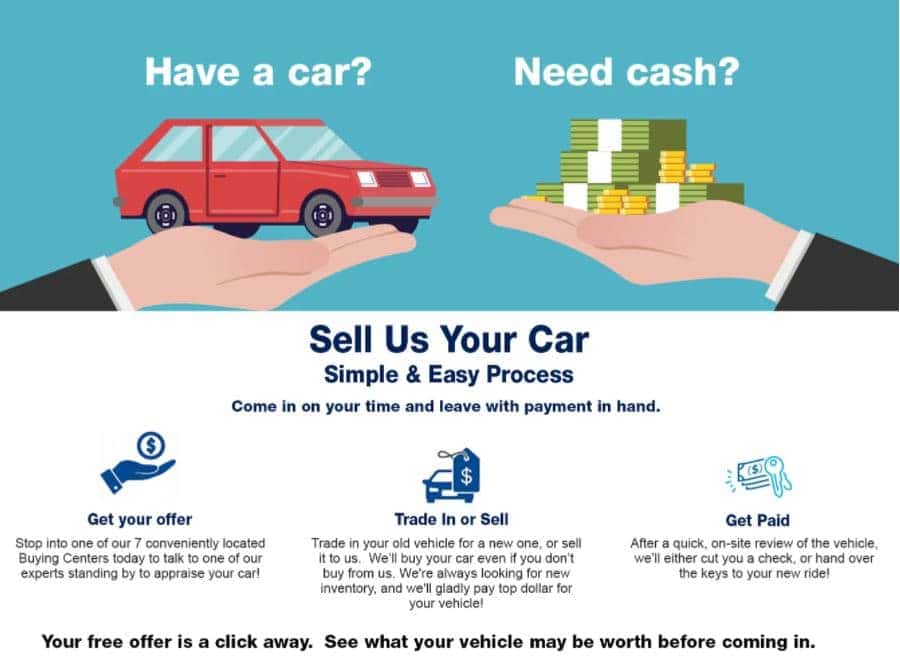
The rise of digital car-buying platforms has introduced a third “hybrid” option. These companies offer a middle ground: higher than a traditional dealer trade-in but lower than a private sale. From a financial management perspective, these are excellent for high-liquidity needs. If you need to offload an asset quickly to cover a different investment or debt, these platforms provide a guaranteed “exit” within 24 to 48 hours.
4. Negotiation Tactics and Financial Closing
Once you have a buyer, the final hurdle is the transaction itself. Mastering the art of negotiation and ensuring a secure transfer of funds is vital to protecting your profit.
Pricing Psychology: Anchoring and Buffers
When setting your asking price, use “anchoring.” If you want $15,000 for your car, list it at $16,500. This provides a “buffer” for negotiation. Psychologically, buyers feel they have “won” the negotiation if they talk you down, but by building in that buffer, you ensure the final “settlement price” remains at your target ROI. Always have a “walk-away” number—the absolute minimum you are willing to accept based on your initial market research.
Mastering the Art of the Deal
During the negotiation, stay focused on the facts: the car’s condition, the maintenance history, and the current market demand. Avoid emotional selling. If a buyer points out a flaw, acknowledge it but pivot back to the value. If they offer a price that is too low, don’t just say “no”—provide a counter-offer that meets them in the middle, but justify it with data. In finance, every dollar saved in a negotiation is a dollar of pure profit.
Securing the Payment and Finalizing Paperwork
The sale isn’t over until the funds are cleared and the liability is transferred. From a digital security and financial safety standpoint, always insist on a cashier’s check (verified at the issuing bank) or a direct wire transfer for large amounts. Avoid personal checks or payment apps with low protection limits. Ensure you have a Bill of Sale and that you follow your state’s requirements for title transfer and license plate removal. This protects you from future liabilities—such as the new owner getting a ticket or an accident in a vehicle still registered in your name—which could lead to unforeseen financial losses.

Conclusion: Reinvesting Your Capital
Selling your car is a major financial milestone. Whether you are using the proceeds to downpay a new vehicle, paying off high-interest debt, or investing in a diversified portfolio, the goal of this process was to extract the maximum value from your asset. By treating the sale as a professional financial transaction—through careful valuation, strategic preparation, and calculated negotiation—you ensure that your hard-earned equity remains exactly where it belongs: in your pocket. Treating your car as a portfolio piece rather than just a machine is the hallmark of sound personal financial management.
aViewFromTheCave is a participant in the Amazon Services LLC Associates Program, an affiliate advertising program designed to provide a means for sites to earn advertising fees by advertising and linking to Amazon.com. Amazon, the Amazon logo, AmazonSupply, and the AmazonSupply logo are trademarks of Amazon.com, Inc. or its affiliates. As an Amazon Associate we earn affiliate commissions from qualifying purchases.